ENPIL 2.5
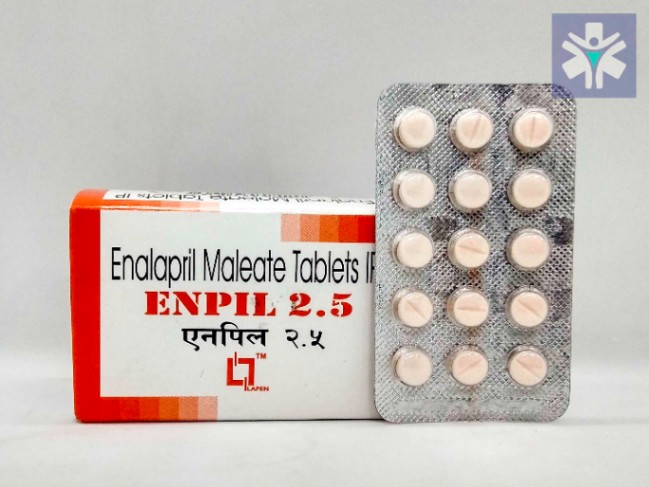
Price: Rs.34.50
15% off
In stock
Loose stock: 0
Description
ENPIL 2.5 TAB 15
Details
Composition
ENALAPRIL MALEATE 2.5 MG
# Enalapril Maleate 2.5 mg
## Short Description
**Enalapril Maleate 2.5 mg** is an oral medicine belonging to the **angiotensin-converting enzyme (ACE) inhibitor** class. It is commonly prescribed to treat **high blood pressure (hypertension)** and **heart failure**. It may also be used in selected patients to help protect cardiovascular health and reduce the workload on the heart.
Enalapril lowers blood pressure by relaxing blood vessels and reducing the production of **angiotensin II**, a hormone that causes blood vessels to narrow.
---
## Key Benefits
* Helps **lower high blood pressure**.
* Helps relax and widen blood vessels, improving blood flow.
* Reduces the workload on the heart.
* Used as part of treatment for **heart failure**.
* May help reduce the risk of complications associated with uncontrolled hypertension.
* Can be used alone or together with other blood-pressure medicines when prescribed.
* May provide beneficial effects on the heart and kidneys in appropriate patients.
---
## Uses / Indications
Enalapril Maleate 2.5 mg may be prescribed for:
### 1. Hypertension
Enalapril helps lower elevated blood pressure and may reduce the risk of complications associated with long-term hypertension, including stroke, heart attack, and kidney damage.
### 2. Heart Failure
Enalapril may be used as part of treatment for **symptomatic heart failure**, helping reduce the workload on the heart and improve cardiovascular function.
### 3. Left Ventricular Dysfunction
In selected patients with reduced heart function, enalapril may be prescribed to help reduce the risk of developing or worsening heart failure.
> The **2.5 mg strength** is often used as a low starting dose in certain patients, particularly when careful dose adjustment is required.
---
## How It Works
Enalapril is an **ACE inhibitor**.
After administration, enalapril is converted in the body to its active form, **enalaprilat**. It inhibits the angiotensin-converting enzyme responsible for producing angiotensin II.
This results in:
1. **Less angiotensin II production**
2. Relaxation and widening of blood vessels
3. Reduced release of aldosterone
4. Reduced sodium and water retention
5. Lower blood pressure
6. Reduced workload on the heart
These effects make enalapril useful in the treatment of hypertension and certain forms of heart failure.
---
## Dosage & Administration
* Take **Enalapril Maleate 2.5 mg exactly as prescribed**.
* It may generally be taken **with or without food**.
* Take the medicine at approximately the same time each day.
* The dose depends on the condition being treated, kidney function, blood pressure, age, and response to treatment.
* **2.5 mg may be used as a starting dose** in some patients.
* Your doctor may gradually increase the dose if necessary.
* Do not increase, decrease, or stop the medicine without medical advice.
### If You Miss a Dose
Take the missed dose when you remember, unless it is nearly time for your next scheduled dose. If it is nearly time for the next dose, skip the missed dose.
**Do not take two doses together** to compensate for a missed dose.
---
## Side Effects
### Common Side Effects
Possible side effects include:
* Dizziness
* Headache
* Weakness or tiredness
* Nausea
* Dry, persistent cough
* Low blood pressure, particularly after starting treatment or increasing the dose
### Serious Side Effects
Seek immediate medical attention if you experience:
* **Swelling of the face, lips, tongue, throat, or other parts of the body (angioedema)**
* Difficulty breathing or swallowing
* Fainting or severe dizziness
* Very low blood pressure
* Significant reduction in urine output
* Symptoms of kidney problems
* Irregular heartbeat or severe muscle weakness, which may indicate abnormal potassium levels
A persistent dry cough is a well-known adverse effect of ACE inhibitors and may require a change of treatment if it becomes troublesome.
---
## Precautions & Warnings
### Pregnancy
**Enalapril should not be used during pregnancy.** ACE inhibitors can cause serious injury or death to the developing fetus, particularly during the second and third trimesters.
If you become pregnant while taking enalapril, contact your healthcare professional promptly.
### Kidney Function
Enalapril can affect kidney function. Your doctor may monitor:
* Serum creatinine
* Kidney function
* Blood potassium levels
Extra caution may be required in people with kidney disease or certain conditions affecting blood flow to the kidneys.
### High Potassium
Enalapril can increase potassium levels in the blood. Tell your doctor if you have kidney disease or are taking potassium supplements or potassium-containing salt substitutes.
### Low Blood Pressure
Some people may experience a significant drop in blood pressure, especially when:
* Starting treatment
* Increasing the dose
* Taking diuretics
* Dehydrated due to vomiting or diarrhea
* Following a low-salt diet
### Angioedema
ACE inhibitors can rarely cause **angioedema**, which may occur at any time during treatment.
Swelling of the tongue, lips, face, or throat or difficulty breathing requires **urgent medical attention**.
### Dehydration
Tell your healthcare professional if you have severe vomiting, diarrhea, excessive sweating, or dehydration because these conditions may increase the risk of low blood pressure or kidney problems.
---
## Drug Interactions
Enalapril may interact with several medicines.
### Potassium Supplements
Potassium supplements and potassium-containing salt substitutes may increase blood potassium levels.
### Potassium-Sparing Diuretics
Medicines such as:
* Spironolactone
* Eplerenone
* Amiloride
* Triamterene
may increase the risk of **hyperkalemia** when combined with enalapril.
### Diuretics
Diuretics such as furosemide or hydrochlorothiazide may increase the blood-pressure-lowering effect of enalapril and may increase the risk of dizziness or low blood pressure.
### NSAIDs
Non-steroidal anti-inflammatory drugs (NSAIDs), including medicines such as ibuprofen and naproxen, may reduce the blood-pressure-lowering effect and may increase the risk of kidney problems, particularly in people who are dehydrated or have impaired kidney function.
### Lithium
Enalapril can increase lithium concentrations and may increase the risk of lithium toxicity. Monitoring may be required.
### Other Renin-Angiotensin System Medicines
Combining enalapril with other medicines affecting the renin-angiotensin system can increase the risk of **low blood pressure, kidney problems, and high potassium**.
### Sacubitril/Valsartan
Enalapril must **not be taken together with sacubitril/valsartan**. A suitable washout period is required when switching between these medicines because of the increased risk of angioedema.
Always inform your doctor or pharmacist about all prescription medicines, OTC medicines, vitamins, and supplements you take.
---
## Storage Information
* Store Enalapril Maleate 2.5 mg according to the temperature instructions on the product label.
* Keep the tablets in their original packaging.
* Protect from excessive heat, moisture, and direct sunlight.
* Keep the container tightly closed.
* Keep out of reach of children and pets.
* Do not use the medicine after its expiry date.
---
## Prescription Status
**Enalapril Maleate 2.5 mg is a prescription medicine.**
It should be taken under the supervision of a qualified healthcare professional. Blood pressure, kidney function, and potassium levels may need to be monitored during treatment.
---
## Genuine Medicine Assurance
When purchasing Enalapril Maleate 2.5 mg:
* Purchase only from a **licensed and reputable pharmacy**.
* Check the product name, strength, manufacturer, batch/lot number, and expiry date.
* Ensure the packaging is intact and properly sealed.
* Avoid medicines from unauthorized or suspicious sellers.
* Do not use tablets if the packaging appears damaged or tampered with.
* Keep the original packaging for product identification and verification.
**Genuine medicine assurance:** Product authenticity should be confirmed through the dispensing pharmacy, manufacturer, or relevant national medicines regulatory authority.
---
# FAQ – Enalapril Maleate 2.5 mg
### 1. What is Enalapril Maleate 2.5 mg used for?
Enalapril Maleate 2.5 mg is primarily used to treat **high blood pressure (hypertension)** and may be prescribed as part of treatment for **heart failure**.
### 2. Is Enalapril 2.5 mg a blood pressure medicine?
Yes. Enalapril is an **ACE inhibitor** that lowers blood pressure by relaxing blood vessels and reducing the effects of angiotensin II.
### 3. How does Enalapril 2.5 mg work?
Enalapril blocks the ACE enzyme, reducing the production of angiotensin II. This causes blood vessels to relax and lowers blood pressure.
### 4. Is Enalapril 2.5 mg a low dose?
Yes. **2.5 mg is a relatively low dose** and may be used as an initial dose in certain patients or when cautious dose adjustment is needed. The appropriate dose varies according to the medical condition and kidney function.
### 5. Can Enalapril 2.5 mg be taken every day?
Yes. Enalapril is commonly taken **once or twice daily**, depending on the prescribed regimen. Follow your doctor's instructions and take it consistently.
### 6. Does Enalapril 2.5 mg lower blood pressure immediately?
Enalapril begins lowering blood pressure after administration, but the full therapeutic effect may take time to develop. Your doctor may adjust the dose based on your blood-pressure response.
### 7. Does Enalapril cause a dry cough?
Yes. A **persistent dry cough** is a recognized side effect of ACE inhibitors such as enalapril. Tell your doctor if the cough becomes persistent or troublesome.
### 8. Can Enalapril 2.5 mg be used for heart failure?
Yes. Enalapril is an established treatment option for certain patients with **heart failure** and may help reduce the workload on the heart.
### 9. Can Enalapril damage the kidneys?
Enalapril can affect kidney function in some patients, although ACE inhibitors can also provide kidney benefits in appropriate patients. Kidney function should be monitored, particularly after starting treatment or changing the dose.
### 10. Can Enalapril increase potassium levels?
Yes. Enalapril can increase **blood potassium levels (hyperkalemia)**. The risk is higher in people with kidney problems or those taking potassium supplements, potassium-sparing diuretics, or certain other medicines.
### 11. Can I take Enalapril with Ibuprofen?
Ibuprofen and other NSAIDs can interact with enalapril and may reduce its blood-pressure-lowering effect or increase the risk of kidney problems. Ask your healthcare professional before using NSAIDs regularly.
### 12. Can Enalapril be taken with Amlodipine?
Yes. Enalapril and amlodipine are sometimes prescribed together for hypertension because they lower blood pressure through different mechanisms. The combination should be used according to your doctor's prescription.
### 13. Can Enalapril be taken with Spironolactone?
It may be prescribed together in selected patients, particularly in heart failure, but the combination can significantly increase **potassium levels** and requires appropriate medical monitoring.
### 14. Can Enalapril be taken during pregnancy?
**No. Enalapril should not be used during pregnancy.** ACE inhibitors can cause serious fetal harm. Contact your doctor immediately if you become pregnant while taking enalapril.
### 15. What should I do if I forget an Enalapril dose?
Take it when you remember unless it is nearly time for your next dose. If it is nearly time for the next dose, skip the missed dose. **Do not double the dose.**
### 16. Can Enalapril cause dizziness?
Yes. Dizziness can occur, particularly when starting treatment or when the dose is increased. Stand up slowly and contact your healthcare professional if dizziness is severe or persistent.
### 17. Can Enalapril cause swelling of the face or lips?
Rarely, enalapril can cause **angioedema**, which may cause swelling of the face, lips, tongue, or throat. This can be life-threatening. Seek emergency medical attention if these symptoms occur.
### 18. Is Enalapril 2.5 mg safe for older adults?
It can be used in older adults when medically appropriate, but dose selection may require greater caution because kidney function and sensitivity to blood-pressure changes can vary with age.
### 19. Can I stop Enalapril 2.5 mg suddenly?
Do not stop enalapril without medical advice. Stopping treatment may cause blood pressure to rise or worsen the condition for which it was prescribed.
### 20. How long should I take Enalapril 2.5 mg?
The duration depends on why it has been prescribed. Some patients require long-term treatment for hypertension or heart failure. Continue taking it as directed by your healthcare professional.
---
## Medical Disclaimer
This information about **Enalapril Maleate 2.5 mg** is provided for educational and informational purposes only. It does not replace professional medical advice, diagnosis, or treatment.
**Do not start, stop, or change the dose of Enalapril Maleate without consulting a qualified healthcare professional.** Blood pressure, kidney function, and potassium levels may need to be monitored during treatment.
Seek **urgent medical attention** for swelling of the face, lips, tongue, or throat, difficulty breathing, severe fainting, or other symptoms of a serious reaction.