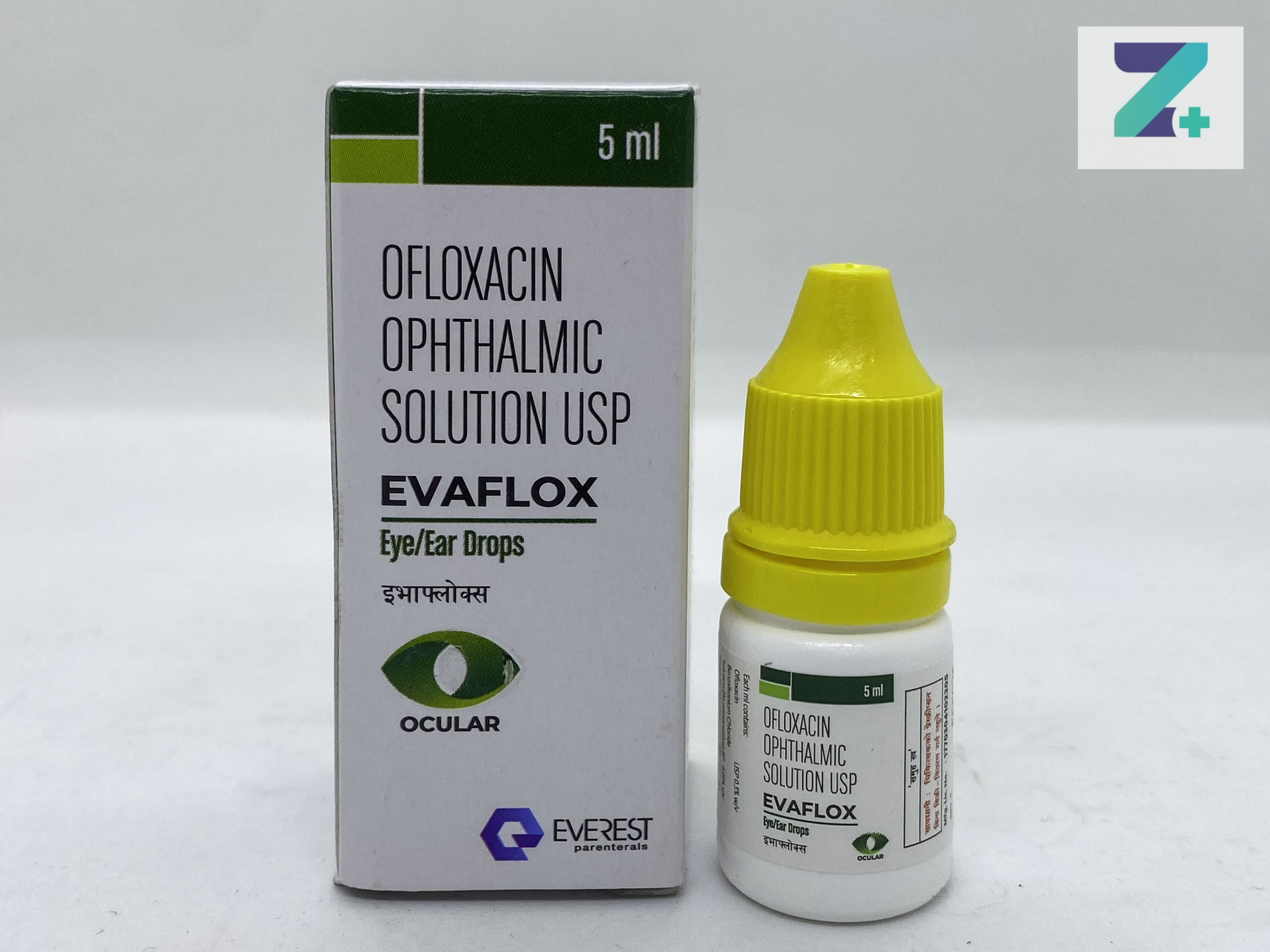
EVAFLOX EYE/EAR DROPS
Price: Rs.77.00
10% off
In stock
Loose stock: 0
Description
EVAFLOX EYE/EAR DROPS DROPS 5ML
Details
Composition
BENZALKONIUM CHLORIDE 0.01 % V/V,OFLOXACIN 0.3%W/V
# BENZALKONIUM CHLORIDE 0.01% V/V + OFLOXACIN 0.3% W/V
## SHORT DESCRIPTION
**Benzalkonium Chloride 0.01% V/V + Ofloxacin 0.3% W/V** is an **ophthalmic antibacterial preparation** containing the antibiotic **ofloxacin** and the preservative **benzalkonium chloride**.
Ofloxacin is a fluoroquinolone antibiotic used to treat susceptible **bacterial infections of the eye**. Benzalkonium chloride is primarily included as a preservative to help prevent microbial contamination of the eye-drop solution.
This medicine is intended for **eye use only** and should be used according to the directions provided by a healthcare professional or the product label.
---
## KEY BENEFITS
* Helps treat susceptible **bacterial eye infections**.
* Ofloxacin provides broad-spectrum antibacterial activity against susceptible organisms.
* May help reduce symptoms associated with bacterial eye infections, such as redness, discharge, and irritation.
* Benzalkonium chloride helps maintain the sterility of the multidose ophthalmic preparation.
* Convenient topical administration directly to the affected eye.
> **Important:** This medicine does not treat viral or fungal eye infections.
---
## USES / INDICATIONS
Ofloxacin ophthalmic preparations may be prescribed for susceptible bacterial infections involving the eye, including:
* **Bacterial conjunctivitis**
* Certain superficial bacterial infections of the eye
* Other susceptible bacterial ocular infections as determined by an eye-care professional
Common symptoms of bacterial conjunctivitis can include:
* Eye redness
* Yellow or greenish discharge
* Eyelid crusting
* Eye irritation
* Foreign-body sensation
The cause of eye redness should be properly assessed because **viral, allergic, fungal, and other eye conditions can produce similar symptoms**.
---
## HOW IT WORKS
### Ofloxacin
Ofloxacin is a **fluoroquinolone antibiotic**.
It works by inhibiting bacterial enzymes called:
* **DNA gyrase**
* **Topoisomerase IV**
These enzymes are necessary for bacterial DNA replication and repair. Blocking them prevents susceptible bacteria from multiplying and can lead to bacterial cell death.
### Benzalkonium Chloride
Benzalkonium chloride is primarily used as a **preservative** in ophthalmic preparations. It helps prevent microbial contamination of the multidose bottle after opening.
### Overall Action
**Ofloxacin → inhibits bacterial DNA replication → reduces susceptible bacteria → helps treat bacterial eye infection**
---
## DOSAGE & ADMINISTRATION
The exact dose and treatment duration depend on the **severity and type of eye infection**, as well as the product formulation.
### General Administration
* Wash your hands thoroughly before using the eye drops.
* Shake the bottle if the product label instructs you to do so.
* Tilt your head back and gently pull down the lower eyelid.
* Instill the prescribed number of drops into the affected eye.
* Do **not touch the dropper tip** to the eye, eyelids, fingers, or other surfaces.
* Close the eye gently after application.
* Replace the cap immediately after use.
### Typical Adult Regimen
For some bacterial ocular infections, ofloxacin ophthalmic solution may be prescribed as **1–2 drops several times daily**, with frequency depending on the severity and specific indication.
**Follow the exact dosing schedule on your prescription or product label.**
### Duration
Complete the prescribed course even if symptoms improve early, unless your healthcare professional instructs you otherwise.
### If You Miss a Dose
Apply the missed dose when remembered unless it is nearly time for the next scheduled dose.
**Do not use extra drops to compensate for a missed dose.**
### Contact Lenses
Do not wear contact lenses while experiencing an active eye infection unless specifically advised by your eye-care professional.
---
## SIDE EFFECTS
### Common Side Effects
Temporary effects may occur after instillation, including:
* Mild burning or stinging
* Eye irritation
* Redness
* Itching
* Temporary blurred vision
* Watery eyes
* Mild discomfort
These effects are often temporary.
### Less Common Effects
Some patients may experience:
* Dry eyes
* Sensitivity to light
* Eyelid swelling
* Foreign-body sensation
* Altered taste after eye-drop administration
### Serious Side Effects
Stop using the medicine and seek medical attention if you develop:
* Severe eye pain
* Significant swelling
* Severe redness or inflammation
* Sudden changes in vision
* Severe or persistent eye irritation
* Signs of an allergic reaction
* Facial, lip, tongue, or throat swelling
* Difficulty breathing
Rarely, fluoroquinolone antibiotics can cause serious hypersensitivity reactions.
---
## PRECAUTIONS & WARNINGS
### For Ophthalmic Use Only
This product is intended for **use in the eye**. Do not swallow it or use it in another part of the body unless specifically formulated and prescribed for that route.
### Avoid Contamination
Do not touch the dropper tip to your eye, eyelashes, eyelids, fingers, or other surfaces.
Contaminating the dropper can introduce microorganisms into the bottle and potentially cause an eye infection.
### Contact Lenses
Benzalkonium chloride can be absorbed by soft contact lenses and may cause irritation.
Remove contact lenses before applying the drops and follow the product instructions regarding when they can safely be reinserted.
### Allergies
Do not use if you have previously experienced a serious allergic reaction to:
* Ofloxacin
* Other fluoroquinolone antibiotics
* Benzalkonium chloride
* Any other ingredient in the preparation
### Prolonged Use
Prolonged or inappropriate use of topical antibiotics may encourage the growth of **non-susceptible organisms**, including fungi.
### Eye Pain or Vision Changes
If severe pain, significant swelling, worsening redness, or vision changes occur, seek prompt ophthalmic assessment.
### Children
Use in children according to the specific product's approved indications and healthcare professional's instructions.
### Pregnancy and Breastfeeding
If you are pregnant, planning pregnancy, or breastfeeding, consult your healthcare professional before using this medicine.
---
## DRUG INTERACTIONS
Because ofloxacin eye drops are administered locally, systemic exposure is generally lower than with oral ofloxacin. However, tell your healthcare professional about all medicines you use.
### Other Eye Drops
If using multiple ophthalmic preparations:
* Use them at separate times as directed.
* Generally leave several minutes between different eye drops.
* **Eye ointments are usually applied last.**
### Other Fluoroquinolones
Tell your healthcare professional if you are using another fluoroquinolone antibiotic.
### Systemic Medicines
Although clinically significant systemic interactions are less likely with ophthalmic administration, inform your doctor about all:
* Prescription medicines
* OTC medicines
* Vitamins
* Herbal supplements
Do not use multiple antibiotic eye preparations together unless specifically prescribed.
---
## STORAGE INFORMATION
* Store according to the manufacturer's recommended temperature.
* Keep the bottle tightly closed when not in use.
* Protect from excessive heat and direct sunlight.
* Do not freeze unless specifically instructed.
* Keep out of reach and sight of children.
* Do not use after the expiry date.
* Follow the manufacturer's instructions regarding the **discard period after opening**.
* Do not use if the solution becomes unusually cloudy, changes color, or contains visible particles unless the product information specifically indicates otherwise.
---
## PRESCRIPTION STATUS
**Prescription Status Depends on Local Regulations**
Ofloxacin ophthalmic preparations are commonly treated as **prescription medicines**, although regulations can vary by country.
Use this antibiotic only according to the advice of a qualified healthcare professional and the instructions supplied with the product.
---
## GENUINE MEDICINE ASSURANCE
For safe and effective treatment, purchase **Benzalkonium Chloride 0.01% + Ofloxacin 0.3% eye drops** from a licensed pharmacy or authorized medicine supplier.
Before use, check:
* Product name and active ingredients
* Strength and dosage form
* Manufacturer details
* Batch/lot number
* Manufacturing and expiry dates
* Bottle seal and packaging
* Storage instructions
* Regulatory/registration information where applicable
Do not use the product if the bottle is damaged, leaking, expired, or appears to have been tampered with.
Always use the original container and avoid transferring eye drops into another bottle.
---
# FAQ – BENZALKONIUM CHLORIDE 0.01% + OFLOXACIN 0.3%
### 1. What is Ofloxacin 0.3% eye drops used for?
Ofloxacin 0.3% eye drops are used to treat **susceptible bacterial infections of the eye**, including bacterial conjunctivitis.
### 2. What is Benzalkonium Chloride 0.01% used for?
Benzalkonium chloride is commonly included as a **preservative** in multidose ophthalmic preparations to help prevent microbial contamination.
### 3. Is Ofloxacin an antibiotic?
Yes. Ofloxacin is a **fluoroquinolone antibiotic** that acts against susceptible bacteria.
### 4. Does Ofloxacin eye drops treat conjunctivitis?
Yes, it may be prescribed for **bacterial conjunctivitis** caused by susceptible bacteria. It does not treat most viral or allergic forms of conjunctivitis.
### 5. Can Ofloxacin eye drops treat viral eye infections?
No. Ofloxacin is an antibacterial medicine and **does not treat viral infections**.
### 6. Can Ofloxacin eye drops treat fungal eye infections?
No. Ofloxacin is not an antifungal medicine. Fungal eye infections require specific ophthalmic treatment.
### 7. How does Ofloxacin work in the eye?
Ofloxacin blocks bacterial **DNA gyrase and topoisomerase IV**, enzymes needed for bacterial DNA replication and repair.
### 8. How many drops of Ofloxacin should I use?
The dose depends on the type and severity of the infection. Some regimens use **1–2 drops several times daily**, but you should follow the exact prescription or product label.
### 9. Can I use Ofloxacin eye drops in both eyes?
Only use the medicine in both eyes if your healthcare professional has instructed you to do so.
### 10. Can I wear contact lenses while using these eye drops?
It is generally advisable to **avoid contact lenses during an active eye infection**. Benzalkonium chloride can also irritate contact lenses, particularly soft lenses.
### 11. How long should I use Ofloxacin eye drops?
Use it for the duration prescribed by your healthcare professional. Do not stop or extend antibiotic treatment without appropriate advice.
### 12. Can Ofloxacin eye drops cause burning?
Yes. **Temporary burning or stinging** after application is a possible side effect.
### 13. Can Ofloxacin eye drops make vision blurry?
Temporary blurred vision can occur immediately after applying eye drops. If significant or persistent vision changes occur, seek medical attention.
### 14. Can children use Ofloxacin eye drops?
Children may use certain ofloxacin ophthalmic formulations when clinically appropriate. The exact indication and dosing should be determined by a healthcare professional.
### 15. Can Ofloxacin eye drops be used during pregnancy?
If you are pregnant or planning pregnancy, consult your doctor before using ofloxacin eye drops. The potential benefits and risks should be assessed individually.
### 16. Can Ofloxacin eye drops be used while breastfeeding?
Consult your healthcare professional before using the medicine while breastfeeding.
### 17. Can I use other eye drops with Ofloxacin?
Other eye drops can sometimes be used at the same time. Leave an appropriate interval between different eye medicines, and generally apply **eye ointments after eye drops**.
### 18. Can I use Ofloxacin eye drops for red eyes?
Red eyes can have many causes. Ofloxacin should **not be used simply for redness** unless a bacterial infection has been diagnosed or the medicine has been recommended by a healthcare professional.
### 19. Can Ofloxacin eye drops be used for an eye injury?
Not every eye injury requires an antibiotic. Eye injuries, especially penetrating injuries, chemical exposure, or injuries associated with severe pain or vision changes, require prompt professional assessment.
### 20. What happens if I accidentally put too many drops in my eye?
A small excess is usually removed naturally through blinking and tearing. You may experience temporary irritation or blurred vision. If a large amount is accidentally used or significant symptoms occur, contact a healthcare professional.
### 21. What should I do if I miss an Ofloxacin eye-drop dose?
Apply it when remembered unless it is almost time for the next dose. **Do not double the number of drops** at the next application.
### 22. Can Ofloxacin eye drops be shared?
No. Eye drops should **never be shared**, because sharing can spread infections and contaminate the bottle.
### 23. How should I apply Ofloxacin eye drops correctly?
Wash your hands, avoid touching the dropper tip, gently pull down the lower eyelid, apply the prescribed drops, close the eye gently, and replace the cap immediately.
### 24. How should Ofloxacin eye drops be stored?
Store them according to the manufacturer's instructions, generally protected from excessive heat, direct sunlight, and contamination. Follow the package instructions regarding how long the bottle can be used after opening.
### 25. Is Ofloxacin 0.3% eye drops available without a prescription?
Prescription requirements vary by country. In many locations, **ofloxacin ophthalmic preparations are prescription medicines**.
---
## MEDICAL DISCLAIMER
This information about **Benzalkonium Chloride 0.01% V/V + Ofloxacin 0.3% W/V ophthalmic solution** is provided for general educational and informational purposes only. It is **not a substitute for professional medical advice, diagnosis, or treatment**.
Ofloxacin is an antibiotic intended for susceptible bacterial eye infections. It should not be used routinely for unexplained eye redness or infections caused by viruses or fungi. Incorrect or unnecessary antibiotic use may contribute to antimicrobial resistance.
Seek prompt medical attention for **severe eye pain, significant vision changes, marked swelling, eye injury, chemical exposure, or worsening symptoms**.
**Do not start, stop, or change antibiotic treatment without appropriate medical advice. Always read the product label/package insert and follow your ophthalmologist's, doctor's, or pharmacist's instructions.**