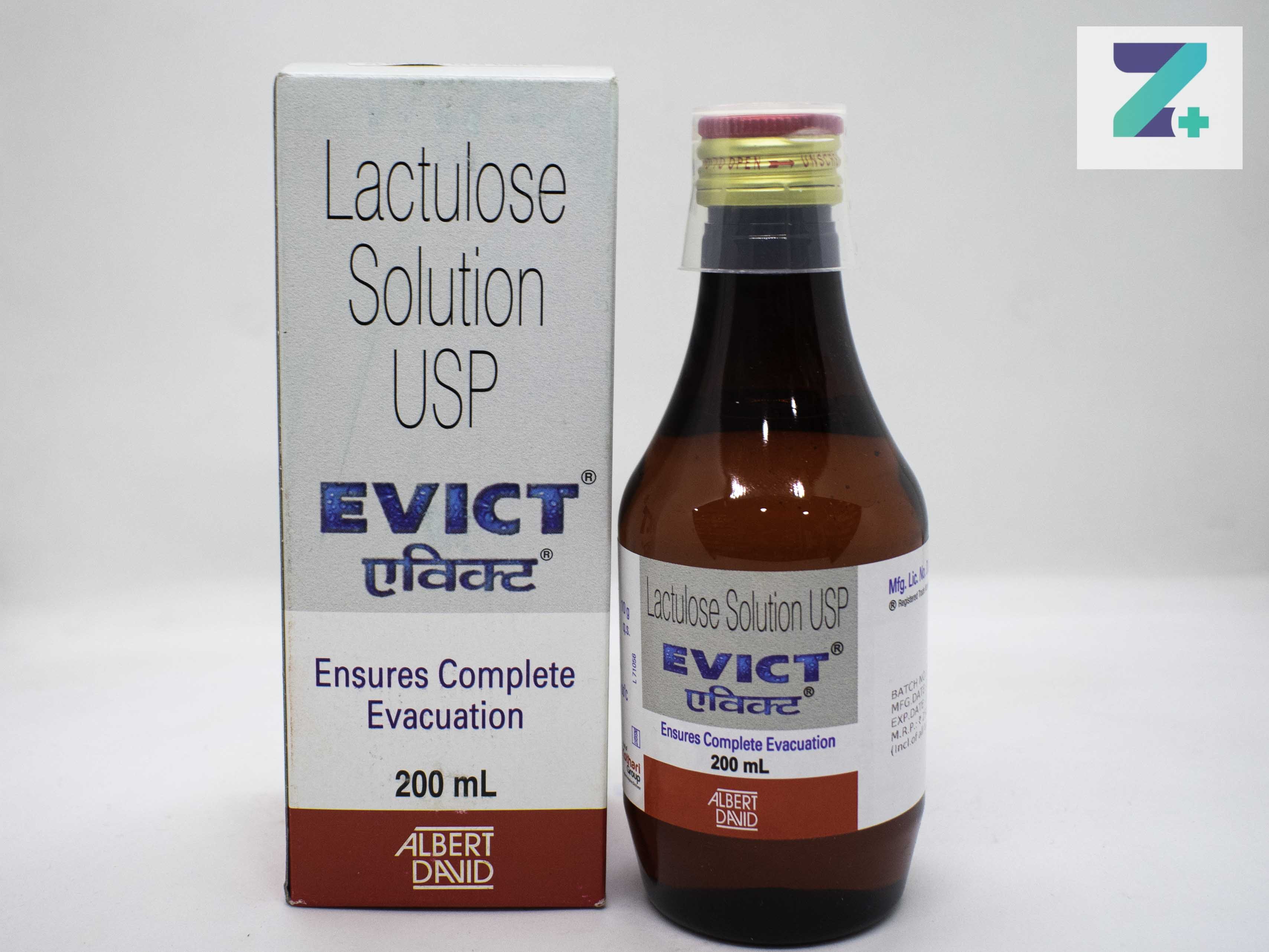
EVICT
Price: Rs.413.28
10% off
In stock
Loose stock: 0
Description
EVICT SYR 200ML
Details
Composition
LACTULOSE 10 G
# Lactulose 10 g
## SHORT DESCRIPTION
**Lactulose 10 g** is an osmotic laxative used primarily to relieve **constipation**. It works by drawing water into the bowel, which softens stools and makes them easier to pass. Lactulose may also be prescribed to help reduce elevated ammonia levels in people with **hepatic encephalopathy**.
## KEY BENEFITS
* Helps relieve **constipation**
* Softens hard stools
* Makes bowel movements easier and more comfortable
* Helps increase bowel movement frequency
* Can be used when a gentle osmotic laxative is required
* May be prescribed to help manage **hepatic encephalopathy** by reducing intestinal ammonia absorption
## USES / INDICATIONS
Lactulose may be used for:
* **Constipation**
* Hard or difficult-to-pass stools
* Irregular bowel movements
* Maintaining soft stools when recommended by a healthcare professional
* **Hepatic encephalopathy**, under medical supervision
For hepatic encephalopathy, lactulose is used at a different dosing regimen from constipation and should be taken strictly according to medical instructions.
## HOW IT WORKS
Lactulose is a **synthetic, non-absorbable sugar** that reaches the colon largely unchanged.
In the colon, bacteria break lactulose down into organic acids. This increases the osmotic effect in the bowel and draws water into the colon.
**Lactulose → Draws water into the bowel → Softens stool → Promotes bowel movement**
In hepatic encephalopathy, lactulose also helps reduce the absorption of **ammonia** from the intestine, helping lower blood ammonia levels.
## DOSAGE & ADMINISTRATION
The appropriate dose depends on the indication, age, response to treatment, and medical condition.
### For Constipation
Adults are commonly started on a dose that may range from **15–45 mL daily**, followed by a maintenance dose according to response. Product concentrations vary, so the dose should always be measured according to the specific product instructions.
If the product provides **10 g of lactulose per measured dose**, follow the dosing instructions supplied with that product.
### Administration
* Take exactly as directed by your healthcare professional or product label.
* It can generally be taken **with or without food**.
* Measure liquid doses using an appropriate measuring device.
* It may be mixed with water, juice, or another suitable liquid if recommended.
* Drink adequate fluids unless your doctor has advised fluid restriction.
* The therapeutic response may take **24–48 hours or longer**.
### For Hepatic Encephalopathy
Higher and more frequent doses may be required to achieve the bowel-movement target prescribed by the healthcare professional. **Do not use the constipation dose for hepatic encephalopathy without medical advice.**
### Missed Dose
Take the missed dose when remembered unless it is nearly time for the next dose. **Do not take a double dose** to compensate for a missed dose.
## SIDE EFFECTS
Common side effects include:
* Flatulence
* Bloating
* Abdominal discomfort
* Abdominal cramps
* Nausea
* Diarrhea
These effects may be more noticeable when treatment is first started or when the dose is too high.
### Serious or Excessive Effects
Prolonged or excessive diarrhea may cause:
* Dehydration
* Electrolyte imbalance
* Low potassium levels
* Weakness
* Muscle cramps
* Irregular heartbeat in severe cases
Contact a healthcare professional if severe or persistent diarrhea, vomiting, dehydration, or significant abdominal pain occurs.
## PRECAUTIONS & WARNINGS
### Intestinal Obstruction
Lactulose should not be used in people with suspected or confirmed **intestinal obstruction** unless specifically directed by a healthcare professional.
Seek medical advice for severe abdominal pain, persistent vomiting, abdominal swelling, or inability to pass stool or gas.
### Diabetes
Lactulose contains sugars and may affect blood glucose in some patients. People with diabetes should use it according to medical advice and monitor glucose as recommended.
### Electrolyte Imbalance
Excessive use can cause significant diarrhea and electrolyte disturbances. This is particularly important in elderly patients and people with kidney or other chronic medical conditions.
### Dehydration
Maintain adequate fluid intake while using lactulose unless you have been instructed to restrict fluids.
### Lactose or Galactose Intolerance
Some lactulose products may contain small amounts of related sugars. Patients with certain inherited disorders of sugar metabolism should check the product ingredients with a healthcare professional.
### Children
Lactulose may be used in children when recommended by a healthcare professional. The dose should be based on age and clinical response.
### Pregnancy
Lactulose is generally considered suitable for use during pregnancy when clinically indicated, but it should still be used according to healthcare professional advice.
### Breastfeeding
Lactulose is minimally absorbed from the gastrointestinal tract and is generally considered compatible with breastfeeding. Consult your healthcare professional if you have concerns.
## DRUG INTERACTIONS
Lactulose has relatively few significant drug interactions, but tell your doctor or pharmacist about all medicines you use.
Potential considerations include:
* Other laxatives
* Medicines that can alter electrolyte levels
* Certain medicines whose absorption may be affected by significant changes in bowel transit
* Medicines used for diabetes, particularly if significant diarrhea occurs
Excessive lactulose-induced diarrhea can cause electrolyte disturbances that may affect the safety of other medicines.
If lactulose is being used for **hepatic encephalopathy**, follow your healthcare professional's instructions carefully, particularly if you are taking other medicines for liver disease.
## STORAGE INFORMATION
* Store according to the manufacturer's instructions.
* Keep at room temperature unless the product label specifies otherwise.
* Protect from excessive heat and direct sunlight.
* Keep the container tightly closed.
* Keep out of reach and sight of children.
* Do not use after the expiry date.
* Do not use the product if the packaging is damaged or contaminated.
## PRESCRIPTION STATUS
**Lactulose 10 g may be available as a prescription or non-prescription medicine depending on the country, formulation, and intended use.**
When used for **hepatic encephalopathy**, medical supervision is important. Always follow local pharmacy and prescribing requirements.
## GENUINE MEDICINE ASSURANCE
To help ensure you receive genuine Lactulose 10 g:
* Purchase from a licensed and reputable pharmacy.
* Check the product name and strength.
* Verify the manufacturer's details.
* Check the batch number and expiry date.
* Ensure the bottle and packaging are sealed and undamaged.
* Confirm the concentration and amount of lactulose stated on the label.
* Avoid products with altered or suspicious packaging.
* Purchase medicines from authorized sources.
* Ask your pharmacist to verify the product if you have concerns about authenticity.
## FAQ SECTION
### What is Lactulose 10 g used for?
Lactulose 10 g is primarily used to **relieve constipation** by drawing water into the bowel and softening stools. It may also be prescribed for hepatic encephalopathy.
### Is Lactulose a laxative?
Yes. Lactulose is an **osmotic laxative** that helps increase water in the colon and makes stools softer and easier to pass.
### How does Lactulose work for constipation?
Lactulose reaches the colon and is broken down by bacteria, producing an osmotic effect that draws water into the bowel. This softens stool and promotes bowel movements.
### How long does Lactulose take to work?
Lactulose commonly takes **24–48 hours or longer** to produce its full laxative effect. Response varies between individuals.
### Can Lactulose be taken every day?
Lactulose may be used regularly for chronic constipation when recommended by a healthcare professional. The dose should be adjusted to achieve comfortable, regular stools without causing excessive diarrhea.
### Can Lactulose be taken with food?
Yes. Lactulose can generally be taken **with or without food**.
### Should I drink water while taking Lactulose?
Adequate fluid intake is generally recommended while taking lactulose unless your doctor has advised you to restrict fluids.
### Does Lactulose cause gas?
Yes. **Gas and bloating are common**, especially when treatment is started. These effects may improve as the body adjusts.
### Does Lactulose cause diarrhea?
Yes. Diarrhea can occur, particularly if the dose is too high. Persistent or severe diarrhea may cause dehydration and electrolyte imbalance.
### Can Lactulose be used during pregnancy?
Lactulose is generally considered suitable during pregnancy when clinically indicated, but you should consult your healthcare professional before starting or changing treatment.
### Can Lactulose be used while breastfeeding?
Lactulose is minimally absorbed and is generally considered compatible with breastfeeding. Discuss its use with your healthcare professional if you have concerns.
### Can children take Lactulose 10 g?
Lactulose can be prescribed to children for constipation, but the appropriate dose depends on the child's age, weight, and clinical condition. Pediatric dosing should be determined by a healthcare professional.
### Is Lactulose safe for elderly people?
Lactulose can be used in older adults, but excessive diarrhea can lead to dehydration and electrolyte imbalance. The dose should be adjusted carefully.
### Can Lactulose be used for hepatic encephalopathy?
Yes. Lactulose is an important treatment for **hepatic encephalopathy** because it helps reduce intestinal ammonia absorption. Dosing for this condition is different from routine constipation treatment and requires medical supervision.
### Does Lactulose lower ammonia levels?
Yes. In hepatic encephalopathy, lactulose helps reduce the amount of ammonia absorbed from the intestine and can help lower blood ammonia levels.
### Can I take Lactulose with other laxatives?
Sometimes other laxatives may be used, but combining laxatives can increase the risk of diarrhea and electrolyte imbalance. Consult your healthcare professional before combining them.
### What happens if I take too much Lactulose?
Taking too much can cause diarrhea, abdominal cramps, dehydration, and electrolyte disturbances. If a large amount has been taken or severe symptoms develop, seek medical advice promptly.
### What should I do if I miss a Lactulose dose?
Take the missed dose when remembered unless it is nearly time for your next scheduled dose. Do not double the next dose.
### Does Lactulose cause dependence?
Lactulose is not generally considered addictive. However, long-term use should be medically reviewed when constipation persists or requires increasing doses.
### How should Lactulose 10 g be stored?
Store it according to the manufacturer's instructions, generally at room temperature and away from excessive heat and direct sunlight. Keep it out of reach of children.
## MEDICAL DISCLAIMER
This information about **Lactulose 10 g** is provided for educational and informational purposes only and is not a substitute for professional medical advice, diagnosis, or treatment.
Lactulose should not be used for unexplained or severe abdominal pain, suspected intestinal obstruction, or other potentially serious gastrointestinal conditions without medical evaluation. Excessive use can cause diarrhea, dehydration, and electrolyte disturbances.
When used for **hepatic encephalopathy**, lactulose should be taken strictly according to the healthcare professional's instructions because dosing and treatment targets differ from those used for constipation.
Always follow the product label, manufacturer's instructions, and advice of your doctor or pharmacist regarding dosage, precautions, interactions, and duration of treatment.