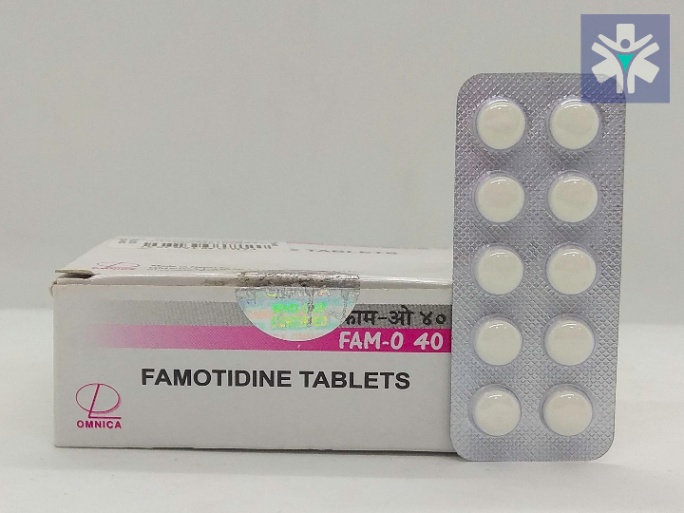
FAM-O 40
Price: Rs.20.00
10% off
In stock
Loose stock: 0
Description
FAM-O 40 TAB 10
Details
Composition
FAMOTIDINE 40 MG
# FAMOTIDINE 40 MG
## SHORT DESCRIPTION
**Famotidine 40 mg** is an **H2-receptor antagonist (H2 blocker)** that reduces the amount of acid produced in the stomach. It is used to treat conditions associated with excessive stomach acid, including **peptic ulcers, gastroesophageal reflux disease (GERD), and certain hypersecretory conditions**.
Famotidine can help relieve symptoms such as **heartburn, acid reflux, and stomach discomfort caused by excess acid**.
---
## KEY BENEFITS
* **Reduces Stomach Acid:** Decreases the production of gastric acid.
* **Relieves Heartburn:** Helps reduce burning discomfort associated with acid reflux.
* **Supports GERD Management:** Helps control acid-related symptoms in people with gastroesophageal reflux disease.
* **Helps Treat Peptic Ulcers:** Can promote healing and reduce acid-related irritation of stomach or intestinal ulcers.
* **Provides Longer Acid Control:** Famotidine has a relatively long duration of action compared with some older H2 blockers.
* **Helps Prevent Acid-Related Symptoms:** May be prescribed to reduce recurrence of certain acid-related conditions.
---
## USES / INDICATIONS
Famotidine may be prescribed for:
* **Gastroesophageal reflux disease (GERD)**
* **Heartburn associated with acid reflux**
* **Gastric (stomach) ulcers**
* **Duodenal ulcers**
* Conditions involving excessive stomach acid production, such as **Zollinger-Ellison syndrome**
* Other acid-related gastrointestinal conditions when recommended by a healthcare professional
The approved indications and dosing may vary by country and product.
---
## HOW IT WORKS
Famotidine selectively blocks **histamine-2 (H2) receptors** on acid-producing cells in the stomach.
Normally, stimulation of these receptors increases gastric acid production. By blocking them, famotidine:
* Reduces gastric acid secretion
* Lowers stomach acidity
* Relieves acid-related irritation
* Allows acid-damaged tissues to heal
Famotidine does **not** neutralize existing stomach acid. Instead, it reduces the amount of new acid produced.
---
## DOSAGE & ADMINISTRATION
**Take Famotidine 40 mg exactly as prescribed by your doctor.**
The dose and treatment duration depend on the condition being treated and kidney function.
* Famotidine may be taken **with or without food**.
* Take it at approximately the same time each day when used regularly.
* Swallow the tablet with water.
* Do not take more than the prescribed dose.
* Patients with reduced kidney function may require a lower dose or different dosing interval.
### Missed Dose
Take the missed dose when remembered unless it is nearly time for the next scheduled dose.
If it is close to the next dose, skip the missed dose.
**Do not take two doses at the same time.**
---
## SIDE EFFECTS
### Common Side Effects
* Headache
* Dizziness
* Constipation
* Diarrhea
* Nausea
* Abdominal discomfort
### Less Common Side Effects
* Fatigue
* Dry mouth
* Changes in taste
* Mild skin rash
### Serious Side Effects
Seek medical attention if you develop:
* Severe allergic reaction
* Facial, lip, tongue, or throat swelling
* Difficulty breathing
* Severe or persistent skin rash
* Confusion or unusual mental changes, particularly in older adults or people with kidney problems
* Yellowing of the skin or eyes
---
## PRECAUTIONS & WARNINGS
Before taking Famotidine 40 mg, tell your healthcare professional if you have:
* **Kidney disease**
* Liver disease
* A history of stomach or intestinal ulcers
* Difficulty swallowing
* Unexplained weight loss
* Persistent vomiting
* Gastrointestinal bleeding
* A history of allergy to famotidine or other H2 blockers
### Kidney Disease
Famotidine is primarily eliminated through the kidneys. Patients with impaired kidney function may need **dose adjustment** to reduce the risk of accumulation and adverse effects.
### Warning Signs of Serious Gastrointestinal Disease
Do not rely on famotidine to treat unexplained symptoms without medical evaluation. Seek medical attention for:
* Black or bloody stools
* Vomiting blood
* Persistent vomiting
* Difficulty swallowing
* Unexplained weight loss
* Persistent or severe abdominal pain
### Long-Term Use
Long-term acid suppression should be used when medically appropriate. Prolonged use may require periodic review by a healthcare professional.
### Pregnancy & Breastfeeding
Tell your doctor if you are **pregnant, planning pregnancy, or breastfeeding** before using famotidine.
---
## DRUG INTERACTIONS
Famotidine has fewer drug interactions than some older H2 blockers, but interactions can still occur.
Potential interactions include:
* Medicines whose absorption depends on stomach acidity
* Certain antifungal medicines
* Some medicines requiring acidic stomach conditions for absorption
* Antacids, depending on the medicine and timing of administration
* Other acid-reducing medicines
Always tell your doctor or pharmacist about **all prescription medicines, OTC medicines, vitamins, and herbal supplements** you take.
---
## STORAGE INFORMATION
* Store according to the manufacturer's instructions.
* Keep at room temperature unless otherwise specified.
* Protect from excessive heat, moisture, and direct sunlight.
* Keep tablets in their original packaging.
* Keep out of reach and sight of children.
* Do not use after the expiry date.
* Keep the container tightly closed.
---
## PRESCRIPTION STATUS
**Famotidine 40 mg is a prescription medicine in many countries**, although lower-strength famotidine products may be available over the counter in some markets.
The availability and prescription requirements depend on the **country, strength, and formulation**.
---
## GENUINE MEDICINE ASSURANCE
For safe and reliable use:
* Purchase Famotidine 40 mg from a **licensed pharmacy or authorized medicine supplier**.
* Check the manufacturer's name, batch number, expiry date, and packaging.
* Confirm the strength is **40 mg** before use.
* Ensure the tablets and packaging are intact.
* Avoid products from unauthorized or suspicious sources.
* Do not use expired or damaged medicines.
* Store the medicine according to the manufacturer's instructions.
---
# FAQ – Frequently Asked Questions
### 1. What is Famotidine 40 mg used for?
Famotidine 40 mg is used to reduce stomach acid and may be prescribed for **GERD, heartburn, gastric ulcers, duodenal ulcers, and certain conditions involving excessive acid production**.
### 2. Is Famotidine 40 mg an antacid?
No. Famotidine is an **H2-receptor blocker**. It reduces the production of stomach acid rather than directly neutralizing acid that is already present.
### 3. Does Famotidine help with heartburn?
Yes. Famotidine reduces stomach acid and can help relieve **heartburn associated with acid reflux**.
### 4. How does Famotidine work?
Famotidine blocks **H2 receptors** on acid-producing cells in the stomach, reducing gastric acid secretion.
### 5. Can Famotidine 40 mg treat GERD?
Yes. Famotidine may be prescribed to control acid-related symptoms associated with **gastroesophageal reflux disease (GERD)**.
### 6. Can Famotidine heal stomach ulcers?
Famotidine reduces stomach acid, which can help create an environment that allows certain **gastric and duodenal ulcers to heal**.
### 7. When should I take Famotidine 40 mg?
The timing depends on the condition being treated and your doctor's instructions. Famotidine can generally be taken **with or without food**.
### 8. Can Famotidine be taken with food?
Yes. Famotidine can generally be taken with or without food.
### 9. What are the common side effects of Famotidine?
Common side effects may include **headache, dizziness, constipation, diarrhea, nausea, and abdominal discomfort**.
### 10. Can Famotidine cause dizziness?
Yes. Dizziness can occur in some people. Avoid driving or operating machinery if you feel dizzy or impaired.
### 11. Can Famotidine be used during pregnancy?
Famotidine may be used during pregnancy when clinically appropriate. Discuss its use with your healthcare professional before starting treatment.
### 12. Can Famotidine be used while breastfeeding?
Famotidine can be used in some breastfeeding situations, but you should discuss your individual circumstances with your healthcare professional.
### 13. Can people with kidney disease take Famotidine?
Yes, but **dose adjustment may be necessary** because famotidine is primarily eliminated by the kidneys.
### 14. Can Famotidine be taken with other acid-reducing medicines?
Combining famotidine with other acid-reducing medicines is not always necessary and should be done only according to medical advice.
### 15. Can Famotidine be taken with antacids?
Antacids may sometimes be used alongside famotidine, but follow your doctor's or pharmacist's advice regarding appropriate use and timing.
### 16. Is Famotidine 40 mg stronger than Famotidine 20 mg?
Famotidine 40 mg contains twice the amount of active ingredient as the 20 mg strength. However, **the appropriate strength depends on the condition and individual patient requirements**.
### 17. Can I stop Famotidine when my heartburn improves?
If famotidine was prescribed for a specific medical condition, follow the prescribed treatment duration. Do not change long-term treatment without consulting your healthcare professional.
### 18. Is Famotidine 40 mg available without a prescription?
Prescription requirements vary by country. **Famotidine 40 mg is prescription-only in many countries**, while lower strengths may be available without a prescription in some markets.
---
## MEDICAL DISCLAIMER
This information is provided for **educational and informational purposes only** and does not replace professional medical advice, diagnosis, or treatment.
Famotidine 40 mg should be used according to the instructions of a qualified healthcare professional. The appropriate dose and duration depend on the condition being treated and factors such as **kidney function, age, and other medicines being taken**.
Do not start, stop, or change the dose without medical advice. Seek prompt medical attention for **vomiting blood, black stools, difficulty swallowing, unexplained weight loss, persistent vomiting, severe abdominal pain, or symptoms that do not improve**.