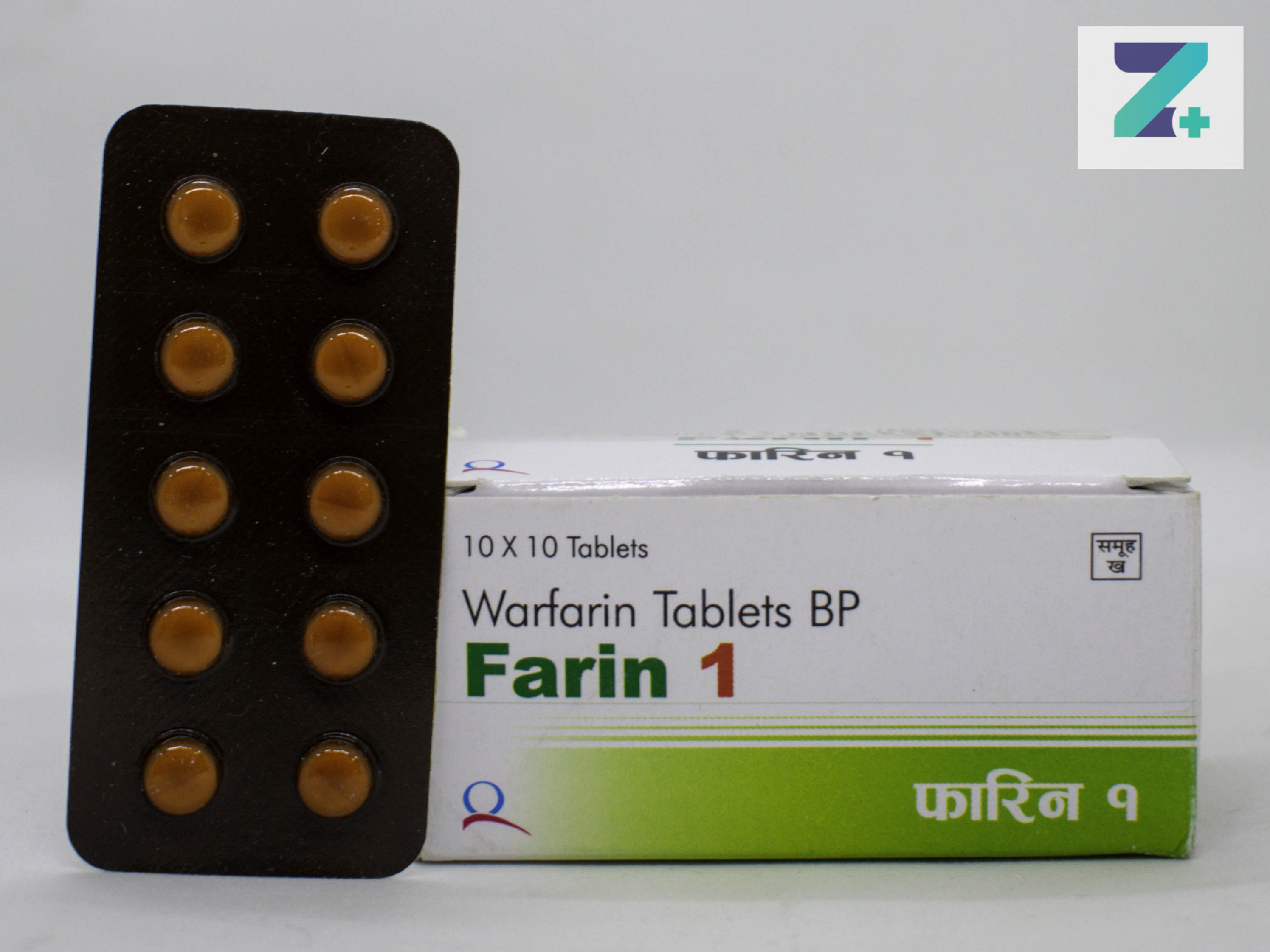
FARIN 1MG
Price: Rs.35.00
15% off
In stock
Loose stock: 0
Description
FARIN 1MG TAB 10
Details
Composition
WARFARIN 1 MG
# Warfarin 1 mg
## Short Description
Warfarin 1 mg is a **prescription anticoagulant (blood thinner)** used to help prevent and treat harmful blood clots. It is commonly prescribed for conditions such as certain irregular heart rhythms, blood clots in the veins, and prevention of clot-related complications after some heart-valve procedures.
Warfarin requires careful dose adjustment and regular **INR blood testing** because the appropriate dose varies considerably between individuals.
## Key Benefits
* Helps prevent the formation of harmful blood clots
* Helps prevent existing clots from growing
* Reduces the risk of stroke and systemic embolism in selected patients
* Helps prevent recurrent deep vein thrombosis (DVT) and pulmonary embolism (PE)
* Can be used for certain patients with mechanical heart valves
## Uses / Indications
Warfarin may be prescribed for:
* Prevention of stroke and systemic embolism in certain patients with **atrial fibrillation**
* Treatment and prevention of **deep vein thrombosis (DVT)**
* Treatment and prevention of **pulmonary embolism (PE)**
* Prevention of thromboembolic complications associated with certain mechanical heart valves
* Other clotting-related conditions when specifically prescribed by a healthcare professional
The indication and target INR range depend on the individual's medical condition.
## How It Works
Warfarin works by inhibiting **vitamin K epoxide reductase**, an enzyme needed to recycle vitamin K.
This reduces the liver's production of several vitamin K-dependent clotting factors, including **Factors II, VII, IX and X**, as well as proteins C and S.
As a result, the blood takes longer to clot, reducing the risk of harmful clot formation.
## Dosage & Administration
* Take Warfarin exactly as prescribed by your doctor
* The **1 mg tablet is a strength**, not a standard dose for everyone
* Your doctor adjusts the dose according to your **INR results, medical condition, diet, other medicines and individual response**
* Take Warfarin at approximately the **same time every day**
* Swallow the tablet with water
* Warfarin may be taken with or without food
* Maintain a consistent intake of vitamin K-containing foods rather than making sudden major dietary changes
* Attend all scheduled INR blood tests
* Never change the dose or stop Warfarin without medical advice
* If you miss a dose, follow your doctor's instructions; do not take a double dose unless specifically instructed
**Important:** Warfarin dosing must be individualized. Do not use the 1 mg strength as a recommended daily dose without a prescription.
## Side Effects
Common or important side effects may include:
* Easy bruising
* Nosebleeds
* Bleeding from the gums
* Prolonged bleeding from minor cuts
* Heavier menstrual bleeding
* Blood in urine
* Blood in stools
* Nausea
* Vomiting
### Seek urgent medical attention for:
* Severe or uncontrolled bleeding
* Vomiting blood
* Coughing up blood
* Black or bloody stools
* Severe headache
* Sudden weakness, confusion or difficulty speaking
* Significant dizziness or fainting
* A serious injury, especially a head injury
* Large unexplained bruises
## Precautions & Warnings
* Warfarin can cause **serious and potentially life-threatening bleeding**
* Regular INR monitoring is essential
* Never stop Warfarin suddenly without medical advice
* Tell your doctor before undergoing surgery, dental procedures or invasive procedures
* Inform your doctor if you have a history of bleeding disorders
* Tell your doctor if you have liver or kidney disease
* Tell your doctor if you have uncontrolled high blood pressure
* Avoid activities that have a high risk of injury
* Use caution with razors and sharp objects
* Limit alcohol and avoid excessive alcohol consumption
* Maintain a consistent diet rather than suddenly increasing or decreasing foods high in vitamin K
* Tell your doctor if you are pregnant or planning pregnancy; Warfarin can be harmful to an unborn baby
* Inform every healthcare professional treating you that you take Warfarin
* Carry information identifying that you take an anticoagulant when appropriate
## Drug Interactions
Warfarin has **many clinically important drug and food interactions**.
Important examples include:
* **NSAIDs** such as ibuprofen, naproxen and diclofenac — may increase bleeding risk
* **Aspirin and antiplatelet medicines** — may increase bleeding risk
* Certain antibiotics — can alter INR and increase bleeding risk
* Certain antifungal medicines — may significantly affect Warfarin
* Some medicines used for heart rhythm disorders
* Some cholesterol-lowering medicines
* Certain antidepressants
* Other anticoagulants
* Herbal products and supplements such as ginkgo, garlic supplements and St John's wort
* Alcohol
* Foods and supplements containing vitamin K can affect Warfarin response
Do not start, stop or change any medicine, supplement or herbal product without discussing it with your doctor or pharmacist.
## Storage Information
* Store according to the manufacturer's instructions
* Keep tablets in their original packaging
* Protect from excessive heat, moisture and direct sunlight
* Keep the container tightly closed
* Keep out of reach and sight of children
* Do not use after the expiry date
* Follow the storage instructions printed on the product label
## Prescription Status
Warfarin 1 mg is a **prescription-only anticoagulant**.
It should be taken only under the supervision of a qualified healthcare professional with appropriate INR monitoring.
## Genuine Medicine Assurance
* Purchase Warfarin only from a licensed and reputable pharmacy
* Verify the medicine name and strength: **Warfarin 1 mg**
* Check the manufacturer, batch number and expiry date
* Ensure the packaging and seal are intact
* Confirm that the tablet strength matches your prescription
* Do not purchase medicines from unauthorized or suspicious sources
* Do not use tablets from damaged or altered packaging
* Because Warfarin has a narrow therapeutic range, do not substitute products or strengths without professional advice
* If you suspect a medicine is counterfeit, consult a pharmacist or the appropriate medicine regulatory authority
## Frequently Asked Questions
### What is Warfarin 1 mg used for?
Warfarin 1 mg is an anticoagulant used to help prevent and treat harmful blood clots. It may be prescribed for atrial fibrillation, DVT, pulmonary embolism and certain mechanical heart valves.
### Is Warfarin a blood thinner?
Yes. Warfarin is commonly called a **blood thinner**, although it does not literally make the blood thinner. It reduces the blood's ability to form clots.
### What does Warfarin 1 mg mean?
1 mg refers to the amount of Warfarin in the tablet. It does **not** mean that everyone should take 1 mg daily. The appropriate dose is individualized using INR monitoring and other clinical factors.
### Why do I need an INR test while taking Warfarin?
INR testing measures how quickly your blood clots and helps your doctor determine whether your Warfarin dose is appropriate. Too little anticoagulation may increase clotting risk, while too much may increase bleeding risk.
### What is the normal INR range when taking Warfarin?
The target INR varies according to the condition being treated. Many patients have a target around **2.0–3.0**, while some patients, such as certain mechanical heart-valve patients, may require a different target. Your doctor will determine your individual target.
### Can I take Warfarin with food?
Yes. Warfarin can generally be taken with or without food. The important point is to take it consistently and maintain a relatively consistent intake of vitamin K-containing foods.
### What foods should I avoid while taking Warfarin?
You do not necessarily need to completely avoid vitamin K-rich foods. Foods such as leafy green vegetables can be part of a healthy diet, but **large sudden changes in vitamin K intake can affect INR**. Keep your dietary intake reasonably consistent and discuss major dietary changes with your healthcare professional.
### Can I drink alcohol while taking Warfarin?
Alcohol can affect Warfarin treatment and increase bleeding risk, particularly with excessive or binge drinking. Discuss alcohol consumption with your healthcare professional.
### Can I take ibuprofen with Warfarin?
NSAIDs such as ibuprofen can increase the risk of bleeding when combined with Warfarin. Do not take ibuprofen or other NSAIDs regularly without medical advice.
### Can I take paracetamol with Warfarin?
Paracetamol may sometimes be used, but frequent or high-dose use can affect INR in some patients. Ask your doctor or pharmacist about the appropriate dose and duration.
### Can Warfarin cause bleeding?
Yes. Bleeding is the most important risk associated with Warfarin. Seek urgent medical attention for severe, unusual or uncontrolled bleeding.
### What should I do if I miss a Warfarin dose?
Take the missed dose as soon as you remember on the same day unless it is almost time for the next dose. Do not double the dose. If you are unsure what to do, contact your anticoagulation clinic or doctor.
### Can I stop Warfarin suddenly?
Do not stop Warfarin without medical advice. Stopping anticoagulation may increase the risk of serious blood clots, stroke or other complications depending on why you are taking it.
### Can Warfarin be used during pregnancy?
Warfarin can cause serious harm to an unborn baby and is generally avoided during pregnancy except in specific circumstances under specialist supervision. Tell your doctor immediately if you are pregnant or planning pregnancy.
### Can Warfarin be used while breastfeeding?
Warfarin is generally considered compatible with breastfeeding, but it should be used under medical supervision.
### Can Warfarin be taken with antibiotics?
Some antibiotics can significantly affect INR and bleeding risk. Tell your doctor that you take Warfarin whenever an antibiotic is prescribed.
### Does Warfarin interact with herbal supplements?
Yes. Some herbal products can affect Warfarin's anticoagulant effect or bleeding risk. Always tell your healthcare professional about supplements and herbal medicines.
### Can Warfarin cause weight gain?
Weight gain is not a typical direct side effect of Warfarin. Unexplained changes in weight or swelling should be discussed with a healthcare professional.
### How long does Warfarin take to work?
Warfarin begins affecting clotting-factor production after treatment starts, but its full anticoagulant effect develops over several days. The timing varies between individuals.
### Is Warfarin the same as aspirin?
No. Warfarin is an **anticoagulant**, while aspirin is an **antiplatelet medicine**. They work differently and should not be substituted for one another without medical advice.
### Is Warfarin safe for long-term use?
Warfarin can be used long term when medically necessary, but it requires ongoing monitoring because of the risk of bleeding and interactions with medicines, foods and other factors.
### What should I do before surgery or dental treatment?
Tell your surgeon or dentist that you take Warfarin. Do not stop it yourself. Your healthcare team will determine whether any adjustment or temporary interruption is necessary.
### What should I do after a head injury while taking Warfarin?
Seek urgent medical evaluation after a significant head injury because internal bleeding can occur even when there are initially few symptoms.
### What happens if my INR is too high?
A high INR means your blood is taking longer than intended to clot and may indicate an increased bleeding risk. Your healthcare professional will determine the appropriate response based on the INR level and your symptoms.
### What happens if my INR is too low?
A low INR may mean that you are not adequately protected against blood clots. Your doctor may adjust your Warfarin dose based on your individual target and circumstances.
## Medical Disclaimer
This information is provided for general educational purposes only and is not a substitute for professional medical advice, diagnosis or treatment. **Warfarin 1 mg is a prescription anticoagulant with potentially serious bleeding risks and requires individualized dosing and INR monitoring.** The 1 mg tablet strength should not be interpreted as a recommended daily dose. Do not change the dose, stop treatment or start other medicines or supplements without consulting your healthcare professional. Seek urgent medical attention for severe or unexplained bleeding, vomiting blood, black stools, severe headache, sudden neurological symptoms or significant injury.