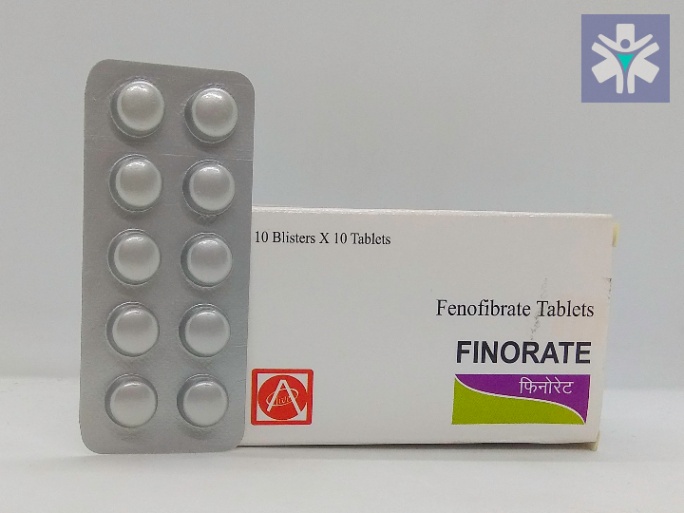
FINORATE
Price: Rs.120.00
10% off
In stock
Loose stock: 0
Description
FINORATE TAB 10
Details
Composition
FENOFIBRATE 145 MG
# FENOFIBRATE 145 MG
## Short Description
**Fenofibrate 145 mg** is a prescription lipid-lowering medicine belonging to the **fibrate** class. It is used to help manage abnormal levels of fats in the blood, particularly **high triglycerides** and certain types of mixed dyslipidemia.
Fenofibrate works mainly by activating **peroxisome proliferator-activated receptor alpha (PPAR-α)**, which increases the breakdown and clearance of triglyceride-rich particles and can improve the overall lipid profile.
Fenofibrate is generally used alongside a **healthy diet, exercise, weight management, and other cardiovascular risk-reduction measures**.
---
## Key Benefits
* Helps **lower elevated triglyceride levels**.
* Can help reduce certain types of cholesterol, particularly **VLDL and non-HDL cholesterol**.
* May increase **HDL ("good") cholesterol** in some patients.
* Helps improve an abnormal lipid profile.
* May be used for certain forms of **mixed dyslipidemia** when lifestyle measures alone are insufficient.
* Can be particularly useful when triglycerides are significantly elevated.
> **Important:** Fenofibrate is not a substitute for a healthy diet, exercise, or other treatments recommended for cardiovascular risk management.
---
## Uses / Indications
Fenofibrate 145 mg may be prescribed for adults with certain lipid disorders, including:
### 1. High Triglycerides
Fenofibrate can be used to reduce **elevated triglyceride levels**.
Very high triglycerides can increase the risk of **acute pancreatitis**, so medical treatment may be necessary along with dietary changes.
### 2. Mixed Dyslipidemia
It may be used for patients with combinations of:
* High triglycerides
* Elevated LDL cholesterol
* Low HDL cholesterol
The specific treatment approach depends on the individual's overall cardiovascular risk and lipid profile.
### 3. Additional Lipid Management
Fenofibrate may sometimes be considered alongside other lipid-lowering treatment when clinically appropriate.
---
## How It Works
Fenofibrate is converted to its active form, **fenofibric acid**, which activates **PPAR-α**.
PPAR-α regulates genes involved in lipid metabolism.
This results in:
* Increased breakdown of triglyceride-rich lipoproteins.
* Reduced production of certain triglyceride-rich particles.
* Increased activity of lipoprotein lipase.
* Improved clearance of triglycerides from the bloodstream.
* Changes in cholesterol metabolism.
The overall effect is a reduction in **triglycerides and certain atherogenic lipoproteins**, with a potential increase in HDL cholesterol.
---
## Dosage & Administration
**Take Fenofibrate 145 mg exactly as prescribed by your doctor.**
### General Administration
* Take the medicine once daily if prescribed in a 145 mg formulation.
* Swallow the tablet whole with water.
* Do not crush or chew a modified-release or specially formulated tablet unless the product instructions specifically allow it.
* Follow the manufacturer's instructions regarding food, as **food requirements can vary between fenofibrate formulations**.
* Take it consistently at approximately the same time each day.
### Lifestyle Measures
Fenofibrate treatment should generally be accompanied by:
* A heart-healthy diet
* Regular physical activity
* Appropriate weight management
* Limiting excessive alcohol intake
* Management of diabetes and other cardiovascular risk factors
### Kidney Disease
The dose may need to be **reduced or adjusted in patients with impaired kidney function**.
Fenofibrate is generally avoided in severe renal impairment unless specifically directed by a specialist.
### Liver Disease
Fenofibrate may not be appropriate for people with significant active liver disease.
### Missed Dose
If you miss a dose:
* Take it when remembered unless it is nearly time for your next dose.
* Skip the missed dose if it is close to the next scheduled dose.
* **Do not take two doses together.**
---
## Side Effects
### Common Side Effects
Possible side effects include:
* Nausea
* Abdominal discomfort
* Diarrhea
* Headache
* Constipation
* Mild increase in liver enzymes
### Muscle-Related Effects
Fenofibrate can rarely cause:
* Muscle pain
* Muscle tenderness
* Muscle weakness
The risk of muscle toxicity can be increased when fenofibrate is combined with certain statins.
### Gallbladder Problems
Fenofibrate can increase the risk of **gallstones** in some patients.
Symptoms requiring medical evaluation may include:
* Severe upper abdominal pain
* Nausea or vomiting
* Pain after meals
* Yellowing of the skin or eyes
### Serious Side Effects
Seek medical attention for:
* Severe or unexplained muscle pain or weakness
* Dark-colored urine
* Severe abdominal pain
* Yellow skin or eyes
* Unusual bleeding or bruising
* Severe skin rash or allergic reaction
### Pancreatitis
Rarely, pancreatitis can occur.
Seek urgent medical attention for **severe persistent abdominal pain**, especially if accompanied by vomiting.
---
## Precautions & Warnings
* Tell your doctor if you have **kidney disease**.
* Inform your doctor about any history of liver disease.
* Tell your doctor if you have gallbladder disease or gallstones.
* Report unexplained muscle pain, weakness, or tenderness.
* The risk of muscle injury may be increased when fenofibrate is combined with a statin.
* Avoid excessive alcohol consumption because it can worsen triglyceride levels and may increase liver-related concerns.
* Regular blood tests may be required to monitor:
* Lipid levels
* Liver function
* Kidney function
* Fenofibrate is generally not recommended in active liver disease.
* Tell your doctor if you are pregnant, planning pregnancy, or breastfeeding.
### Muscle Injury Warning
Seek prompt medical attention if you develop unexplained:
* Muscle pain
* Muscle weakness
* Muscle tenderness
* Dark urine
These can rarely indicate **rhabdomyolysis**, a serious muscle injury.
---
## Drug Interactions
### Statins
Combining fenofibrate with statins such as:
* Atorvastatin
* Rosuvastatin
* Simvastatin
* Pravastatin
may increase the risk of **muscle toxicity**, although the combination may be clinically appropriate for selected patients under medical supervision.
### Warfarin and Other Anticoagulants
Fenofibrate can increase the effect of **warfarin** and potentially increase bleeding risk.
Patients taking anticoagulants may require closer **INR monitoring** after starting, stopping, or changing fenofibrate therapy.
### Cyclosporine
Cyclosporine can affect kidney function and may increase the risk of adverse effects associated with fenofibrate.
### Other Fibrates
Combining fenofibrate with other fibrates is generally avoided because it can increase the risk of adverse effects, including muscle toxicity and gallbladder problems.
### Bile Acid Sequestrants
Medicines such as cholestyramine may reduce the absorption of some fenofibrate formulations.
Your doctor or pharmacist may recommend separating administration times.
### Diabetes Medicines
Fenofibrate may affect glucose control in some patients. Blood glucose monitoring may be appropriate in people taking diabetes medicines.
### Other Medicines
Tell your healthcare professional about all:
* Prescription medicines
* OTC medicines
* Vitamins
* Herbal supplements
---
## Storage Information
* Store at **room temperature according to the manufacturer's instructions**.
* Keep tablets in their original packaging.
* Protect from excessive heat and moisture.
* Keep away from direct sunlight.
* Keep the container tightly closed.
* Keep out of reach of children.
* Do not use after the expiry date.
* Do not use tablets if the packaging is damaged or the medicine appears abnormal.
---
## Prescription Status
**Fenofibrate 145 mg is generally a prescription medicine.**
It should be used under medical supervision because appropriate treatment requires assessment of the patient's lipid profile, kidney function, liver function, cardiovascular risk, and other medications.
Prescription requirements may vary by country.
---
## Genuine Medicine Assurance
When purchasing **Fenofibrate 145 mg**, ensure that you:
* Purchase from a **licensed pharmacy or authorized medicine supplier**.
* Verify the generic name and strength.
* Check the manufacturer's name.
* Confirm the specific formulation, as fenofibrate products can have different release characteristics.
* Verify the batch/lot number and expiry date.
* Ensure the packaging and security seal are intact.
* Check that the tablet appearance matches the manufacturer's information.
* Avoid products with suspicious packaging or unusually low prices.
* Do not purchase prescription medicines from unauthorized sellers.
For authenticity assurance, compare the packaging and product information with the manufacturer's official documentation or the relevant national medicines regulatory authority.
---
# FAQ
### 1. What is Fenofibrate 145 mg used for?
Fenofibrate 145 mg is used to manage **high triglycerides and certain types of abnormal cholesterol levels**, particularly when lifestyle changes alone are insufficient.
### 2. Is Fenofibrate a statin?
**No.** Fenofibrate belongs to the **fibrate** class of lipid-lowering medicines. Statins, such as atorvastatin and rosuvastatin, belong to a different drug class.
### 3. How does Fenofibrate lower triglycerides?
Fenofibrate activates **PPAR-α**, which changes lipid metabolism and increases the breakdown and clearance of triglyceride-rich particles.
### 4. Does Fenofibrate lower cholesterol?
Yes. Fenofibrate can reduce triglycerides and certain cholesterol-containing lipoproteins. It may also increase HDL cholesterol in some patients.
### 5. Can Fenofibrate be taken with a statin?
In selected patients, fenofibrate may be combined with a statin. However, the combination can increase the risk of **muscle toxicity**, so it should only be used under medical supervision.
### 6. Does Fenofibrate cause muscle pain?
It can rarely cause muscle pain, tenderness, or weakness. The risk may be greater when used with statins.
### 7. What should I do if I develop muscle pain while taking Fenofibrate?
Contact your healthcare professional, particularly if muscle pain is severe or associated with weakness or dark urine.
### 8. Can Fenofibrate cause liver problems?
Fenofibrate can cause increases in liver enzymes and, rarely, more serious liver injury. Your doctor may monitor liver function during treatment.
### 9. Can Fenofibrate cause gallstones?
Yes. Fenofibrate can increase the risk of **gallstones** in some patients.
### 10. Can Fenofibrate lower triglycerides quickly?
Triglyceride levels may begin improving after treatment starts, but the response varies. Your doctor may perform follow-up lipid testing to assess the effectiveness of treatment.
### 11. Can I take Fenofibrate with food?
Food requirements vary between fenofibrate formulations. **Follow the instructions on your specific product label.**
### 12. Can Fenofibrate be taken during pregnancy?
Fenofibrate is generally not used routinely during pregnancy. If you are pregnant or planning pregnancy, discuss treatment with your healthcare professional.
### 13. Can Fenofibrate be taken while breastfeeding?
Consult your healthcare professional before using fenofibrate while breastfeeding. Your doctor will assess whether treatment should be continued or an alternative considered.
### 14. Can people with kidney disease take Fenofibrate?
Patients with kidney impairment may require **dose adjustment**, and fenofibrate may be unsuitable in severe renal impairment.
### 15. Can I drink alcohol while taking Fenofibrate?
Excessive alcohol can raise triglycerides and may increase concerns about liver health. It is advisable to limit alcohol and follow your healthcare professional's recommendations.
### 16. Can Fenofibrate be used for very high triglycerides?
Yes. Fenofibrate may be prescribed for significantly elevated triglycerides. Very high triglyceride levels can increase the risk of **acute pancreatitis** and require medical management.
### 17. What happens if I miss a Fenofibrate dose?
Take it when remembered unless it is close to the next scheduled dose. Skip it if necessary and **do not double the next dose**.
### 18. Does Fenofibrate cure high cholesterol?
No. Fenofibrate helps **manage abnormal lipid levels**. Long-term treatment may be necessary, together with diet, exercise, and management of other cardiovascular risk factors.
### 19. How long do I need to take Fenofibrate?
The duration depends on your lipid levels and overall cardiovascular risk. Some patients require long-term treatment. Do not stop it without discussing it with your doctor.
### 20. Why are blood tests needed while taking Fenofibrate?
Your doctor may monitor **triglycerides, cholesterol, liver enzymes, and kidney function** to determine whether the medicine is effective and safe for you.
---
## Medical Disclaimer
This information is provided for **educational and informational purposes only** and is not a substitute for professional medical advice, diagnosis, or treatment.
**Fenofibrate 145 mg is a prescription lipid-lowering medicine** used primarily for elevated triglycerides and certain mixed lipid disorders. Treatment should be individualized according to the patient's lipid profile, cardiovascular risk, kidney function, liver function, and other medicines.
Fenofibrate can rarely cause **muscle injury, liver problems, gallbladder disease, and pancreatitis**. Seek medical attention for severe or unexplained muscle pain or weakness, dark urine, severe abdominal pain, or yellowing of the skin or eyes.
Patients taking statins, warfarin, cyclosporine, or other lipid-lowering medicines should inform their healthcare professional before starting fenofibrate.
Always follow the **specific manufacturer's package insert and your healthcare professional's instructions**, as approved indications, dosage recommendations, food requirements, contraindications, warnings, and formulation may vary between products and countries.