FLOXIN 500
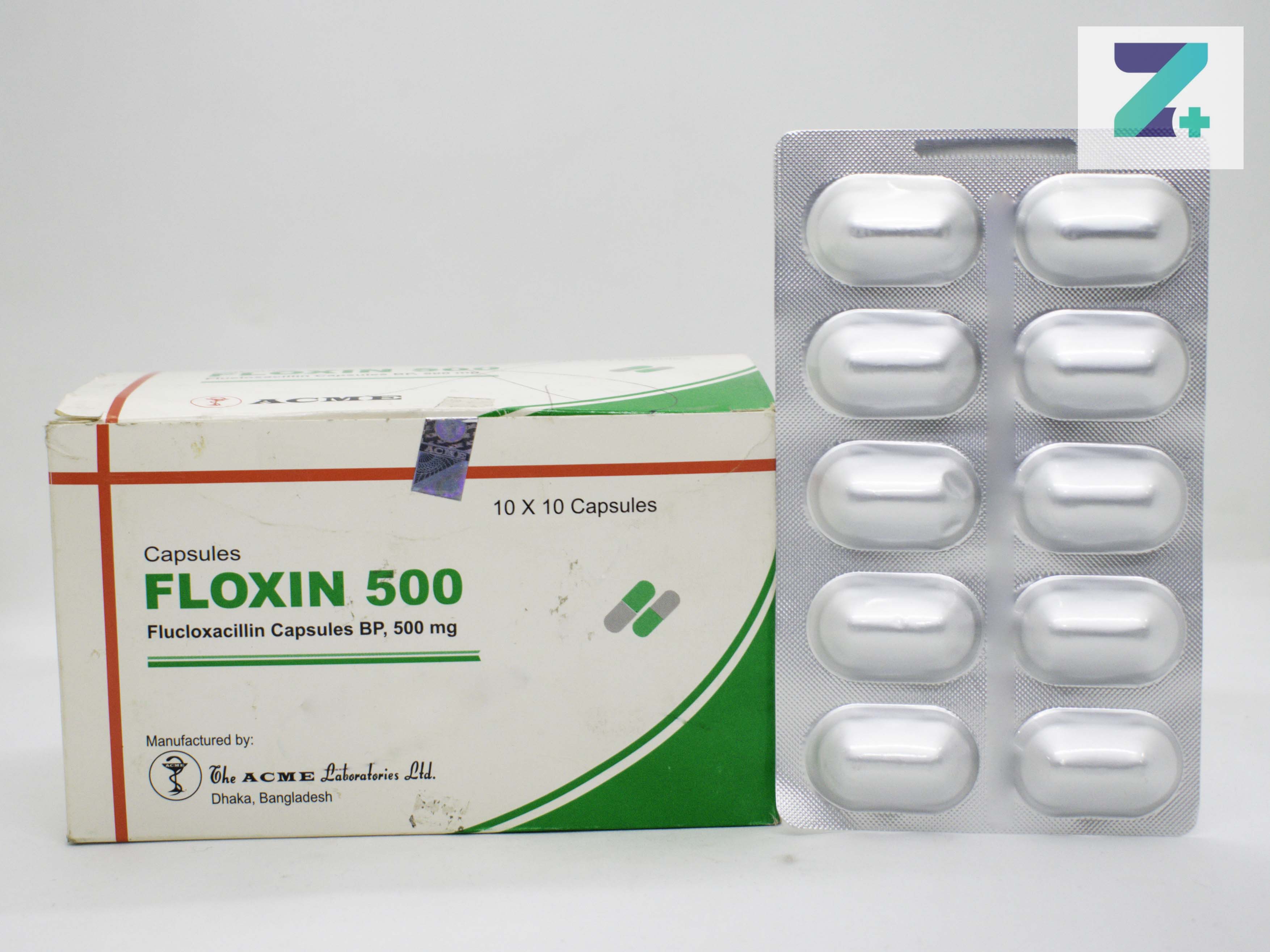
Price: Rs.240.00
10% off
In stock
Loose stock: 0
Description
FLOXIN 500 CAP 10
Details
Composition
FLUCLOXACILLIN 500 MG
# FLUCLOXACILLIN 500 MG
## SHORT DESCRIPTION
**Flucloxacillin 500 mg** is a **penicillin-type antibiotic** belonging to the beta-lactam group. It is mainly used to treat bacterial infections caused by susceptible **penicillinase-producing staphylococci**, including certain infections of the skin, soft tissues, bones, joints, and respiratory tract.
Flucloxacillin is **not effective against viral infections** such as the common cold or flu. It should be used only when prescribed or recommended by a qualified healthcare professional.
---
## KEY BENEFITS
* Treats susceptible **bacterial infections**.
* Particularly useful against certain **Staphylococcus** infections that produce penicillinase.
* May be used for infections involving the **skin and soft tissues**.
* May be prescribed for certain **bone and joint infections**.
* Can be used for selected respiratory and other susceptible bacterial infections.
* Helps eliminate susceptible bacteria and control infection when used appropriately.
---
## USES / INDICATIONS
Flucloxacillin 500 mg may be prescribed for susceptible bacterial infections such as:
* **Skin and soft-tissue infections**
* Cellulitis
* Abscesses, when antibiotic treatment is indicated
* Wound infections
* Infected burns
* Certain **bone and joint infections**
* Certain respiratory tract infections
* Certain bloodstream or systemic infections caused by susceptible organisms
* Other infections caused by susceptible penicillinase-producing staphylococci
The exact indication should be determined by a healthcare professional based on the infection and bacterial susceptibility.
---
## HOW IT WORKS
Flucloxacillin is a **beta-lactam antibiotic**.
It binds to bacterial **penicillin-binding proteins (PBPs)**, which are involved in constructing the bacterial cell wall.
This interferes with bacterial cell-wall formation, eventually causing susceptible bacteria to rupture and die.
**Flucloxacillin → binds bacterial PBPs → inhibits cell-wall synthesis → bacterial death.**
Flucloxacillin is relatively resistant to destruction by certain bacterial beta-lactamases (penicillinases), making it useful against susceptible penicillinase-producing staphylococci.
---
## DOSAGE & ADMINISTRATION
Take Flucloxacillin exactly as prescribed.
### Typical Adult Use
For many adult infections, **500 mg four times daily** is a commonly used regimen, but the exact dose depends on:
* Type and severity of infection
* Patient's age
* Kidney and liver function
* Clinical response
* Local prescribing guidelines
**Do not use this example as a substitute for your prescribed regimen.**
### How to Take
* Flucloxacillin is generally best taken on an **empty stomach**.
* Take it approximately **30–60 minutes before meals** or at least 2 hours after food, according to the product instructions.
* Swallow capsules with a full glass of water.
* Space doses evenly throughout the day.
* Complete the prescribed course unless your healthcare professional tells you otherwise.
### Missed Dose
Take the missed dose when remembered unless it is nearly time for your next dose.
**Do not take two doses together.**
---
## SIDE EFFECTS
### Common Side Effects
Possible side effects include:
* Nausea
* Vomiting
* Diarrhea
* Indigestion
* Abdominal discomfort
* Skin rash
### Serious Side Effects
Seek urgent medical attention if you develop:
* Difficulty breathing
* Swelling of the face, lips, tongue, or throat
* Severe allergic reaction
* Severe or persistent diarrhea
* Bloody diarrhea
* Yellowing of the skin or eyes
* Dark urine
* Severe skin reactions
* Unusual bruising or bleeding
Antibiotic-associated **Clostridioides difficile** diarrhea can occur during or after antibiotic treatment and may require medical treatment.
---
## PRECAUTIONS & WARNINGS
### Penicillin Allergy
Do not take flucloxacillin if you have previously experienced a serious allergic reaction to:
* Flucloxacillin
* Penicillins
* Other beta-lactam antibiotics, where cross-reactivity is a concern
Tell your healthcare professional about any previous antibiotic allergy.
### Liver Problems
Flucloxacillin can rarely cause **liver injury or cholestatic jaundice**.
Tell your healthcare professional if you have a history of liver disease or previous liver problems associated with penicillin antibiotics.
Seek medical attention if you develop yellow skin/eyes, dark urine, or persistent itching.
### Kidney Disease
Dose or monitoring considerations may be necessary in significant kidney impairment.
### Antibiotic-Associated Diarrhea
Persistent or severe diarrhea during or after treatment may indicate antibiotic-associated colitis. Do not self-treat severe antibiotic-related diarrhea with antidiarrheal medicines without medical advice.
### Prolonged Treatment
Longer courses may require monitoring of liver, kidney, or blood function, particularly in patients with underlying medical conditions.
### Infectious Mononucleosis
Patients with infectious mononucleosis may have a higher likelihood of developing a rash when treated with certain penicillin antibiotics.
### Complete the Course
Take the antibiotic for the duration prescribed. Stopping treatment too early may allow the infection to persist and may contribute to antibiotic resistance.
---
## DRUG INTERACTIONS
Tell your healthcare professional about all medicines and supplements you take.
### Warfarin and Other Anticoagulants
Antibiotic treatment can sometimes affect anticoagulant control. Patients taking **warfarin** may require additional monitoring of clotting parameters.
### Methotrexate
Penicillin antibiotics may potentially affect methotrexate elimination and increase toxicity risk. Medical supervision is important when these medicines are combined.
### Probenecid
Probenecid can reduce renal elimination of penicillins and may increase flucloxacillin concentrations.
### Other Antibiotics
Combining antibiotics should only be done when clinically appropriate and prescribed by a healthcare professional.
### Oral Contraceptives
Some people are concerned about antibiotics reducing the effectiveness of hormonal contraception. Flucloxacillin does **not generally reduce contraceptive effectiveness directly**, but vomiting or severe diarrhea can interfere with oral contraceptive absorption. Follow contraceptive guidance provided by your healthcare professional.
---
## STORAGE INFORMATION
* Store according to the manufacturer's instructions.
* Keep capsules in their original packaging.
* Protect from excessive heat and moisture.
* Keep away from direct sunlight.
* Keep out of reach of children.
* Do not use after the expiry date.
* If using a liquid formulation, follow the product-specific storage and discard instructions.
---
## PRESCRIPTION STATUS
**Prescription medicine.**
Flucloxacillin 500 mg should be used only under the direction of a qualified healthcare professional. Prescription requirements may vary by country.
---
## GENUINE MEDICINE ASSURANCE
When purchasing **Flucloxacillin 500 mg**, obtain it from a **licensed pharmacy or authorized medicine supplier**.
Check the packaging for:
* Correct medicine name and strength
* Manufacturer information
* Batch/lot number
* Manufacturing and expiry dates
* Intact seal and packaging
* Appropriate regulatory labeling
Do not use products with damaged packaging, altered labels, missing batch information, or questionable authenticity.
---
# FAQ – FLUCLOXACILLIN 500 MG
### 1. What is Flucloxacillin 500 mg used for?
Flucloxacillin 500 mg is an antibiotic used to treat certain **susceptible bacterial infections**, particularly infections caused by penicillinase-producing staphylococci.
### 2. Is Flucloxacillin a penicillin antibiotic?
Yes. Flucloxacillin belongs to the **penicillin family of beta-lactam antibiotics**.
### 3. What infections does Flucloxacillin treat?
It may be used for susceptible infections of the **skin and soft tissues, bones, joints, respiratory tract, wounds, and other sites**, depending on the identified or suspected bacteria.
### 4. Does Flucloxacillin work for viral infections?
No. Flucloxacillin does not treat viral infections such as **colds, influenza, or most viral sore throats**.
### 5. How does Flucloxacillin work?
It blocks bacterial cell-wall synthesis by binding to penicillin-binding proteins, causing susceptible bacteria to die.
### 6. How should Flucloxacillin 500 mg be taken?
It is generally taken on an **empty stomach**, commonly 30–60 minutes before meals, with doses spaced evenly throughout the day. Follow your specific prescription and product instructions.
### 7. Can I take Flucloxacillin with food?
Food can reduce absorption, so flucloxacillin is generally recommended on an empty stomach. Follow the instructions supplied with your particular product.
### 8. How long should I take Flucloxacillin?
Take it for the **full duration prescribed** by your healthcare professional, even if you begin to feel better.
### 9. What happens if I miss a dose?
Take it when remembered unless it is nearly time for the next dose. **Do not double the dose.**
### 10. What are common side effects of Flucloxacillin?
Common side effects include **nausea, vomiting, diarrhea, indigestion, abdominal discomfort, and skin rash**.
### 11. Can Flucloxacillin cause diarrhea?
Yes. Mild diarrhea can occur with antibiotics. However, **severe, persistent, or bloody diarrhea** requires medical evaluation because it can indicate antibiotic-associated colitis.
### 12. Can I take Flucloxacillin if I am allergic to penicillin?
People with a serious penicillin allergy should generally **not take flucloxacillin**. Tell your healthcare professional about any previous antibiotic allergy before treatment.
### 13. Can Flucloxacillin affect the liver?
Rarely, flucloxacillin can cause liver injury or cholestatic jaundice. Seek medical advice if you develop **yellowing of the skin or eyes, dark urine, or persistent itching**.
### 14. Can Flucloxacillin be taken during pregnancy?
If clinically indicated, penicillin antibiotics may be used during pregnancy, but the decision should be made by a healthcare professional based on the individual situation.
### 15. Can Flucloxacillin be used while breastfeeding?
Flucloxacillin is generally considered compatible with breastfeeding, but discuss its use with your healthcare professional, particularly if the infant develops diarrhea, thrush, or an allergic reaction.
### 16. Can Flucloxacillin be taken with paracetamol?
There is generally no major direct interaction between flucloxacillin and paracetamol. However, always inform your healthcare professional about all medicines you are taking.
### 17. Can Flucloxacillin be taken with ibuprofen?
There is no major routine interaction between flucloxacillin and ibuprofen, but individual factors such as kidney disease, stomach problems, and other medicines should be considered.
### 18. Does Flucloxacillin make you sleepy?
Drowsiness is not a typical effect. However, illness itself or other medicines taken alongside the antibiotic may cause fatigue or sleepiness.
### 19. Can I stop Flucloxacillin when I feel better?
Do not stop early unless instructed by your healthcare professional. Completing the prescribed course helps ensure the infection is adequately treated.
### 20. Is Flucloxacillin 500 mg available without a prescription?
Flucloxacillin is generally a **prescription antibiotic**. Availability and legal requirements vary by country.
---
## MEDICAL DISCLAIMER
This information about **Flucloxacillin 500 mg** is provided for general educational purposes only and does not replace professional medical advice, diagnosis, or treatment.
Flucloxacillin should only be used when appropriate for a **susceptible bacterial infection**. Unnecessary antibiotic use contributes to antimicrobial resistance.
Do not use flucloxacillin if you have a history of a serious allergy to penicillins or relevant beta-lactam antibiotics. Seek urgent medical attention for difficulty breathing, facial or throat swelling, severe skin reactions, or other signs of a serious allergic reaction.
Contact a healthcare professional for severe or persistent diarrhea, particularly if it contains blood, or for symptoms suggesting liver problems such as yellowing of the skin or eyes.
**Do not change the dose, skip doses intentionally, or discontinue treatment without professional advice.**