FLOZAC 25
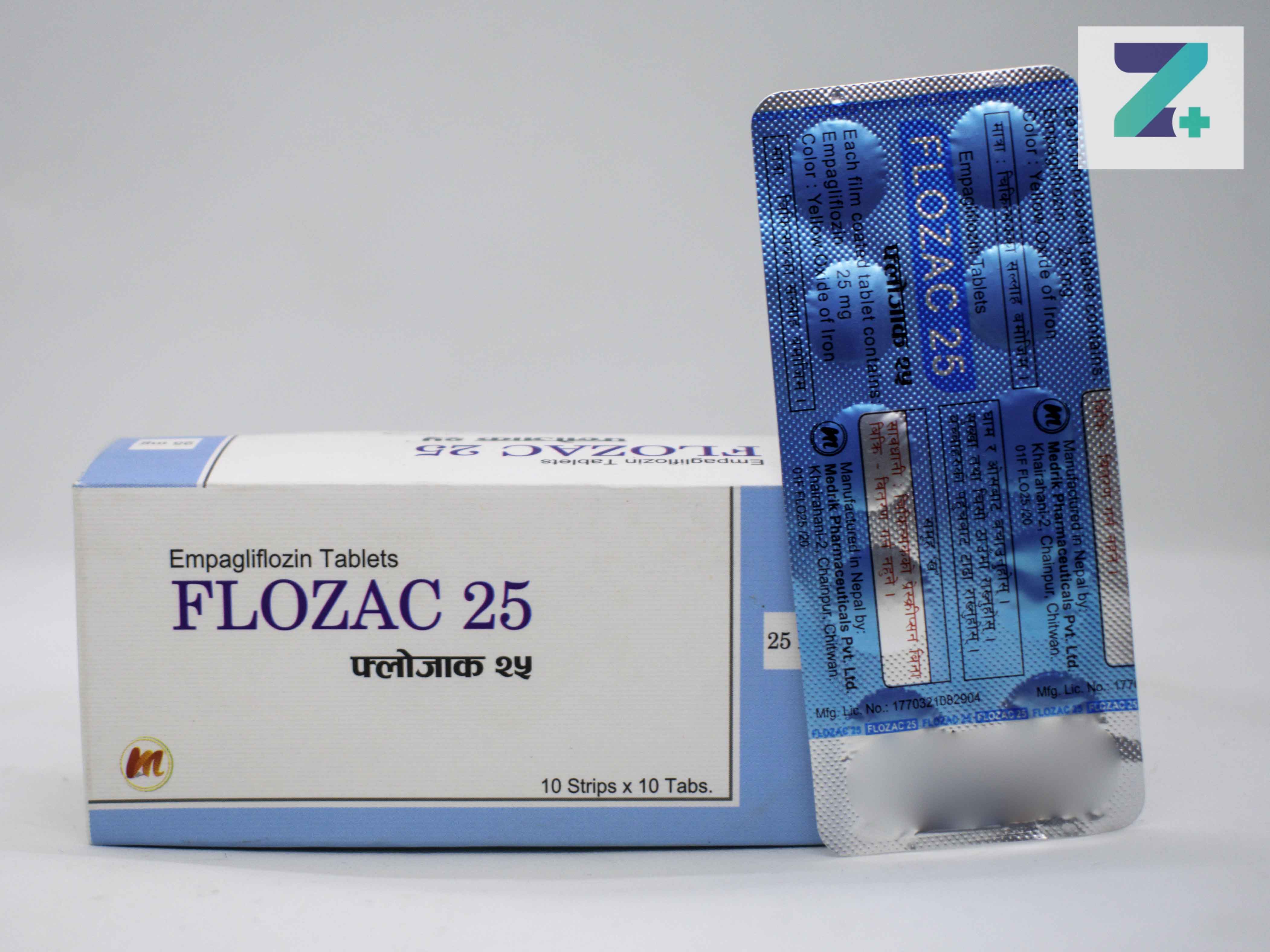
Price: Rs.300.00
15% off
In stock
Loose stock: 0
Description
FLOZAC 25 TAB 10
Details
Composition
EMPAGLIFOZIN 25
# Empagliflozin 25 mg
## Short Description
**Empagliflozin 25 mg** is an oral medicine belonging to the **SGLT2 inhibitor** class. It is primarily used to help control blood glucose levels in adults with **type 2 diabetes mellitus**. Empagliflozin is also used in appropriate patients to reduce the risk of cardiovascular death in adults with type 2 diabetes and established cardiovascular disease, and to reduce the risk of cardiovascular death and hospitalization for heart failure in adults with heart failure. It is also indicated for certain adults with chronic kidney disease to reduce the risk of sustained kidney disease progression, cardiovascular death, and hospitalization for heart failure.
---
## Key Benefits
* Helps **lower blood glucose levels** in adults with type 2 diabetes.
* Can be used alone or with other diabetes medicines when prescribed.
* May help reduce the risk of **cardiovascular death** in certain adults with type 2 diabetes and cardiovascular disease.
* Helps reduce the risk of **hospitalization for heart failure and cardiovascular death** in appropriate patients with heart failure.
* May help slow **kidney disease progression** in eligible adults with chronic kidney disease.
* May promote modest **weight loss** and lower blood pressure as a consequence of increased urinary glucose and sodium loss.
> **Note:** Empagliflozin is **not used to treat type 1 diabetes** and is not a substitute for insulin.
---
## Uses / Indications
Empagliflozin 25 mg may be prescribed for:
### 1. Type 2 Diabetes Mellitus
Used together with diet and exercise to improve blood glucose control in adults with **type 2 diabetes**.
### 2. Cardiovascular Risk Reduction
In certain adults with type 2 diabetes and established cardiovascular disease, empagliflozin may reduce the risk of **cardiovascular death**.
### 3. Heart Failure
Empagliflozin is used in appropriate adults with heart failure to reduce the risk of **cardiovascular death and hospitalization for heart failure**.
### 4. Chronic Kidney Disease
In eligible adults with chronic kidney disease, empagliflozin may reduce the risk of **sustained decline in kidney function, cardiovascular death, and hospitalization for heart failure**.
---
## How It Works
Empagliflozin selectively blocks **sodium-glucose cotransporter 2 (SGLT2)** in the kidneys.
Normally, SGLT2 helps the kidneys reabsorb glucose from urine back into the bloodstream. By inhibiting this transporter, empagliflozin:
1. Reduces glucose reabsorption by the kidneys.
2. Causes excess glucose to be eliminated through the urine.
3. Lowers blood glucose levels.
4. Increases urinary sodium and fluid excretion, contributing to its beneficial effects in certain patients with **heart failure and kidney disease**.
Because its glucose-lowering effect depends partly on kidney function, its effectiveness for blood glucose control decreases as kidney function declines.
---
## Dosage & Administration
* **Usual starting dose for type 2 diabetes:** 10 mg once daily.
* The dose may be increased to **25 mg once daily** when additional blood glucose control is required and the patient tolerates the medicine.
* For cardiovascular, heart-failure, or kidney indications, the recommended dose is generally **10 mg once daily**.
* Take empagliflozin **once daily in the morning**, with or without food.
* Swallow the tablet whole with water.
* Follow the dosage prescribed by your healthcare professional.
* Do not take more than the prescribed dose.
### If You Miss a Dose
Take the missed dose when you remember, unless it is nearly time for your next dose. **Do not take two doses at the same time** to make up for a missed dose.
### Important
Adequate fluid intake is important because empagliflozin increases urination and can contribute to dehydration.
---
## Side Effects
### Common Side Effects
Possible side effects include:
* Increased urination
* Genital fungal infections
* Urinary tract infections
* Increased thirst
* Dehydration
* Dizziness, particularly when standing up
* Changes in blood pressure
### Serious Side Effects
Seek immediate medical attention if you develop:
* **Diabetic ketoacidosis (DKA)** — nausea, vomiting, abdominal pain, unusual tiredness, difficulty breathing, or confusion. DKA can occur even when blood glucose is not extremely high.
* Severe dehydration or fainting
* Severe allergic reaction
* Severe or persistent urinary infection
* Symptoms of **necrotizing fasciitis of the perineum (Fournier's gangrene)**, such as severe pain, tenderness, swelling, redness, or fever around the genital or perineal area.
* Severe genital infection.
---
## Precautions & Warnings
### Kidney Function
Kidney function should be assessed before starting treatment and monitored as clinically appropriate. Empagliflozin may not be appropriate for certain patients with significantly reduced kidney function, depending on the indication.
### Dehydration
Empagliflozin increases urine output. The risk of dehydration and low blood pressure may be greater in:
* Older adults
* People taking diuretics
* People with impaired kidney function
* People with low blood pressure
* People who are vomiting, experiencing diarrhea, or unable to maintain adequate fluid intake
### Ketoacidosis
Empagliflozin can cause **ketoacidosis**, including cases where blood glucose levels are not extremely elevated.
The risk may increase during:
* Prolonged fasting
* Very low-carbohydrate/ketogenic diets
* Excessive alcohol consumption
* Acute illness
* Major surgery
* Significant reduction in insulin dose
Contact your healthcare professional promptly if symptoms such as nausea, vomiting, abdominal pain, unusual fatigue, or difficulty breathing occur.
### Surgery
Your healthcare professional may advise temporarily stopping empagliflozin before major surgery or procedures requiring prolonged fasting. Follow your prescriber's specific instructions.
### Genital Infections
Because glucose is increased in the urine, empagliflozin can increase the risk of genital fungal infections. Seek medical advice for persistent itching, redness, swelling, discharge, or pain.
### Pregnancy & Breastfeeding
Empagliflozin is generally **not recommended during the second and third trimesters of pregnancy** because of potential effects on the developing kidneys. Discuss pregnancy or breastfeeding with your doctor before using this medicine.
---
## Drug Interactions
Empagliflozin may interact with:
### Insulin and Insulin Secretagogues
Combining empagliflozin with **insulin or sulfonylureas** can increase the risk of hypoglycemia. Your healthcare professional may need to adjust the dose of these medicines.
### Diuretics
Diuretics such as furosemide or hydrochlorothiazide may increase the risk of:
* Dehydration
* Low blood pressure
* Increased urination
### Lithium
SGLT2 inhibitors may affect lithium concentrations. If you take lithium, your healthcare professional may need to monitor lithium levels more closely.
### Other Medicines
Always tell your doctor or pharmacist about all prescription medicines, OTC medicines, vitamins, and herbal supplements you use.
---
## Storage Information
* Store Empagliflozin 25 mg at **room temperature**, according to the product label.
* Keep tablets in their original packaging.
* Protect from excessive heat and moisture.
* Keep the medicine away from direct sunlight.
* Keep out of reach of children and pets.
* Do not use the medicine after its expiry date.
---
## Prescription Status
**Empagliflozin 25 mg is a prescription medicine.**
It should be used under the supervision of a qualified healthcare professional, particularly because treatment may require assessment of kidney function, hydration status, blood glucose, and other medicines being taken.
---
## Genuine Medicine Assurance
When purchasing Empagliflozin 25 mg:
* Purchase only from a **licensed and reputable pharmacy**.
* Check the manufacturer's name, batch/lot number, expiry date, and packaging.
* Do not purchase medicines from unauthorized or suspicious sellers.
* Do not use tablets if the packaging is damaged or the product appears altered.
* Keep the original packaging and prescription information.
* For online purchases, verify that the pharmacy is properly licensed and authorized to sell prescription medicines.
**Genuine medicine assurance:** Product authenticity should be confirmed through the dispensing pharmacy, manufacturer, or relevant national medicines regulatory authority.
---
# FAQ – Empagliflozin 25 mg
### 1. What is Empagliflozin 25 mg used for?
Empagliflozin 25 mg is primarily used to improve blood glucose control in adults with **type 2 diabetes**. Empagliflozin is also used in appropriate patients with cardiovascular disease, heart failure, and chronic kidney disease for specific risk-reduction benefits.
### 2. Is Empagliflozin 25 mg a diabetes medicine?
Yes. Empagliflozin is an **SGLT2 inhibitor** used to help control blood glucose in people with type 2 diabetes.
### 3. How does Empagliflozin 25 mg lower blood sugar?
It blocks SGLT2 in the kidneys, reducing glucose reabsorption and causing excess glucose to be removed from the body through urine.
### 4. Can Empagliflozin 25 mg help with weight loss?
Empagliflozin can cause **modest weight loss** in some people because glucose and calories are eliminated in the urine. However, it should not be used solely as a weight-loss medicine.
### 5. Does Empagliflozin 25 mg cause frequent urination?
Yes. Increased urination can occur because empagliflozin causes more glucose and sodium to be eliminated through the urine.
### 6. Can Empagliflozin cause dehydration?
Yes. Increased urination can lead to dehydration, particularly in older adults, people taking diuretics, or those who are not drinking enough fluids.
### 7. Can Empagliflozin 25 mg cause low blood sugar?
Empagliflozin alone generally has a **low risk of hypoglycemia**. However, the risk can increase when it is combined with insulin or medicines such as sulfonylureas.
### 8. Can Empagliflozin 25 mg be used for type 1 diabetes?
Empagliflozin is **not indicated for the treatment of type 1 diabetes**. SGLT2 inhibitors can increase the risk of diabetic ketoacidosis, including when blood glucose is not very high.
### 9. Can Empagliflozin 25 mg be taken with Metformin?
Yes. Empagliflozin is commonly prescribed together with **metformin** for type 2 diabetes when clinically appropriate. Your healthcare professional will determine the appropriate doses.
### 10. Can Empagliflozin be taken with insulin?
It may be prescribed with insulin in some patients with type 2 diabetes. However, combining the medicines can increase the risk of hypoglycemia and requires appropriate medical supervision.
### 11. Does Empagliflozin protect the kidneys?
Empagliflozin has demonstrated **kidney-protective benefits in appropriate patients with chronic kidney disease**, including reducing the risk of certain kidney disease progression outcomes. It should not, however, be considered a treatment for every type or stage of kidney disease.
### 12. Is Empagliflozin good for heart failure?
Empagliflozin is used in appropriate patients with heart failure and can reduce the risk of **hospitalization for heart failure and cardiovascular death**.
### 13. What is the difference between Empagliflozin 10 mg and 25 mg?
Both strengths contain the same active ingredient. **10 mg once daily** is generally the recommended starting dose for type 2 diabetes, while **25 mg once daily** may be used for additional blood glucose control in appropriate patients. The 25 mg strength is not necessarily more appropriate for cardiovascular or kidney indications, where 10 mg is generally the recommended dose.
### 14. Should Empagliflozin 25 mg be taken before or after food?
Empagliflozin can generally be taken **with or without food**. It is commonly taken once daily in the morning.
### 15. What happens if I stop Empagliflozin suddenly?
Stopping empagliflozin can cause blood glucose levels to rise in people using it for diabetes. Do not stop treatment without discussing it with your healthcare professional, unless you have been specifically instructed to temporarily stop it.
### 16. Can Empagliflozin cause urinary tract infections?
Yes. Urinary tract infections can occur with empagliflozin. Seek medical advice if you develop burning during urination, frequent urination accompanied by pain, fever, back pain, or other signs of infection.
### 17. Can Empagliflozin cause genital infections?
Yes. Increased glucose in the urine can increase the risk of **genital fungal infections**, particularly in susceptible individuals.
### 18. Can Empagliflozin cause ketoacidosis?
Yes. Although uncommon, empagliflozin can cause **diabetic ketoacidosis (DKA)**. Symptoms may include nausea, vomiting, abdominal pain, unusual tiredness, and difficulty breathing. Seek urgent medical attention if these symptoms occur.
### 19. Can I drink alcohol while taking Empagliflozin?
Alcohol may increase the risk of dehydration and can contribute to conditions that increase the risk of ketoacidosis, particularly excessive alcohol consumption or prolonged fasting. Discuss alcohol use with your healthcare professional.
### 20. Is Empagliflozin 25 mg safe for everyone?
No medicine is suitable for everyone. Kidney function, hydration status, other medicines, diabetes control, cardiovascular health, and individual medical history should be considered before and during treatment.
---
## Medical Disclaimer
This information about **Empagliflozin 25 mg** is intended for educational and informational purposes only. It does not replace professional medical advice, diagnosis, or treatment.
**Do not start, stop, or change the dose of Empagliflozin without consulting a qualified healthcare professional.** Seek urgent medical attention if you experience symptoms suggestive of diabetic ketoacidosis, severe dehydration, a serious allergic reaction, or a severe genital/perineal infection.
**Important:** The appropriate dose and indications may vary depending on the patient's medical condition, kidney function, age, concurrent medicines, and the specific product's approved labeling. Always follow the prescribing information and advice provided by your doctor or pharmacist.