FML EYE
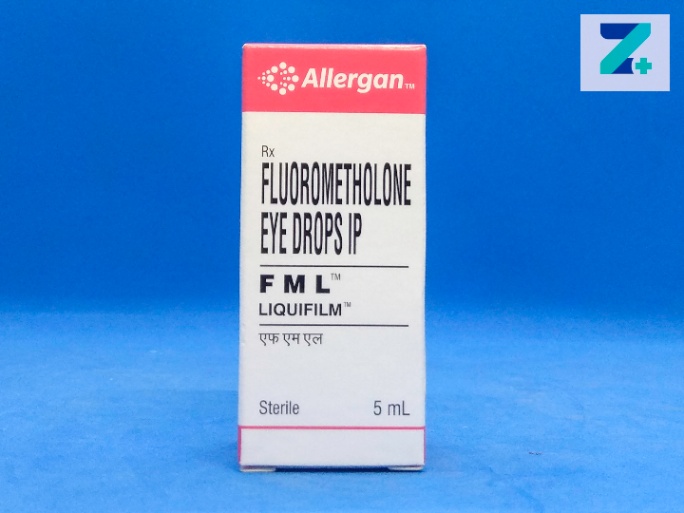
Price: Rs.268.67
10% off
In stock
Loose stock: 0
Description
FML EYE DROP 5ML
Details
Composition
FLUOROMETHOLONE ACETATE 1 MG
# FLUOROMETHOLONE ACETATE 1 MG
## SHORT DESCRIPTION
**Fluorometholone Acetate 1 mg** is a **corticosteroid ophthalmic medicine** used to reduce inflammation in the eye. It may be prescribed for steroid-responsive inflammatory conditions affecting the **conjunctiva, cornea, and anterior segment of the eye**.
Fluorometholone acetate helps reduce redness, swelling, irritation, and other symptoms associated with ocular inflammation. Because ophthalmic corticosteroids can increase intraocular pressure and may worsen certain infections, they should be used under appropriate medical supervision.
> **Note:** Ophthalmic fluorometholone acetate products are commonly labeled by concentration (for example, **0.1% ophthalmic suspension**) rather than by a total dose in mg. Verify the exact concentration and formulation on the product packaging before use.
---
## KEY BENEFITS
* Helps reduce **eye inflammation**.
* May relieve redness, swelling, irritation, and discomfort caused by steroid-responsive inflammation.
* Helps control inflammatory conditions affecting the **anterior eye**.
* Can reduce inflammatory symptoms following certain eye conditions or procedures when prescribed.
* Provides localized corticosteroid treatment directly to the affected eye.
---
## USES / INDICATIONS
Fluorometholone acetate ophthalmic preparations may be prescribed for:
1. **Steroid-responsive ocular inflammation**
2. Inflammation of the conjunctiva
3. Inflammation involving the cornea
4. Anterior segment inflammatory conditions
5. Certain postoperative inflammatory conditions when specifically prescribed
It should **not** be used for undiagnosed red eye because corticosteroids can worsen certain infections and may delay appropriate treatment.
---
## HOW IT WORKS
Fluorometholone acetate is a **synthetic corticosteroid**.
After application to the eye, it reduces the inflammatory response by suppressing the production and activity of various inflammatory mediators.
This helps reduce:
* Redness
* Swelling
* Irritation
* Inflammatory discomfort
* Excessive immune activity in ocular tissues
It treats **inflammation**, but it does not treat bacterial, fungal, or viral infections unless an appropriate antimicrobial treatment is also prescribed.
---
## DOSAGE & ADMINISTRATION
### Typical Use
The dose depends on the **exact ophthalmic concentration, formulation, severity of inflammation, and clinical response**.
For commonly used fluorometholone ophthalmic preparations, dosing may involve **1–2 drops in the affected eye(s) several times daily**, with the frequency adjusted by the ophthalmologist.
**Do not use the 1 mg strength as a dosing instruction without confirming the product concentration and formulation.**
### How to Apply
1. Wash your hands thoroughly.
2. Shake the ophthalmic suspension well if instructed on the product label.
3. Tilt your head back.
4. Gently pull down the lower eyelid.
5. Instill the prescribed number of drops.
6. Do not allow the dropper tip to touch the eye, eyelid, fingers, or other surfaces.
7. Close the eye gently after application.
8. Replace the cap securely.
### If Using Other Eye Drops
Allow approximately **5–10 minutes between different ophthalmic medicines**, unless your ophthalmologist gives different instructions.
### Contact Lenses
Do not wear contact lenses during treatment unless specifically approved by your eye specialist. If permitted, remove lenses before application and follow the product-specific instructions regarding when they can be replaced.
### Missed Dose
Apply the missed dose when remembered unless it is almost time for the next dose.
**Do not use extra drops to compensate for a missed dose.**
### Duration of Treatment
Use the medicine for the duration prescribed. Prolonged corticosteroid use may increase the risk of **increased intraocular pressure, cataract formation, and infection**.
---
## SIDE EFFECTS
### Common Side Effects
Possible effects include:
* Temporary burning or stinging
* Eye irritation
* Blurred vision immediately after application
* Eye redness
* Dryness
* Mild discomfort
### Important Eye-Related Effects
Prolonged or intensive corticosteroid use may cause:
* **Increased intraocular pressure**
* Glaucoma
* Cataract formation
* Delayed wound healing
* Secondary eye infections
### Serious Side Effects
Seek prompt medical attention for:
* Severe or persistent eye pain
* Significant vision changes
* Severe redness or swelling
* New discharge
* Increasing sensitivity to light
* Symptoms that worsen instead of improving
---
## PRECAUTIONS & WARNINGS
### Risk of Increased Eye Pressure
Ophthalmic corticosteroids can increase **intraocular pressure (IOP)**, particularly with prolonged treatment.
Patients receiving extended treatment may require regular eye-pressure monitoring.
### Glaucoma
Use with caution in patients with:
* Glaucoma
* A history of increased intraocular pressure
* A family history of glaucoma
### Eye Infections
Corticosteroids can suppress local immune responses and may **worsen or mask infections**.
They should generally not be used alone for:
* Herpes simplex keratitis
* Fungal eye infections
* Certain viral eye infections
* Untreated bacterial eye infections
### Corneal Damage
Use caution if the cornea is damaged or thinned because corticosteroids can delay healing and, in severe cases, contribute to corneal complications.
### Cataracts
Prolonged corticosteroid use may increase the risk of **posterior subcapsular cataract** formation.
### Delayed Healing
Steroids can delay healing following certain eye injuries or surgical procedures.
### Long-Term Use
If treatment continues for an extended period, an ophthalmologist may need to monitor:
* Intraocular pressure
* Corneal health
* Lens clarity
* Signs of infection
### Children
Children may be more susceptible to corticosteroid-related increases in intraocular pressure. Pediatric use should be supervised by an eye-care professional.
### Pregnancy
If you are pregnant or planning pregnancy, discuss the use of fluorometholone acetate with your healthcare professional.
### Breastfeeding
Consult a healthcare professional before using prolonged ophthalmic corticosteroid treatment while breastfeeding.
---
## DRUG INTERACTIONS
Because fluorometholone acetate is applied to the eye, systemic exposure is generally limited, but interactions can still be relevant.
### Other Ophthalmic Steroids
Using multiple steroid eye preparations may increase the risk of corticosteroid-related adverse effects.
### Other Eye Drops
If several ophthalmic medicines are required, separate their administration by approximately **5–10 minutes** unless otherwise instructed.
### Glaucoma Medicines
Patients using medicines to control intraocular pressure may require additional monitoring because corticosteroids can increase IOP.
### Immunosuppressive Medicines
Systemic immunosuppressive treatment may potentially increase susceptibility to infection when combined with corticosteroid therapy.
Tell your healthcare professional about all prescription medicines, OTC medicines, supplements, and other eye preparations you use.
---
## STORAGE INFORMATION
* Store according to the manufacturer's instructions.
* Keep the container tightly closed.
* Protect from excessive heat and direct sunlight.
* Do not freeze unless specifically instructed.
* If the product is an ophthalmic suspension, **shake well before use when directed on the label**.
* Do not touch the dropper tip to any surface.
* Keep out of reach and sight of children.
* Do not use after the expiry date.
* Discard the product according to the manufacturer's instructions after opening.
---
## PRESCRIPTION STATUS
**Prescription medicine in many countries.**
Fluorometholone acetate ophthalmic preparations should generally be used under the supervision of an **ophthalmologist or qualified healthcare professional**, particularly when treatment lasts longer than a short course.
Prescription requirements vary according to country and formulation.
---
## GENUINE MEDICINE ASSURANCE
When purchasing **Fluorometholone Acetate ophthalmic medicine**, obtain it from a **licensed pharmacy or authorized medicine supplier**.
Before use, check:
* Medicine name
* Exact concentration and formulation
* Active ingredient
* Manufacturer
* Batch/lot number
* Manufacturing and expiry dates
* Packaging and seal integrity
* Regulatory information
* Appearance of the suspension
Do not use products with damaged packaging, missing labels, altered expiry dates, or questionable authenticity.
---
# FAQ – FLUOROMETHOLONE ACETATE 1 MG
### 1. What is Fluorometholone Acetate used for?
Fluorometholone acetate is an ophthalmic corticosteroid used to reduce **steroid-responsive inflammation of the eye**.
### 2. Is Fluorometholone Acetate an antibiotic?
No. Fluorometholone acetate is a **corticosteroid**, not an antibiotic. It reduces inflammation but does not directly kill bacteria.
### 3. Can Fluorometholone Acetate treat an eye infection?
It should not generally be used alone to treat an eye infection. Corticosteroids can worsen or mask certain infections, particularly fungal and viral infections.
### 4. Does Fluorometholone Acetate reduce eye redness?
Yes, it can reduce redness caused by **ocular inflammation**. However, unexplained eye redness should be assessed before using a steroid eye drop.
### 5. How often should Fluorometholone Acetate eye drops be used?
The frequency depends on the exact formulation and severity of inflammation. Follow your ophthalmologist's prescribed schedule rather than adjusting the frequency yourself.
### 6. Is Fluorometholone Acetate safe for long-term use?
Long-term use can increase the risk of **glaucoma, increased intraocular pressure, cataracts, delayed healing, and secondary infections**. Extended treatment requires medical monitoring.
### 7. Can Fluorometholone Acetate increase eye pressure?
Yes. Ophthalmic corticosteroids can increase **intraocular pressure**, particularly with prolonged use.
### 8. Can Fluorometholone Acetate cause cataracts?
Prolonged corticosteroid treatment can increase the risk of certain cataracts, including posterior subcapsular cataracts.
### 9. Can I wear contact lenses while using Fluorometholone Acetate?
Contact lenses may need to be removed during treatment. Follow your product instructions and ophthalmologist's advice regarding contact-lens use.
### 10. Can I use other eye drops with Fluorometholone Acetate?
Yes, multiple eye medicines may sometimes be prescribed together. Generally leave **5–10 minutes between different eye drops** unless instructed otherwise.
### 11. Should I shake Fluorometholone Acetate eye drops?
If your product is an **ophthalmic suspension**, it generally needs to be shaken before use. Follow the instructions printed on your specific product.
### 12. Can Fluorometholone Acetate cause blurred vision?
Temporary blurred vision can occur immediately after applying eye drops. Persistent or significant vision changes require medical assessment.
### 13. What happens if I miss a dose?
Apply it when remembered unless it is nearly time for the next dose. **Do not apply extra drops to make up for the missed dose.**
### 14. Can I stop Fluorometholone Acetate suddenly?
For a short course, follow your prescribed schedule. For prolonged or intensive treatment, do not change or discontinue therapy without your ophthalmologist's advice.
### 15. Can Fluorometholone Acetate be used during pregnancy?
Discuss its use with your healthcare professional if you are pregnant or planning pregnancy. Treatment should be based on the expected benefits and potential risks.
### 16. Can Fluorometholone Acetate be used while breastfeeding?
Consult your healthcare professional before prolonged use while breastfeeding.
### 17. What are the warning signs of a serious eye problem?
Seek prompt medical attention for **severe eye pain, sudden or significant vision changes, severe redness, marked swelling, new discharge, or worsening symptoms**.
### 18. Is Fluorometholone Acetate available without a prescription?
It is generally a **prescription ophthalmic medicine**, although dispensing requirements vary by country.
### 19. How long does Fluorometholone Acetate take to work?
Inflammatory symptoms may begin improving after treatment starts, but the response varies according to the underlying eye condition and severity of inflammation.
### 20. Can I use Fluorometholone Acetate for any red eye?
No. Red eye can have many causes, including infections that may become worse with corticosteroids. An eye professional should determine whether a steroid is appropriate.
---
## MEDICAL DISCLAIMER
This information about **Fluorometholone Acetate ophthalmic medicine** is provided for general educational purposes only and does not replace professional medical advice, diagnosis, or treatment.
**Important:** The stated **1 mg strength should be verified against the product's exact ophthalmic concentration and formulation** before publishing or dispensing, because fluorometholone acetate eye preparations are commonly labeled by concentration rather than total milligrams per dose.
Ophthalmic corticosteroids can increase intraocular pressure, contribute to glaucoma or cataract formation, delay healing, and worsen or mask certain eye infections. They should therefore be used only as directed by an appropriate healthcare professional.
Seek prompt medical attention for severe eye pain, sudden vision changes, worsening redness, significant swelling, or other serious eye symptoms.
Always follow the **specific product labeling and your ophthalmologist's instructions** regarding dosage, duration, administration, and monitoring.