FRUSIX 40
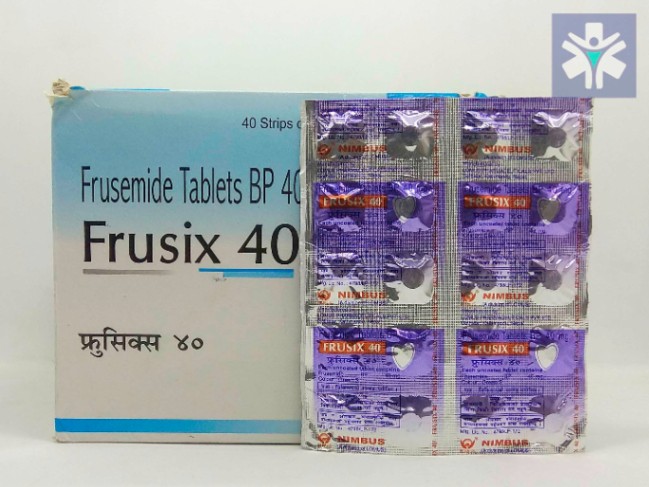
Price: Rs.20.00
15% off
In stock
Loose stock: 0
Description
FRUSIX 40 TAB 10
Details
Composition
FRUSEMIDE 40 MG
# FRUSEMIDE 40 MG
## Short Description
**Frusemide 40 mg** (also known as **Furosemide**) is a powerful **loop diuretic** or “water tablet” used to remove excess salt and water from the body. It is commonly prescribed for **fluid retention (edema)** associated with heart failure, kidney disease, liver disease, and certain other conditions.
Frusemide can also be used to help manage **high blood pressure** in selected patients. Because it can significantly affect fluid balance, electrolytes, blood pressure, and kidney function, it should be used under medical supervision.
## Key Benefits
* Helps remove **excess fluid and sodium** from the body.
* Reduces swelling (**edema**) caused by fluid retention.
* Helps relieve fluid accumulation associated with **heart failure**.
* May be used for edema associated with certain **kidney or liver disorders**.
* Can help reduce symptoms associated with fluid overload, such as swelling and breathlessness.
* May contribute to blood pressure control in selected patients.
* Has a strong and relatively rapid diuretic effect.
## Uses / Indications
Frusemide 40 mg may be prescribed for:
* **Edema associated with congestive heart failure**.
* Fluid retention associated with kidney disease.
* Edema associated with certain liver diseases, including cirrhosis.
* Fluid overload in other medical conditions when clinically appropriate.
* **Hypertension**, particularly when fluid retention or certain other clinical circumstances are present.
* Acute pulmonary edema in appropriately monitored medical settings, using suitable formulations and dosing.
The exact indication and dose depend on the patient's medical condition and response to treatment.
## How It Works
Frusemide is a **loop diuretic**.
It acts mainly on the **thick ascending limb of the loop of Henle** in the kidneys, where it inhibits the sodium-potassium-chloride (**Na⁺-K⁺-2Cl⁻**) cotransporter.
This reduces the reabsorption of:
* Sodium.
* Chloride.
* Potassium.
* Water.
As a result, the kidneys produce more urine, allowing the body to remove excess fluid and salt.
### Overall Effect
**Frusemide → increases urine production → removes sodium and water → reduces fluid overload and swelling.**
## Dosage & Administration
The appropriate dose varies considerably depending on the condition, kidney function, age, and response.
For adults with edema, treatment may commonly be initiated with doses such as **20–40 mg**, with subsequent adjustment by the healthcare professional. A **40 mg dose** may therefore be used as an individual dose or as part of a personalized treatment regimen.
### General Instructions
* Take exactly as prescribed.
* It is usually taken **once daily in the morning**, although some patients require additional doses.
* If a second daily dose is prescribed, it is generally taken earlier in the afternoon to reduce nighttime urination.
* Take with or without food according to your prescription/product instructions.
* Take with water.
* Because frusemide increases urine production, ensure appropriate fluid intake according to your doctor's instructions.
* Do not change your dose based solely on how much urine you produce.
### Monitoring
Long-term treatment may require monitoring of:
* Blood pressure.
* Kidney function.
* Sodium.
* Potassium.
* Other electrolytes.
* Body weight and fluid status.
### If You Miss a Dose
Take the missed dose when remembered unless it is close to the next scheduled dose. **Do not double the dose.**
## Side Effects
Common side effects may include:
* Increased urination.
* Dizziness.
* Light-headedness.
* Headache.
* Dehydration.
* Dry mouth.
* Low blood pressure.
* Changes in electrolyte levels.
### Electrolyte-Related Effects
Frusemide can reduce levels of:
* Potassium.
* Sodium.
* Magnesium.
* Calcium.
Symptoms of electrolyte imbalance may include:
* Muscle cramps.
* Weakness.
* Fatigue.
* Confusion.
* Irregular heartbeat.
* Excessive thirst.
### Serious Side Effects
Seek medical attention if you experience:
* Severe dehydration.
* Fainting.
* Severe weakness.
* Very low blood pressure.
* Irregular heartbeat.
* Significant reduction in urine output.
* Severe skin rash or allergic reaction.
* Hearing changes or ringing in the ears, particularly after high doses or rapid intravenous administration.
* Symptoms of severe electrolyte imbalance.
## Precautions & Warnings
### Dehydration
Because frusemide increases urine production, excessive fluid loss can cause:
* Dehydration.
* Low blood pressure.
* Kidney problems.
* Electrolyte abnormalities.
Do not deliberately restrict or excessively increase fluid intake without medical advice.
### Electrolyte Imbalance
Regular monitoring may be required, particularly with long-term treatment or high doses.
### Kidney Disease
Frusemide is frequently used in people with kidney disease, but kidney function and electrolyte levels should be monitored.
### Liver Disease
Patients with severe liver disease may be particularly sensitive to electrolyte disturbances and require careful monitoring.
### Low Blood Pressure
Frusemide can lower blood pressure. Stand up slowly if you experience dizziness or light-headedness.
### Diabetes
Frusemide can affect blood glucose levels. People with diabetes may require additional glucose monitoring.
### Gout
Frusemide can increase **uric acid levels** and may worsen gout in susceptible individuals.
### Hearing Problems
High doses, especially given rapidly by injection, can rarely cause **ototoxicity**. Tell your doctor if you develop ringing in the ears or hearing changes.
### Pregnancy and Breastfeeding
Tell your healthcare professional if you are pregnant, planning pregnancy, or breastfeeding. Frusemide should be used during pregnancy only when medically indicated.
## Drug Interactions
### Digoxin
Low potassium caused by frusemide can increase the risk of **digoxin toxicity**. Electrolytes may need monitoring.
### Lithium
Frusemide may reduce lithium clearance and increase **lithium toxicity**. This combination requires careful monitoring.
### NSAIDs
Medicines such as:
* Ibuprofen.
* Naproxen.
* Diclofenac.
may reduce the diuretic effect of frusemide and can increase the risk of kidney problems in susceptible patients.
### ACE Inhibitors and ARBs
Combining frusemide with medicines such as ACE inhibitors or ARBs may produce an additional reduction in blood pressure and may affect kidney function, particularly when treatment is initiated or doses are changed.
### Aminoglycoside Antibiotics
Aminoglycosides may increase the risk of **hearing or kidney toxicity** when used with high-dose frusemide.
### Corticosteroids
Corticosteroids may increase the risk of **low potassium**, particularly when used with high-dose or prolonged frusemide treatment.
### Other Diuretics
Combining frusemide with other diuretics can produce a stronger diuretic effect and increase the risk of dehydration and electrolyte abnormalities.
Tell your healthcare professional about all prescription medicines, OTC medicines, vitamins, and supplements.
## Storage Information
* Store at room temperature according to the manufacturer's instructions.
* Keep tablets in their original packaging.
* Protect from excessive heat, moisture, and direct sunlight.
* Keep the container tightly closed.
* Keep out of reach of children.
* Do not use after the expiry date.
* Dispose of expired or unused medicines according to local pharmacy guidance.
## Prescription Status
**Frusemide 40 mg is generally a prescription-only medicine.**
Because it can significantly affect **blood pressure, kidney function, fluid balance, and electrolytes**, treatment should be supervised by a qualified healthcare professional.
## Genuine Medicine Assurance
When purchasing Frusemide 40 mg, obtain it from a **licensed pharmacy or authorized medicine supplier**.
Before use, check:
* Correct medicine name and **40 mg strength**.
* Manufacturer details.
* Batch/lot number.
* Manufacturing and expiry dates.
* Intact packaging and seals.
* Clear dosage instructions.
* Appropriate storage conditions.
Do not use the medicine if the packaging appears damaged, tampered with, incorrectly labeled, or suspicious.
## Frequently Asked Questions (FAQ)
### 1. What is Frusemide 40 mg used for?
Frusemide 40 mg is a **loop diuretic** used mainly to treat fluid retention (edema) associated with conditions such as heart failure, kidney disease, and certain liver diseases. It can also be used in selected cases of hypertension.
### 2. Is frusemide the same as furosemide?
Yes. **Frusemide and furosemide are different names for the same active medicine.**
### 3. Is frusemide a water tablet?
Yes. Frusemide is commonly called a **water tablet** because it increases urine production and helps remove excess water and salt from the body.
### 4. How does frusemide work?
Frusemide blocks the sodium-potassium-chloride transporter in the kidney's loop of Henle. This increases the excretion of **sodium, chloride, and water**.
### 5. How quickly does frusemide 40 mg work?
When taken orally, increased urination generally begins within approximately **one hour**, although the exact timing varies between individuals.
### 6. How long does frusemide work?
The diuretic effect of an oral dose generally lasts for **several hours**. The exact duration varies depending on kidney function and other factors.
### 7. Why should frusemide be taken in the morning?
Frusemide increases urine production. Taking it in the morning can reduce the need to **wake up during the night to urinate**.
### 8. Does frusemide lower blood pressure?
Yes. By reducing circulating fluid volume, frusemide can lower blood pressure. It is used for hypertension in selected patients.
### 9. Does frusemide reduce swelling?
Yes. Frusemide helps remove excess fluid and can reduce **swelling of the legs, ankles, abdomen, or other tissues** caused by fluid retention.
### 10. Can frusemide help with shortness of breath?
If breathlessness is caused by **fluid accumulation**, such as pulmonary congestion associated with heart failure, removing excess fluid may improve symptoms. Sudden or severe breathlessness requires urgent medical assessment.
### 11. Does frusemide cause frequent urination?
Yes. Increased urination is the intended effect of the medicine, especially during the first several hours after taking a dose.
### 12. Can frusemide cause dehydration?
Yes. Excessive fluid loss can cause **dehydration, dizziness, low blood pressure, and kidney problems**.
### 13. Does frusemide lower potassium?
Yes. Frusemide can cause **low potassium (hypokalemia)**. Your doctor may monitor potassium and other electrolytes during treatment.
### 14. Can I take potassium supplements with frusemide?
Some patients taking frusemide may require potassium supplementation, but **do not start potassium supplements on your own**. Your doctor may determine whether supplementation or dietary changes are appropriate based on blood tests.
### 15. Can frusemide affect kidney function?
Yes. Although it is commonly used in patients with kidney disease, excessive fluid loss can worsen kidney function. Kidney function should be monitored when clinically appropriate.
### 16. Can frusemide cause gout?
It can. Frusemide may increase **uric acid levels**, potentially triggering or worsening gout in susceptible people.
### 17. Can I take frusemide with ibuprofen?
Ibuprofen and other NSAIDs can reduce the effect of frusemide and may increase the risk of **kidney problems**, especially in people who are dehydrated or have kidney disease. Consult your healthcare professional before using NSAIDs regularly.
### 18. Can I take frusemide with blood pressure medicines?
Yes, frusemide is sometimes intentionally combined with other blood pressure medicines. However, the combination can cause **excessive blood pressure reduction or changes in kidney function**, so monitoring may be necessary.
### 19. Can I drink alcohol while taking frusemide?
Alcohol may increase **dizziness and low blood pressure**, particularly when starting treatment or after a dose increase. Discuss alcohol consumption with your healthcare professional.
### 20. Can frusemide be taken during pregnancy?
Frusemide is not routinely used simply to treat normal pregnancy-related swelling. It may be used during pregnancy only when **specifically medically indicated**.
### 21. Can frusemide be used while breastfeeding?
Frusemide can reduce milk production at higher doses and may pass into breast milk. Discuss its use with your healthcare professional if you are breastfeeding.
### 22. What should I do if I miss a dose of frusemide?
Take it when remembered unless it is nearly time for the next dose. **Do not take a double dose.** If you remember late at night, ask your pharmacist or doctor whether to skip the dose to avoid excessive nighttime urination.
### 23. What happens if I take too much frusemide?
An excessive dose can cause severe **dehydration, low blood pressure, electrolyte abnormalities, and kidney problems**. Seek urgent medical advice if an overdose is suspected.
### 24. Is Frusemide 40 mg available without a prescription?
Frusemide is generally a **prescription-only medicine** because it requires appropriate dosing and monitoring.
### 25. Can I stop taking frusemide when my swelling improves?
Do not stop prescribed frusemide without speaking to your healthcare professional. The underlying condition may still require treatment, and stopping it suddenly may cause fluid to build up again.
## Medical Disclaimer
This information about **Frusemide 40 mg (Furosemide)** is provided for general educational and informational purposes only. It is not a substitute for professional medical advice, diagnosis, or treatment.
Frusemide is a potent diuretic that can cause **dehydration, low blood pressure, electrolyte abnormalities, kidney problems, and increased uric acid levels**. The appropriate dose varies significantly according to the underlying condition and kidney function.
Always take frusemide exactly as prescribed and attend recommended blood pressure, kidney-function, and electrolyte monitoring. Seek urgent medical attention for **fainting, severe weakness, confusion, irregular heartbeat, very low urine output, severe dehydration, significant hearing changes, or symptoms of a serious allergic reaction**.