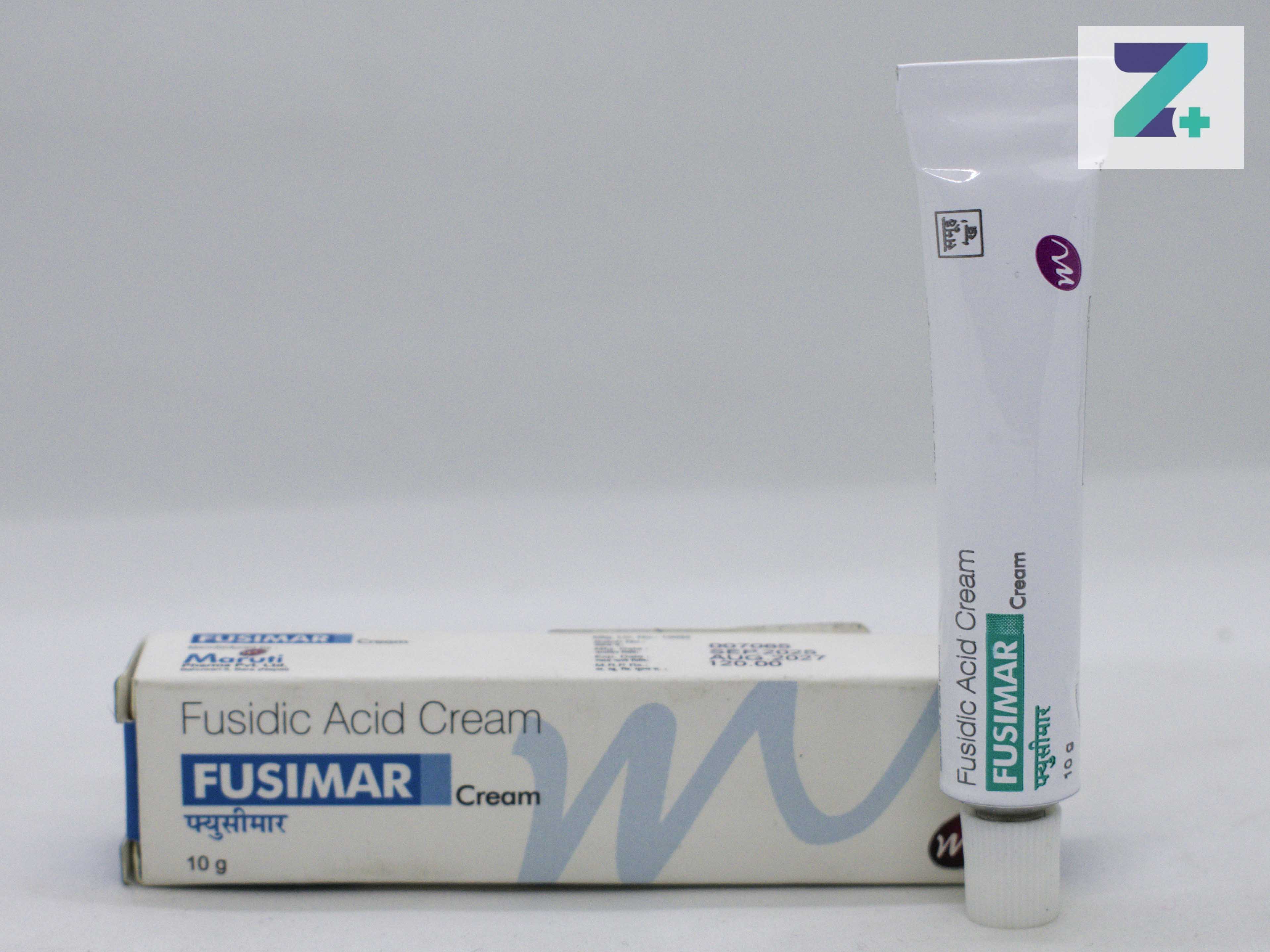
FUSIMAR
Price: Rs.120.00
10% off
In stock
Loose stock: 0
Description
FUSIMAR CREAM 10GM
Details
Composition
FUSIDIC ACID 20 MG
# Fusidic Acid 20 mg
## Short Description
Fusidic Acid is a **topical antibiotic** used to treat certain bacterial skin infections, particularly infections caused by susceptible **Staphylococcus** bacteria. It works by stopping bacterial protein production, helping control the infection and support healing.
> **Note:** “20 mg” may refer to the amount of fusidic acid in a particular product rather than its concentration. Check the product label to confirm whether the formulation is a cream, ointment, gel or another preparation.
## Key Benefits
* Helps treat susceptible bacterial skin infections
* Targets bacteria responsible for certain skin infections
* Helps reduce redness, swelling and discharge associated with bacterial infection
* Supports healing of infected skin
* Particularly active against many **Staphylococcus** species
* Provides localized antibacterial treatment when applied to the affected skin
## Uses / Indications
Fusidic Acid may be prescribed for susceptible bacterial skin infections such as:
* **Impetigo**
* Infected cuts and wounds
* Infected abrasions
* Folliculitis
* Certain infected dermatitis conditions
* Other localized bacterial skin infections as diagnosed by a healthcare professional
It is **not effective against fungal or viral skin infections**.
## How It Works
Fusidic acid is an antibacterial medicine that inhibits **bacterial protein synthesis**.
It interferes with bacterial elongation factor G (EF-G), preventing susceptible bacteria from producing proteins necessary for their growth and survival. This helps reduce the bacterial infection and allows the affected skin to heal.
## Dosage & Administration
* Use Fusidic Acid exactly as prescribed or according to the product label
* Clean and gently dry the affected area before application
* Apply a thin layer to the infected area
* Wash your hands before and after application unless the hands are being treated
* Avoid contact with the eyes and mucous membranes
* Use for the full duration recommended by your healthcare professional
* Do not apply more frequently or use for longer than recommended
* Do not share the medicine with other people
* If you miss an application, apply it when remembered unless it is nearly time for the next application
* Do not apply extra medicine to compensate for a missed application
The exact frequency and duration depend on the formulation, infection and doctor's instructions.
## Side Effects
Possible side effects include:
* Mild burning or stinging
* Skin irritation
* Redness
* Itching
* Rash
* Dryness at the application site
* Mild discomfort
Rarely, allergic reactions may occur.
Stop using the medicine and seek medical attention if you develop severe swelling, blistering, widespread rash, difficulty breathing or other signs of a serious allergic reaction.
## Precautions & Warnings
* For external use only if the product is a topical formulation
* Use only on the affected area as directed
* Avoid contact with the eyes
* Do not use if you have a known allergy to fusidic acid or any component of the product
* Avoid prolonged or repeated use unless specifically prescribed
* Prolonged or inappropriate use may contribute to **antibiotic resistance**
* Do not use for fungal, viral or non-bacterial skin infections unless specifically directed
* Seek medical advice if the infection becomes worse or does not improve
* Tell your doctor if the infection is extensive or recurrent
* Use caution around large wounds or damaged skin unless advised by a healthcare professional
* Tell your doctor if you are pregnant, planning pregnancy or breastfeeding
* Keep out of reach of children
## Drug Interactions
Topical fusidic acid has limited systemic absorption when used appropriately, so significant drug interactions are uncommon.
However:
* Avoid applying other topical medicines to the same area unless advised by your doctor
* Combining multiple topical antibiotics may increase irritation
* Tell your doctor or pharmacist about all medicines you use, including topical preparations
* Oral or injectable fusidic acid formulations may have different interaction profiles from topical products
Always follow the instructions provided for your specific formulation.
## Storage Information
* Store according to the manufacturer's instructions
* Keep the tube or container tightly closed
* Protect from excessive heat, moisture and direct sunlight
* Keep out of reach and sight of children
* Do not use after the expiry date
* Do not use if the product has changed significantly in appearance, colour or consistency
* Follow the specific storage instructions printed on the product label
## Prescription Status
Fusidic Acid may be available as a **prescription medicine**, although availability and dispensing requirements vary by country and formulation.
Use topical fusidic acid only as recommended by a healthcare professional, particularly because inappropriate antibiotic use can contribute to resistance.
## Genuine Medicine Assurance
* Purchase Fusidic Acid only from a licensed and reputable pharmacy
* Check the medicine name and strength/concentration
* Verify the manufacturer, batch number and expiry date
* Ensure the packaging and seal are intact
* Do not use products from damaged, altered or suspicious packaging
* Confirm that the formulation matches your prescription
* Purchase medicines from authorized sources
* If you suspect the product is counterfeit, consult a pharmacist or the appropriate medicine regulatory authority
## Frequently Asked Questions
### What is Fusidic Acid 20 mg used for?
Fusidic acid is an antibiotic used to treat certain **bacterial skin infections**, particularly infections caused by susceptible Staphylococcus bacteria.
### Is Fusidic Acid an antibiotic?
Yes. Fusidic acid is an **antibacterial antibiotic** used against susceptible bacteria.
### Can Fusidic Acid treat fungal infections?
No. Fusidic acid does not treat fungal infections such as ringworm or candidiasis.
### Can Fusidic Acid treat viral infections?
No. Fusidic acid is not effective against viral infections such as herpes or viral rashes.
### What skin infections can Fusidic Acid treat?
Depending on the formulation and medical diagnosis, it may be used for impetigo, infected wounds, infected dermatitis, folliculitis and other susceptible bacterial skin infections.
### How does Fusidic Acid work?
It blocks bacterial protein synthesis by interfering with **elongation factor G**, preventing susceptible bacteria from growing and surviving.
### How should Fusidic Acid be applied?
For topical formulations, apply a thin layer to the affected area as directed by your doctor or the product label. Wash your hands before and after application.
### Can Fusidic Acid be used on the face?
It may be used on facial skin when specifically prescribed for a bacterial infection. Avoid contact with the eyes and do not use it for ordinary acne unless directed by a healthcare professional.
### Can Fusidic Acid be used for acne?
Fusidic acid is not routinely recommended for ordinary acne. Antibiotic treatment for acne should be guided by a healthcare professional because inappropriate antibiotic use can contribute to resistance.
### Can Fusidic Acid be used on wounds?
It may be prescribed for **bacterial infection of a wound**, but it should not routinely be applied to every cut or wound without evidence of infection or medical advice.
### Does Fusidic Acid reduce redness?
If redness is caused by a susceptible bacterial infection, treating the infection may reduce redness and inflammation. Fusidic acid is not a general-purpose anti-inflammatory medicine.
### Can Fusidic Acid cause skin irritation?
Yes. Burning, stinging, redness, itching or irritation can occur at the application site.
### How long does Fusidic Acid take to work?
Some improvement may occur within a few days, but the exact response depends on the type and severity of the infection. Complete the prescribed course even if symptoms improve early.
### Can Fusidic Acid be used during pregnancy?
Tell your doctor if you are pregnant or planning pregnancy. Your healthcare professional can determine whether topical fusidic acid is appropriate for your condition.
### Can Fusidic Acid be used while breastfeeding?
Consult your doctor before use while breastfeeding. Avoid applying the medicine to the breast or nipple immediately before feeding unless specifically instructed.
### Can Fusidic Acid be used in children?
It may be prescribed for children for appropriate bacterial skin infections. Use the formulation and dosage recommended by a healthcare professional.
### Can Fusidic Acid be used with other creams?
Do not apply other medicated creams to the same area without checking with your doctor or pharmacist, as some combinations may increase irritation or affect treatment.
### Can Fusidic Acid be used for boils?
A healthcare professional should assess boils because some require drainage rather than topical antibiotic treatment. Fusidic acid should be used only when appropriate.
### Can Fusidic Acid treat impetigo?
Yes. Topical fusidic acid may be used for certain localized cases of **impetigo caused by susceptible bacteria**, depending on local treatment recommendations and resistance patterns.
### Can I stop Fusidic Acid when the infection looks better?
Follow the treatment duration prescribed by your healthcare professional. Do not extend treatment unnecessarily or repeatedly reuse leftover antibiotics.
### Can Fusidic Acid cause antibiotic resistance?
Yes. Overuse, inappropriate use or prolonged use of topical antibiotics can contribute to **antibiotic resistance**. Use fusidic acid only when medically appropriate.
### What should I do if I miss an application?
Apply it when you remember unless it is nearly time for the next application. Do not apply a large amount to compensate for the missed dose.
### What happens if I use too much Fusidic Acid?
Excessive topical application may increase skin irritation. Remove excess product if appropriate and contact a healthcare professional if significant symptoms occur.
### Is Fusidic Acid the same as Fucidin?
Fucidin is a brand name used for products containing **fusidic acid** in some markets. Always check the active ingredient and strength on the actual product packaging.
## Medical Disclaimer
This information is provided for general educational purposes only and is not a substitute for professional medical advice, diagnosis or treatment. Fusidic Acid is an antibiotic and should be used only for appropriate bacterial infections and according to the product label or a qualified healthcare professional's instructions. **Please verify the product strength and formulation, as “20 mg” may represent the amount of active ingredient rather than the concentration.** Unnecessary or prolonged antibiotic use can contribute to antimicrobial resistance. Seek medical advice if the infection worsens, spreads, fails to improve or produces significant pain, swelling or fever.