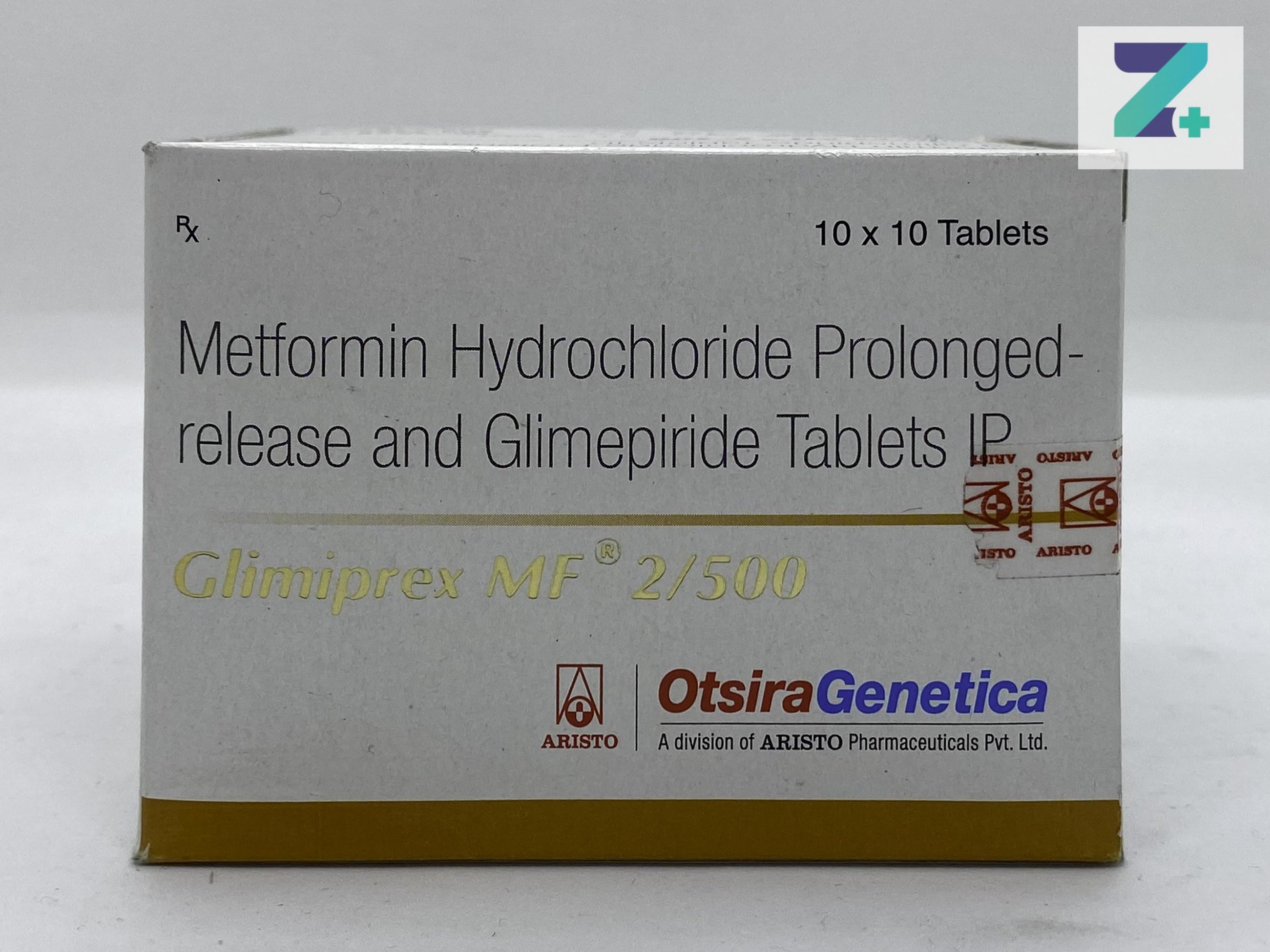
GLIMIPREX MF-2/500 MG
Price: Rs.176.00
13% off
In stock
Loose stock: 0
Description
GLIMIPREX MF-2/500 MG TAB 10
Details
Composition
GLIMEPIRIDE 2 MG,METFORMIN 500 MCG
# Glimepiride 2 mg + Metformin 500 mg
> **Important:** The ingredient strength you provided says **Metformin 500 mcg**. Metformin combination tablets for diabetes are commonly expressed in **mg**, and **500 mcg = 0.5 mg**, which is an unusually small amount. The information below assumes you mean **Metformin 500 mg**. Please verify the product label before publishing.
## SHORT DESCRIPTION
**Glimepiride 2 mg + Metformin 500 mg** is a combination oral antidiabetic medicine used to help control **blood glucose levels in adults with type 2 diabetes mellitus** when diet, exercise, or a single medicine does not provide adequate control.
Glimepiride is a **sulfonylurea**, while metformin is a **biguanide**. Together, they improve blood glucose control through complementary mechanisms.
## KEY BENEFITS
* Helps lower elevated blood glucose levels
* Improves overall blood sugar control in type 2 diabetes
* Stimulates insulin release from the pancreas
* Helps reduce glucose production by the liver
* Improves the body's response to insulin
* May reduce the need for multiple separate tablets
* Supports long-term diabetes management when combined with diet and exercise
## USES / INDICATIONS
Glimepiride 2 mg + Metformin 500 mg may be prescribed for:
* **Type 2 diabetes mellitus**
* Inadequately controlled blood glucose despite appropriate diet and exercise
* Patients requiring combination therapy with a sulfonylurea and metformin
This medicine is **not intended for treating type 1 diabetes mellitus or diabetic ketoacidosis**.
## HOW IT WORKS
### Glimepiride
Glimepiride stimulates the pancreas to release more **insulin**. Insulin helps glucose move from the bloodstream into tissues where it can be used for energy.
### Metformin
Metformin primarily:
* Reduces glucose production by the liver
* Improves insulin sensitivity
* Helps peripheral tissues use glucose more effectively
* Reduces intestinal glucose absorption to a smaller extent
Together, the two medicines can provide complementary blood glucose lowering.
## DOSAGE & ADMINISTRATION
The dose should be individualized according to blood glucose levels, kidney function, diet, and previous diabetes treatment.
* Take exactly as prescribed.
* This combination is generally taken **with meals** to reduce gastrointestinal side effects and because glimepiride should be taken with food.
* Take the tablet at approximately the same time each day.
* Swallow with water unless the product instructions state otherwise.
* Continue recommended diet, exercise, and blood glucose monitoring.
* Do not change the dose without medical advice.
### Important
Because **glimepiride can cause hypoglycemia**, skipping or delaying meals after taking the medicine can increase the risk of low blood sugar.
### Missed dose
If you miss a dose, take it when remembered with food if appropriate, unless it is close to the next scheduled dose. **Do not double the dose.** Follow your healthcare professional's instructions for missed doses.
## SIDE EFFECTS
Common side effects may include:
* Nausea
* Diarrhea
* Abdominal discomfort
* Bloating
* Loss of appetite
* Metallic taste
* Headache
* Dizziness
* **Low blood sugar (hypoglycemia)**
### Symptoms of hypoglycemia
Watch for:
* Sweating
* Shaking
* Hunger
* Dizziness
* Weakness
* Fast heartbeat
* Irritability
* Confusion
* Difficulty concentrating
Severe hypoglycemia can cause seizures, unconsciousness, or other medical emergencies.
### Serious side effects
Seek medical attention for:
* Severe or persistent low blood sugar
* Severe weakness or confusion
* Difficulty breathing
* Severe allergic reaction
* Persistent vomiting or dehydration
* Symptoms of lactic acidosis, such as unusual weakness, severe fatigue, breathing difficulty, abdominal discomfort, or feeling unusually cold
## PRECAUTIONS & WARNINGS
### Hypoglycemia
Glimepiride can cause low blood sugar, particularly when meals are skipped, alcohol is consumed, exercise is unusually strenuous, or other glucose-lowering medicines are used.
Carry a rapid source of glucose, such as glucose tablets, if recommended by your healthcare professional.
### Kidney function
Metformin is eliminated primarily through the kidneys. Reduced kidney function can increase the risk of **metformin-associated lactic acidosis**.
Kidney function should be assessed before and periodically during treatment.
### Lactic acidosis
Lactic acidosis is rare but potentially serious. Risk increases with significant kidney impairment, severe illness, dehydration, excessive alcohol intake, and certain other conditions.
Seek urgent medical attention for severe weakness, breathing difficulty, unusual sleepiness, abdominal discomfort, or feeling very cold.
### Liver disease
Tell your doctor if you have liver disease. Glimepiride and metformin may require special consideration in people with significant hepatic impairment.
### Alcohol
Excessive alcohol consumption can increase the risk of hypoglycemia and may increase the risk of lactic acidosis associated with metformin.
### Vitamin B12
Long-term metformin treatment may reduce vitamin B12 absorption in some people. Your healthcare professional may periodically monitor B12 levels, especially if you have anemia, neuropathy, or other risk factors.
### Surgery and contrast imaging
Metformin may need to be temporarily withheld around certain surgical procedures or imaging studies involving **iodinated contrast**, depending on kidney function and the specific procedure.
Always tell your healthcare team that you take metformin.
### Pregnancy
Glimepiride + metformin should not be used during pregnancy unless specifically prescribed by a healthcare professional. Diabetes during pregnancy requires individualized treatment.
## DRUG INTERACTIONS
Glimepiride + metformin can interact with several medicines.
Important examples include:
* **Insulin and other antidiabetic medicines** — may increase the risk of hypoglycemia.
* **Beta-blockers** — may mask some symptoms of low blood sugar.
* **ACE inhibitors** — may potentially increase glucose-lowering effects in some patients.
* **Corticosteroids** — may increase blood glucose and reduce diabetes control.
* **Certain diuretics** — may affect blood glucose control.
* **Rifampicin and other enzyme-inducing medicines** — may alter glimepiride effectiveness.
* **Certain antifungals and other CYP-interacting medicines** — may alter glimepiride levels.
* **Alcohol** — may increase hypoglycemia risk and contribute to metformin-associated lactic acidosis.
* **Iodinated contrast agents** — may require temporary metformin interruption depending on kidney function and clinical circumstances.
* **Cationic medicines eliminated through the kidneys** may increase metformin exposure.
Tell your doctor or pharmacist about all prescription medicines, OTC medicines, vitamins, and herbal supplements you take.
## STORAGE INFORMATION
* Store Glimepiride 2 mg + Metformin 500 mg according to the manufacturer's instructions.
* Keep at room temperature.
* Protect from excessive heat, moisture, and direct sunlight.
* Keep tablets in their original packaging.
* Keep out of reach and sight of children.
* Do not use after the expiry date.
* Do not use tablets if the packaging is damaged or the medicine appears abnormal.
## PRESCRIPTION STATUS
**Glimepiride 2 mg + Metformin 500 mg is generally a prescription medicine.**
It should be used under medical supervision because the dose needs to be individualized and glimepiride can cause potentially serious hypoglycemia.
## GENUINE MEDICINE ASSURANCE
To help ensure you receive genuine Glimepiride + Metformin:
* Purchase only from a licensed and reputable pharmacy.
* Check the active ingredients and strengths.
* **Verify whether the metformin strength is 500 mg rather than 500 mcg.**
* Check the manufacturer and product information.
* Verify the batch number and expiry date.
* Ensure the packaging is sealed and undamaged.
* Check that the tablets match the description on the package.
* Avoid products with suspicious or altered packaging.
* Consult a pharmacist if you have concerns about authenticity.
## FAQ SECTION
### What is Glimepiride 2 mg + Metformin 500 mg used for?
It is used to help control **high blood sugar in adults with type 2 diabetes mellitus**, particularly when one medicine alone does not provide adequate glucose control.
### What are Glimepiride and Metformin?
Glimepiride is a **sulfonylurea** that stimulates insulin release from the pancreas. Metformin is a **biguanide** that mainly reduces glucose production by the liver and improves insulin sensitivity.
### How does Glimepiride + Metformin work?
The combination works through two complementary mechanisms: glimepiride increases insulin secretion, while metformin reduces liver glucose production and improves insulin sensitivity.
### Can Glimepiride + Metformin cure diabetes?
No. It helps control blood glucose but does not cure type 2 diabetes. Diabetes management usually also involves healthy eating, physical activity, weight management when appropriate, and regular monitoring.
### Can this medicine be used for type 1 diabetes?
No. Glimepiride + metformin is generally intended for **type 2 diabetes** and is not a substitute for insulin in type 1 diabetes.
### Should Glimepiride + Metformin be taken with food?
Yes. It is generally taken with meals, as directed by the healthcare professional, to improve tolerability and reduce the risk of hypoglycemia associated with glimepiride.
### What happens if I skip a meal after taking Glimepiride?
Skipping a meal can increase the risk of **low blood sugar** because glimepiride stimulates insulin release. Follow your doctor's instructions and learn how to recognize and treat hypoglycemia.
### What are the symptoms of low blood sugar?
Symptoms may include sweating, shaking, hunger, dizziness, weakness, fast heartbeat, irritability, confusion, and difficulty concentrating.
### What should I do if my blood sugar becomes too low?
If you are conscious and able to swallow, consume a rapid source of glucose according to your diabetes action plan and recheck your blood glucose when appropriate. Severe hypoglycemia, seizures, or unconsciousness require emergency medical attention.
### Can Glimepiride cause weight gain?
Glimepiride may contribute to weight gain in some people. Maintaining a balanced diet and regular physical activity can help support diabetes management.
### Can Metformin cause diarrhea?
Yes. Diarrhea, nausea, abdominal discomfort, and bloating are common, especially when starting metformin. These effects may improve as the body adjusts.
### Does Metformin cause low blood sugar?
Metformin alone generally has a low risk of causing hypoglycemia. However, when combined with glimepiride or other glucose-lowering medicines, the overall risk of hypoglycemia increases.
### Can Metformin affect vitamin B12?
Yes. Long-term metformin use can reduce vitamin B12 absorption in some people. Periodic monitoring may be appropriate for certain patients.
### Can I drink alcohol while taking Glimepiride + Metformin?
Avoid excessive alcohol. Alcohol can increase the risk of hypoglycemia and may increase the risk of metformin-associated lactic acidosis.
### Can Glimepiride + Metformin be taken with insulin?
It may be used with insulin in selected patients, but combining glucose-lowering medicines increases the risk of hypoglycemia and requires medical supervision.
### Can I take Glimepiride + Metformin if I have kidney disease?
Metformin use depends on kidney function. Significant kidney impairment may make metformin unsuitable or require dose restrictions. Kidney function should be assessed by a healthcare professional.
### Can I take Glimepiride + Metformin during pregnancy?
Treatment of diabetes during pregnancy requires specialist guidance. Do not use or discontinue this medicine during pregnancy without consulting your healthcare professional.
### Can I take Glimepiride + Metformin while breastfeeding?
Consult your doctor before using this combination while breastfeeding. Your healthcare professional can determine the most appropriate diabetes treatment.
### What should I do if I miss a dose?
Take the missed dose according to your prescribed instructions. Do not double the next dose. Because glimepiride is associated with hypoglycemia, taking an extra dose can be dangerous.
### What happens if I take too much Glimepiride + Metformin?
An overdose can cause **severe hypoglycemia** and, with excessive metformin exposure, potentially serious metabolic complications. Seek emergency medical attention if a significant overdose is suspected.
### Can Glimepiride + Metformin be stopped suddenly?
Do not stop diabetes medication without medical advice. Stopping treatment may cause blood glucose to rise significantly.
### Is Glimepiride + Metformin available without a prescription?
It is generally a **prescription medicine** and should be used under the supervision of a healthcare professional.
### Is Glimepiride 2 mg + Metformin 500 mg the same as Metformin 500 mcg?
No. **500 mg and 500 mcg are very different strengths.** 500 mg equals 500,000 mcg. Please verify the product label before dispensing or publishing product information.
## MEDICAL DISCLAIMER
This information about **Glimepiride 2 mg + Metformin 500 mg** is provided for educational and informational purposes only and is not a substitute for professional medical advice, diagnosis, or treatment.
The dosage should be individualized according to blood glucose control, kidney and liver function, age, diet, other medicines, and risk of hypoglycemia. Glimepiride can cause potentially serious low blood sugar, while metformin carries a rare but serious risk of lactic acidosis in susceptible patients.
**Important strength verification:** The requested ingredient was written as **Metformin 500 mcg**. The content above assumes the intended strength is **Metformin 500 mg**, which is a common combination strength. Please verify the actual product packaging before using this content for a medicine listing.
**Do not start, stop, or change this medicine without consulting a qualified healthcare professional.** Seek urgent medical attention for severe hypoglycemia, loss of consciousness, seizures, severe breathing difficulty, or suspected overdose.
Always follow the approved product information and the specific instructions provided by your doctor or pharmacist.