GLUBOSE 25MG
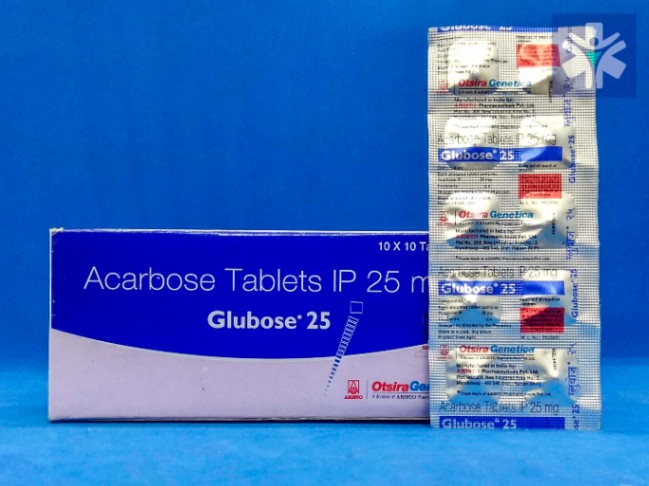
Price: Rs.121.60
13% off
In stock
Loose stock: 0
Description
GLUBOSE 25MG TAB 10
Details
Composition
ACARBOSE 25 MG
# ACARBOSE 25 MG
## SHORT DESCRIPTION
**Acarbose 25 mg** is an oral **alpha-glucosidase inhibitor** used to help control blood glucose levels in people with **type 2 diabetes mellitus**. It works primarily in the intestine by slowing the digestion and absorption of carbohydrates, helping reduce the rise in blood glucose after meals.
Acarbose is usually used together with a suitable **diet and exercise program**, either alone or in combination with other diabetes medicines.
---
## KEY BENEFITS
* Helps control **post-meal blood glucose levels**.
* Slows the digestion of carbohydrates in the intestine.
* Helps reduce rapid blood sugar spikes after meals.
* Can be used alone or alongside other diabetes medicines when prescribed.
* Does not usually cause low blood sugar when used alone.
* Supports overall blood-glucose management as part of a diabetes treatment plan.
---
## USES / INDICATIONS
Acarbose 25 mg may be prescribed for:
* **Type 2 diabetes mellitus**
* Control of elevated blood glucose after meals
* Blood-glucose management when diet and exercise alone are insufficient
* Combination therapy with other antidiabetic medicines when additional glucose control is needed
Acarbose is **not intended to replace a healthy diet, exercise, or other diabetes treatment prescribed by a healthcare professional**.
---
# HOW IT WORKS
Acarbose inhibits intestinal enzymes called **alpha-glucosidases**.
These enzymes normally break complex carbohydrates and disaccharides into simpler sugars that can be absorbed into the bloodstream.
Acarbose slows this process:
**Acarbose → inhibits carbohydrate-digesting enzymes → slows carbohydrate breakdown → delays glucose absorption → reduces the post-meal blood-glucose rise.**
Because its main action occurs in the intestine, acarbose has relatively limited systemic absorption.
---
# DOSAGE & ADMINISTRATION
### Starting Dose
Acarbose is commonly started at a **low dose**, such as:
**25 mg once daily or 25 mg with a meal**, depending on the prescribed regimen.
The dose may be gradually increased according to blood-glucose response and tolerance.
### Usual Administration
Acarbose should generally be taken:
**At the beginning of a meal, with the first few bites of food.**
This timing is important because the medicine needs to be present in the intestine when carbohydrates are being digested.
### Dose Adjustment
Your healthcare professional may gradually increase the dose to improve blood-glucose control while reducing gastrointestinal side effects.
### Important Dietary Point
Acarbose works on carbohydrates in food. If a meal contains little or no carbohydrate, the effect may be limited.
### Missed Dose
If you forget to take acarbose with a meal, **do not take it between meals or take an extra dose later** unless specifically instructed.
Resume the normal dosing schedule with the next appropriate meal.
---
# SIDE EFFECTS
## Common Side Effects
Gastrointestinal effects are particularly common, especially when treatment begins:
* Flatulence (gas)
* Abdominal bloating
* Abdominal discomfort
* Diarrhea
* Abdominal pain
* Increased bowel movements
These effects may become less noticeable as the body adjusts to treatment.
## Less Common Side Effects
* Nausea
* Constipation
* Indigestion
## Serious Side Effects
Seek medical attention for:
* Severe or persistent abdominal pain
* Significant abdominal swelling
* Severe constipation or vomiting
* Signs of liver problems, such as yellowing of the skin or eyes or dark urine
* Severe allergic reaction
---
# PRECAUTIONS & WARNINGS
## Gastrointestinal Disorders
Acarbose may worsen intestinal gas and discomfort.
It may not be suitable for people with certain gastrointestinal conditions, particularly disorders associated with:
* Intestinal obstruction
* Severe inflammatory bowel disease
* Significant digestive or absorption problems
Discuss any chronic bowel condition with your healthcare professional before starting treatment.
## Kidney Disease
Tell your doctor if you have kidney disease. Acarbose may not be appropriate in significant renal impairment.
## Liver Disease
Liver function may need monitoring in some patients, particularly during prolonged treatment.
## Hypoglycemia
Acarbose alone generally has a low risk of causing hypoglycemia.
However, **low blood sugar can occur when acarbose is combined with insulin or medicines such as sulfonylureas**.
### Important: Treating Low Blood Sugar
If hypoglycemia occurs while taking acarbose, use **glucose (dextrose)** rather than ordinary table sugar (sucrose), because acarbose slows the breakdown of sucrose.
## Pregnancy
Tell your healthcare professional if you are pregnant or planning pregnancy. Diabetes during pregnancy requires an individualized treatment plan.
## Breastfeeding
Consult your healthcare professional before using acarbose while breastfeeding.
---
# DRUG INTERACTIONS
### Insulin and Sulfonylureas
When acarbose is combined with:
* Insulin
* Glimepiride
* Glibenclamide
* Other sulfonylureas
the risk of **hypoglycemia** may increase.
If low blood sugar occurs, glucose/dextrose should be used for rapid correction.
### Digestive Enzyme Preparations
Medicines or supplements containing digestive enzymes may potentially reduce the effect of acarbose.
### Certain Intestinal Absorbents
Some intestinal adsorbents may interfere with acarbose's action.
### Diuretics and Other Medicines
Changes in blood glucose may occur when starting or stopping other medicines.
Tell your doctor or pharmacist about all medicines and supplements you take.
---
# STORAGE INFORMATION
* Store Acarbose 25 mg according to the manufacturer's instructions.
* Keep tablets in their original packaging.
* Protect from excessive heat and moisture.
* Keep away from direct sunlight.
* Keep out of reach of children.
* Do not use after the expiry date.
---
# PRESCRIPTION STATUS
**Prescription medicine.**
Acarbose 25 mg should be used under the supervision of a qualified healthcare professional.
The appropriate dose depends on blood-glucose levels, diet, kidney and liver function, other diabetes medicines, and treatment response.
---
# GENUINE MEDICINE ASSURANCE
When purchasing **Acarbose 25 mg**, obtain it from a **licensed pharmacy or authorized medicine supplier**.
Check the packaging for:
* Correct medicine name and strength
* Manufacturer information
* Batch/lot number
* Manufacturing and expiry dates
* Intact packaging and seal
* Regulatory information
* Patient information leaflet
Avoid medicines with damaged packaging, altered labels, missing batch details, or questionable authenticity.
---
# FAQ – ACARBOSE 25 MG
### 1. What is Acarbose 25 mg used for?
Acarbose 25 mg is used to help control **blood glucose in people with type 2 diabetes**, particularly the rise in blood sugar that occurs after meals.
### 2. Is Acarbose a diabetes medicine?
Yes. Acarbose is an oral antidiabetic medicine belonging to the **alpha-glucosidase inhibitor** class.
### 3. How does Acarbose work?
It slows the digestion of carbohydrates in the intestine, which delays glucose absorption and reduces the rise in blood sugar after meals.
### 4. When should Acarbose 25 mg be taken?
Acarbose is generally taken **at the beginning of a meal, with the first few bites**.
### 5. Can Acarbose be taken after a meal?
It works best when taken at the beginning of the meal. If you have forgotten a dose, do not routinely take an extra dose after the meal unless your healthcare professional specifically advises you to do so.
### 6. Does Acarbose cause low blood sugar?
Acarbose alone generally does not cause significant hypoglycemia. However, the risk can increase when it is combined with **insulin or sulfonylureas**.
### 7. How should low blood sugar be treated while taking Acarbose?
Use **glucose (dextrose)** to treat hypoglycemia because acarbose can slow the digestion of ordinary table sugar.
### 8. Why does Acarbose cause gas?
Acarbose leaves more undigested carbohydrates available for fermentation by bacteria in the intestine, which can produce **gas and bloating**.
### 9. Does Acarbose cause diarrhea?
Yes. Diarrhea is a relatively common gastrointestinal side effect, particularly when treatment is started or the dose is increased.
### 10. Can Acarbose be taken with Metformin?
Yes. Acarbose may be prescribed together with metformin when additional blood-glucose control is required. The combination should be used under medical supervision.
### 11. Can Acarbose be taken with insulin?
It can be used with insulin in some patients, but combining them can increase the risk of hypoglycemia. Your healthcare professional may adjust the insulin dose.
### 12. Can Acarbose be used for type 1 diabetes?
Acarbose is primarily indicated for **type 2 diabetes**. It should not be used for type 1 diabetes unless specifically directed by a specialist.
### 13. Can Acarbose be used during pregnancy?
Diabetes treatment during pregnancy requires medical supervision. Tell your healthcare professional if you are pregnant or planning pregnancy.
### 14. Can I take Acarbose if I have kidney disease?
Acarbose may not be appropriate in significant kidney impairment. Inform your doctor about any kidney problems before starting treatment.
### 15. Does Acarbose help with weight loss?
Acarbose is not primarily a weight-loss medicine. Some people may experience modest weight changes, but it should be used for appropriate diabetes management.
### 16. What happens if I miss an Acarbose dose?
If the meal has already finished, generally **skip the missed dose** and take the next dose with the next appropriate meal. Do not take extra tablets to compensate.
### 17. Can Acarbose be taken without food?
Acarbose is designed to work with carbohydrate-containing meals and should generally be taken **with the first bites of a meal**.
### 18. Is Acarbose 25 mg safe for long-term use?
It may be used long term when prescribed and monitored appropriately. Your doctor may monitor blood glucose and, when appropriate, liver function.
### 19. Is Acarbose 25 mg a substitute for diet and exercise?
No. Acarbose works as part of a comprehensive diabetes-management plan that includes appropriate **diet, physical activity, blood-glucose monitoring, and other treatment when necessary**.
### 20. Is Acarbose 25 mg available without a prescription?
Acarbose is generally a **prescription medicine**, although regulatory requirements may differ between countries.
---
# MEDICAL DISCLAIMER
This information about **Acarbose 25 mg** is provided for general educational purposes only and does not replace professional medical advice, diagnosis, or treatment.
Acarbose is a prescription medicine used primarily for **type 2 diabetes** and should be taken according to an individualized treatment plan. Gastrointestinal side effects such as gas, bloating, abdominal discomfort, and diarrhea are common, particularly during treatment initiation.
Patients with significant gastrointestinal disease, kidney impairment, or liver problems should consult a healthcare professional before using acarbose.
If acarbose is combined with insulin or a sulfonylurea, hypoglycemia can occur. Because acarbose interferes with sucrose digestion, **glucose/dextrose should be used to treat hypoglycemia rather than relying on ordinary table sugar**.
**Use Acarbose 25 mg only as directed by a qualified healthcare professional and do not change the dose without medical advice.**