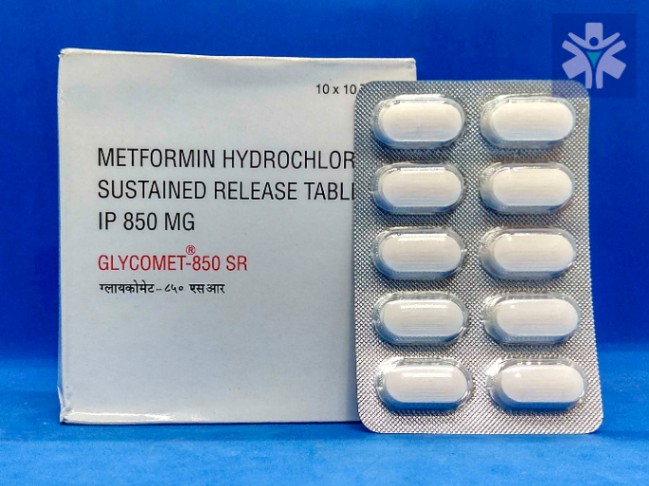
GLYCOMET SR 850MG
Price: Rs.84.00
13% off
In stock
Loose stock: 0
Description
GLYCOMET SR 850MG TAB 10
Details
Composition
METFORMIN 850 MG
# METFORMIN 850 MG
## SHORT DESCRIPTION
**Metformin 850 mg** is an oral medicine primarily used to help control **blood glucose levels in people with type 2 diabetes mellitus**. It belongs to the **biguanide** class of antidiabetic medicines and is commonly used alongside a healthy diet and regular physical activity.
Metformin helps improve the body's response to insulin and reduces the amount of glucose produced by the liver. It generally does **not cause low blood sugar when used alone**.
---
## KEY BENEFITS
* Helps control **high blood sugar in type 2 diabetes**.
* Reduces excessive glucose production by the liver.
* Improves the body's **sensitivity to insulin**.
* Helps reduce intestinal absorption of glucose to a lesser extent.
* Usually has a **low risk of hypoglycemia when used alone**.
* Generally does not cause weight gain and may be weight-neutral or associated with modest weight loss in some patients.
* Can be used alone or combined with other diabetes medicines or insulin when prescribed.
---
## USES / INDICATIONS
Metformin 850 mg may be prescribed for:
* **Type 2 diabetes mellitus**
* Improving blood glucose control when diet and exercise alone are insufficient
* Combination treatment with other oral antidiabetic medicines
* Combination treatment with insulin in selected patients
### Other Uses
Metformin is sometimes prescribed **off-label for certain conditions**, such as polycystic ovary syndrome (PCOS), depending on the patient's circumstances and local medical practice.
> **Important:** Metformin is **not used to treat type 1 diabetes as the primary glucose-lowering treatment**.
---
## HOW IT WORKS
Metformin lowers blood glucose through several mechanisms:
### 1. Reduces Liver Glucose Production
Metformin primarily decreases **hepatic gluconeogenesis**, reducing the amount of glucose released into the bloodstream by the liver.
### 2. Improves Insulin Sensitivity
It improves insulin sensitivity, allowing muscles and other tissues to use glucose more effectively.
### 3. Reduces Intestinal Glucose Absorption
Metformin may modestly reduce the absorption of glucose from the gastrointestinal tract.
### Overall Effect
These actions help lower **blood glucose and HbA1c levels** without directly stimulating the pancreas to release insulin.
---
## DOSAGE & ADMINISTRATION
* Take Metformin 850 mg **exactly as prescribed**.
* It is usually taken **with meals** to reduce gastrointestinal side effects.
* Depending on the formulation and treatment plan, it may be prescribed once, twice, or multiple times daily.
* Your doctor may start treatment at a lower dose and gradually increase it to improve tolerance.
* Swallow tablets with water.
* If you are using an **extended-release (ER/SR/XR) formulation**, swallow it whole unless the specific product instructions state otherwise.
### Missed Dose
Take the missed dose with the next appropriate meal if remembered reasonably soon.
If it is nearly time for the next dose, skip the missed dose.
**Do not take a double dose.**
### Monitoring
Your healthcare professional may monitor:
* Blood glucose
* HbA1c
* Kidney function/eGFR
* Vitamin B12 during long-term treatment when appropriate
---
## SIDE EFFECTS
### Common Side Effects
The most common adverse effects are gastrointestinal and may include:
* Nausea
* Diarrhea
* Abdominal discomfort
* Stomach pain
* Bloating
* Gas
* Reduced appetite
* Metallic taste
These effects often improve as the body becomes accustomed to treatment. Taking metformin with meals and gradually increasing the dose can improve tolerability.
### Vitamin B12 Deficiency
Long-term metformin treatment may reduce **vitamin B12 levels** in some people. Your doctor may recommend monitoring B12, especially if you have anemia, neuropathy, or other risk factors.
### Serious Side Effect – Lactic Acidosis
**Lactic acidosis is rare but potentially life-threatening.**
Seek urgent medical attention for symptoms such as:
* Severe weakness
* Unusual muscle pain
* Difficulty breathing
* Severe drowsiness
* Abdominal discomfort with worsening illness
* Feeling unusually cold
* Slow or irregular heartbeat
The risk is higher in certain patients, particularly those with significant kidney impairment or conditions associated with poor oxygenation or severe dehydration.
---
## PRECAUTIONS & WARNINGS
* Kidney function should be assessed before starting metformin and periodically during treatment.
* Metformin is **contraindicated in severe renal impairment**.
* Tell your doctor if you have kidney, liver, or heart problems.
* Avoid excessive alcohol consumption because it can increase the risk of lactic acidosis.
* Temporarily stopping metformin may be necessary around certain **iodinated contrast imaging procedures**, depending on kidney function and the type of procedure. Follow your healthcare professional's instructions.
* Tell your doctor if you have severe infection, dehydration, or a condition causing reduced oxygen supply to tissues.
* Inform your doctor before major surgery.
* Long-term treatment may contribute to **vitamin B12 deficiency**.
* Metformin alone usually has a low risk of hypoglycemia, but low blood sugar can occur when it is combined with insulin or medicines such as sulfonylureas.
* Tell your healthcare professional if you are pregnant, planning pregnancy, or breastfeeding.
---
## DRUG INTERACTIONS
Metformin can interact with certain medicines and medical procedures.
Important examples include:
* **Iodinated contrast agents** — may increase the risk of kidney problems and, in susceptible patients, lactic acidosis. Metformin may need to be temporarily withheld depending on the clinical situation.
* **Alcohol** — excessive alcohol intake can increase the risk of lactic acidosis.
* **Insulin and sulfonylureas** — may increase the risk of hypoglycemia when combined with metformin.
* **Cimetidine and some other medicines** — may affect metformin elimination and increase exposure.
* **Certain diuretics and medicines affecting kidney function** — may increase the risk of metformin accumulation if kidney function deteriorates.
* **Corticosteroids** — can increase blood glucose and reduce diabetic control.
* Other medicines that affect blood glucose may require dose adjustments.
Always provide your doctor or pharmacist with a complete list of your prescription medicines, OTC medicines, vitamins, and supplements.
---
## STORAGE INFORMATION
* Store Metformin 850 mg according to the conditions specified on the **product packaging**.
* Keep tablets in their original container.
* Protect from excessive heat, moisture, and direct sunlight.
* Keep the container tightly closed.
* Keep out of reach of children and pets.
* Do not use after the expiry date.
* Do not use tablets if the packaging is damaged or the tablets appear abnormal.
---
## PRESCRIPTION STATUS
**Metformin 850 mg is generally a prescription medicine**, although regulations may vary between countries.
It should be used under medical supervision because the appropriate dose depends on **blood glucose control, kidney function, other medicines, and the patient's overall health**.
---
## GENUINE MEDICINE ASSURANCE
When purchasing Metformin 850 mg, ensure that:
* The medicine comes in **original, sealed manufacturer packaging**.
* The active ingredient and strength (**Metformin 850 mg**) are clearly stated.
* The formulation is clearly identified, such as immediate-release or extended-release where applicable.
* The **batch/lot number and expiry date** are visible.
* Packaging is intact and shows no signs of tampering.
* Tablets have the expected appearance described by the manufacturer.
* The product is purchased from a **licensed and reputable pharmacy or authorized medicine supplier**.
* The medicine supplied matches the prescription and dispensing information.
Do not use medicine that appears counterfeit, expired, damaged, or improperly stored.
---
# FAQ – METFORMIN 850 MG
### 1. What is Metformin 850 mg used for?
Metformin 850 mg is primarily used to **control blood glucose in people with type 2 diabetes mellitus**, alongside diet and physical activity.
### 2. Is Metformin 850 mg a diabetes medicine?
Yes. Metformin is one of the most commonly used medicines for **type 2 diabetes**.
### 3. How does Metformin lower blood sugar?
It mainly reduces the amount of glucose produced by the **liver** and improves the body's sensitivity to insulin.
### 4. Does Metformin cause low blood sugar?
Metformin used alone generally has a **low risk of hypoglycemia** because it does not directly stimulate insulin release. The risk can increase when it is combined with insulin or certain other diabetes medicines.
### 5. Should Metformin 850 mg be taken with food?
Yes. Taking metformin **with meals** can help reduce gastrointestinal side effects such as nausea, diarrhea, and stomach discomfort.
### 6. Does Metformin 850 mg cause weight gain?
Metformin generally does **not cause significant weight gain**. Some people may experience modest weight loss while taking it.
### 7. Can Metformin 850 mg be used for PCOS?
Metformin is sometimes used **off-label in PCOS**, particularly when insulin resistance or impaired glucose regulation is present. Its use should be determined by a healthcare professional.
### 8. Can Metformin be used for type 1 diabetes?
Metformin is not a replacement for insulin and is **not the primary treatment for type 1 diabetes**. In selected cases, a specialist may use it as an additional medicine.
### 9. What are the most common side effects of Metformin?
The most common side effects are **diarrhea, nausea, abdominal discomfort, bloating, gas, and reduced appetite**.
### 10. How can I reduce Metformin stomach side effects?
Taking metformin with meals and gradually increasing the dose under medical supervision can improve tolerance. If side effects remain severe, talk to your doctor.
### 11. Can Metformin cause vitamin B12 deficiency?
Yes. Long-term metformin treatment can reduce **vitamin B12 levels** in some people. Your healthcare professional may recommend periodic testing when appropriate.
### 12. Can Metformin damage the kidneys?
Metformin itself is not generally considered directly toxic to healthy kidneys. However, it is eliminated through the kidneys and can accumulate when kidney function is significantly impaired. **Kidney function should therefore be monitored.**
### 13. Can I drink alcohol while taking Metformin?
Excessive alcohol consumption should be avoided because it can increase the risk of **lactic acidosis** and may negatively affect blood glucose control.
### 14. Can Metformin be taken during pregnancy?
Metformin may be used in some pregnancies depending on the clinical situation, but this should be determined by a healthcare professional. Do not start or stop metformin during pregnancy without medical advice.
### 15. Can I take Metformin while breastfeeding?
Metformin is sometimes used during breastfeeding, but you should discuss your individual situation with your healthcare professional before starting or changing treatment.
### 16. What should I do if I miss a Metformin dose?
Take the missed dose with food when you remember, unless it is nearly time for the next dose. **Do not double the dose.**
### 17. Can I stop Metformin when my blood sugar becomes normal?
Do not stop metformin without consulting your doctor. Normal blood glucose may indicate that treatment, diet, and lifestyle measures are working effectively.
### 18. How long does Metformin 850 mg take to work?
Metformin begins improving glucose regulation after treatment starts, but its full effect on blood glucose and **HbA1c** develops over time. Regular monitoring helps determine its effectiveness.
### 19. What happens if I take too much Metformin?
Taking too much metformin can cause severe gastrointestinal symptoms and, rarely, **lactic acidosis**. If you suspect an overdose, seek urgent medical attention.
### 20. What is the difference between Metformin 850 mg and Metformin 500 mg?
The main difference is the **amount of metformin in each tablet**. The appropriate strength depends on your blood glucose response, tolerance, kidney function, and prescribed treatment plan. Do not change strengths without medical advice.
---
## MEDICAL DISCLAIMER
This information about **Metformin 850 mg** is provided for educational and informational purposes only. It is not a substitute for professional medical advice, diagnosis, or treatment.
Metformin is primarily used for **type 2 diabetes** and should be taken according to an individualized treatment plan. Kidney function is particularly important when determining whether metformin is appropriate.
**Do not start, stop, or change the dose of Metformin 850 mg without consulting a qualified healthcare professional.** Seek urgent medical attention for severe weakness, difficulty breathing, unusual drowsiness, severe dehydration, or other symptoms that could indicate a serious adverse reaction.