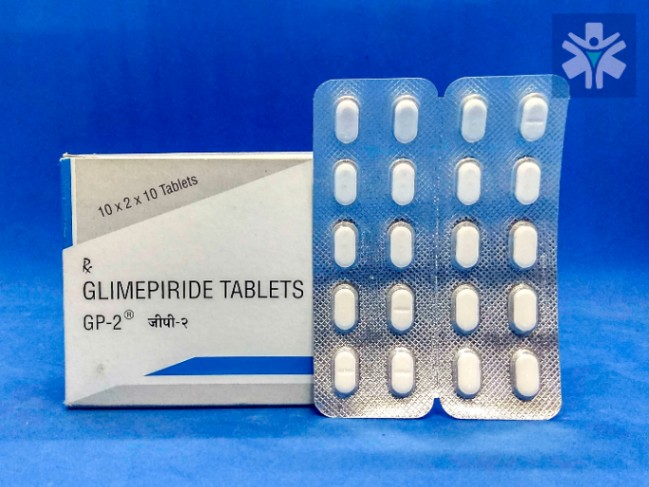
GP-2
Price: Rs.86.00
13% off
In stock
Loose stock: 0
Description
GP-2 TAB 10
Details
Composition
GLIMEPIRIDE 2 MG
# Glimepiride 2 mg
## Short Description
Glimepiride 2 mg is an **oral antidiabetic medicine** belonging to the sulfonylurea class. It is primarily used to help control **blood glucose levels in adults with type 2 diabetes mellitus**, along with a suitable diet and exercise program.
Glimepiride works mainly by stimulating the pancreas to release insulin, helping lower blood sugar.
## Key Benefits
* Helps lower elevated blood glucose levels
* Helps improve blood sugar control in type 2 diabetes
* Stimulates the body to release insulin
* Can be used alone or with other diabetes medicines when prescribed
* Supports long-term diabetes management alongside diet and exercise
## Uses / Indications
Glimepiride 2 mg is primarily used for:
* **Type 2 diabetes mellitus**
* Improving blood glucose control when diet and exercise alone are insufficient
* Combination treatment with other antidiabetic medicines when prescribed
Glimepiride is **not used to treat type 1 diabetes or diabetic ketoacidosis**.
## How It Works
Glimepiride is a **sulfonylurea**.
It stimulates pancreatic beta cells to release insulin. Increased insulin availability helps glucose move from the bloodstream into body tissues, thereby lowering blood glucose.
**Glimepiride → stimulates insulin release → increases glucose uptake → lowers blood sugar**
Because it increases insulin secretion, glimepiride can sometimes cause **low blood sugar (hypoglycemia)**.
## Dosage & Administration
* Take Glimepiride exactly as prescribed
* The usual starting dose is often **1 mg once daily**, with the dose adjusted according to blood glucose response
* A 2 mg tablet may be prescribed when clinically appropriate
* It is generally taken **with breakfast or the first main meal of the day**
* Take it at approximately the same time each day
* Swallow the tablet with water
* Do not skip meals after taking glimepiride
* Your doctor may adjust the dose based on blood glucose levels and tolerability
* Do not change the dose without medical advice
### Missed Dose
If you forget a dose, follow your healthcare professional's instructions. **Do not take a double dose** to compensate for a missed dose.
## Side Effects
Common side effects may include:
* **Low blood sugar (hypoglycemia)**
* Headache
* Dizziness
* Nausea
* Weakness
* Increased appetite
* Weight gain
Less common but serious reactions may include:
* Severe hypoglycemia
* Allergic reactions
* Liver problems
* Changes in blood cell counts
* Severe skin reactions
### Symptoms of Low Blood Sugar
Watch for:
* Sweating
* Shaking
* Hunger
* Fast heartbeat
* Dizziness
* Irritability
* Confusion
* Blurred vision
* Weakness
Severe hypoglycemia can cause **loss of consciousness or seizures** and requires urgent medical attention.
## Precautions & Warnings
* Glimepiride can cause hypoglycemia
* Do not skip meals after taking the medicine
* Monitor blood glucose as recommended
* Older adults may be more susceptible to hypoglycemia
* Use cautiously in people with kidney or liver problems
* Tell your doctor if you have adrenal, pituitary or thyroid disorders
* Inform your doctor if you have glucose-6-phosphate dehydrogenase (G6PD) deficiency
* Alcohol may increase the risk of hypoglycemia
* Illness, reduced food intake and increased physical activity can affect blood glucose levels
* Tell your doctor if you are pregnant, planning pregnancy or breastfeeding
* Do not drive or operate machinery if you experience symptoms of low blood sugar
### Important
Glimepiride is intended for **type 2 diabetes** and is not appropriate for treating diabetic ketoacidosis or type 1 diabetes.
## Drug Interactions
Glimepiride can interact with several medicines, including:
* **Insulin and other antidiabetic medicines** — may increase the risk of hypoglycemia
* Other sulfonylureas
* **Beta-blockers** — may mask some symptoms of low blood sugar
* ACE inhibitors — may enhance glucose-lowering effects in some patients
* Certain antibiotics
* Some antifungal medicines
* Certain anticoagulants
* Corticosteroids — may increase blood glucose
* Diuretics — may affect blood glucose control
* Thyroid medicines
* Alcohol — may increase or unpredictably affect blood-glucose control
This is not a complete interaction list. Tell your doctor or pharmacist about all prescription medicines, OTC medicines, vitamins and herbal supplements you use.
## Storage Information
* Store according to the manufacturer's instructions
* Keep in a cool, dry place
* Protect from excessive heat, moisture and direct sunlight
* Keep the tablets in their original packaging
* Keep the container tightly closed
* Keep out of reach and sight of children
* Do not use after the expiry date
## Prescription Status
Glimepiride 2 mg is generally a **prescription medicine**.
It should be used under the supervision of a qualified healthcare professional, with appropriate blood-glucose monitoring.
## Genuine Medicine Assurance
* Purchase Glimepiride only from a licensed and reputable pharmacy
* Check the medicine name and **2 mg strength**
* Verify the manufacturer's name
* Check the batch number and expiry date
* Ensure the packaging and seal are intact
* Avoid medicines from unverified sellers
* Do not use tablets with damaged or suspicious packaging
* Follow the manufacturer's storage instructions
* If you suspect counterfeit medicine, consult a pharmacist or the relevant medicine regulatory authority
## Frequently Asked Questions
### What is Glimepiride 2 mg used for?
Glimepiride 2 mg is used to help control **blood sugar in adults with type 2 diabetes**, together with diet and exercise.
### Is Glimepiride a diabetes medicine?
Yes. Glimepiride is an oral antidiabetic medicine belonging to the **sulfonylurea** class.
### How does Glimepiride 2 mg work?
Glimepiride stimulates the pancreas to release insulin. The increased insulin helps lower blood glucose.
### Is Glimepiride used for type 1 diabetes?
No. Glimepiride is generally used for **type 2 diabetes** and is not a substitute for insulin in type 1 diabetes.
### Can Glimepiride lower blood sugar too much?
Yes. **Hypoglycemia is one of the most important side effects** of glimepiride.
### What are the symptoms of low blood sugar with Glimepiride?
Symptoms may include sweating, shaking, hunger, dizziness, fast heartbeat, weakness, confusion and blurred vision.
### How should I take Glimepiride 2 mg?
Take it exactly as prescribed, generally with breakfast or the first main meal. Do not skip the meal after taking it.
### Can I take Glimepiride without food?
It is generally taken with a meal. Taking it and then skipping food can increase the risk of low blood sugar.
### Does Glimepiride cause weight gain?
Yes. Weight gain can occur because glimepiride increases insulin secretion and can increase the risk of low blood sugar and increased food intake.
### Can Glimepiride be taken with Metformin?
Yes. Glimepiride and metformin are sometimes prescribed together for type 2 diabetes when one medicine alone does not provide adequate glucose control. Your doctor should determine the appropriate doses.
### Can Glimepiride be taken with insulin?
It may be used with insulin in selected patients, but combining glucose-lowering medicines can increase the risk of hypoglycemia. This combination should be supervised by a healthcare professional.
### Can I drink alcohol while taking Glimepiride?
Alcohol can affect blood glucose and may increase the risk of hypoglycemia. It is best to discuss alcohol consumption with your healthcare professional.
### Can Glimepiride be taken during pregnancy?
Glimepiride is generally not the preferred treatment during pregnancy. If you are pregnant or planning pregnancy, speak with your doctor about appropriate diabetes treatment.
### Can I take Glimepiride while breastfeeding?
Consult your doctor before taking glimepiride while breastfeeding. Your healthcare professional can determine the most appropriate diabetes treatment.
### Does Glimepiride cure diabetes?
No. Glimepiride helps **control blood glucose** but does not cure type 2 diabetes.
### How long does Glimepiride take to work?
Glimepiride begins lowering blood glucose after administration, but the overall improvement in diabetes control depends on the dose, diet, exercise, adherence and individual response.
### Can Glimepiride cause dizziness?
Yes. Dizziness can occur, particularly when blood sugar becomes too low.
### What should I do if I miss a dose of Glimepiride?
Follow your doctor's instructions. Do not take an extra tablet to compensate for a missed dose.
### What should I do if I take too much Glimepiride?
An overdose can cause potentially serious **hypoglycemia**. Seek urgent medical attention if you have taken more than prescribed, especially if symptoms such as sweating, confusion, shaking or loss of consciousness occur.
### Can Glimepiride affect the kidneys?
Glimepiride is metabolized by the liver and its metabolites are eliminated partly through the kidneys. People with kidney impairment may have an increased risk of prolonged hypoglycemia and require careful medical supervision.
### Can Glimepiride affect the liver?
Liver problems are uncommon but possible. People with liver impairment may require alternative treatment or careful monitoring.
### Can Glimepiride be taken with other diabetes medicines?
Yes, it may be combined with medicines such as metformin or other glucose-lowering treatments when prescribed. Combining medicines may increase the risk of hypoglycemia.
### Can Glimepiride cause low blood sugar at night?
Yes. Hypoglycemia can occur at different times, including overnight. Taking the medicine exactly as prescribed and monitoring glucose as recommended can help reduce the risk.
### Should I stop Glimepiride if my blood sugar becomes normal?
Do not stop the medicine without speaking to your doctor. Normal blood glucose may indicate that the treatment is working.
### Can Glimepiride be used in older adults?
It can be used in selected older adults, but additional caution may be needed because older people can be more vulnerable to prolonged or severe hypoglycemia.
### Does Glimepiride cause increased appetite?
Increased appetite can occur and may contribute to weight gain in some patients.
### Is Glimepiride safe for long-term use?
Glimepiride can be used long-term in appropriate patients under medical supervision. Regular monitoring of blood glucose and overall diabetes control is important.
## Medical Disclaimer
This information is provided for general educational and SEO purposes only and is **not a substitute for professional medical advice, diagnosis or treatment**. Glimepiride 2 mg should be used only as prescribed by a qualified healthcare professional. It can cause potentially serious **hypoglycemia**, particularly when meals are skipped or when combined with other glucose-lowering medicines. Dosage must be individualized according to blood glucose levels, kidney and liver function, age and other clinical factors. Always follow your prescribed treatment plan and consult your doctor or pharmacist before changing, stopping or combining medicines.