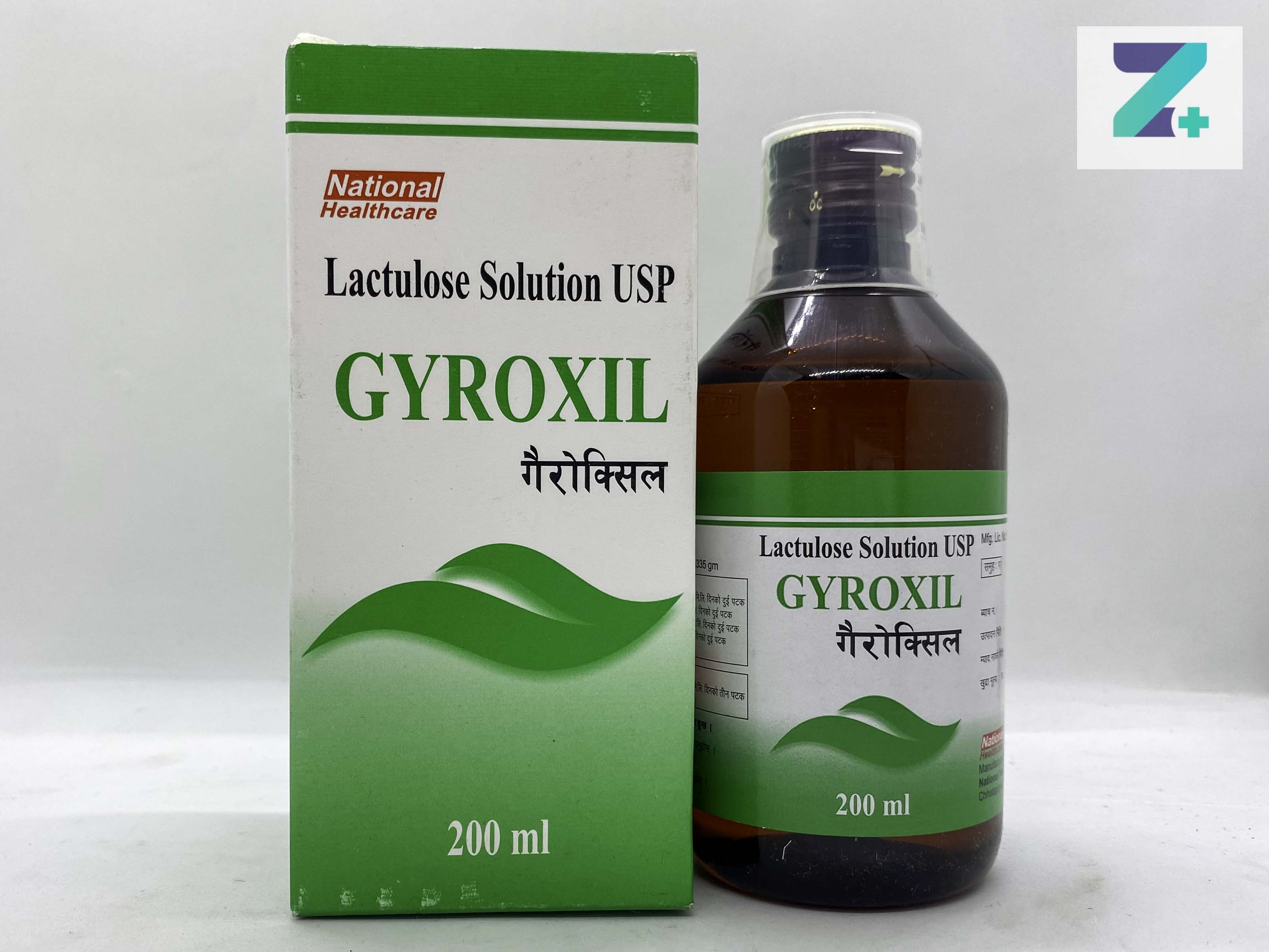
GYROXIL
Price: Rs.400.00
10% off
In stock
Loose stock: 0
Description
GYROXIL SYR 200ML
Details
Composition
LACTULOSE 3.335 MG
# LACTULOSE 3.335 MG
## SHORT DESCRIPTION
**Lactulose 3.335 mg** is an osmotic laxative commonly used to treat **constipation** and, at appropriate doses, to help reduce elevated ammonia levels in people with **hepatic encephalopathy**. It works by drawing water into the bowel, softening stools and making them easier to pass.
> **Note:** Lactulose products are commonly labeled as a liquid containing a concentration of approximately **3.335 g/5 mL (3335 mg/5 mL)**. Please verify the exact strength and concentration stated on your product packaging.
---
## KEY BENEFITS
* **Relieves Constipation:** Helps soften hard stools and make bowel movements easier.
* **Promotes Regular Bowel Movements:** Helps increase water content in the colon.
* **Gentle Osmotic Action:** Works locally in the bowel with minimal systemic absorption.
* **Supports Management of Hepatic Encephalopathy:** At prescribed doses, lactulose can help reduce intestinal ammonia absorption.
* **Suitable for Long-Term Constipation Management:** May be used for longer periods when recommended by a healthcare professional.
---
## USES / INDICATIONS
Lactulose may be used for:
* **Constipation**
* Hard or difficult-to-pass stools
* Irregular bowel movements
* Prevention and treatment of complications associated with **hepatic encephalopathy**, under medical supervision
For hepatic encephalopathy, the dose and treatment goal are different from those used for ordinary constipation and should be determined by a doctor.
---
## HOW IT WORKS
Lactulose is a **synthetic disaccharide and osmotic laxative**.
It passes largely undigested into the colon, where intestinal bacteria break it down into organic acids. This process:
1. Increases the osmotic pressure within the colon.
2. Draws water into the bowel.
3. Softens stool and increases stool volume.
4. Stimulates bowel movement and facilitates defecation.
In hepatic encephalopathy, lactulose also acidifies the contents of the colon and helps convert absorbable ammonia (**NH₃**) into ammonium (**NH₄⁺**), which is less readily absorbed. This helps reduce the amount of ammonia reaching the bloodstream.
---
## DOSAGE & ADMINISTRATION
**Use Lactulose exactly as directed by your doctor or according to the product label.**
### For Constipation
The dose is individualized according to age, severity of constipation, and response to treatment. It is usually taken as an oral liquid and may be taken with or without food.
* Measure the dose using an appropriate measuring device.
* Drink adequate fluids unless your doctor has advised fluid restriction.
* Lactulose may take **1–2 days** to produce its full laxative effect.
* The dose may be adjusted to achieve comfortable, regular bowel movements.
### For Hepatic Encephalopathy
Higher and more frequent doses may be required. Treatment aims to produce several soft bowel movements per day and must be supervised by a healthcare professional.
### Missed Dose
Take the missed dose when remembered unless it is nearly time for the next dose. If it is close to the next dose, skip the missed dose.
**Do not take a double dose.**
---
## SIDE EFFECTS
### Common Side Effects
* Flatulence (gas)
* Bloating
* Abdominal cramps
* Abdominal discomfort
* Nausea
* Diarrhea
These effects may be more noticeable when treatment is first started or when the dose is increased.
### Serious Side Effects
Excessive or prolonged diarrhea can cause:
* Dehydration
* Low potassium levels
* Other electrolyte disturbances
Seek medical attention if you develop severe or persistent diarrhea, significant weakness, confusion, severe abdominal pain, or signs of dehydration.
---
## PRECAUTIONS & WARNINGS
Before using Lactulose, inform your doctor if you have:
* Intestinal obstruction or suspected bowel blockage
* Severe abdominal pain of unknown cause
* Galactose intolerance or other hereditary disorders of sugar metabolism
* Diabetes
* Electrolyte abnormalities
* A need to restrict fluid intake
### Important Precautions
* Do not use laxatives repeatedly for unexplained abdominal pain without medical evaluation.
* Excessive doses can cause severe diarrhea and electrolyte disturbances.
* Maintain adequate fluid intake unless fluid restriction has been recommended.
* Patients with diabetes should discuss prolonged or high-dose use with their healthcare professional because some lactulose preparations contain small amounts of absorbable sugars.
* If constipation persists despite treatment, consult a healthcare professional to determine the underlying cause.
### Pregnancy & Breastfeeding
Lactulose is generally considered to have minimal systemic absorption, but pregnant or breastfeeding individuals should still consult a healthcare professional before starting treatment.
---
## DRUG INTERACTIONS
Lactulose generally has few clinically significant drug interactions, but it may interact with or affect the use of:
* Other laxatives
* Medicines that affect electrolyte levels
* Certain medicines whose absorption may be affected by changes in bowel transit
* Other medicines used to treat hepatic encephalopathy
Prolonged or excessive diarrhea caused by lactulose may lead to electrolyte disturbances, which can affect the safety or effectiveness of some medicines.
Always inform your doctor or pharmacist about all prescription medicines, OTC medicines, vitamins, and supplements you take.
---
## STORAGE INFORMATION
* Store Lactulose according to the manufacturer's recommended conditions.
* Keep the container tightly closed.
* Protect from excessive heat and direct sunlight.
* Keep out of reach and sight of children.
* Do not use after the expiry date printed on the package.
* Follow any specific storage instructions provided on the product label.
---
## PRESCRIPTION STATUS
**Prescription status varies depending on the country and formulation.**
Lactulose may be available **with or without a prescription** in different markets. For hepatic encephalopathy, medical supervision is essential.
---
## GENUINE MEDICINE ASSURANCE
For safe and reliable use:
* Purchase Lactulose from a **licensed pharmacy or authorized medicine supplier**.
* Check the manufacturer, batch number, expiry date, and packaging.
* Ensure the bottle is properly sealed and undamaged.
* Do not use the product if its appearance, packaging, or labeling seems unusual.
* Store the product according to the manufacturer's instructions.
* Use an appropriate measuring device rather than a household spoon when measuring liquid doses.
---
# FAQ – Frequently Asked Questions
### 1. What is Lactulose 3.335 mg used for?
Lactulose is primarily used to treat **constipation**. It is also used at higher, medically supervised doses to help manage **hepatic encephalopathy**.
### 2. How does Lactulose work for constipation?
Lactulose reaches the colon largely undigested and is broken down by intestinal bacteria. It draws water into the bowel, softens stools, and makes bowel movements easier.
### 3. How long does Lactulose take to work?
Lactulose commonly takes **1–2 days** to produce its full laxative effect, although the response can vary between individuals.
### 4. Can Lactulose be taken every day?
Lactulose can be used regularly when recommended by a healthcare professional. The dose should be adjusted according to bowel response to avoid excessive diarrhea.
### 5. Does Lactulose cause gas?
Yes. **Gas and bloating are common** when starting Lactulose. These effects may improve as the body adjusts to treatment.
### 6. Can Lactulose cause diarrhea?
Yes. Taking too much Lactulose can cause diarrhea. Severe or prolonged diarrhea may result in dehydration and electrolyte abnormalities.
### 7. Can Lactulose be taken during pregnancy?
Lactulose has minimal systemic absorption, but pregnant individuals should consult their doctor before using any medicine.
### 8. Can Lactulose be used while breastfeeding?
Because Lactulose is minimally absorbed from the gastrointestinal tract, exposure through breast milk is expected to be low. Consult your healthcare professional before use while breastfeeding.
### 9. Can Lactulose be used for hepatic encephalopathy?
Yes. Lactulose is an established treatment for **hepatic encephalopathy**. However, the dosing is different from constipation treatment and requires medical supervision.
### 10. Can Lactulose be taken with other laxatives?
It may sometimes be combined with other laxatives under medical supervision. Do not routinely combine laxatives without consulting your doctor or pharmacist.
### 11. What should I do if I miss a dose of Lactulose?
Take the missed dose when you remember unless it is close to your next scheduled dose. If it is nearly time for the next dose, skip it.
**Do not double the dose.**
### 12. Is Lactulose safe for long-term use?
Lactulose may be used for long-term constipation management when medically appropriate. Long-term use should be monitored if frequent or high doses are required.
### 13. Should I drink water while taking Lactulose?
Adequate fluid intake can support constipation treatment and help prevent dehydration. However, people who have been instructed to restrict fluids should follow their doctor's advice.
### 14. Is Lactulose a stimulant laxative?
No. Lactulose is an **osmotic laxative**. It works primarily by increasing water in the colon rather than directly stimulating intestinal contractions.
---
## MEDICAL DISCLAIMER
This information is provided for **educational and informational purposes only** and does not replace professional medical advice, diagnosis, or treatment.
The exact concentration, dosage, and approved uses of Lactulose products may vary between manufacturers and countries. Always check the product packaging and follow the instructions provided by your healthcare professional.
**Do not use Lactulose for persistent or unexplained constipation without medical advice. Seek prompt medical attention for severe abdominal pain, vomiting, abdominal swelling, inability to pass stool or gas, significant rectal bleeding, or symptoms of severe dehydration.**