HYDRAMIDE SPF 50 SUNSCREEN
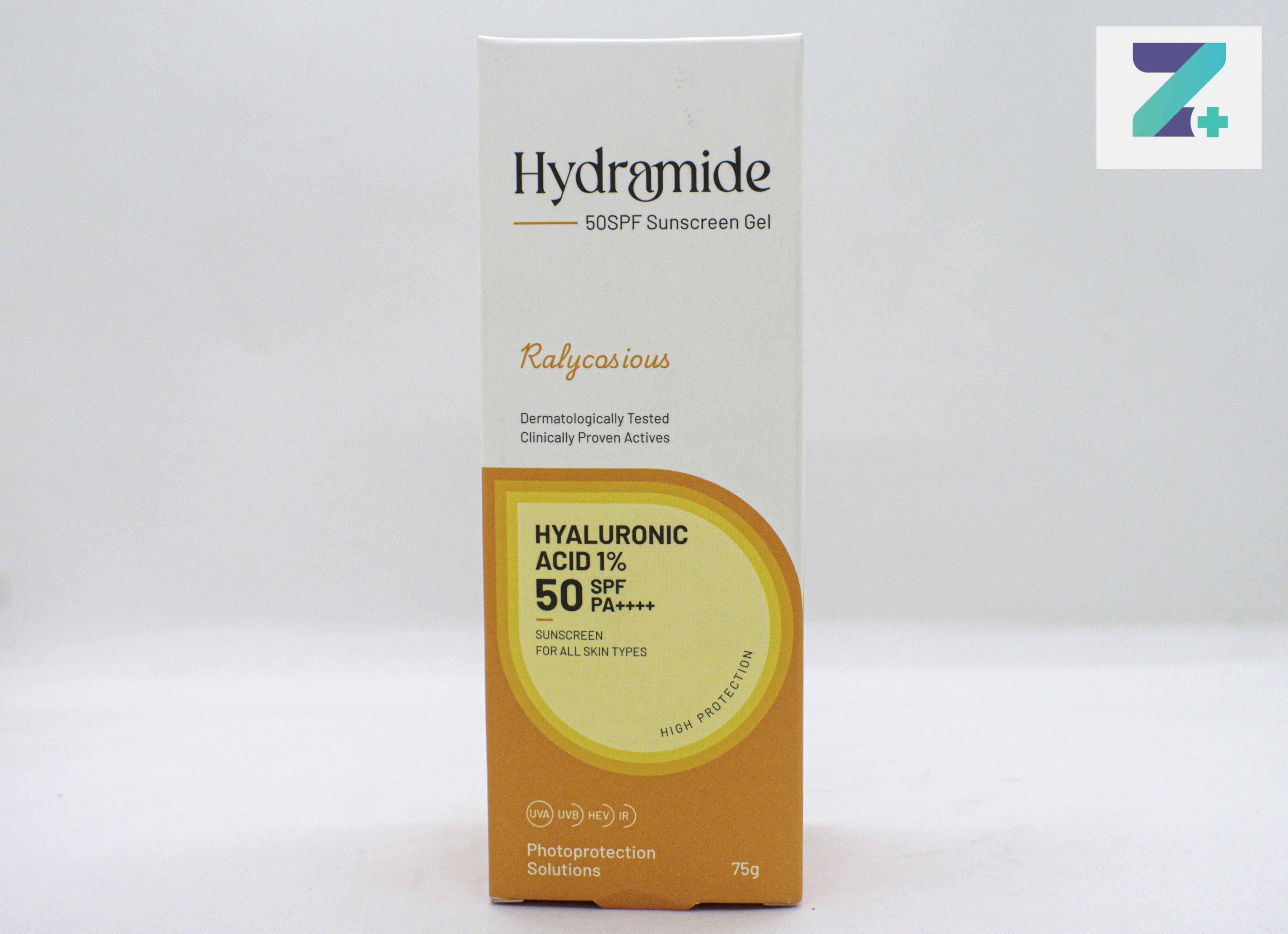
Price: Rs.1200.00
10% off
In stock
Loose stock: 0
Description
HYDRAMIDE SPF 50 SUNSCREEN GEL 75GM
Details
Composition
HYALURONIC ACID 1%
# Hyaluronic Acid 1%
## Short Description
**Hyaluronic Acid 1%** is a topical hydrating preparation containing **1% hyaluronic acid**, a naturally occurring substance that helps attract and retain moisture. It is commonly used to improve **skin hydration, softness, and smoothness** and may be included in skincare or specialized medical preparations.
Hyaluronic acid acts primarily as a **humectant**, helping increase water content in the outer layers of the skin.
> **Note:** The exact indication, application method, and route of administration depend on the specific product formulation. Always follow the product label or healthcare professional's instructions.
---
# Key Benefits
* Provides **deep hydration** to dry or dehydrated skin.
* Helps attract and retain moisture in the skin.
* Supports the skin's natural moisture barrier.
* Helps improve the appearance of **dryness and roughness**.
* Leaves skin feeling softer and smoother.
* Can temporarily improve the appearance of **fine dehydration lines**.
* Generally suitable for regular topical use when used as directed.
---
# Uses / Indications
### 1. Skin Hydration
Hyaluronic Acid 1% is commonly used to moisturize and hydrate dry or dehydrated skin.
### 2. Dry and Rough Skin
It may help improve the feel and appearance of:
* Dry skin
* Rough skin
* Tight-feeling skin
* Dehydrated skin
### 3. Skin Moisture Support
It can be incorporated into skincare routines to help maintain the skin's moisture balance and support the skin barrier.
### 4. Specialized Medical Preparations
Certain medical products containing hyaluronic acid may be used in **wound care, ophthalmic care, or other medical applications**.
> **Important:** A regular topical skincare product should not be used in the eyes, on open wounds, or inside the body unless it is specifically manufactured and labeled for that purpose.
---
# How It Works
Hyaluronic acid is a naturally occurring **glycosaminoglycan** with a strong ability to bind water.
When applied topically, it helps attract and retain moisture within the outer layers of the skin. This can:
* Increase skin hydration
* Improve skin softness
* Reduce the feeling of dryness
* Improve skin smoothness
* Temporarily make fine dehydration lines less noticeable
The effects can vary depending on the molecular weight, concentration, and formulation of the product.
---
# Dosage & Administration
**Use Hyaluronic Acid 1% according to the manufacturer's instructions or as directed by your healthcare professional.**
### General Topical Application
1. Clean the affected or intended area gently.
2. Pat the skin dry or follow the specific product instructions.
3. Apply a small amount of the preparation evenly.
4. Gently spread over the skin.
5. Allow it to absorb.
6. Apply a moisturizer afterward if recommended or needed.
### Frequency
The frequency of application depends on the specific product. Many topical preparations can be used **once or twice daily**, but follow the instructions printed on the product.
### Important
* For **external use only**, unless specifically labeled otherwise.
* Do not swallow.
* Avoid direct contact with the eyes.
* Do not apply a cosmetic preparation to open, infected, or severely damaged skin.
* Do not confuse topical hyaluronic acid with **injectable hyaluronic acid dermal fillers**.
---
# Side Effects
## Common Side Effects
Hyaluronic acid is generally well tolerated when used topically. Possible reactions include:
* Mild redness
* Mild itching
* Burning or stinging
* Temporary irritation
* Dryness or tightness
These reactions may also be caused by other ingredients in the formulation.
## Rare but Serious Reactions
Stop using the product and seek medical attention if you develop:
* Severe rash
* Significant swelling
* Facial or throat swelling
* Difficulty breathing
* Severe or persistent skin irritation
---
# Precautions & Warnings
### 1. Avoid Eye Contact
Unless specifically designed as an ophthalmic preparation, do not apply Hyaluronic Acid 1% directly into the eyes.
If accidental contact occurs, rinse thoroughly with clean water.
### 2. Sensitive Skin
People with sensitive skin should consider applying a small amount to a limited area initially to check for irritation.
### 3. Open or Infected Wounds
Do not apply a regular cosmetic preparation to **open, infected, or deeply damaged wounds** unless the product is specifically designed for wound care.
### 4. Pregnancy
Topical hyaluronic acid is generally associated with minimal systemic absorption, but the safety of the complete formulation should be considered. Consult a healthcare professional if pregnant or planning pregnancy.
### 5. Breastfeeding
Consult a healthcare professional before using specialized medicinal preparations while breastfeeding.
### 6. Injectable Products
Topical Hyaluronic Acid 1% should **never be injected**. Injectable hyaluronic acid products are different preparations and should only be administered by appropriately qualified healthcare professionals.
### 7. Discontinue if Severe Irritation Occurs
Stop use and seek medical advice if significant redness, swelling, blistering, or persistent irritation develops.
---
# Drug Interactions
Topical hyaluronic acid generally has **minimal systemic drug interactions**.
However, irritation can increase when multiple active topical products are used together.
### Retinoids
Hyaluronic acid is generally compatible with retinoids such as retinol or tretinoin and may help support hydration.
### AHAs and BHAs
It can generally be used with exfoliating acids such as:
* Glycolic acid
* Lactic acid
* Salicylic acid
However, excessive use of multiple active ingredients can cause irritation.
### Benzoyl Peroxide
Hyaluronic acid can generally be used alongside benzoyl peroxide, particularly when additional hydration is needed.
### Prescription Topical Medicines
If you are using prescription creams, gels, or ointments, ask your doctor or pharmacist whether they should be applied at the same time or separately.
---
# Storage Information
* Store according to the **manufacturer's recommended conditions**.
* Keep the container tightly closed.
* Protect from excessive heat and direct sunlight.
* Avoid contamination of the applicator or product.
* Keep out of reach of children.
* Do not use after the expiry date.
* Do not use if the packaging is damaged or the product has developed an unusual color, odor, or consistency.
---
# Prescription Status
**Hyaluronic Acid 1% topical preparations are generally available without a prescription**, particularly when marketed as cosmetic moisturizers or skincare products.
However, the regulatory classification can vary depending on:
* Formulation
* Intended use
* Route of administration
* Country-specific regulations
**Injectable hyaluronic acid products and specialized medical formulations are different from ordinary topical preparations.**
---
# Genuine Medicine Assurance
When purchasing **Hyaluronic Acid 1%**, ensure that:
* You purchase it from a **licensed pharmacy, authorized retailer, or reputable supplier**.
* The packaging is properly sealed and undamaged.
* The manufacturer's name is clearly stated.
* The concentration is clearly identified as **1%**.
* The batch/lot number and expiry date are visible.
* The product is within its expiry period.
* The product's appearance and consistency match the manufacturer's description.
* You retain your pharmacy invoice or purchase receipt where possible.
* Avoid products from unauthorized sellers or products making unrealistic medical claims.
* For medicinal products, use the manufacturer's or relevant regulatory authority's verification system when available.
---
# FAQ – Hyaluronic Acid 1%
### 1. What is Hyaluronic Acid 1%?
Hyaluronic Acid 1% is a preparation containing **1% hyaluronic acid**, a naturally occurring substance that helps attract and retain water. It is commonly used for topical skin hydration.
### 2. What is Hyaluronic Acid 1% used for?
It is primarily used to **hydrate dry or dehydrated skin**, improve skin softness, and support the skin's moisture barrier.
### 3. Is Hyaluronic Acid 1% good for dry skin?
Yes. Hyaluronic acid is a humectant that helps attract and retain moisture, making it useful for **dry and dehydrated skin**.
### 4. Can Hyaluronic Acid 1% be used every day?
Many topical products can be used daily, often once or twice a day. However, the correct frequency depends on the specific formulation and should follow the manufacturer's instructions.
### 5. Can Hyaluronic Acid 1% be used on the face?
Yes, if the product is intended for facial use. Apply it to clean skin and avoid direct contact with the eyes.
### 6. Does Hyaluronic Acid 1% remove wrinkles?
It does not permanently remove wrinkles. However, improved skin hydration can make **fine dehydration lines appear less noticeable** temporarily.
### 7. Does Hyaluronic Acid 1% lighten the skin?
No. Hyaluronic acid is primarily a **hydrating ingredient** and is not a skin-lightening medicine.
### 8. Can Hyaluronic Acid 1% cause acne?
Hyaluronic acid itself is generally well tolerated and is not typically considered comedogenic. However, other ingredients in a particular formulation may affect acne-prone skin.
### 9. Can Hyaluronic Acid 1% cause irritation?
Yes, although irritation is generally uncommon. Redness, itching, burning, or stinging can occur, particularly in sensitive skin or due to other ingredients in the product.
### 10. Can Hyaluronic Acid 1% be used with retinol?
Yes. Hyaluronic acid is generally compatible with **retinol and other retinoids** and can help maintain skin hydration.
### 11. Can Hyaluronic Acid 1% be used with vitamin C?
Yes. Hyaluronic acid is generally compatible with **vitamin C** and can be incorporated into the same skincare routine.
### 12. Can Hyaluronic Acid 1% be used with niacinamide?
Yes. Hyaluronic acid and **niacinamide** are generally compatible and are commonly used together.
### 13. Can Hyaluronic Acid 1% be applied to open wounds?
A standard cosmetic product should not be applied to open wounds. Only use a **hyaluronic acid wound-care preparation specifically designed and labeled for wound management**.
### 14. Can Hyaluronic Acid 1% be used around the eyes?
It may be used around the eyes if the product specifically permits it, but avoid getting it directly into the eyes unless it is an ophthalmic formulation.
### 15. Is Hyaluronic Acid 1% safe during pregnancy?
Topical hyaluronic acid generally has minimal systemic absorption, but complete product formulations differ. Consult your healthcare professional if you are pregnant or planning pregnancy.
### 16. Is Hyaluronic Acid 1% safe during breastfeeding?
Topical use generally results in minimal systemic absorption, but discuss specialized medicinal formulations with a healthcare professional if breastfeeding.
### 17. Is topical Hyaluronic Acid 1% the same as a dermal filler?
No. **Topical hyaluronic acid and injectable dermal fillers are different products.** Injectable fillers require appropriate professional administration.
### 18. How long does Hyaluronic Acid 1% take to work?
The skin may feel more hydrated relatively quickly, but visible improvements depend on the formulation, skin condition, and regular use.
### 19. Does Hyaluronic Acid 1% permanently hydrate the skin?
No. Its moisturizing effect depends on continued use and the skin's ability to retain moisture. Regular application can help maintain hydration.
### 20. Is Hyaluronic Acid 1% available without a prescription?
Most topical hyaluronic acid products are available **without a prescription**. Requirements may vary according to the product's formulation, intended use, and local regulations.
---
# Medical Disclaimer
**This information is provided for educational and informational purposes only and is not a substitute for professional medical advice, diagnosis, or treatment.**
Hyaluronic Acid 1% products can differ significantly in their **formulation, intended use, route of administration, and regulatory classification**. Always read the product label and use the preparation only as directed.
This information primarily applies to **topical hyaluronic acid preparations** and should not be interpreted as instructions for injectable hyaluronic acid, dermal fillers, ophthalmic products, or specialized wound-care preparations.
If severe irritation, swelling, difficulty breathing, or another serious reaction occurs, discontinue use and seek appropriate medical attention.