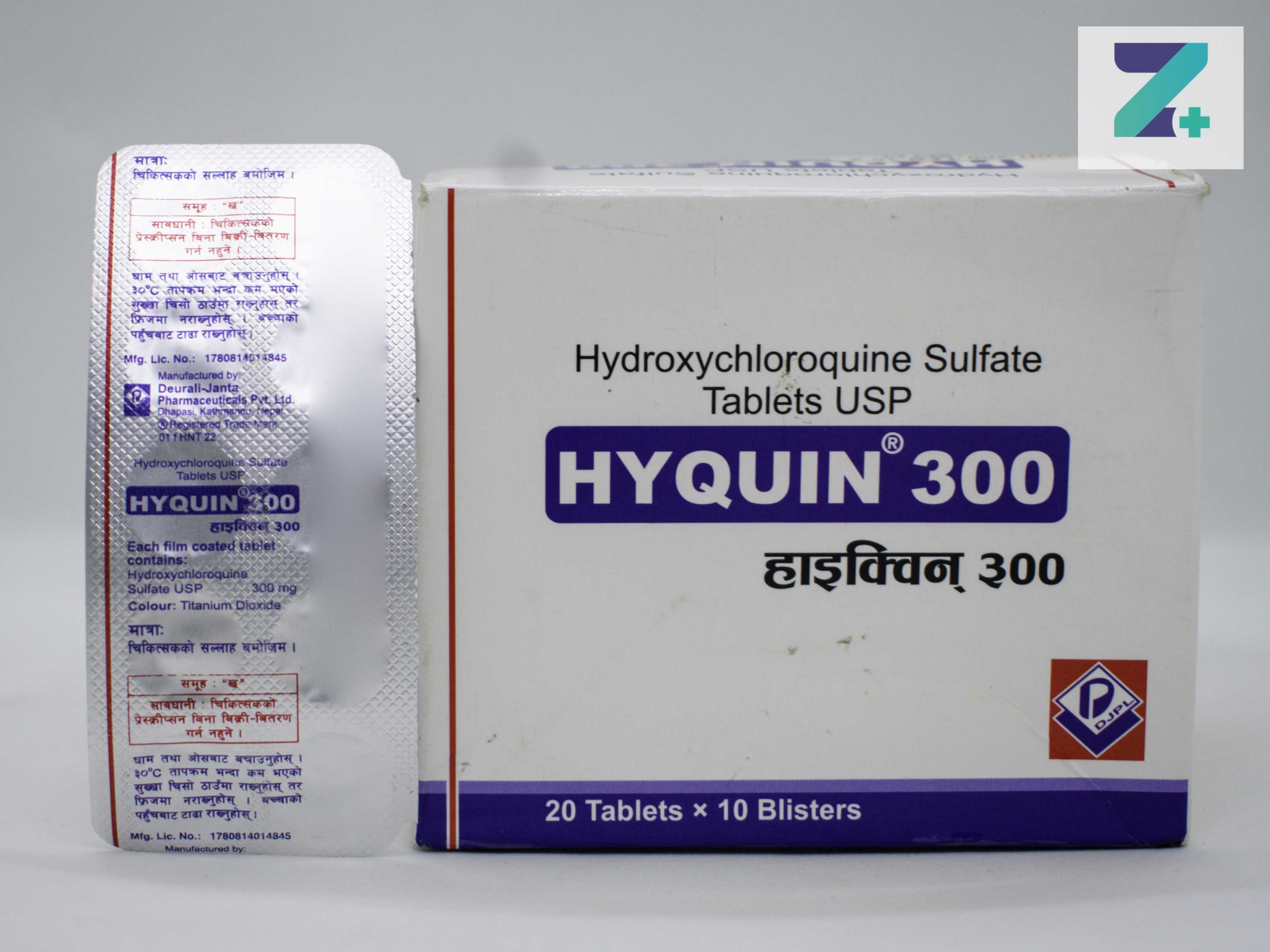
HYQUIN-300
Price: Rs.200.00
10% off
In stock
Loose stock: 0
Description
HYQUIN-300 TAB 10
Details
Composition
HYDROXYCHLOROQUINE SULPHATE 300 MG
# Hydroxychloroquine Sulphate 300 mg
## Short Description
**Hydroxychloroquine Sulphate 300 mg** is an antimalarial and disease-modifying medicine used primarily for certain **autoimmune and inflammatory conditions**, including **rheumatoid arthritis and systemic lupus erythematosus (SLE)**. It can also be used for the treatment or prevention of certain forms of malaria when the causative parasite is susceptible.
Hydroxychloroquine works by altering immune-system activity and interfering with processes involved in inflammation. Because prolonged treatment can affect the eyes and heart in some patients, appropriate medical monitoring is important.
> **Important:** Hydroxychloroquine should be taken only under the supervision of a qualified healthcare professional. It should not be self-used for COVID-19 prevention or treatment.
---
## Key Benefits
* Helps reduce inflammation and disease activity in certain **autoimmune disorders**.
* Commonly used as a disease-modifying treatment for **rheumatoid arthritis**.
* Used in the management of **systemic lupus erythematosus** and certain related conditions.
* Has **antimalarial activity** against susceptible malaria parasites.
* May help reduce joint pain, stiffness and swelling associated with inflammatory arthritis.
* Can help control certain skin manifestations associated with lupus and other autoimmune diseases.
---
## Uses / Indications
### 1. Rheumatoid Arthritis
Hydroxychloroquine may be prescribed to help control inflammation and symptoms associated with **rheumatoid arthritis**.
It may improve:
* Joint pain
* Joint swelling
* Morning stiffness
* Overall inflammatory disease activity
### 2. Systemic Lupus Erythematosus (SLE)
Hydroxychloroquine is widely used as part of treatment for **lupus**, including certain skin and joint manifestations.
### 3. Other Autoimmune Conditions
Depending on local approvals and specialist recommendations, hydroxychloroquine may be used for other inflammatory or autoimmune disorders.
### 4. Malaria
Hydroxychloroquine has antimalarial activity and may be used to **treat or prevent certain types of malaria where the parasite remains susceptible**.
Because resistance to hydroxychloroquine is widespread in some regions, it is not appropriate for all malaria infections.
> The approved indications and recommended malaria regimens vary by country and resistance patterns.
---
## How It Works
Hydroxychloroquine belongs to the **4-aminoquinoline** class of medicines.
### In Autoimmune Disease
Hydroxychloroquine accumulates within intracellular compartments such as lysosomes and endosomes and alters their acidity. This can interfere with antigen processing and immune signaling, including certain **toll-like receptor pathways**.
The overall effect is a reduction in excessive immune and inflammatory activity.
### In Malaria
Hydroxychloroquine interferes with the parasite's ability to process **heme**, a toxic substance generated when the parasite digests hemoglobin. This contributes to accumulation of toxic substances inside susceptible malaria parasites and leads to their death.
### Simple Mechanism
**Autoimmune disease:**
Hydroxychloroquine → modifies immune signaling → reduces excessive inflammation.
**Malaria:**
Hydroxychloroquine → interferes with parasite heme processing → damages susceptible malaria parasites.
---
## Dosage & Administration
> **The appropriate dose depends on the condition, body weight, age, kidney/liver function and treatment duration. Do not use the 300 mg strength as a standard dose for every patient.**
### Rheumatoid Arthritis
Hydroxychloroquine is commonly prescribed in a **daily dose based on the patient's actual body weight**, with the dose kept within recommended safety limits.
The healthcare professional may adjust the dose according to:
* Clinical response
* Body weight
* Tolerability
* Kidney function
* Duration of treatment
### Systemic Lupus Erythematosus
Dosing is individualized according to body weight and disease manifestations.
Long-term therapy requires appropriate monitoring, particularly **eye examinations**.
### Malaria
Treatment and prevention regimens vary depending on:
* Type of malaria
* Geographic location
* Local resistance
* Patient age and body weight
* Whether treatment or prophylaxis is required
Do not use hydroxychloroquine for malaria without confirming that the malaria parasite is susceptible.
### How to Take
* Take exactly as prescribed.
* Take with food or milk if recommended to reduce stomach irritation.
* Swallow tablets with water.
* Take doses at the same time each day when prescribed on a regular schedule.
* Do not exceed the prescribed dose.
### Missed Dose
Take the missed dose when remembered unless it is nearly time for the next dose.
**Do not take two doses together** to compensate for a missed dose.
---
## Side Effects
### Common Side Effects
Possible side effects include:
* Nausea
* Stomach pain
* Diarrhea
* Vomiting
* Headache
* Dizziness
* Loss of appetite
* Skin rash
* Itching
Taking the medicine with food may help reduce gastrointestinal discomfort.
### Eye-Related Side Effects
Long-term use can rarely cause **hydroxychloroquine retinal toxicity**, which may lead to permanent visual impairment if not detected early.
Report symptoms such as:
* Difficulty reading
* Blurred vision
* Changes in color vision
* Missing areas in the field of vision
* Visual distortion
### Serious Side Effects
Seek medical attention for:
* Significant vision changes
* Fainting
* Severe or irregular heartbeat
* Unexplained muscle weakness
* Severe skin reactions
* Significant mood or behavioral changes
* Seizures
* Severe allergic reaction
---
## Precautions & Warnings
### Retinal Toxicity
One of the most important long-term risks is **retinal damage**.
Risk increases with factors such as:
* Higher daily dose relative to body weight
* Long treatment duration
* Kidney impairment
* Tamoxifen use
* Pre-existing retinal disease
Baseline and periodic eye examinations may be recommended depending on treatment duration and risk factors.
### Heart Rhythm Problems
Hydroxychloroquine can prolong the **QT interval** in susceptible patients and, rarely, cause serious cardiac rhythm disturbances.
Tell your healthcare professional if you have:
* Heart rhythm disorders
* Previous prolonged QT interval
* Significant heart disease
* Low potassium or magnesium
* A history of unexplained fainting
### Kidney Disease
Hydroxychloroquine is partly eliminated by the kidneys. People with impaired kidney function may require additional caution and monitoring.
### Liver Disease
Tell your healthcare professional if you have liver disease or abnormal liver function.
### Blood Disorders
Rarely, hydroxychloroquine can affect blood cell counts. Medical monitoring may be appropriate during prolonged treatment.
### Muscle and Nerve Effects
Rare cases of muscle weakness or neuromuscular toxicity can occur, particularly during long-term treatment.
### Hypoglycemia
Hydroxychloroquine can occasionally cause **low blood glucose**, including in people taking diabetes medicines.
Watch for symptoms such as:
* Sweating
* Shaking
* Confusion
* Dizziness
* Weakness
* Rapid heartbeat
### Pregnancy
Hydroxychloroquine may be used during pregnancy for certain autoimmune conditions when medically indicated. Do not stop prescribed therapy without discussing it with your doctor.
### Breastfeeding
Hydroxychloroquine passes into breast milk in small amounts. Discuss its use with your healthcare professional if you are breastfeeding.
---
## Drug Interactions
### Medicines That Prolong QT Interval
Combining hydroxychloroquine with other QT-prolonging medicines may increase the risk of abnormal heart rhythms.
Examples can include certain:
* Antiarrhythmic medicines
* Antipsychotic medicines
* Antidepressants
* Antibiotics
### Digoxin
Hydroxychloroquine may increase digoxin concentrations in some patients. Monitoring may be required.
### Diabetes Medicines
Hydroxychloroquine can enhance the glucose-lowering effect of insulin and certain oral antidiabetic medicines, potentially causing hypoglycemia.
### Tamoxifen
Concurrent long-term use may increase the risk of retinal toxicity.
### Antacids
Antacids containing aluminum or magnesium may reduce absorption.
A healthcare professional or pharmacist may recommend separating administration times.
### Other Antimalarial Medicines
Combining hydroxychloroquine with other antimalarial drugs should be done only under appropriate medical supervision.
> Always tell your doctor or pharmacist about **all prescription medicines, OTC medicines, vitamins and herbal supplements** you take.
---
## Storage Information
* Store at the temperature specified on the product label.
* Keep tablets in the original packaging.
* Protect from excessive heat and moisture.
* Keep away from direct sunlight.
* Keep the medicine out of reach of children.
* Keep the container tightly closed when applicable.
* Do not use after the expiry date.
> Hydroxychloroquine tablets can be dangerous if accidentally ingested by children. Store them securely.
---
## Prescription Status
**Hydroxychloroquine Sulphate 300 mg is generally a prescription medicine.**
It should be used under medical supervision, particularly for long-term autoimmune treatment because **eye, cardiac and other monitoring may be required**.
---
## Genuine Medicine Assurance
When purchasing **Hydroxychloroquine Sulphate 300 mg**:
* Purchase only from a **licensed and reputable pharmacy**.
* Verify the medicine name and strength.
* Check the manufacturer's name.
* Check the batch/lot number and expiry date.
* Ensure the packaging and blister strips are intact.
* Check labeling and registration information where applicable.
* Avoid products with suspicious, damaged or altered packaging.
* Do not purchase prescription medicines from unauthorized sellers.
* Keep the original packaging for product verification.
* If you suspect a counterfeit medicine, contact the manufacturer, licensed pharmacy or relevant medicines regulatory authority.
---
# Frequently Asked Questions (FAQ)
### 1. What is Hydroxychloroquine Sulphate 300 mg used for?
Hydroxychloroquine is used mainly for certain **autoimmune conditions**, including rheumatoid arthritis and systemic lupus erythematosus. It may also be used for susceptible malaria infections.
### 2. Is Hydroxychloroquine an antibiotic?
No. Hydroxychloroquine is an **antimalarial and immunomodulatory medicine**. It is not a conventional antibiotic.
### 3. Is Hydroxychloroquine a steroid?
No. Hydroxychloroquine is **not a corticosteroid**. It belongs to the 4-aminoquinoline class.
### 4. How does Hydroxychloroquine work?
For autoimmune diseases, it modifies immune signaling and reduces excessive inflammation. Against susceptible malaria parasites, it interferes with parasite heme processing.
### 5. Can Hydroxychloroquine treat rheumatoid arthritis?
Yes. Hydroxychloroquine is an established disease-modifying medicine used in the management of rheumatoid arthritis.
### 6. Can Hydroxychloroquine be used for lupus?
Yes. Hydroxychloroquine is commonly used as part of treatment for **systemic lupus erythematosus**, particularly for joint and skin manifestations.
### 7. Does Hydroxychloroquine 300 mg require an eye examination?
Long-term hydroxychloroquine treatment requires attention to **retinal safety**. Depending on treatment duration and individual risk factors, baseline and periodic ophthalmic screening may be recommended.
### 8. Can Hydroxychloroquine affect eyesight?
Yes. Rarely, prolonged treatment can cause retinal toxicity that may lead to permanent vision loss. Report new or unusual visual symptoms promptly.
### 9. Can Hydroxychloroquine affect the heart?
Rarely, it can affect heart rhythm by prolonging the QT interval and can cause other cardiac complications. Risk may be higher in people with underlying heart disease or when combined with certain medicines.
### 10. Can Hydroxychloroquine lower blood sugar?
Yes. It can occasionally cause **hypoglycemia**, particularly when combined with insulin or other glucose-lowering medicines.
### 11. Should Hydroxychloroquine be taken with food?
Taking it with food or milk may help reduce stomach irritation. Follow the instructions provided with your specific product.
### 12. Can Hydroxychloroquine be used during pregnancy?
It may be prescribed during pregnancy for certain autoimmune conditions when the benefits outweigh potential risks. **Do not stop prescribed treatment without consulting your doctor.**
### 13. Can Hydroxychloroquine be used while breastfeeding?
Hydroxychloroquine enters breast milk in small amounts. Consult your healthcare professional before use while breastfeeding.
### 14. Can Hydroxychloroquine be used to prevent COVID-19?
Hydroxychloroquine **should not be used for COVID-19 prevention or treatment unless specifically recommended as part of an approved clinical indication or research setting**. It has not been established as an effective routine treatment or preventive medicine for COVID-19.
### 15. Is Hydroxychloroquine effective against all malaria?
No. Resistance to hydroxychloroquine occurs in many malaria parasites and geographic regions. The appropriate antimalarial medicine depends on the parasite and location.
### 16. What happens if I miss a dose?
Take the dose when remembered unless it is nearly time for the next dose. **Do not double the next dose.**
### 17. Can Hydroxychloroquine be taken with antacids?
Some aluminum- or magnesium-containing antacids may interfere with hydroxychloroquine absorption. Ask your pharmacist or doctor how to separate the medicines.
### 18. Can Hydroxychloroquine be taken with other medicines?
It can interact with several medicines, particularly those affecting **heart rhythm, blood sugar or digoxin levels**. Tell your healthcare professional about every medicine and supplement you take.
### 19. Is Hydroxychloroquine Sulphate 300 mg available without a prescription?
Hydroxychloroquine is generally a **prescription-only medicine**, although specific regulations may vary by country.
### 20. How should Hydroxychloroquine 300 mg be stored?
Store it according to the manufacturer's instructions, away from excessive heat and moisture and **securely out of children's reach**.
---
## Medical Disclaimer
This information about **Hydroxychloroquine Sulphate 300 mg** is provided for educational and general informational purposes only. It is **not a substitute for professional medical advice, diagnosis or treatment**.
Hydroxychloroquine requires appropriate patient selection and monitoring. The correct dose depends on the indication, body weight, kidney and liver function, treatment duration and other medicines being used. Long-term treatment may require **ophthalmic monitoring**, and patients with cardiac risk factors may require additional evaluation.
Hydroxychloroquine should **not be self-medicated for COVID-19** or used for malaria without appropriate medical assessment and consideration of local malaria resistance patterns.
Seek prompt medical attention for significant vision changes, fainting, severe palpitations, difficulty breathing, severe allergic reactions or other serious symptoms.
**Do not start, stop or change Hydroxychloroquine Sulphate treatment without consulting a qualified healthcare professional.**