HYTIDE 12.5
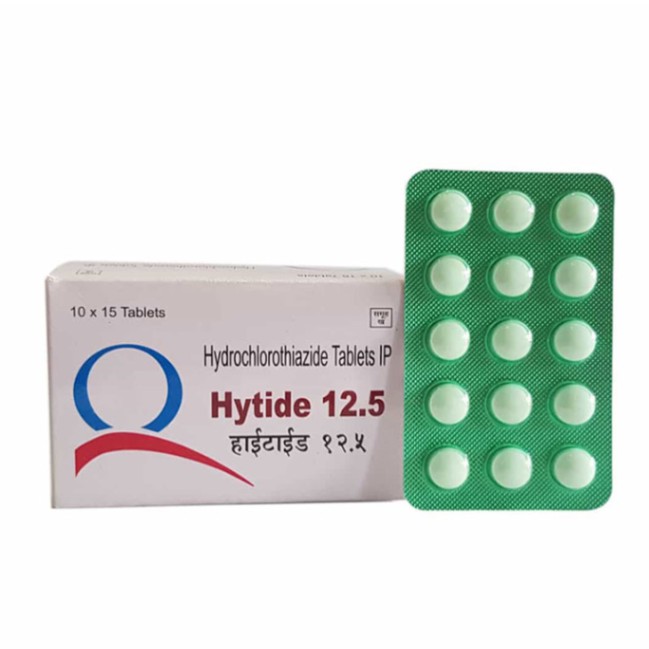
Price: Rs.28.50
10% off
In stock
Loose stock: 0
Description
HYTIDE 12.5 TAB 15
Details
Composition
HYDROCHLOROTHIAZIDE 12.5 MG
# HYDROCHLOROTHIAZIDE 12.5 MG
## SHORT DESCRIPTION
**Hydrochlorothiazide 12.5 mg** is a **thiazide diuretic (“water pill”)** used primarily to help lower high blood pressure and reduce excess fluid retention (edema). It works mainly by helping the kidneys remove excess **sodium and water** from the body.
Hydrochlorothiazide may be used alone or together with other medicines, such as ACE inhibitors, ARBs, or other blood-pressure medicines.
---
## KEY BENEFITS
* Helps **lower high blood pressure**.
* Helps reduce excess **fluid and swelling (edema)**.
* Promotes removal of excess sodium and water through urine.
* May be used alone or as part of combination blood-pressure treatment.
* Can help reduce fluid accumulation associated with certain medical conditions.
---
## USES / INDICATIONS
Hydrochlorothiazide 12.5 mg may be prescribed for:
1. **Hypertension (high blood pressure)**
2. **Edema associated with heart failure**
3. Fluid retention associated with certain **kidney disorders**
4. Fluid retention associated with certain **liver disorders**
5. Other conditions involving excess fluid, when specifically recommended by a healthcare professional
It may also be included in combination medicines for blood-pressure control.
---
## HOW IT WORKS
Hydrochlorothiazide acts on the **distal convoluted tubule of the kidney**.
It inhibits the sodium-chloride (**Na⁺/Cl⁻**) cotransporter, reducing the reabsorption of sodium and chloride.
This causes the kidneys to excrete more:
* Sodium
* Chloride
* Water
The resulting reduction in fluid volume helps lower **blood pressure** and reduce **edema**.
With long-term use, blood pressure remains lower partly because of reduced peripheral vascular resistance.
---
## DOSAGE & ADMINISTRATION
### Typical Adult Dose for Hypertension
A commonly used starting dose is **12.5 mg once daily**.
Your healthcare professional may adjust the dose depending on your blood-pressure response and other medicines you take.
### For Edema
Dosing for edema can vary considerably depending on the underlying condition and severity. Higher or divided doses may sometimes be prescribed under medical supervision.
### How to Take
* Take exactly as prescribed.
* It is usually taken **once daily**, preferably in the morning.
* Taking it later in the day may cause increased urination during the night.
* Take with or without food unless your healthcare professional advises otherwise.
* Maintain adequate fluid intake according to your medical condition and doctor's advice.
### Missed Dose
Take the missed dose when remembered unless it is close to the next scheduled dose.
**Do not double the dose.**
---
## SIDE EFFECTS
### Common Side Effects
Possible side effects include:
* Increased urination
* Dizziness
* Lightheadedness
* Headache
* Weakness
* Increased thirst
* Low blood pressure
Hydrochlorothiazide can alter electrolyte levels.
### Electrolyte-Related Effects
It may cause:
* **Low potassium**
* Low sodium
* Low magnesium
* Increased calcium levels
Symptoms of significant electrolyte imbalance may include:
* Muscle cramps
* Muscle weakness
* Confusion
* Irregular heartbeat
* Severe fatigue
### Other Possible Effects
* Increased blood sugar
* Increased uric acid
* Increased sensitivity to sunlight
* Skin rash
* Nausea
### Serious Side Effects
Seek medical attention for:
* Severe dizziness or fainting
* Severe weakness
* Confusion
* Significant heart rhythm changes
* Severe allergic reaction
* Severe skin reaction
* Signs of serious electrolyte imbalance
---
## PRECAUTIONS & WARNINGS
### Low Blood Pressure
Hydrochlorothiazide can lower blood pressure too much in some people, particularly when treatment begins or when combined with other blood-pressure medicines.
Rise slowly from sitting or lying positions if you experience dizziness.
### Electrolyte Imbalance
Regular monitoring may be required for people at risk of:
* Low potassium
* Low sodium
* Low magnesium
* High calcium
### Kidney Disease
Hydrochlorothiazide may be less effective in severe kidney impairment and may not be appropriate in certain patients.
Tell your healthcare professional if you have kidney disease.
### Liver Disease
Electrolyte disturbances and dehydration can be particularly problematic in people with significant liver disease.
### Diabetes
Hydrochlorothiazide may increase blood glucose levels in some patients.
People with diabetes may require closer blood-glucose monitoring.
### Gout
Hydrochlorothiazide can increase **uric acid** levels and may trigger or worsen gout in susceptible individuals.
### Photosensitivity
Hydrochlorothiazide can increase sensitivity to sunlight.
Use appropriate sun protection and report unusual or severe skin reactions.
### Lupus
Thiazide diuretics may occasionally worsen or activate lupus-related symptoms in susceptible patients.
### Skin Cancer Risk
Long-term hydrochlorothiazide exposure has been associated with an increased risk of certain **non-melanoma skin cancers**, particularly with cumulative exposure.
Protect skin from excessive sunlight and report unusual or persistent skin lesions to a healthcare professional.
### Pregnancy
Hydrochlorothiazide is not generally used simply to treat routine pregnancy-related swelling. Pregnant patients should use it only when specifically recommended by a healthcare professional.
### Breastfeeding
Discuss hydrochlorothiazide use with your healthcare professional. Higher doses may reduce milk production.
---
## DRUG INTERACTIONS
### Other Blood-Pressure Medicines
Combining hydrochlorothiazide with other antihypertensive medicines may increase the risk of **low blood pressure**.
### ACE Inhibitors and ARBs
Medicines such as lisinopril, enalapril, losartan, or valsartan may enhance blood-pressure lowering.
They may also affect kidney function and potassium levels, depending on the combination.
### Lithium
Hydrochlorothiazide can reduce lithium elimination and significantly increase **lithium levels**, potentially causing toxicity.
This combination requires careful medical supervision.
### Digoxin
Electrolyte abnormalities caused by hydrochlorothiazide, particularly low potassium or magnesium, can increase the risk of **digoxin toxicity**.
### NSAIDs
Medicines such as:
* Ibuprofen
* Naproxen
* Diclofenac
may reduce the diuretic and blood-pressure-lowering effects of hydrochlorothiazide and may increase kidney risk in susceptible patients.
### Corticosteroids
Corticosteroids may increase the risk of **low potassium** and may worsen blood-glucose control.
### Diabetes Medicines
Hydrochlorothiazide can affect blood glucose and may alter the requirements for certain diabetes medicines.
### Other Diuretics
Combining diuretics can increase fluid loss and electrolyte disturbances.
### Cholestyramine / Colestipol
These medicines may reduce absorption of hydrochlorothiazide if taken at the same time.
Your healthcare professional may recommend separating administration.
---
## STORAGE INFORMATION
* Store according to the manufacturer's instructions.
* Keep at room temperature unless the product label states otherwise.
* Protect from excessive heat, moisture, and direct sunlight.
* Keep tablets in their original packaging.
* Keep out of reach and sight of children.
* Do not use after the expiry date.
* Do not use tablets if the packaging is damaged.
---
## PRESCRIPTION STATUS
**Prescription medicine in many countries.**
Hydrochlorothiazide 12.5 mg should be used according to the advice of a qualified healthcare professional because blood pressure, kidney function, and electrolyte levels may require monitoring.
Availability and prescription requirements vary by country.
---
## GENUINE MEDICINE ASSURANCE
When purchasing **Hydrochlorothiazide 12.5 mg**, obtain it from a **licensed pharmacy or authorized medicine supplier**.
Check the product for:
* Correct medicine name and strength
* Active ingredient
* Manufacturer
* Batch/lot number
* Manufacturing date
* Expiry date
* Intact packaging and seal
* Appropriate regulatory information
Avoid medicines with damaged packaging, missing labels, altered expiry dates, or questionable authenticity.
---
# FAQ – HYDROCHLOROTHIAZIDE 12.5 MG
### 1. What is Hydrochlorothiazide 12.5 mg used for?
Hydrochlorothiazide 12.5 mg is mainly used to treat **high blood pressure** and can also be used to reduce excess fluid retention (edema).
### 2. Is Hydrochlorothiazide a diuretic?
Yes. It is a **thiazide diuretic**, commonly called a "water pill."
### 3. How does Hydrochlorothiazide lower blood pressure?
It causes the kidneys to remove more sodium and water, initially reducing circulating fluid volume. With continued treatment, it also helps reduce peripheral vascular resistance.
### 4. Does Hydrochlorothiazide make you urinate more?
Yes. Increased urination is an expected effect, particularly during the first several hours after taking a dose.
### 5. What is the best time to take Hydrochlorothiazide 12.5 mg?
It is commonly taken **in the morning** to reduce the chance of nighttime urination. Follow your prescribed schedule.
### 6. Can Hydrochlorothiazide be taken every day?
Yes. For hypertension, hydrochlorothiazide is commonly prescribed as a **once-daily medicine**, but the exact regimen should be determined by your healthcare professional.
### 7. Does Hydrochlorothiazide lower potassium?
Yes. It can cause **low potassium (hypokalemia)** in some patients.
### 8. Can Hydrochlorothiazide cause dehydration?
Yes. Excessive fluid loss can lead to dehydration, especially during hot weather, vomiting, diarrhea, or when combined with other diuretics.
### 9. Can Hydrochlorothiazide increase blood sugar?
It can cause a modest increase in blood glucose in some patients, particularly at higher doses.
### 10. Can Hydrochlorothiazide cause gout?
It can increase **uric acid levels** and may trigger or worsen gout in susceptible people.
### 11. Can Hydrochlorothiazide affect the kidneys?
It can affect kidney function, particularly if significant dehydration occurs or when combined with other medicines that affect the kidneys.
### 12. Can I take Hydrochlorothiazide with other blood-pressure medicines?
Yes, it is commonly combined with other antihypertensive medicines. However, combination therapy should be supervised because blood pressure and electrolyte levels may require monitoring.
### 13. Can I take Ibuprofen with Hydrochlorothiazide?
NSAIDs such as ibuprofen may reduce hydrochlorothiazide's effectiveness and can increase kidney risk in susceptible patients. Consult your healthcare professional before regular use.
### 14. Does Hydrochlorothiazide cause low blood pressure?
It can. Dizziness, lightheadedness, or fainting may occur if blood pressure falls too much.
### 15. Can Hydrochlorothiazide be used during pregnancy?
It should only be used during pregnancy when specifically recommended by a healthcare professional.
### 16. Can Hydrochlorothiazide be used while breastfeeding?
Discuss its use with your healthcare professional because higher doses may affect milk production.
### 17. Should I stop Hydrochlorothiazide if my blood pressure becomes normal?
Do not stop it without medical advice. A normal blood-pressure reading may indicate that the treatment is working.
### 18. What happens if I miss a Hydrochlorothiazide dose?
Take it when remembered unless it is close to the next dose. **Do not double the dose.**
### 19. Does Hydrochlorothiazide cause weight loss?
It may cause a temporary reduction in body weight due to **fluid loss**, but it is not a weight-loss medicine and should not be used for that purpose.
### 20. Is Hydrochlorothiazide 12.5 mg available without a prescription?
Prescription requirements vary by country, but hydrochlorothiazide is commonly supplied as a **prescription medicine**.
---
## MEDICAL DISCLAIMER
This information about **Hydrochlorothiazide 12.5 mg** is provided for general educational purposes only and does not replace professional medical advice, diagnosis, or treatment.
Hydrochlorothiazide can affect **blood pressure, kidney function, blood glucose, uric acid, and electrolyte levels**. Patients taking it for extended periods or those with kidney, liver, heart, or metabolic conditions may require medical monitoring.
Do not start, stop, or change the dose without consulting a qualified healthcare professional. Seek medical attention for severe dizziness, fainting, confusion, significant muscle weakness, irregular heartbeat, severe allergic reactions, or other concerning symptoms.
Always follow the **specific product label and your healthcare professional's instructions** regarding dosage, duration, interactions, contraindications, and storage.