INMECIN 50
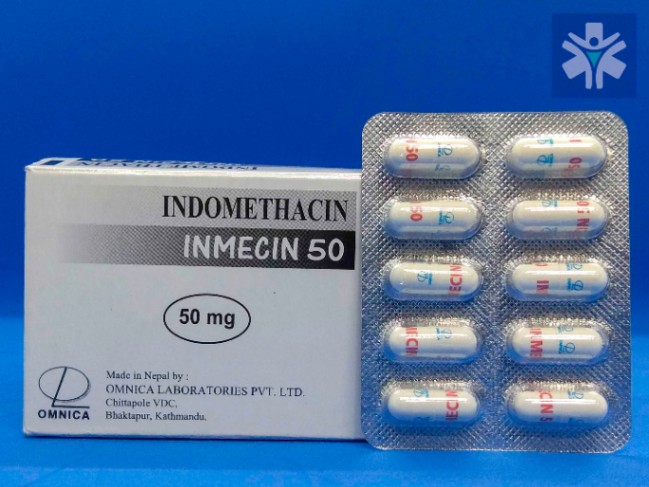
Price: Rs.80.00
10% off
In stock
Loose stock: 0
Description
INMECIN 50 CAP 10
Details
Composition
INDOMETHACIN 50 MG
# Indomethacin 50 mg
## SHORT DESCRIPTION
**Indomethacin 50 mg** is a prescription **nonsteroidal anti-inflammatory drug (NSAID)** used to relieve pain, inflammation, and swelling associated with certain musculoskeletal and inflammatory conditions. It is particularly useful in conditions such as **acute gout attacks, osteoarthritis, rheumatoid arthritis, ankylosing spondylitis, and bursitis/tendinitis**, depending on medical assessment.
Indomethacin should be used at the **lowest effective dose for the shortest appropriate duration** because NSAIDs can cause serious gastrointestinal, cardiovascular, kidney, and other adverse effects.
## KEY BENEFITS
* Helps relieve moderate pain
* Reduces inflammation and swelling
* Helps reduce joint pain and stiffness
* May be used for acute gout attacks
* May provide relief in certain arthritis and musculoskeletal conditions
* Helps reduce pain associated with bursitis and tendinitis
* Provides both analgesic and anti-inflammatory effects
## USES / INDICATIONS
Indomethacin 50 mg may be prescribed for:
* **Acute gout attacks**
* Rheumatoid arthritis
* Osteoarthritis
* Ankylosing spondylitis
* Acute musculoskeletal pain
* Bursitis
* Tendinitis
* Certain other inflammatory joint conditions
The exact indication and duration of treatment should be determined by a healthcare professional.
## HOW IT WORKS
Indomethacin works by inhibiting **cyclooxygenase (COX) enzymes**, which are involved in the production of **prostaglandins**.
Prostaglandins contribute to:
* Pain
* Inflammation
* Swelling
* Fever
By reducing prostaglandin production, indomethacin helps decrease **pain, inflammation, and swelling**.
## DOSAGE & ADMINISTRATION
The dosage depends on the condition being treated and the patient's response.
For adults, indomethacin is commonly prescribed in divided doses. A healthcare professional may adjust the dose depending on the indication, with the **lowest effective dose** generally preferred.
For a **50 mg capsule/tablet**:
* Take exactly as prescribed.
* Swallow with water.
* Taking it with food or milk may help reduce stomach irritation.
* Do not crush or chew modified-release formulations.
* Do not take more frequently than prescribed.
* Do not use indomethacin for longer than recommended.
### Missed Dose
Take the missed dose when remembered unless it is nearly time for the next dose. Do not take two doses together.
## SIDE EFFECTS
Common side effects may include:
* Nausea
* Vomiting
* Indigestion
* Stomach pain
* Heartburn
* Diarrhea or constipation
* Headache
* Dizziness
* Drowsiness
### Serious Side Effects
Seek immediate medical attention if you develop:
* Black or bloody stools
* Vomiting blood or material resembling coffee grounds
* Severe or persistent stomach pain
* Chest pain
* Shortness of breath
* Sudden weakness or difficulty speaking
* Severe allergic reaction
* Significant swelling
* Reduced urine output
* Severe skin rash or blistering
## PRECAUTIONS & WARNINGS
### Gastrointestinal bleeding
Indomethacin can cause **stomach ulcers, gastrointestinal bleeding, and perforation**, which can sometimes be life-threatening.
The risk is higher in:
* Older adults
* People with a history of ulcers or gastrointestinal bleeding
* People taking anticoagulants or corticosteroids
* People using multiple NSAIDs
### Cardiovascular risk
NSAIDs may increase the risk of **heart attack or stroke**, particularly with higher doses or prolonged use.
Avoid using indomethacin immediately before or after **coronary artery bypass graft (CABG) surgery** unless specifically directed by a healthcare professional.
### Kidney problems
Indomethacin can affect kidney function. Tell your doctor if you have kidney disease, dehydration, heart failure, or are taking medicines that affect the kidneys.
### Liver problems
Patients with liver disease should use indomethacin only under medical supervision.
### Asthma and NSAID sensitivity
Tell your doctor if aspirin or other NSAIDs have previously caused asthma, wheezing, hives, or allergic reactions.
### Pregnancy
NSAIDs, including indomethacin, should generally be **avoided from around 20 weeks of pregnancy onward unless specifically advised by a healthcare professional**, and they should be avoided at approximately **30 weeks and later** because of important fetal risks.
### Breastfeeding
Consult your doctor before using indomethacin while breastfeeding.
### Elderly patients
Older adults may have a higher risk of gastrointestinal bleeding, kidney problems, and other NSAID-related adverse effects.
## DRUG INTERACTIONS
Indomethacin may interact with several medicines, including:
* **Aspirin and other NSAIDs**
* Anticoagulants such as **warfarin**
* Antiplatelet medicines such as **clopidogrel**
* Corticosteroids such as prednisolone
* ACE inhibitors
* Angiotensin receptor blockers (ARBs)
* Diuretics
* Lithium
* Methotrexate
* Cyclosporine
* Tacrolimus
* Certain medicines for blood pressure
* SSRIs and SNRIs, which may increase gastrointestinal bleeding risk
Do not combine indomethacin with another NSAID unless specifically instructed by your doctor.
Tell your healthcare professional about all medicines, supplements, and herbal products you take.
## STORAGE INFORMATION
* Store according to the manufacturer's instructions.
* Keep at room temperature.
* Protect from excessive heat, moisture, and direct sunlight.
* Keep the medicine in its original packaging.
* Keep out of reach and sight of children.
* Do not use after the expiry date.
* Do not use tablets or capsules if the packaging is damaged.
## PRESCRIPTION STATUS
**Indomethacin 50 mg is generally a prescription medicine.**
It should be used under the supervision of a qualified healthcare professional because of its potential for gastrointestinal, cardiovascular, kidney, and other serious adverse effects.
## GENUINE MEDICINE ASSURANCE
To help ensure you receive genuine Indomethacin 50 mg:
* Purchase from a licensed and reputable pharmacy.
* Check the medicine name and strength.
* Verify the manufacturer's details.
* Check the batch number and expiry date.
* Ensure the packaging is properly sealed.
* Do not purchase products with altered or suspicious labeling.
* Check that the tablets/capsules correspond with the product information.
* Consult a pharmacist if you have concerns about authenticity.
## FAQ SECTION
### What is Indomethacin 50 mg used for?
Indomethacin 50 mg is an NSAID used to relieve **pain and inflammation** in conditions such as acute gout, arthritis, bursitis, tendinitis, and certain other inflammatory disorders.
### Is Indomethacin a painkiller?
Yes. Indomethacin is an NSAID with both **pain-relieving and anti-inflammatory** properties.
### Is Indomethacin used for gout?
Yes. Indomethacin is commonly prescribed for **acute gout attacks** to reduce pain and inflammation.
### Does Indomethacin reduce swelling?
Yes. By reducing prostaglandin production, indomethacin can help reduce inflammation and associated swelling.
### Is Indomethacin an NSAID?
Yes. Indomethacin belongs to the **nonsteroidal anti-inflammatory drug (NSAID)** class.
### How does Indomethacin work?
It blocks COX enzymes involved in prostaglandin production. This reduces the chemical signals responsible for pain and inflammation.
### How should I take Indomethacin 50 mg?
Take it exactly as prescribed, preferably with food or milk if it causes stomach irritation. Follow your doctor's instructions regarding the number of doses per day.
### Can I take Indomethacin on an empty stomach?
It can be taken with or without food depending on the formulation, but taking it with food or milk may help reduce stomach irritation.
### Can Indomethacin cause stomach problems?
Yes. Indigestion, nausea, stomach pain, ulcers, and gastrointestinal bleeding are possible. Severe stomach pain, black stools, or vomiting blood requires urgent medical attention.
### Can Indomethacin cause kidney problems?
Yes. NSAIDs can reduce kidney function, particularly in people with kidney disease, dehydration, heart failure, or certain other risk factors.
### Can I take Ibuprofen with Indomethacin?
Generally, **do not take ibuprofen together with indomethacin** unless specifically instructed by your doctor. Both are NSAIDs and combining them can increase the risk of stomach bleeding, kidney problems, and other adverse effects.
### Can I take Aspirin with Indomethacin?
Do not combine aspirin and indomethacin without medical advice. The combination can increase gastrointestinal bleeding and other risks.
### Can Indomethacin be taken with Paracetamol?
Paracetamol and indomethacin may sometimes be used together, but this should be discussed with a healthcare professional, particularly if prolonged treatment is required.
### Can Indomethacin increase blood pressure?
Yes. NSAIDs can cause fluid retention and may increase blood pressure in some people.
### Can Indomethacin cause dizziness?
Yes. Dizziness, headache, and drowsiness can occur. Avoid driving or operating machinery if you feel affected.
### Can Indomethacin be used during pregnancy?
Indomethacin and other NSAIDs should generally be avoided from around **20 weeks of pregnancy onward unless specifically recommended by a healthcare professional**, with particular avoidance later in pregnancy because of fetal risks.
### Can Indomethacin be used while breastfeeding?
Consult your healthcare professional before using indomethacin while breastfeeding.
### Who should avoid Indomethacin?
People with a history of serious NSAID allergy, active stomach ulcer or gastrointestinal bleeding, certain severe kidney or heart conditions, or specific cardiovascular risks may need to avoid it. Your doctor should determine whether it is appropriate.
### What happens if I miss a dose of Indomethacin?
Take it when remembered unless it is almost time for the next dose. Do not double the dose.
### What happens if I take too much Indomethacin?
Overdose can cause nausea, vomiting, stomach pain, dizziness, drowsiness, gastrointestinal bleeding, kidney problems, or other serious effects. Seek urgent medical advice if you take more than prescribed.
### How long can I take Indomethacin?
Use it for the **shortest duration necessary** at the lowest effective dose. Long-term treatment should only be continued under medical supervision.
### Is Indomethacin stronger than Ibuprofen?
They are different NSAIDs, and their effects vary between individuals and conditions. Indomethacin can be particularly effective for certain inflammatory conditions, but it also has a significant adverse-effect profile.
### Does Indomethacin cure arthritis?
No. It helps control **pain and inflammation** but does not cure the underlying cause of most forms of arthritis.
### Does Indomethacin make you sleepy?
Drowsiness or dizziness can occur in some people. Avoid driving if you experience these effects.
### How should Indomethacin 50 mg be stored?
Store it according to the manufacturer's instructions, generally at room temperature and away from excessive heat, moisture, and direct sunlight. Keep it out of children's reach.
## MEDICAL DISCLAIMER
This information about **Indomethacin 50 mg** is provided for educational and informational purposes only and is not a substitute for professional medical advice, diagnosis, or treatment.
Indomethacin is a potent NSAID and can cause serious **gastrointestinal bleeding, ulcers, kidney problems, cardiovascular events, allergic reactions, and other adverse effects**. Use the lowest effective dose for the shortest appropriate duration under professional guidance.
Do not combine indomethacin with other NSAIDs unless specifically instructed by a healthcare professional. Tell your doctor about any history of ulcers, gastrointestinal bleeding, heart disease, kidney disease, asthma triggered by NSAIDs, pregnancy, or use of blood thinners.
**Always follow the dosage and duration prescribed by your doctor or pharmacist and check the specific product label before use.**