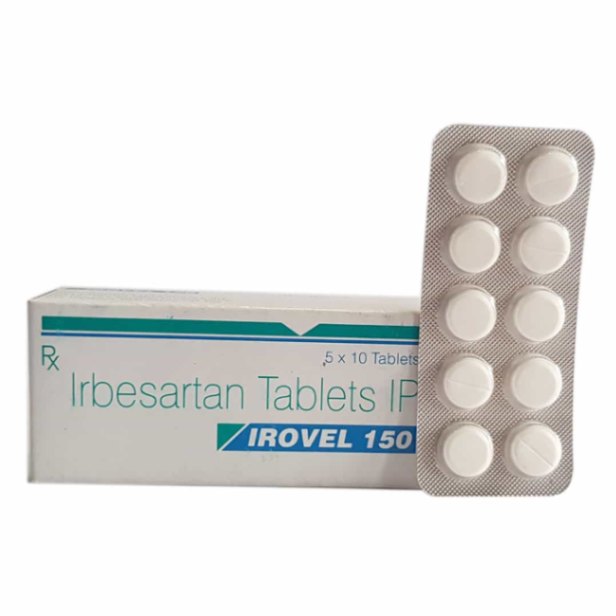
IROVEL 150MG
Price: Rs.226.80
13% off
In stock
Loose stock: 0
Description
IROVEL 150MG TAB 10
Details
Composition
IRBESARTAN 150 MG
# Irbesartan 150 mg
## Short Description
**Irbesartan 150 mg** is an oral prescription medicine belonging to the **angiotensin II receptor blocker (ARB)** class. It is primarily used to treat **high blood pressure (hypertension)** and may also be used to help protect kidney function in certain patients with **type 2 diabetes and hypertension**.
Irbesartan works by blocking the action of angiotensin II, a hormone that causes blood vessels to narrow. This helps **relax blood vessels, lower blood pressure, and reduce the workload on the heart**.
---
# Key Benefits
* Helps lower **high blood pressure**.
* Helps relax and widen blood vessels.
* Reduces the workload on the heart.
* May help reduce the risk of cardiovascular complications associated with uncontrolled hypertension.
* Helps protect kidney function in certain patients with **type 2 diabetes, hypertension, and diabetic nephropathy**.
* Can be used alone or together with other blood-pressure medicines when prescribed.
---
# Uses / Indications
### 1. Hypertension
Irbesartan 150 mg is commonly used to treat **high blood pressure** in adults.
Lowering blood pressure can help reduce the long-term risk of complications such as:
* Stroke
* Heart attack
* Heart failure
* Kidney damage
### 2. Diabetic Kidney Disease
Irbesartan may be used in patients with **hypertension and type 2 diabetes with diabetic nephropathy** to help slow progression of kidney disease and reduce proteinuria.
### Important
Irbesartan controls blood pressure but **does not cure hypertension**. Continue treatment as prescribed even when you feel well.
---
# How It Works
Irbesartan is an **angiotensin II receptor blocker (ARB)**.
Angiotensin II normally binds to **AT1 receptors**, causing blood vessels to constrict and contributing to increased blood pressure and sodium retention.
Irbesartan blocks AT1 receptors, which results in:
* Relaxation of blood vessels
* Reduced vascular resistance
* Lower blood pressure
* Reduced effects of aldosterone
* Decreased workload on the heart
By blocking the renin-angiotensin-aldosterone system, irbesartan can also help reduce pressure within the kidneys in certain patients.
---
# Dosage & Administration
**Take Irbesartan 150 mg exactly as prescribed by your doctor.**
### Usual Adult Dose for Hypertension
* The commonly recommended starting dose is **150 mg once daily**.
* Depending on blood-pressure response, your doctor may increase the dose to **300 mg once daily**.
* Some patients, such as those who are volume-depleted or receiving certain diuretics, may require a lower starting dose.
### Diabetic Nephropathy
A commonly recommended target dose is **300 mg once daily**, under medical supervision.
### How to Take
* Take the tablet **once daily**, preferably at the same time each day.
* It can generally be taken **with or without food**.
* Swallow with water.
* Do not change the dose without consulting your doctor.
### Missed Dose
If you forget a dose, take it when you remember unless it is nearly time for the next dose.
**Do not take two doses at once** to compensate for a missed dose.
---
# Side Effects
Most people tolerate irbesartan well, but side effects can occur.
### Common Side Effects
* Dizziness
* Headache
* Fatigue
* Nausea
* Muscle or joint discomfort
* Low blood pressure, particularly after starting treatment
### Important but Less Common Effects
Irbesartan may sometimes cause:
* Increased potassium levels (**hyperkalemia**)
* Changes in kidney function
* Excessive lowering of blood pressure
* Allergic reactions
### Seek Medical Attention Immediately If
You develop:
* Swelling of the face, lips, tongue, or throat
* Difficulty breathing or swallowing
* Severe dizziness or fainting
* Significant reduction in urine output
* Symptoms of severe allergic reaction
---
# Precautions & Warnings
### Pregnancy
**Irbesartan should not be used during pregnancy**, particularly during the second and third trimesters, because medicines that act directly on the renin-angiotensin system can cause serious injury or death to the developing fetus.
If pregnancy occurs while taking irbesartan, contact your healthcare professional promptly.
### Kidney Problems
Tell your doctor if you have:
* Kidney disease
* Renal artery narrowing
* A history of kidney failure
* Dehydration
Kidney function may need to be monitored during treatment.
### High Potassium
Irbesartan can increase blood potassium levels.
Tell your doctor if you have conditions that increase the risk of hyperkalemia or if you take potassium supplements or potassium-containing salt substitutes.
### Low Blood Pressure
Excessive blood-pressure reduction may occur, particularly if you are:
* Dehydrated
* Taking high-dose diuretics
* Experiencing vomiting or diarrhea
* Following a very low-salt diet
### Liver Disease
Tell your healthcare professional if you have liver disease. Dose selection may require additional consideration.
### Elderly Patients
Older adults may be more sensitive to blood-pressure changes and dizziness, which can increase the risk of falls.
---
# Drug Interactions
Tell your doctor or pharmacist about all medicines, supplements, and herbal products you use.
Important interactions include:
### Potassium Supplements
Potassium supplements and potassium-containing salt substitutes may increase the risk of **hyperkalemia**.
### Potassium-Sparing Diuretics
Medicines such as **spironolactone, eplerenone, amiloride, and triamterene** may increase potassium levels when combined with irbesartan.
### NSAIDs
Nonsteroidal anti-inflammatory drugs such as **ibuprofen, naproxen, and diclofenac** may reduce the blood-pressure-lowering effect of irbesartan and may increase the risk of kidney problems, particularly in dehydrated or vulnerable patients.
### Lithium
Irbesartan may increase **lithium concentrations**, potentially causing lithium toxicity. This combination requires medical supervision and monitoring.
### Other Blood-Pressure Medicines
Combining irbesartan with other medicines that lower blood pressure may produce an additional blood-pressure-lowering effect.
### ACE Inhibitors or Other ARBs
Combining an ARB with an **ACE inhibitor or another ARB** is generally not recommended because it can increase the risk of low blood pressure, high potassium, and kidney impairment.
---
# Storage Information
* Store at **room temperature**, according to the manufacturer's instructions.
* Keep tablets in their original packaging.
* Protect from excessive heat, moisture, and direct sunlight.
* Keep the container properly closed.
* Keep out of reach of children.
* Do not use after the expiry date.
* Do not use tablets if the packaging is damaged or the tablets appear abnormal.
Always follow the storage instructions printed on the specific product package.
---
# Prescription Status
**Irbesartan 150 mg is generally a prescription medicine.**
It should be used under the supervision of a qualified healthcare professional, particularly because blood pressure, kidney function, and potassium levels may require monitoring.
Prescription and dispensing requirements may vary by country and local regulations.
---
# Genuine Medicine Assurance
When purchasing **Irbesartan 150 mg**, ensure that:
* You purchase it from a **licensed and reputable pharmacy or authorized medicine supplier**.
* The packaging is sealed and undamaged.
* The manufacturer's name is clearly displayed.
* The **batch/lot number, manufacturing date, and expiry date** are clearly printed.
* The strength is clearly stated as **150 mg**.
* Tablets are intact and have no unusual discoloration or damage.
* You retain the pharmacy invoice or receipt where possible.
* Avoid medicines from unauthorized sellers or products with suspicious packaging.
* Where available, verify the product using the manufacturer's or relevant medicines regulatory authority's authentication system.
---
# FAQ – Irbesartan 150 mg
### 1. What is Irbesartan 150 mg used for?
Irbesartan 150 mg is primarily used to treat **high blood pressure (hypertension)**. It may also be used to help protect the kidneys in certain patients with type 2 diabetes, hypertension, and diabetic nephropathy.
### 2. Is Irbesartan a blood-pressure medicine?
Yes. Irbesartan is an **ARB blood-pressure medicine** that lowers blood pressure by blocking the effects of angiotensin II.
### 3. How does Irbesartan 150 mg work?
It blocks **AT1 receptors for angiotensin II**, causing blood vessels to relax and reducing blood pressure.
### 4. What is the usual dose of Irbesartan?
For many adults with hypertension, **150 mg once daily** is a common starting dose. Depending on response, a doctor may increase it to 300 mg once daily.
### 5. Can Irbesartan be taken with or without food?
Yes. Irbesartan can generally be taken **with or without food**.
### 6. What is the best time to take Irbesartan?
It can usually be taken at any convenient time of day. Taking it at approximately the **same time every day** helps maintain consistent treatment.
### 7. Can Irbesartan 150 mg be used for kidney protection?
Yes. Irbesartan has a specific role in certain patients with **type 2 diabetes, hypertension, and diabetic nephropathy**, where it can help reduce proteinuria and slow kidney disease progression.
### 8. Does Irbesartan lower heart rate?
Irbesartan primarily lowers blood pressure by relaxing blood vessels. It **does not primarily lower heart rate** like beta-blockers do.
### 9. Can Irbesartan cause dizziness?
Yes. Dizziness can occur, particularly when starting treatment or when blood pressure becomes lower than usual.
### 10. Does Irbesartan increase potassium?
It can. Irbesartan may increase **blood potassium levels**, particularly in people with kidney problems or those taking potassium supplements or potassium-sparing medicines.
### 11. Can I take potassium supplements with Irbesartan?
Do not take potassium supplements or potassium-containing salt substitutes without discussing them with your doctor because irbesartan can increase potassium levels.
### 12. Can I take Ibuprofen with Irbesartan?
Regular or high-dose use of NSAIDs such as ibuprofen may reduce the effectiveness of irbesartan and increase the risk of kidney problems in susceptible people. Ask your doctor or pharmacist before using NSAIDs regularly.
### 13. Can Irbesartan be taken during pregnancy?
**Irbesartan should not be used during pregnancy.** If you become pregnant while taking irbesartan, contact your healthcare professional promptly.
### 14. Can I stop Irbesartan when my blood pressure becomes normal?
Do not stop treatment without medical advice. A normal blood-pressure reading may indicate that the medicine is working rather than that hypertension has disappeared.
### 15. What happens if I miss an Irbesartan dose?
Take the missed dose when you remember unless it is close to your next dose. **Do not double the dose.**
### 16. Does Irbesartan cause weight gain?
Significant weight gain is **not a typical direct effect** of irbesartan. Unexpected or rapid weight gain should be discussed with a healthcare professional, especially if accompanied by swelling or shortness of breath.
### 17. Is Irbesartan the same as Losartan?
No. Both are **angiotensin II receptor blockers (ARBs)**, but they are different active medicines and have different dosing and pharmacological properties.
### 18. Can Irbesartan be taken with other blood-pressure medicines?
Yes, doctors may prescribe irbesartan together with other blood-pressure medicines when additional blood-pressure control is needed. The combination should be determined by a healthcare professional.
### 19. How long does Irbesartan take to lower blood pressure?
Blood pressure may begin to decrease after treatment starts, but the full effect can take several weeks. Continue taking it as prescribed even if you do not immediately notice a change.
### 20. What should I do if my blood pressure is still high while taking Irbesartan 150 mg?
Do not increase the dose yourself. Contact your doctor. Your healthcare professional may assess adherence, lifestyle factors, kidney function, other medicines, and whether the dose or treatment combination needs adjustment.
---
# Medical Disclaimer
**This information is provided for educational and informational purposes only and is not a substitute for professional medical advice, diagnosis, or treatment.**
Irbesartan 150 mg should be used according to the instructions of a qualified healthcare professional and the specific product label. The appropriate dose may vary depending on blood pressure, kidney function, age, other medicines, and individual medical circumstances.
**Irbesartan must not be used during pregnancy.** Patients with kidney disease or those taking medicines that affect potassium levels may require laboratory monitoring.
Do not start, stop, or change your blood-pressure medication without consulting your doctor. If you experience severe dizziness, fainting, difficulty breathing, swelling of the face or throat, or other serious symptoms, seek immediate medical attention.