IVER DT
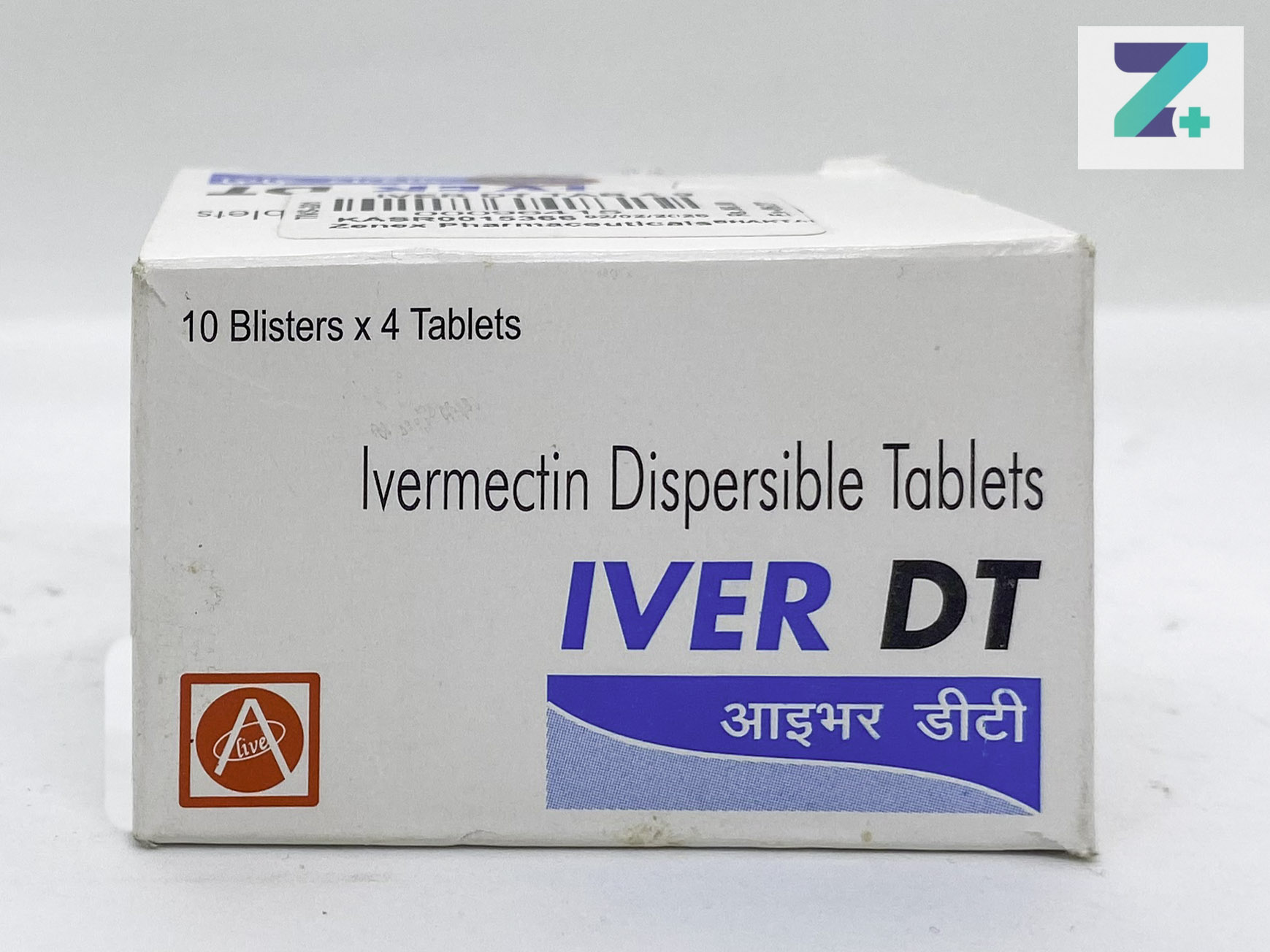
Price: Rs.88.00
10% off
In stock
Loose stock: 0
Description
IVER DT TAB 4
Details
Composition
IVERMECTIN 6 MG
# IVERMECTIN 6 MG
## SHORT DESCRIPTION
**Ivermectin 6 mg** is an antiparasitic medicine used to treat certain **parasitic worm and mite infections**. It works by interfering with nerve and muscle function in susceptible parasites, leading to their paralysis and elimination.
Ivermectin is used for conditions such as **strongyloidiasis and onchocerciasis** and may be prescribed for certain other parasitic infections depending on local medical guidelines.
> **Important:** Ivermectin is not a general-purpose medicine for viral infections and should not be used to prevent or treat COVID-19 unless specifically recommended within an approved indication or clinical setting.
---
## KEY BENEFITS
* Helps treat certain **parasitic infections**.
* Effective against susceptible parasitic worms and some ectoparasites.
* Used in the treatment of **intestinal strongyloidiasis**.
* Used for **onchocerciasis (river blindness)**.
* May be prescribed for certain other parasitic conditions under medical supervision.
* Convenient oral tablet formulation.
---
## USES / INDICATIONS
Ivermectin 6 mg may be prescribed for:
1. **Strongyloidiasis** caused by *Strongyloides stercoralis*.
2. **Onchocerciasis** caused by *Onchocerca volvulus*.
3. Certain other parasitic infections when specifically prescribed by a healthcare professional.
4. Some mite or ectoparasitic conditions may be treated with ivermectin under appropriate medical guidance, depending on the formulation and indication.
> The approved uses vary by country. The dose and number of tablets depend on the **infection and body weight**, so 6 mg is not a universal dose.
---
## HOW IT WORKS
Ivermectin binds to specific **glutamate-gated chloride channels** found in the nerve and muscle cells of susceptible parasites.
This increases chloride ion permeability, causing:
* Paralysis of the parasite
* Impaired movement and feeding
* Eventual death or elimination of the parasite
Ivermectin has a greater affinity for these targets in parasites than in humans when used at recommended therapeutic doses.
---
## DOSAGE & ADMINISTRATION
### Adults
The dose of ivermectin is **weight-based and indication-specific**.
For some approved parasitic infections, ivermectin is administered as a **single oral dose**, while other conditions may require repeated treatment.
A 6 mg tablet may be used as part of the calculated dose.
> **Do not assume that one 6 mg tablet is the correct dose for you.** The number of tablets required depends on body weight and the infection being treated.
### Administration
* Take exactly as prescribed.
* Follow the instructions supplied with your particular product.
* Tablets are commonly taken with water.
* For some indications, administration on an **empty stomach** may be recommended; follow your product-specific instructions.
* Do not repeat treatment unless directed by a healthcare professional.
### Children
Ivermectin dosing in children is based on **body weight**. Oral ivermectin is generally not recommended for children weighing **less than 15 kg** unless specifically directed by a specialist.
### Missed Dose
For single-dose treatments, do not repeat the dose simply because symptoms persist.
For repeated treatment schedules, follow your prescribed instructions and ask your healthcare professional what to do if a dose is missed.
---
## SIDE EFFECTS
### Common Side Effects
Depending on the infection being treated, possible side effects include:
* Dizziness
* Nausea
* Diarrhea
* Abdominal discomfort
* Headache
* Weakness
* Fatigue
* Mild skin rash
During treatment for **onchocerciasis**, some side effects may result from the body's response to dying microfilariae rather than direct toxicity from ivermectin.
### Serious Side Effects
Seek urgent medical attention for:
* Severe dizziness or fainting
* Confusion
* Loss of coordination
* Seizures
* Severe skin rash
* Difficulty breathing
* Facial, lip, tongue, or throat swelling
* Severe weakness
* Altered consciousness
### Neurological Effects
Excessive doses can cause serious **neurological toxicity**, including confusion, severe drowsiness, loss of coordination, seizures, or coma.
---
## PRECAUTIONS & WARNINGS
### Correct Diagnosis
Ivermectin should only be used for a **susceptible parasitic infection** for which it is appropriate.
Do not self-treat unexplained itching, diarrhea, or other symptoms with ivermectin without a proper diagnosis.
### Liver Disease
Tell your healthcare professional if you have liver disease because ivermectin is extensively metabolized in the liver.
### Neurological Symptoms
Seek medical attention if severe dizziness, confusion, coordination problems, unusual sleepiness, or other neurological symptoms develop.
### Onchocerciasis and Loa loa
Patients who may have **Loa loa (African eye worm)** infection require special medical assessment before ivermectin treatment because serious neurological reactions can occur in individuals with high *Loa loa* microfilarial loads.
### Pregnancy
Ivermectin should be used during pregnancy only when specifically recommended by a healthcare professional. The potential benefits and risks should be considered individually.
### Breastfeeding
Ivermectin passes into breast milk. Consult a healthcare professional before taking ivermectin while breastfeeding.
### Children
Ivermectin tablets are generally not recommended for children weighing **less than 15 kg** because safety and dosing data are limited.
---
## DRUG INTERACTIONS
Ivermectin may interact with medicines that affect drug metabolism or central nervous system function.
Potential interactions include:
* **Warfarin and other anticoagulants:** ivermectin may affect anticoagulant response in some patients, so monitoring may be required.
* Other medicines that affect **CYP3A4 or P-glycoprotein** may potentially alter ivermectin exposure.
* Medicines that cause significant central nervous system depression may increase neurological side effects.
Always tell your doctor or pharmacist about:
* Prescription medicines
* OTC medicines
* Vitamins
* Herbal supplements
* Other antiparasitic medicines
Do not take additional ivermectin-containing products without professional advice.
---
## STORAGE INFORMATION
* Store at **room temperature** according to the manufacturer's instructions.
* Keep tablets in their original packaging.
* Protect from excessive heat and moisture.
* Keep away from direct sunlight.
* Keep out of reach and sight of children.
* Do not use after the expiry date.
* Do not use tablets if the packaging is damaged or the tablets have significantly changed in appearance.
---
## PRESCRIPTION STATUS
**Prescription medicine in many countries.**
Ivermectin should be used under appropriate medical supervision. Prescription requirements vary depending on the country, formulation, and indication.
Do not use veterinary ivermectin products in humans.
---
## GENUINE MEDICINE ASSURANCE
When purchasing **Ivermectin 6 mg**, obtain it from a **licensed pharmacy or authorized medicine supplier**.
Before use, verify:
* Product name and strength
* Active ingredient
* Manufacturer details
* Batch/lot number
* Manufacturing and expiry dates
* Packaging integrity
* Regulatory information
Avoid products with damaged packaging, missing labels, altered expiry information, or questionable authenticity.
**Never substitute veterinary ivermectin products for human medicines.**
---
# FAQ – IVERMECTIN 6 MG
### 1. What is Ivermectin 6 mg used for?
Ivermectin is an antiparasitic medicine used for certain infections, including **strongyloidiasis and onchocerciasis**.
### 2. Is Ivermectin 6 mg an antibiotic?
No. Ivermectin is an **antiparasitic medicine**, not an antibiotic.
### 3. How does Ivermectin work?
It interferes with nerve and muscle function in susceptible parasites by affecting **glutamate-gated chloride channels**, causing paralysis and elimination of the parasite.
### 4. Is one 6 mg tablet enough?
Not necessarily. Ivermectin dosing is usually based on **body weight and the specific parasitic infection**. Your healthcare professional should determine the appropriate dose.
### 5. Can Ivermectin be used for worms?
Yes. Ivermectin is used to treat certain parasitic worm infections, including **Strongyloides** and **Onchocerca** infections.
### 6. Can Ivermectin treat scabies?
Oral ivermectin may be used for **scabies in certain circumstances**, particularly when prescribed by a healthcare professional. Treatment may require specific dosing and sometimes repeat doses.
### 7. Can Ivermectin treat head lice?
Ivermectin can be used for certain lice infections in appropriate formulations and circumstances. The appropriate treatment depends on the patient and local treatment guidelines.
### 8. Can Ivermectin treat COVID-19?
Ivermectin is **not an approved treatment for COVID-19** in most major treatment guidelines. It should not be taken to prevent or treat COVID-19 unless specifically recommended within an appropriate approved clinical setting.
### 9. Can Ivermectin be taken on an empty stomach?
For some indications and formulations, ivermectin is recommended on an **empty stomach**. Follow the instructions provided with your specific product or prescription.
### 10. Can children take Ivermectin 6 mg?
Ivermectin dosing in children is weight-based. Oral ivermectin is generally not recommended for children weighing **less than 15 kg** unless specifically directed by a specialist.
### 11. Can Ivermectin be taken during pregnancy?
Ivermectin should only be used during pregnancy when specifically recommended by a healthcare professional after considering the potential benefits and risks.
### 12. Can Ivermectin be taken while breastfeeding?
Ivermectin passes into breast milk. Consult a healthcare professional before using it while breastfeeding.
### 13. What are the common side effects of Ivermectin?
Possible side effects include **dizziness, nausea, diarrhea, abdominal discomfort, headache, weakness, fatigue, and skin rash**.
### 14. Can Ivermectin cause dizziness?
Yes. Dizziness can occur. Avoid driving or operating machinery if you feel dizzy or unusually weak after taking it.
### 15. Can I take Ivermectin with other medicines?
Some medicines can interact with ivermectin. Tell your healthcare professional about all medicines and supplements you take before starting treatment.
### 16. Can I use veterinary Ivermectin?
**No.** Veterinary ivermectin products are formulated for animals and may contain different concentrations or inactive ingredients. Use only medicines specifically approved for human use.
### 17. Can I take Ivermectin regularly for parasite prevention?
Do not take ivermectin routinely for parasite prevention unless a healthcare professional recommends it based on your exposure risk, location, or specific medical circumstances.
### 18. What happens if I take too much Ivermectin?
An overdose can cause serious neurological effects, including **severe drowsiness, confusion, loss of coordination, seizures, low blood pressure, or loss of consciousness**. Seek emergency medical care if an overdose is suspected.
### 19. Is Ivermectin 6 mg available without a prescription?
Prescription requirements vary by country, but ivermectin is a **prescription medicine in many countries**.
### 20. How long does Ivermectin take to work?
The response depends on the parasite and infection being treated. Symptoms may improve over several days, while complete elimination of the infection can take longer and may require follow-up treatment or testing.
---
## MEDICAL DISCLAIMER
This information about **Ivermectin 6 mg** is provided for general educational and informational purposes only. It does not replace professional medical advice, diagnosis, or treatment.
Ivermectin should be used only for **appropriate, diagnosed parasitic infections** and at a dose determined according to the infection, body weight, age, and medical condition. Do not use veterinary ivermectin products in humans.
Do not self-medicate with ivermectin for unapproved conditions. Seek urgent medical attention for **severe dizziness, confusion, loss of coordination, seizures, difficulty breathing, severe allergic reactions, or suspected overdose**.