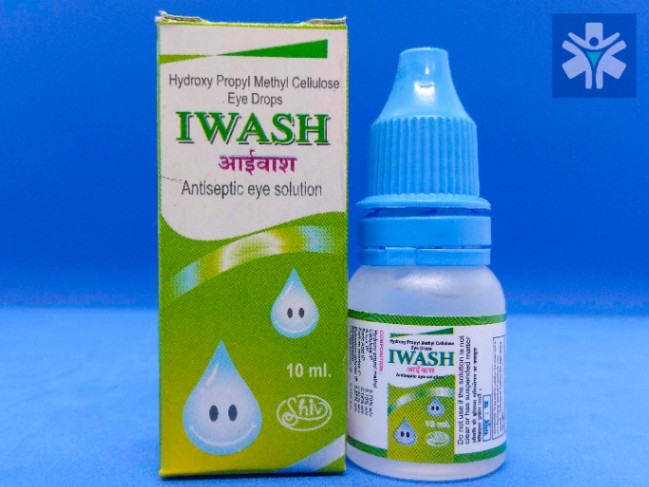
IWASH
Price: Rs.100.00
10% off
In stock
Loose stock: 0
Description
IWASH EYE DROPS 10ML
Details
Composition
BENZALKONIUM CHLORIDE 0.02 % V/V,BORAX 0.19 % W/V,BORIC ACID 0.19 % W/V,METHYLCELLULOSE 0.70% W/V,POTASSIUM CHLORIDE 0.37 % W/V,SODIUM CHLORIDE 0.45 % W/V
# Benzalkonium Chloride 0.02% v/v + Borax 0.19% w/v + Boric Acid 0.19% w/v + Methylcellulose 0.70% w/v + Potassium Chloride 0.37% w/v + Sodium Chloride 0.45% w/v
## Short Description
**Benzalkonium Chloride 0.02% + Borax 0.19% + Boric Acid 0.19% + Methylcellulose 0.70% + Potassium Chloride 0.37% + Sodium Chloride 0.45%** is an **ophthalmic eye-drop solution** formulated to provide soothing, lubricating, and cleansing support for irritated or uncomfortable eyes.
The formulation contains **methylcellulose**, which helps provide lubrication and moisture to the ocular surface, while the electrolyte components help provide a solution suitable for ophthalmic use. Boric acid and borax may contribute to buffering and formulation stability.
> The exact therapeutic indication should be confirmed from the product's approved label, as formulations with these ingredients can vary between manufacturers.
---
## Key Benefits
* Helps provide **lubrication and moisture** to the eyes
* May relieve symptoms of **dry, irritated, or uncomfortable eyes**
* Helps reduce temporary eye discomfort associated with environmental irritation
* Methylcellulose provides a protective lubricating layer over the ocular surface
* Electrolytes help support the formulation's ophthalmic characteristics
* May provide soothing relief from mild ocular irritation
* Convenient topical ophthalmic administration
---
## Uses / Indications
This ophthalmic preparation may be used for symptomatic relief of:
* Dry eyes
* Mild eye irritation
* Burning or stinging caused by environmental conditions
* Temporary eye discomfort
* Ocular surface dryness
* Irritation associated with dust, wind, smoke, or prolonged visual activity
It may also be used as a **lubricating or soothing eye preparation**, depending on the manufacturer's approved indications.
### Important
This product should **not be assumed to treat bacterial, viral, or fungal eye infections** unless specifically indicated by the product label or prescribed by an eye-care professional.
---
## How It Works
### Methylcellulose
Methylcellulose acts primarily as a **lubricating and viscosity-enhancing agent**.
It helps form a temporary protective layer over the eye surface, reducing friction and helping relieve dryness and irritation.
### Sodium Chloride & Potassium Chloride
These electrolytes contribute to the formulation's ionic composition and help create an ophthalmic solution designed for application to the eye.
### Boric Acid & Borax
These ingredients can contribute to **buffering and maintaining the appropriate characteristics of the ophthalmic solution**.
### Benzalkonium Chloride
Benzalkonium chloride is commonly used as a **preservative** in ophthalmic formulations. However, repeated exposure can irritate the ocular surface in some individuals.
### Overall Action
**Methylcellulose → lubricates the ocular surface → helps reduce dryness and irritation → improves eye comfort.**
---
## Dosage & Administration
> **Follow the dosage instructions on the specific product label or as directed by your doctor or pharmacist.**
### General Administration
For lubricating ophthalmic preparations, dosing may commonly involve:
**1–2 drops into the affected eye(s) as needed**, depending on the product instructions.
Do not exceed the recommended frequency without medical advice.
### How to Apply
1. Wash your hands thoroughly.
2. Remove the cap without touching the dropper tip.
3. Tilt your head backward.
4. Look upward and gently pull down the lower eyelid.
5. Place the recommended number of drops into the eye.
6. Close the eye gently for a few seconds.
7. Avoid touching the eye, eyelashes, or eyelid with the dropper tip.
8. Replace the cap immediately after use.
### Contact Lenses
If you wear contact lenses, remove them before using the drops.
Because this formulation contains **benzalkonium chloride**, contact-lens users should follow the product-specific instructions regarding lens removal and reinsertion. Many benzalkonium chloride-containing eye drops require lenses to be removed before administration.
### Missed Dose
If used as needed, simply administer the next dose when symptoms require it.
Do not use excessive amounts to compensate for a missed application.
---
## Side Effects
### Common Side Effects
Temporary effects may include:
* Mild burning or stinging
* Eye irritation
* Temporary blurred vision
* Mild redness
* Watery eyes
* Mild discomfort after application
These effects generally resolve quickly.
### Benzalkonium Chloride-Related Effects
Repeated exposure to benzalkonium chloride may cause or worsen:
* Ocular surface irritation
* Dryness
* Redness
* Burning or stinging
People with severe dry-eye disease or those requiring frequent eye-drop administration may be more sensitive.
### Serious Side Effects
Stop using the product and seek medical attention if you develop:
* Severe eye pain
* Significant or persistent redness
* Sudden vision changes
* Severe swelling
* Signs of an allergic reaction
* Persistent worsening of eye symptoms
---
## Precautions & Warnings
### For External Ophthalmic Use
Use only in the eyes. **Do not swallow or inject the solution.**
### Avoid Contamination
Do not allow the dropper tip to touch:
* The eye
* Eyelashes
* Eyelids
* Fingers
* Other surfaces
Contamination can introduce microorganisms into the eye-drop bottle.
### Contact Lenses
Benzalkonium chloride may be absorbed by soft contact lenses and can irritate the eye.
Remove contact lenses before application and follow the manufacturer's instructions regarding when they can be replaced.
### Persistent Symptoms
If eye irritation, dryness, redness, or discomfort persists or worsens, consult an ophthalmologist.
### Eye Infection
Do not use this product as a substitute for appropriate antimicrobial treatment when an eye infection is suspected.
Seek medical attention for:
* Pus-like discharge
* Significant swelling
* Severe redness
* Eye pain
* Light sensitivity
* Vision loss or significant vision changes
### Injury or Chemical Exposure
Do not rely on this product for serious eye injuries or chemical exposure. Seek urgent medical attention.
### Pregnancy
If pregnant or planning pregnancy, consult your healthcare professional before using any ophthalmic medicine.
### Breastfeeding
Discuss use during breastfeeding with your doctor or pharmacist if regular or prolonged treatment is required.
---
## Drug Interactions
Significant systemic drug interactions are generally unlikely because this is a **topical ophthalmic preparation**.
However, tell your healthcare professional if you are using other eye medicines.
### Other Eye Drops
If more than one ophthalmic medicine is being used:
* Separate different eye drops by approximately **5–10 minutes**, unless otherwise directed.
* Follow the order recommended by your ophthalmologist.
### Eye Ointments
If using an eye ointment as well as eye drops, the ointment is generally applied **after the drops**, unless your healthcare professional gives different instructions.
### Contact Lens Products
Benzalkonium chloride may interact with or be absorbed by certain contact lenses. Remove lenses before application as directed.
---
## Storage Information
* Store according to the manufacturer's instructions.
* Keep at the recommended room temperature unless the label specifies refrigeration.
* Protect from excessive heat and direct sunlight.
* Keep the bottle tightly closed.
* Keep out of reach and sight of children.
* Do not use after the expiry date.
* Do not use if the solution becomes cloudy, changes appearance, or the container is damaged.
* Discard the bottle according to the manufacturer's recommended period after opening.
* Avoid touching the dropper tip to any surface.
> **Always follow the storage and in-use expiry instructions printed on the specific product packaging.**
---
## Prescription Status
**Prescription status varies according to the exact formulation, manufacturer, and country.**
Ophthalmic lubricating preparations containing methylcellulose and similar ingredients may be available **without a prescription in some countries**, while other formulations may be subject to different regulatory requirements.
Check local pharmacy regulations and the product label.
---
## Genuine Medicine Assurance
When purchasing this ophthalmic preparation:
* Purchase from a **licensed pharmacy or authorized medicine supplier**.
* Verify the complete ingredient list and concentrations.
* Check the manufacturer's name.
* Check the batch/lot number and expiry date.
* Ensure the bottle and packaging are properly sealed.
* Do not use products with damaged, leaking, or tampered packaging.
* Check that the solution has not changed color or become cloudy.
* Do not share eye drops with another person.
* Avoid products from unauthorized sources.
* If authenticity is uncertain, consult a pharmacist or contact the manufacturer using the details printed on the packaging.
---
# FAQ – Benzalkonium Chloride + Borax + Boric Acid + Methylcellulose Eye Drops
### 1. What are these eye drops used for?
This formulation may be used to provide **lubrication and symptomatic relief of dry, irritated, or uncomfortable eyes**, depending on the manufacturer's approved indication.
### 2. Does this medicine treat dry eyes?
Methylcellulose provides lubrication and may help relieve symptoms associated with **ocular surface dryness**.
### 3. What does methylcellulose do in eye drops?
Methylcellulose acts as a **lubricant and viscosity-enhancing agent**, helping the solution remain on the surface of the eye and reduce dryness and friction.
### 4. What is benzalkonium chloride used for?
Benzalkonium chloride is commonly used as a **preservative** in multidose ophthalmic preparations.
### 5. Can benzalkonium chloride irritate the eyes?
Yes. Repeated exposure to benzalkonium chloride can cause or worsen **ocular surface irritation and dryness** in some people.
### 6. Can I use these eye drops with contact lenses?
Because the formulation contains benzalkonium chloride, contact lenses should generally be **removed before application**. Follow the specific product instructions regarding when lenses can be reinserted.
### 7. Can these eye drops treat an eye infection?
They should not be assumed to treat bacterial, viral, or fungal eye infections. An eye infection may require specific treatment prescribed by an eye-care professional.
### 8. Can these eye drops cause blurred vision?
Temporary blurred vision may occur immediately after application. If blurred vision persists or is significant, seek medical advice.
### 9. Can these eye drops cause burning or stinging?
Mild, temporary burning or stinging can occur after application. Persistent or severe irritation should be evaluated.
### 10. How often can I use these eye drops?
The appropriate frequency depends on the specific product. Follow the manufacturer's label or your healthcare professional's instructions.
### 11. Can I use these eye drops with other eye medicines?
They may be used with other ophthalmic medicines when appropriate. Leave approximately **5–10 minutes between different eye drops**, unless your doctor advises otherwise.
### 12. Can I use eye ointment with these drops?
Yes, when medically appropriate. Eye drops are generally used before eye ointment because ointments can interfere with absorption of subsequently administered drops.
### 13. Can I use these eye drops during pregnancy?
Consult your healthcare professional before use during pregnancy, particularly if frequent or prolonged treatment is needed.
### 14. Can I use these eye drops while breastfeeding?
Ask your doctor or pharmacist if you need to use them regularly while breastfeeding.
### 15. What should I do if I accidentally put too many drops in my eye?
An occasional extra drop generally causes temporary irritation or blurred vision. If significant discomfort or persistent symptoms occur, contact an eye-care professional.
### 16. Can I use these drops every day?
Some lubricating eye preparations can be used regularly, but frequent long-term use of products containing preservatives such as benzalkonium chloride may irritate some people. Discuss frequent use with an eye-care professional.
### 17. How should I store these eye drops?
Store them according to the manufacturer's instructions, protect them from excessive heat and sunlight, and keep the bottle tightly closed.
### 18. Can I share my eye drops?
**No.** Sharing eye drops can spread infection and contaminate the bottle.
### 19. How long are the eye drops usable after opening?
The in-use period varies by product. Check the manufacturer's label or package insert and discard the bottle according to those instructions.
### 20. When should I see an eye doctor?
Seek medical attention for **severe eye pain, significant redness, pus-like discharge, light sensitivity, sudden vision changes, eye injury, or symptoms that persist or worsen**.
---
## Medical Disclaimer
This information about **Benzalkonium Chloride 0.02% v/v + Borax 0.19% w/v + Boric Acid 0.19% w/v + Methylcellulose 0.70% w/v + Potassium Chloride 0.37% w/v + Sodium Chloride 0.45% w/v ophthalmic solution** is provided for educational and informational purposes only and is **not a substitute for professional medical advice, diagnosis, or treatment**.
The exact indications, dosing instructions, storage requirements, and prescription status may vary according to the specific manufacturer and country. Benzalkonium chloride may cause ocular-surface irritation, particularly with frequent or prolonged use.
Do not use this preparation as a substitute for appropriate treatment of a suspected eye infection or serious eye condition. Seek prompt ophthalmic care for severe pain, significant vision changes, severe redness, light sensitivity, or persistent/worsening symptoms.
Always read the specific product label and follow the instructions of your ophthalmologist, doctor, or pharmacist.