KALINAC
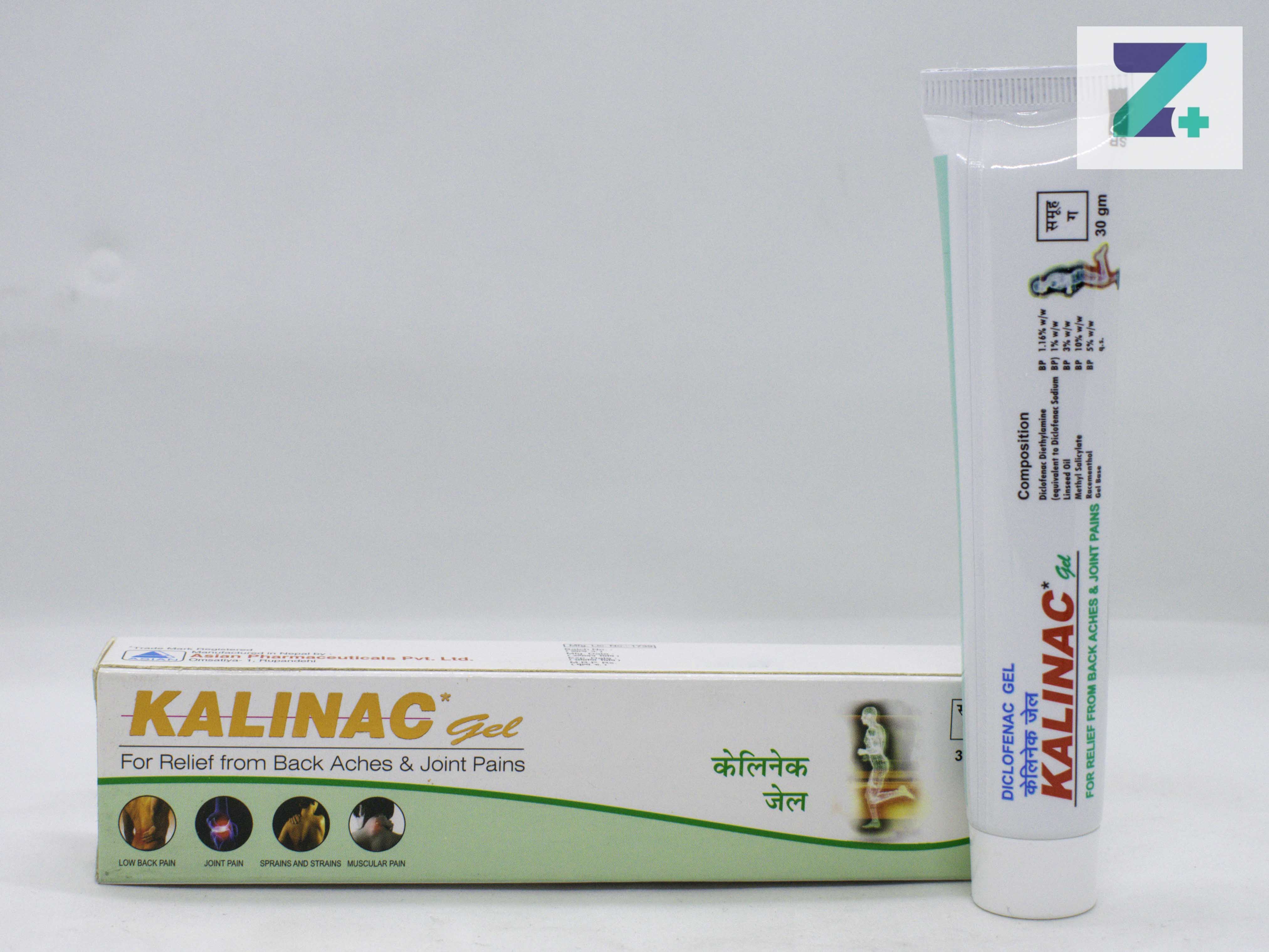
Price: Rs.120.00
10% off
In stock
Loose stock: 0
Description
KALINAC GEL 30G
Details
Composition
DICLOFENAC DIETHYLAMINE 1.16 % W/W,LINSEED OIL 3 % W/W,MENTHOL 5 % W/W,METHYL SALICYLATE 10 % W/W
# Diclofenac Diethylamine 1.16% w/w + Linseed Oil 3% w/w + Menthol 5% w/w + Methyl Salicylate 10% w/w
## Short Description
**Diclofenac Diethylamine 1.16% w/w + Linseed Oil 3% w/w + Menthol 5% w/w + Methyl Salicylate 10% w/w** is a **topical pain-relieving and anti-inflammatory preparation** used for temporary relief of localized muscle and joint pain.
Diclofenac is an NSAID that helps reduce inflammation and pain, while **menthol and methyl salicylate** provide counterirritant and soothing effects. Linseed oil is commonly included as a supportive topical ingredient.
This combination may be used for **sprains, strains, muscle aches, joint pain and other painful inflammatory musculoskeletal conditions**.
---
## Key Benefits
* Provides **localized relief from muscle and joint pain**.
* Helps reduce **inflammation and swelling**.
* Diclofenac provides topical anti-inflammatory action.
* Menthol produces a cooling sensation that can temporarily relieve pain.
* Methyl salicylate provides a warming/counterirritant effect.
* May help relieve discomfort associated with **sprains and strains**.
* Topical application delivers the active ingredients directly to the painful area.
---
## Uses / Indications
This topical combination may be used for temporary relief of:
* **Muscle pain**
* Joint pain
* Sprains
* Strains
* Sports-related injuries
* Backache
* Localized soft-tissue inflammation
* Tendon or ligament-related discomfort
* Mild osteoarthritis-related pain
* Musculoskeletal aches and pains
It is intended for **localized external use** and should not be applied to internal body surfaces.
---
## How It Works
### Diclofenac Diethylamine 1.16%
Diclofenac is a topical **NSAID**. It inhibits cyclooxygenase enzymes and reduces the production of **prostaglandins**, which contribute to pain and inflammation.
### Menthol 5%
Menthol activates cold-sensitive receptors in the skin, producing a **cooling sensation** that can temporarily reduce the perception of pain.
### Methyl Salicylate 10%
Methyl salicylate acts primarily as a **counterirritant**, producing a warming sensation that can help distract from and temporarily relieve localized muscle and joint discomfort.
### Linseed Oil 3%
Linseed oil is included as a supportive topical ingredient and may contribute to the formulation's soothing and skin-conditioning properties.
### Combined Action
**Diclofenac reduces inflammation + menthol provides cooling + methyl salicylate provides counterirritant warmth → temporary relief of localized pain and discomfort.**
---
## Dosage & Administration
### Adults and Children
Apply a **thin layer to the affected area 3–4 times daily**, or according to the specific product label or healthcare professional's instructions.
### How to Apply
1. Clean and dry the affected area.
2. Apply a small amount of the preparation.
3. Gently massage into the skin until absorbed, unless the product instructions state otherwise.
4. Wash hands after application.
5. Avoid contact with eyes, mouth and other mucous membranes.
### Important
* Do not apply more frequently than recommended.
* Do not use on large areas for prolonged periods without medical advice.
* Do not cover the treated area with an airtight or tightly occlusive dressing unless specifically instructed.
* Do not apply to cuts, wounds or broken skin.
* Avoid using heat pads over the treated area.
---
## Side Effects
### Common Side Effects
Possible local reactions include:
* Redness
* Mild burning
* Stinging
* Itching
* Skin irritation
* Dryness
* Rash
* Cooling or warming sensation
### Less Common Effects
Some people may develop:
* Contact dermatitis
* Increased skin sensitivity
* Local swelling
* Blistering
Although topical diclofenac generally produces less systemic exposure than oral diclofenac, **systemic NSAID-related adverse effects can rarely occur**, particularly with excessive use or application over large areas.
### Seek Medical Attention For
* Severe skin reaction
* Extensive blistering or peeling
* Facial or throat swelling
* Difficulty breathing
* Black stools or vomiting blood
* Severe stomach pain
* Other signs of serious NSAID-related adverse effects
---
## Precautions & Warnings
### For External Use Only
Do not swallow the product or apply it inside the mouth, nose, eyes or other mucous membranes.
### Damaged Skin
Do not apply to:
* Cuts
* Open wounds
* Infected skin
* Eczema-damaged skin
* Burns
* Other significantly damaged skin
### Avoid Heat and Occlusive Dressings
Do not apply heating pads, hot-water bottles or tight occlusive coverings over the treated area. Heat may increase skin irritation and potentially increase absorption.
### NSAID Allergy
Avoid use if you have previously experienced an allergic reaction to:
* Diclofenac
* Aspirin
* Ibuprofen
* Naproxen
* Other NSAIDs
People with NSAID-sensitive asthma should seek medical advice before use.
### Pregnancy
Topical diclofenac should be used during pregnancy only when specifically recommended by a healthcare professional. **NSAIDs should generally be avoided from around 20 weeks of pregnancy onward unless specifically advised, and should not be used at 30 weeks or later.**
### Children
Use in children should follow the specific product's age restrictions and professional advice.
### Large-Area or Prolonged Use
Applying excessive amounts or using the preparation over large areas for prolonged periods may increase systemic absorption and the risk of adverse effects.
### Methyl Salicylate
Avoid excessive application because methyl salicylate can be absorbed through the skin. Accidental ingestion can be dangerous, particularly in children.
---
## Drug Interactions
Topical use generally produces lower systemic exposure than oral NSAIDs, but interactions are still possible, especially with extensive or prolonged application.
### Other NSAIDs
Avoid routinely combining with oral or topical NSAIDs such as:
* Diclofenac tablets
* Ibuprofen
* Naproxen
* Indomethacin
* Ketorolac
Using multiple NSAIDs may increase the risk of adverse effects.
### Anticoagulants
Patients taking **warfarin, apixaban, rivaroxaban or other blood thinners** should consult a healthcare professional before prolonged or extensive use.
### Aspirin
Concurrent use with aspirin may increase NSAID-related adverse effects.
### Corticosteroids
Medicines such as prednisolone may increase gastrointestinal risks when systemic NSAID exposure occurs.
Always tell your doctor or pharmacist about all prescription medicines, OTC medicines, supplements and herbal products you use.
---
## Storage Information
* Store at **room temperature** according to the manufacturer's instructions.
* Keep the container tightly closed.
* Protect from excessive heat and direct sunlight.
* Keep away from moisture.
* Keep out of reach of children.
* Do not use after the expiry date.
* Do not use if the tube or container is damaged.
* Do not leave the product in a hot vehicle or near a heat source.
---
## Prescription Status
**Topical diclofenac combination preparations may be available without a prescription in some countries, while certain formulations may be pharmacy-controlled or prescription-only.**
The legal status depends on the **country, formulation, concentration and packaging size**.
Follow local regulations and seek pharmacist or healthcare professional advice when appropriate.
---
## Genuine Medicine Assurance
When purchasing **Diclofenac Diethylamine 1.16% + Linseed Oil 3% + Menthol 5% + Methyl Salicylate 10%**:
* Purchase from a **licensed and reputable pharmacy**.
* Check that the tube and outer packaging are sealed and undamaged.
* Verify all active ingredients and concentrations.
* Check the manufacturer, batch/lot number and expiry date.
* Do not use products with suspicious labeling or damaged packaging.
* Avoid unauthorized online medicine sellers.
* Store according to the manufacturer's instructions.
* If you suspect a counterfeit medicine, contact the manufacturer, licensed pharmacy or relevant medicines regulatory authority.
---
# Frequently Asked Questions (FAQ)
### 1. What is Diclofenac Diethylamine 1.16% gel used for?
It is a topical pain-relieving and anti-inflammatory preparation used for **localized muscle and joint pain, sprains, strains and other musculoskeletal discomfort**.
### 2. What are the ingredients in this pain relief preparation?
It contains:
* **Diclofenac Diethylamine 1.16% w/w**
* **Linseed Oil 3% w/w**
* **Menthol 5% w/w**
* **Methyl Salicylate 10% w/w**
### 3. How does Diclofenac Diethylamine relieve pain?
Diclofenac reduces the production of prostaglandins involved in **pain and inflammation**, helping reduce localized swelling and discomfort.
### 4. What does Menthol do in the formulation?
Menthol produces a **cooling sensation** by activating cold-sensitive receptors in the skin. This can temporarily reduce the perception of pain.
### 5. What does Methyl Salicylate do?
Methyl salicylate acts as a **counterirritant**, producing a warming sensation that can temporarily relieve muscle and joint discomfort.
### 6. What is the role of Linseed Oil?
Linseed oil is included as a supportive ingredient and may provide **skin-conditioning and soothing properties** within the topical formulation.
### 7. Can this gel be used for back pain?
It may provide temporary relief from **localized muscular back pain**, particularly when the pain is associated with muscle strain or inflammation.
### 8. Can it be used for sprains and strains?
Yes. Topical diclofenac preparations may help relieve pain and inflammation associated with **sprains and strains**.
### 9. How often should I apply this medicine?
Many topical diclofenac preparations are applied **3–4 times daily**, but follow the specific product label or your healthcare professional's instructions.
### 10. Can I apply it to broken skin?
**No.** Do not apply this preparation to open wounds, cuts, burns, infected skin or significantly damaged skin.
### 11. Can I use a heating pad after applying the gel?
It is generally advisable to **avoid heating pads or other external heat sources** over the treated area because heat may increase irritation and absorption.
### 12. Can I use this product with Diclofenac tablets?
Do not routinely combine topical diclofenac with oral diclofenac or another NSAID without medical advice. Combining NSAIDs may increase the risk of adverse effects.
### 13. Can I use it with Ibuprofen?
Both diclofenac and ibuprofen are NSAIDs. Using them together without professional advice may increase the risk of **stomach, kidney and cardiovascular adverse effects**.
### 14. Can this medicine cause skin irritation?
Yes. **Redness, itching, burning, stinging or rash** may occur at the application site. Stop using it and seek medical advice if a severe skin reaction develops.
### 15. Can I use this medicine during pregnancy?
Consult a healthcare professional before use. Topical NSAIDs such as diclofenac have important pregnancy precautions, particularly **from around 20 weeks onward and during the third trimester**.
### 16. Can children use this diclofenac combination?
The suitability depends on the specific product and the child's age. **Follow the product's age restrictions and seek professional advice before use in children.**
### 17. Can I apply the gel to my face?
It is generally intended for localized musculoskeletal areas rather than the face. Avoid the eyes, lips and mucous membranes unless the specific product is designed for that use.
### 18. How long does topical Diclofenac take to work?
Some people may experience pain relief relatively quickly, while maximum benefit may require **regular application over several days**, depending on the condition.
### 19. What should I do if the pain does not improve?
If pain persists, worsens, or is associated with significant swelling, weakness, numbness, fever or injury, consult a healthcare professional. The underlying condition may require a different treatment.
### 20. Is Diclofenac Diethylamine 1.16% available without a prescription?
Availability varies by country. Some topical diclofenac combination products are available **over the counter**, while others may require pharmacist or prescription authorization.
---
## Medical Disclaimer
This information about **Diclofenac Diethylamine 1.16% w/w + Linseed Oil 3% w/w + Menthol 5% w/w + Methyl Salicylate 10% w/w** is provided for educational and general informational purposes only. It is **not a substitute for professional medical advice, diagnosis or treatment**.
This product is intended for external use and should be used according to the specific manufacturer's instructions. Avoid application to broken skin, eyes and mucous membranes, and avoid excessive use or external heat over treated areas.
Because the product contains **diclofenac, an NSAID**, people with NSAID allergies, cardiovascular disease, kidney disease, gastrointestinal ulcers, asthma triggered by NSAIDs, or pregnancy-related concerns should seek professional advice before use.
**Do not use more frequently or for longer than recommended.** Seek medical attention for severe allergic reactions, severe skin reactions, significant gastrointestinal symptoms or other concerning effects.