KEFIX 200MG
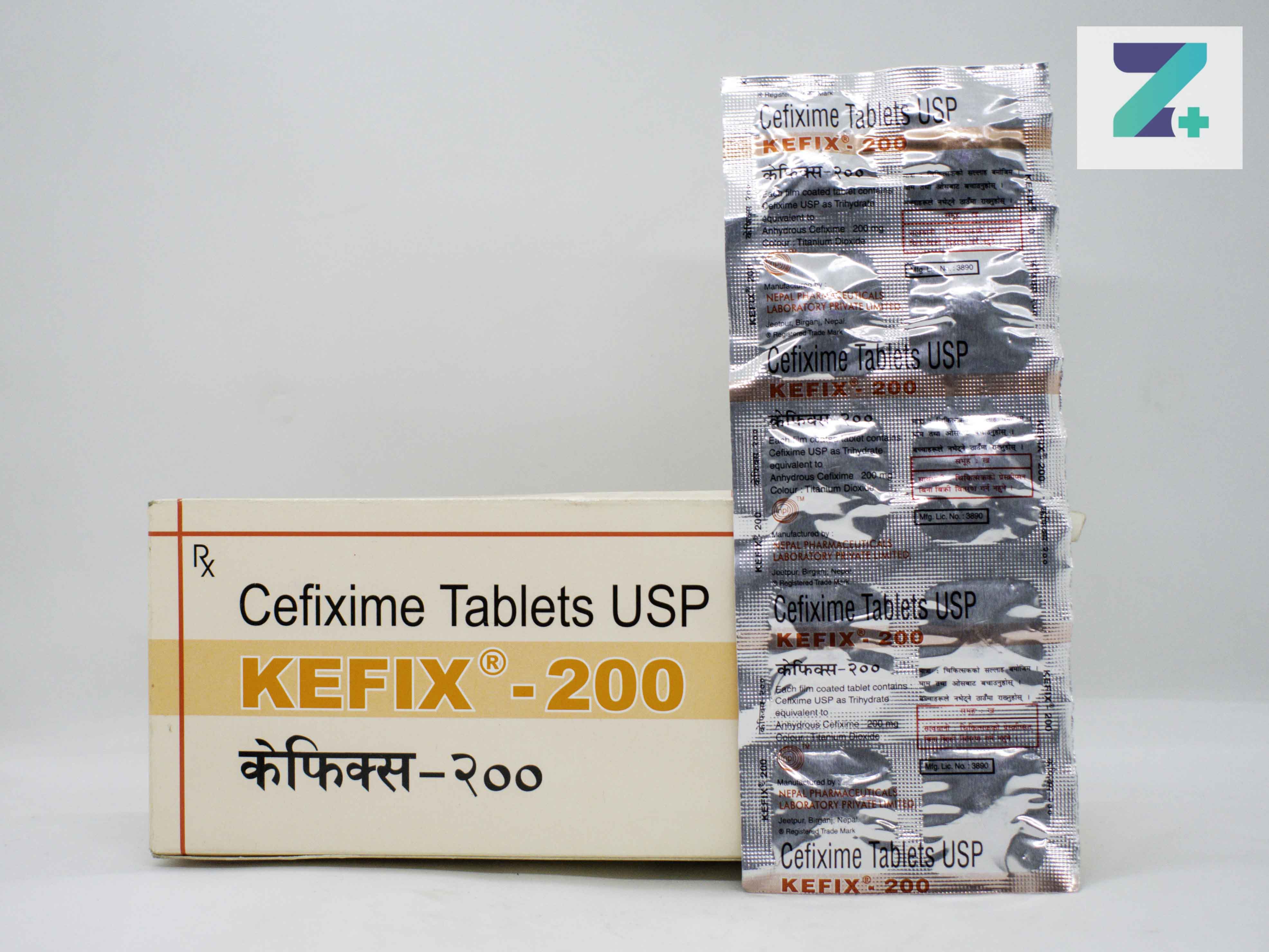
Price: Rs.200.00
10% off
In stock
Loose stock: 4
Description
KEFIX 200MG TAB 10
Details
Composition
ANHYDROUS CEFIXIME 200 MG
# Anhydrous Cefixime 200 mg
## Short Description
**Anhydrous Cefixime 200 mg** is a **third-generation cephalosporin antibiotic** used to treat certain bacterial infections. It works by interfering with bacterial cell-wall formation, ultimately causing susceptible bacteria to die.
Cefixime may be prescribed for infections such as **urinary tract infections, certain respiratory tract infections, ear infections, throat infections and uncomplicated gonorrhea**, depending on bacterial susceptibility and local treatment guidelines.
> **Important:** Cefixime treats bacterial infections only. It does not work against viral infections such as the common cold or influenza.
---
## Key Benefits
* Effective against a range of **susceptible Gram-positive and Gram-negative bacteria**.
* Convenient oral antibiotic therapy.
* May be used for certain **respiratory tract infections**.
* May treat certain **urinary tract infections (UTIs)**.
* May be prescribed for **middle-ear infections**.
* Can be used for certain throat and tonsil infections.
* May be used for uncomplicated gonorrhea when appropriate according to current guidelines and susceptibility.
---
## Uses / Indications
Cefixime 200 mg may be prescribed for susceptible bacterial infections, including:
### Respiratory Tract Infections
* Acute bacterial exacerbations of chronic bronchitis
* Certain community-acquired respiratory infections
* Other susceptible bacterial respiratory infections
### Ear, Nose & Throat Infections
* **Otitis media (middle-ear infection)**
* Pharyngitis
* Tonsillitis
### Urinary Tract Infections
* Certain uncomplicated urinary tract infections caused by susceptible bacteria.
### Sexually Transmitted Infections
Cefixime may be used in selected circumstances for **uncomplicated gonorrhea**, particularly when recommended by local treatment guidelines.
### Other Infections
The medicine may occasionally be prescribed for other susceptible bacterial infections based on clinical judgment and laboratory results.
> **Antibiotic stewardship:** Cefixime should be used only when a bacterial infection is suspected or confirmed and the organism is susceptible.
---
## How It Works
Cefixime is a **beta-lactam antibiotic belonging to the third-generation cephalosporin class**.
It binds to bacterial **penicillin-binding proteins (PBPs)** and interferes with the final stages of bacterial cell-wall synthesis.
Without a properly functioning cell wall, susceptible bacteria become unstable and eventually die.
### In simple terms:
**Cefixime → blocks bacterial cell-wall formation → weakens the bacterial cell → bacterial cell dies → infection can resolve.**
---
## Dosage & Administration
### Adults and Children ≥12 Years or ≥50 kg
A commonly used adult dose is:
**400 mg per day**, either as:
* **200 mg twice daily**, or
* **400 mg once daily**
depending on the infection and prescribing instructions.
### Children
Pediatric dosing is generally based on body weight rather than simply using the adult dose.
A commonly used regimen is approximately:
**8 mg/kg/day**, given once daily or divided into two doses.
### Administration
* Take exactly as prescribed.
* Cefixime can generally be taken **with or without food**.
* Take doses at evenly spaced times.
* Swallow the tablet with water.
* Complete the prescribed course unless your healthcare professional tells you otherwise.
* Do not share antibiotics with other people.
> **Important:** The appropriate dose and treatment duration depend on the infection, age, kidney function, bacterial susceptibility and local treatment guidelines. **Do not use the above information as a personalized prescription.**
---
## Side Effects
### Common Side Effects
Possible adverse effects include:
* Diarrhea
* Nausea
* Abdominal discomfort
* Indigestion
* Vomiting
* Headache
* Dizziness
### Skin Reactions
Some people may experience:
* Rash
* Itching
* Hives
### Serious Side Effects
Seek urgent medical attention if you develop:
* Difficulty breathing
* Facial, lip or throat swelling
* Severe allergic reaction
* Severe or persistent diarrhea
* Bloody stools
* Severe abdominal pain
* Yellowing of the skin or eyes
* Unusual bleeding or bruising
### Antibiotic-Associated Diarrhea
Cefixime, like other antibiotics, can occasionally cause **Clostridioides difficile-associated diarrhea**, which may occur during or after treatment.
Do not self-treat severe antibiotic-associated diarrhea with anti-diarrheal medicines without medical advice.
---
## Precautions & Warnings
### Allergy to Cephalosporins
Do not use cefixime if you have previously experienced a serious allergic reaction to cefixime or another cephalosporin.
### Penicillin Allergy
People with a history of severe allergy to penicillin or other beta-lactam antibiotics should inform their healthcare professional because cross-reactive allergic reactions can occasionally occur.
### Kidney Disease
Cefixime is eliminated partly through the kidneys. Patients with impaired kidney function may require **dose adjustment**.
### Severe Diarrhea
Contact a healthcare professional if you develop severe, persistent or bloody diarrhea during or after treatment.
### Antibiotic Resistance
Unnecessary use of cefixime can contribute to **antibiotic resistance** and make future infections more difficult to treat.
### Pregnancy
Cefixime should be used during pregnancy when medically appropriate and recommended by a healthcare professional.
### Breastfeeding
Cefixime can generally be used when clinically indicated, but breastfeeding patients should discuss treatment with their healthcare professional.
### Complete the Course
Take cefixime for the prescribed duration. Stopping treatment early may allow the infection to return and may contribute to resistance.
---
## Drug Interactions
Cefixime has relatively few major drug interactions, but some medicines require caution.
### Warfarin and Other Anticoagulants
Cefixime and other cephalosporins may occasionally affect **prothrombin time/INR** and increase bleeding risk, particularly in susceptible patients.
Patients taking warfarin may require appropriate monitoring.
### Carbamazepine
Cefixime may increase **carbamazepine concentrations** in some patients. Monitoring may be necessary.
### Other Medicines
Tell your healthcare professional if you take:
* Blood thinners
* Antiepileptic medicines
* Kidney-affecting medicines
* Other antibiotics
* Prescription or OTC medicines
Do not start or stop another medicine without professional advice.
---
## Storage Information
* Store at **room temperature**, according to the manufacturer's instructions.
* Keep tablets in the original packaging.
* Protect from excessive heat and moisture.
* Keep away from direct sunlight.
* Keep out of reach of children.
* Do not use after the expiry date.
* Do not use tablets if the packaging is damaged or the tablets appear abnormal.
---
## Prescription Status
**Cefixime 200 mg is generally a prescription-only antibiotic** in many countries.
It should be used under the supervision of a qualified healthcare professional to ensure the infection is appropriately treated and to reduce antibiotic resistance.
---
## Genuine Medicine Assurance
When purchasing **Anhydrous Cefixime 200 mg**:
* Purchase from a **licensed and reputable pharmacy**.
* Check that the packaging is sealed and undamaged.
* Verify the active ingredient and strength.
* Check the manufacturer's name, batch/lot number and expiry date.
* Confirm that the product is labeled **Cefixime 200 mg**.
* Avoid products with suspicious packaging, spelling errors or altered labels.
* Do not purchase antibiotics from unauthorized sellers.
* Store the medicine according to the manufacturer's instructions.
* If counterfeit medicine is suspected, contact the manufacturer, licensed pharmacy or relevant medicines regulatory authority.
---
# Frequently Asked Questions (FAQ)
### 1. What is Anhydrous Cefixime 200 mg?
Anhydrous cefixime 200 mg is an oral **third-generation cephalosporin antibiotic** used to treat certain susceptible bacterial infections.
### 2. What is Cefixime 200 mg used for?
Cefixime may be used for susceptible bacterial infections such as **urinary tract infections, certain respiratory infections, middle-ear infections, throat infections and selected cases of gonorrhea**.
### 3. Is Cefixime an antibiotic?
Yes. Cefixime is a **cephalosporin antibiotic** belonging to the beta-lactam antibiotic family.
### 4. How does Cefixime work?
Cefixime blocks bacterial **cell-wall synthesis**, causing susceptible bacteria to become unstable and die.
### 5. Can Cefixime treat viral infections?
**No.** Cefixime does not treat viral infections such as the common cold, influenza or most viral sore throats.
### 6. What is the usual adult dose of Cefixime 200 mg?
A commonly used adult total dose is **400 mg per day**, which may be given as 200 mg twice daily or 400 mg once daily, depending on the infection and prescribing instructions.
### 7. Can Cefixime 200 mg be taken with food?
Yes. Cefixime can generally be taken **with or without food**.
### 8. How long should I take Cefixime?
The treatment duration depends on the infection and clinical response. Take cefixime for the **full duration prescribed by your healthcare professional**.
### 9. What happens if I stop Cefixime early?
Stopping treatment early may allow surviving bacteria to multiply, causing the infection to return and potentially contributing to **antibiotic resistance**.
### 10. Can Cefixime cause diarrhea?
Yes. **Diarrhea is one of the more common side effects** of cefixime and other antibiotics.
### 11. When should diarrhea from Cefixime be considered serious?
Seek medical attention for **severe, persistent or bloody diarrhea**, especially if it develops during treatment or in the weeks following antibiotic use.
### 12. Can I take Cefixime if I am allergic to penicillin?
Some people with mild penicillin allergies may tolerate cephalosporins, but individuals with a history of **severe or immediate beta-lactam allergy** should discuss this with a healthcare professional before taking cefixime.
### 13. Can Cefixime be used during pregnancy?
Cefixime may be used during pregnancy when the expected benefits outweigh potential risks and a healthcare professional considers it appropriate.
### 14. Can Cefixime be taken while breastfeeding?
Cefixime is generally considered compatible with breastfeeding when clinically indicated, but discuss its use with your doctor or pharmacist.
### 15. Can Cefixime be used for a urinary tract infection?
Yes. Cefixime may be prescribed for certain **uncomplicated urinary tract infections** caused by susceptible bacteria.
### 16. Can Cefixime treat gonorrhea?
Cefixime may be used for **uncomplicated gonorrhea in certain circumstances**, particularly when recommended by current local guidelines. Treatment recommendations can change because of increasing antibiotic resistance.
### 17. Can I take Cefixime with Warfarin?
Caution may be required because cephalosporins can occasionally affect clotting parameters. Patients taking warfarin should inform their healthcare professional and may require **INR monitoring**.
### 18. Can children take Cefixime 200 mg?
Cefixime can be used in children when appropriately prescribed, but pediatric dosing is usually **weight-based**. A 200 mg tablet should not automatically be given to a child without professional dosing instructions.
### 19. Is Cefixime 200 mg available without a prescription?
Cefixime is generally **prescription-only** in many countries. Requirements vary by jurisdiction.
### 20. What should I do if I miss a dose of Cefixime?
Take the missed dose when you remember unless it is nearly time for the next dose. **Do not double the dose** to make up for a missed one.
---
## Medical Disclaimer
This information about **Anhydrous Cefixime 200 mg** is provided for educational and general informational purposes only. It is **not a substitute for professional medical advice, diagnosis or treatment**.
Cefixime is a prescription antibiotic and should only be used when clinically appropriate. Unnecessary antibiotic use can contribute to **antimicrobial resistance**. The appropriate dose and treatment duration depend on the infection, patient age, kidney function, bacterial susceptibility and local treatment guidelines.
Seek medical attention immediately for signs of a serious allergic reaction or severe/persistent diarrhea. **Do not start, stop or change antibiotic treatment without consulting a qualified healthcare professional.**