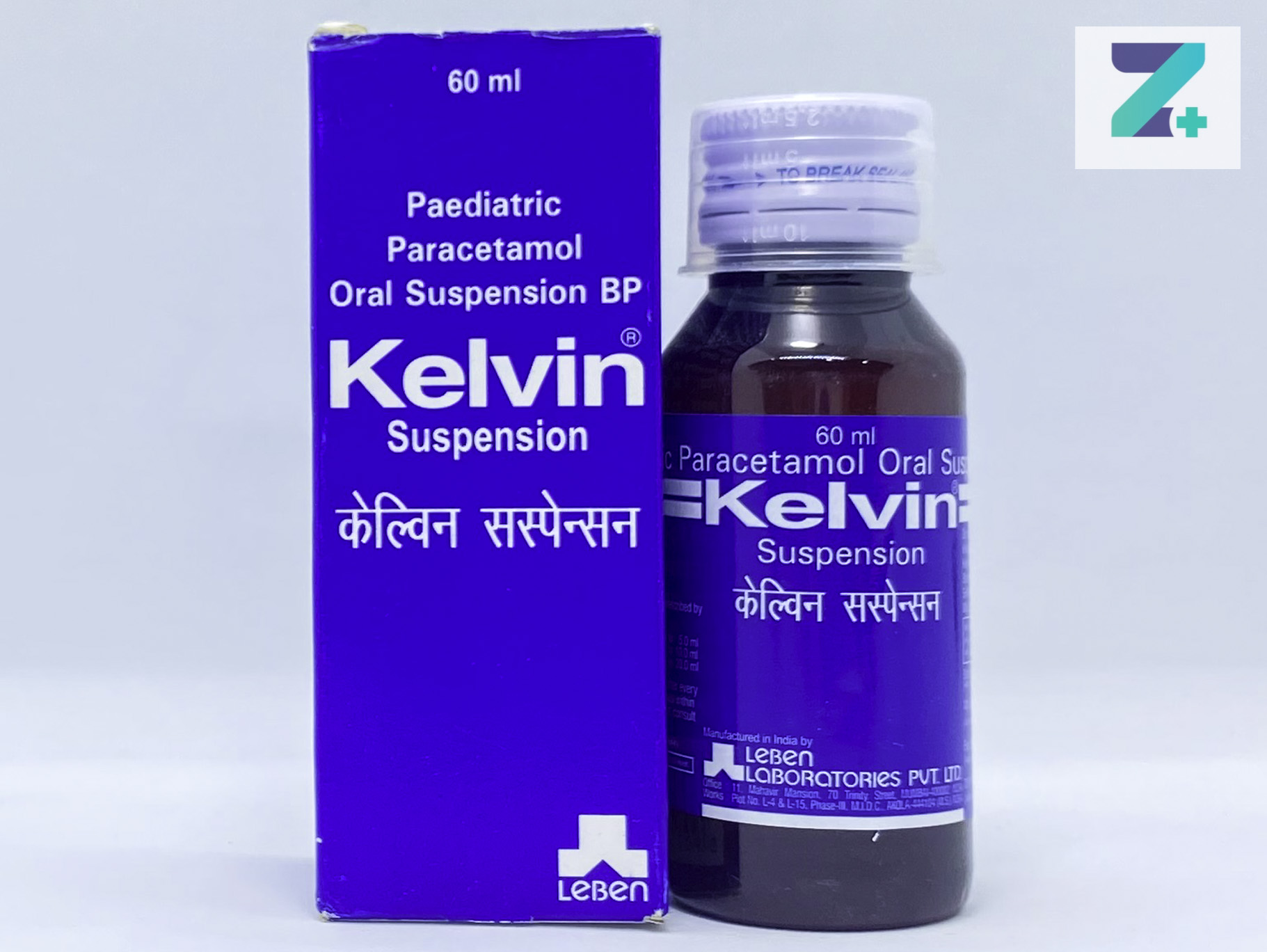
KELVIN SYR
Price: Rs.30.00
10% off
In stock
Loose stock: 0
Description
KELVIN SYR SYR 60ML
Details
Composition
PARACETAMOL 120 MG
# PARACETAMOL 120 MG
## SHORT DESCRIPTION
**Paracetamol 120 mg** (also known as **acetaminophen**) is a medicine used to relieve **mild to moderate pain** and reduce **fever**. A 120 mg strength is commonly found in pediatric liquid formulations, but the exact concentration and dosing instructions depend on the product.
Paracetamol does not treat the underlying cause of an infection; it helps relieve symptoms such as fever and pain.
> **Important:** In children, the correct dose is based primarily on **body weight and age**, not simply the product strength. Always check the product label and use the supplied measuring device.
---
## KEY BENEFITS
* Helps reduce **fever**.
* Provides relief from **mild to moderate pain**.
* May help relieve discomfort associated with colds, flu, teething, headaches, and minor aches.
* Generally does not cause stomach irritation to the same extent as many NSAID painkillers.
* Available in pediatric formulations for children when appropriately dosed.
---
## USES / INDICATIONS
Paracetamol 120 mg may be used for symptomatic relief of:
* **Fever**
* Headache
* Toothache
* Teething discomfort
* Sore throat
* Minor muscle or body aches
* Pain associated with colds and flu
* Mild pain following minor injuries or procedures
It may also be used to reduce fever following vaccination when advised by a healthcare professional.
---
## HOW IT WORKS
Paracetamol works mainly through effects on pain and temperature regulation within the **central nervous system**.
It reduces the production of certain **prostaglandins** involved in pain signaling and temperature regulation.
### In Simple Terms:
**Paracetamol reduces pain signals and helps reset an elevated body temperature → providing pain relief and lowering fever.**
Unlike NSAIDs such as ibuprofen, paracetamol has relatively little peripheral anti-inflammatory activity at usual doses.
---
## DOSAGE & ADMINISTRATION
### Children
Pediatric paracetamol dosing should be based on **body weight**, age, and the specific formulation.
A commonly used pediatric dose is approximately:
**10–15 mg/kg per dose**, given at appropriate intervals when needed.
However, the exact dosing schedule and maximum daily dose should follow the **product label or healthcare professional's instructions**.
### Important for 120 mg Products
The statement **"Paracetamol 120 mg" may refer to 120 mg per 5 mL, per dose, or another formulation**. Always verify the concentration printed on the package before administering it.
### Administration
* Shake oral suspension well before use.
* Measure the dose using the supplied oral syringe, spoon, or measuring cup.
* Do not use a household teaspoon for accurate pediatric dosing.
* Maintain the recommended interval between doses.
* Do not exceed the recommended daily dose.
### Missed Dose
Paracetamol is usually taken as needed. If a scheduled dose is missed, give it when appropriate while maintaining the required interval.
**Never give an extra dose to compensate for a missed dose.**
### Overdose Warning
Taking more paracetamol than recommended can cause **serious liver damage**, even when the person initially feels well.
If an overdose is suspected, seek urgent medical advice immediately.
---
## SIDE EFFECTS
Paracetamol is generally well tolerated when used at the recommended dose.
### Possible Side Effects
* Nausea
* Vomiting
* Abdominal discomfort
* Skin rash
### Rare but Serious Side Effects
Rarely, paracetamol may cause:
* Severe allergic reaction
* Serious skin reactions
* Liver injury
* Abnormal blood-cell changes
Seek urgent medical attention for:
* Difficulty breathing
* Facial or throat swelling
* Severe skin rash or blistering
* Yellowing of the skin or eyes
* Severe or persistent vomiting
* Unusual drowsiness or confusion
---
## PRECAUTIONS & WARNINGS
### Do Not Exceed the Recommended Dose
The most important safety concern is **paracetamol overdose**.
Never give more than recommended and do not give multiple products containing paracetamol at the same time unless specifically instructed.
### Liver Disease
Children or adults with liver disease may require special dosing or medical supervision.
### Malnutrition or Dehydration
People who are significantly malnourished or dehydrated may have an increased risk of liver toxicity from excessive paracetamol exposure.
### Alcohol
Regular or heavy alcohol consumption can increase the risk of liver injury, particularly when paracetamol is taken excessively.
### Children
Use the child's **current weight and the product's concentration** to determine the appropriate dose.
Never estimate a child's dose using an adult formulation without professional guidance.
### Persistent Fever
If a child's fever persists, repeatedly returns, or is accompanied by concerning symptoms, medical assessment may be necessary rather than continuing paracetamol indefinitely.
### Infants
Very young infants with fever may require prompt medical evaluation. Do not rely solely on paracetamol without obtaining appropriate medical advice.
---
## DRUG INTERACTIONS
### Warfarin
Regular prolonged use of paracetamol may increase the anticoagulant effect of **warfarin** in some patients.
### Other Paracetamol-Containing Medicines
This is one of the most important interactions to avoid.
Cold, flu, headache, and pain medicines may already contain **paracetamol/acetaminophen**.
Taking multiple products together can result in an accidental overdose.
### Antiepileptic Medicines
Some medicines used to treat epilepsy can affect paracetamol metabolism and may alter the risk of liver toxicity.
### Other Medicines
Tell your doctor or pharmacist if the patient is taking:
* Prescription medicines
* OTC pain or cold medicines
* Herbal products
* Nutritional supplements
Always check the active ingredients of combination products before giving another dose of paracetamol.
---
## STORAGE INFORMATION
* Store according to the manufacturer's instructions.
* Keep at room temperature unless the product label states otherwise.
* Protect from excessive heat and direct sunlight.
* Keep the bottle tightly closed.
* Keep out of reach and sight of children.
* Do not use after the expiry date.
* For liquid formulations, follow any specific **after-opening storage instructions** on the label.
---
## PRESCRIPTION STATUS
**Usually available without a prescription**, depending on the country, formulation, and age group.
Some pediatric formulations may be sold through pharmacies without a prescription, while certain strengths or products may have different regulatory requirements.
---
## GENUINE MEDICINE ASSURANCE
When purchasing **Paracetamol 120 mg**, obtain it from a **licensed pharmacy or authorized medicine supplier**.
Check the packaging for:
* Correct medicine name
* Strength/concentration
* Manufacturer information
* Batch/lot number
* Manufacturing and expiry dates
* Intact seal
* Clear dosage instructions
* Appropriate regulatory information
For liquid products, check that the liquid looks and smells as expected and that the bottle has not been tampered with.
---
# FAQ – PARACETAMOL 120 MG
### 1. What is Paracetamol 120 mg used for?
Paracetamol 120 mg is used to **reduce fever and relieve mild to moderate pain**. It is commonly available in pediatric formulations.
### 2. Is paracetamol the same as acetaminophen?
Yes. **Paracetamol and acetaminophen are the same active medicine**, although the names differ by region.
### 3. Is Paracetamol 120 mg suitable for children?
It may be suitable for children depending on their **age, weight, and the exact formulation**. Always check the product label and recommended pediatric dose.
### 4. How much paracetamol should a child take?
A commonly used dose is **10–15 mg/kg per dose**, but the appropriate dose and maximum daily amount depend on the child's age, weight, formulation, and medical circumstances.
### 5. Is 120 mg the same as 120 mg per 5 mL?
Not necessarily. **120 mg is a strength, not automatically a concentration of 120 mg/5 mL.** Check the package carefully to determine how much paracetamol is present in each mL or dose.
### 6. Can paracetamol reduce fever?
Yes. Paracetamol is commonly used to **reduce fever** and improve fever-related discomfort.
### 7. Can paracetamol treat an infection?
No. Paracetamol helps control **pain and fever**, but it does not eliminate bacterial, viral, or other infections.
### 8. Can paracetamol be given for teething pain?
Yes, an appropriately dosed pediatric formulation may help relieve **teething-related pain or discomfort**.
### 9. Can paracetamol be given with food?
Yes. Paracetamol can generally be taken **with or without food**.
### 10. Can paracetamol be taken with ibuprofen?
In some children, healthcare professionals may recommend using paracetamol and ibuprofen appropriately. However, dosing schedules must be followed carefully to avoid errors. Ask a pharmacist or doctor if you are unsure.
### 11. Can paracetamol cause liver damage?
Yes, **overdose or excessive repeated dosing can cause serious liver damage**. Always follow the recommended dose.
### 12. Can I give another cold medicine with paracetamol?
Only after checking its ingredients. Many cold and flu products already contain **paracetamol**, and combining them can cause an overdose.
### 13. What should I do if I accidentally give too much paracetamol?
Seek **urgent medical advice immediately**, even if the child or adult appears completely well. Liver toxicity can initially have few or no symptoms.
### 14. How quickly does paracetamol work?
It generally begins to provide pain or fever relief within **about 30–60 minutes**, although the response varies between individuals and formulations.
### 15. How long does paracetamol last?
The pain- and fever-relieving effect generally lasts for **several hours**. Follow the recommended interval between doses on the product label.
### 16. Can paracetamol be used after vaccination?
It may be used for fever or discomfort following vaccination when appropriate. Routine preventive dosing is not always necessary, so follow the advice of the healthcare professional administering the vaccine.
### 17. Can paracetamol be used during pregnancy?
Paracetamol may be used during pregnancy when needed and at the **lowest effective dose for the shortest necessary duration**, following medical advice.
### 18. Is Paracetamol 120 mg available without a prescription?
In many countries, pediatric paracetamol products are available **without a prescription**, although regulations vary by country and formulation.
### 19. Can children take paracetamol every day?
Repeated or prolonged use should not be undertaken without medical advice, particularly if the child has persistent fever or pain.
### 20. When should I seek medical help for a child's fever?
Seek medical advice when the child is very young, the fever is persistent or severe, or there are concerning symptoms such as difficulty breathing, unusual drowsiness, seizures, dehydration, a stiff neck, a non-blanching rash, or significant deterioration.
---
## MEDICAL DISCLAIMER
This information about **Paracetamol 120 mg** is provided for general educational purposes only and does not replace professional medical advice, diagnosis, or treatment.
Pediatric paracetamol dosing must be based on the **child's weight, age, formulation concentration, and maximum recommended daily dose**. The 120 mg strength alone is not sufficient to determine an appropriate dose.
**Never combine multiple medicines containing paracetamol/acetaminophen without checking their ingredients**, as accidental overdose can cause severe and potentially life-threatening liver damage.
Always follow the **specific product label and healthcare professional's instructions**. If an overdose is suspected, seek urgent medical assistance even if no symptoms are initially present.