LAMEZ 25MG
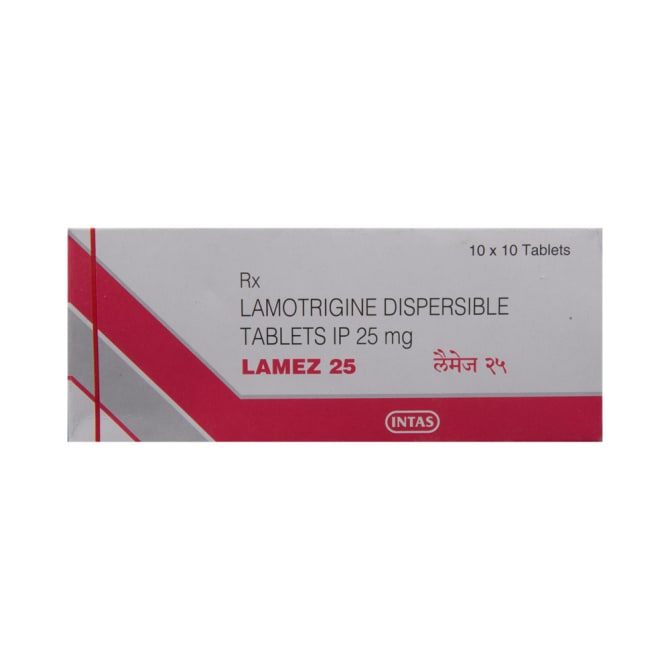
Price: Rs.124.80
13% off
In stock
Loose stock: 0
Description
LAMEZ 25MG TAB 10
Details
Composition
LAMOTRIGINE 25 MG
# LAMOTRIGINE 25 MG
## SHORT DESCRIPTION
**Lamotrigine 25 mg** is an anticonvulsant medicine used to help control certain types of **seizures (epilepsy)**. It is also used as a **mood stabilizer for maintenance treatment of bipolar disorder** in appropriate patients.
Lamotrigine works by reducing excessive electrical activity in the brain. The **25 mg strength is commonly used as a low starting dose during gradual dose escalation**, which is particularly important because increasing lamotrigine too quickly can increase the risk of serious skin reactions.
## KEY BENEFITS
* Helps control certain types of **epileptic seizures**.
* May be used alone or alongside other anticonvulsant medicines for selected seizure disorders.
* Used for **maintenance treatment of bipolar disorder** in appropriate adults.
* Helps stabilize abnormal electrical activity in the brain.
* The 25 mg strength is useful for **gradual dose titration**.
* Can be taken orally and is available in several dosage strengths.
## USES / INDICATIONS
Lamotrigine may be prescribed for:
* **Epilepsy** and certain seizure disorders.
* Focal (partial-onset) seizures.
* Generalized tonic-clonic seizures.
* Certain seizures associated with **Lennox-Gastaut syndrome**.
* Maintenance treatment of **bipolar I disorder** to help reduce recurrence of mood episodes in appropriate patients.
The exact approved indications can vary depending on the country, formulation, age group, and product labeling.
> **Important:** Lamotrigine is generally **not used to treat an acute manic or mixed episode** of bipolar disorder. Its principal role in bipolar disorder is maintenance treatment.
## HOW IT WORKS
Lamotrigine primarily works by blocking **voltage-sensitive sodium channels** in nerve cells.
This reduces the release of excitatory neurotransmitters, particularly **glutamate and aspartate**, helping to stabilize excessive electrical activity in the brain.
### Overall Action
**Lamotrigine → blocks voltage-sensitive sodium channels → reduces excessive neuronal activity → helps prevent seizures and stabilizes mood.**
## DOSAGE & ADMINISTRATION
Lamotrigine dosing must be **individualized and increased gradually**.
The appropriate dose depends on:
* The condition being treated.
* Age.
* Other anticonvulsant medicines being taken.
* Whether **valproate/valproic acid** is being used.
* Kidney and liver function.
* Response to treatment.
* Tolerability.
### Lamotrigine 25 mg
**25 mg is commonly used as a starting or titration strength**, rather than being the usual long-term maintenance dose for many patients.
A healthcare professional may start with a low dose and gradually increase it over several weeks.
### General Administration
* Take exactly as prescribed.
* Take it at the same time each day.
* It can generally be taken **with or without food**.
* Swallow tablets with water unless your specific formulation has different instructions.
* Do not increase the dose faster than instructed.
* Do not stop treatment abruptly without medical advice.
### Missed Dose
If you miss a dose, take it when remembered unless it is nearly time for your next dose.
**Do not take two doses together.**
If lamotrigine has been stopped for **several days**, contact your healthcare professional before restarting it. Depending on the duration of interruption, it may be necessary to restart using the initial titration schedule.
## SIDE EFFECTS
Common or possible side effects include:
* Headache.
* Dizziness.
* Sleepiness or drowsiness.
* Nausea.
* Vomiting.
* Blurred or double vision.
* Tremor.
* Lack of coordination.
* Fatigue.
* Insomnia.
* Dry mouth.
### Serious Skin Reactions
Lamotrigine can rarely cause serious and potentially life-threatening skin reactions, including:
* **Stevens-Johnson syndrome (SJS)**.
* Toxic epidermal necrolysis (TEN).
* Drug reaction with eosinophilia and systemic symptoms (**DRESS**).
Seek **immediate medical attention** if you develop:
* A new rash.
* Blistering or peeling skin.
* Sores in the mouth or eyes.
* Fever with a rash.
* Facial swelling.
* Swollen lymph nodes.
* Difficulty breathing.
* Unusual weakness or severe illness following the appearance of a rash.
**Do not ignore a new rash while taking lamotrigine.**
## PRECAUTIONS & WARNINGS
### Serious Skin Rash — IMPORTANT
The risk of serious rash is increased when:
* Lamotrigine is started at too high a dose.
* The dose is increased too rapidly.
* Lamotrigine is taken with **valproate or valproic acid**.
Any new unexplained rash should be evaluated promptly by a healthcare professional.
### Do Not Stop Abruptly
Stopping lamotrigine suddenly can increase seizure frequency and may cause serious complications in people with epilepsy.
Dose reduction should generally be performed under medical supervision.
### Bipolar Disorder
Lamotrigine is primarily used for **maintenance treatment** of bipolar disorder. It is not generally relied upon for rapid treatment of acute mania.
Patients should be monitored for changes in mood, worsening depression, or suicidal thoughts.
### Suicidal Thoughts
Antiepileptic medicines, including lamotrigine, may be associated with an increased risk of suicidal thoughts or behavior in some patients.
Seek immediate professional help if significant mood changes or suicidal thoughts occur.
### Liver or Kidney Problems
Patients with significant liver or kidney impairment may require dose adjustments.
### Hypersensitivity
Rarely, lamotrigine can cause a serious systemic hypersensitivity reaction involving multiple organs.
Symptoms such as fever, rash, facial swelling, swollen lymph nodes, or organ-related symptoms require urgent medical evaluation.
### Pregnancy
If you are pregnant or planning pregnancy, consult your healthcare professional before changing lamotrigine treatment.
Abruptly stopping an anticonvulsant can itself be harmful, so treatment decisions during pregnancy should be medically supervised.
### Driving and Operating Machinery
Lamotrigine can cause dizziness, blurred or double vision, or drowsiness. Avoid driving or operating machinery until you know how the medicine affects you.
## DRUG INTERACTIONS
### Valproate / Valproic Acid
**Valproate significantly increases lamotrigine levels and prolongs its half-life**, increasing the risk of serious skin reactions.
When used together, lamotrigine generally requires a **much slower and lower-dose titration schedule**.
### Carbamazepine
Carbamazepine can increase the metabolism of lamotrigine and lower lamotrigine concentrations.
It may also increase certain neurological adverse effects in some patients.
### Phenytoin
Phenytoin can increase lamotrigine metabolism and reduce its blood concentration.
### Phenobarbital and Primidone
These medicines may increase lamotrigine metabolism and reduce its effectiveness.
### Rifampicin
Rifampicin can increase lamotrigine clearance and reduce its concentration.
### Hormonal Contraceptives
Estrogen-containing hormonal contraceptives can increase lamotrigine clearance and may significantly reduce lamotrigine concentrations.
Changes in hormonal contraception can therefore require clinical reassessment of lamotrigine dosing.
### Other Medicines
Other anticonvulsants and medicines may affect lamotrigine levels or increase adverse effects.
Always tell your doctor or pharmacist about **all prescription medicines, OTC medicines, vitamins, supplements, and herbal products** you use.
## STORAGE INFORMATION
* Store according to the manufacturer's instructions.
* Keep at room temperature unless otherwise specified.
* Protect from excessive heat and moisture.
* Keep away from direct sunlight.
* Keep tablets in their original packaging.
* Keep out of reach of children.
* Do not use after the expiry date.
* Do not use tablets from damaged or tampered packaging.
## PRESCRIPTION STATUS
**Lamotrigine 25 mg is generally a prescription medicine.**
Because lamotrigine requires careful dose titration and can rarely cause serious skin reactions, it should be started and adjusted under the supervision of a qualified healthcare professional.
Prescription requirements may vary by country.
## GENUINE MEDICINE ASSURANCE
When purchasing **Lamotrigine 25 mg**, obtain it from a **licensed pharmacy or authorized medicine supplier**.
Check:
* Active ingredient: **Lamotrigine**.
* Strength: **25 mg**.
* Manufacturer details.
* Batch/lot number.
* Manufacturing date.
* Expiry date.
* Intact packaging and seal.
* Clear labeling and dosage instructions.
Avoid medicines with damaged packaging, missing batch information, unclear labeling, or questionable authenticity.
## FREQUENTLY ASKED QUESTIONS (FAQ)
### 1. What is Lamotrigine 25 mg used for?
Lamotrigine 25 mg is used as part of treatment for certain **seizure disorders** and as a low-strength titration dose in treatment plans for **bipolar disorder maintenance**.
### 2. Is lamotrigine an anticonvulsant?
Yes. Lamotrigine is an **anticonvulsant/antiepileptic medicine** that helps reduce abnormal electrical activity in the brain.
### 3. Is lamotrigine a mood stabilizer?
Yes. Lamotrigine is considered a **mood stabilizer** and is used primarily for maintenance treatment of bipolar disorder.
### 4. Why is Lamotrigine 25 mg often used at the beginning of treatment?
A low starting dose helps reduce the risk of serious skin reactions. Lamotrigine is generally increased **slowly and carefully** rather than started at a high dose.
### 5. How does lamotrigine work?
It primarily blocks voltage-sensitive sodium channels and reduces the release of excitatory neurotransmitters, helping stabilize electrical activity in the brain.
### 6. Can lamotrigine stop seizures?
Lamotrigine can help **reduce the frequency of certain seizures**, but it does not cure epilepsy.
### 7. Can lamotrigine be used alone?
Yes. Depending on the type of epilepsy and the patient's circumstances, lamotrigine may be used alone or in combination with other anticonvulsants.
### 8. Can lamotrigine be used with valproate?
Yes, but this combination requires **careful dosing and slow lamotrigine titration** because valproate significantly increases lamotrigine exposure and the risk of serious rash.
### 9. What is the most serious side effect of lamotrigine?
A rare but potentially life-threatening adverse effect is a **severe skin reaction**, including Stevens-Johnson syndrome and toxic epidermal necrolysis.
### 10. What should I do if I develop a rash while taking lamotrigine?
Contact a healthcare professional **promptly**. If the rash is accompanied by fever, blistering, peeling skin, mouth/eye sores, facial swelling, or difficulty breathing, seek **urgent medical attention**.
### 11. Can lamotrigine cause dizziness?
Yes. Dizziness is a possible side effect. Avoid driving or operating machinery until you know how lamotrigine affects you.
### 12. Does lamotrigine cause weight gain?
Lamotrigine is generally considered to have a relatively low tendency to cause weight gain compared with some other mood stabilizers, although individual responses vary.
### 13. Does lamotrigine make you sleepy?
Drowsiness can occur, although some people may experience insomnia or other sleep changes instead.
### 14. Can lamotrigine be stopped suddenly?
It should generally **not be stopped abruptly**, particularly in people taking it for epilepsy, because seizures may become more frequent or severe.
### 15. What happens if I miss several doses of lamotrigine?
Do not simply restart your previous full dose after a prolonged interruption. Contact your healthcare professional because **re-titration may be necessary** to reduce the risk of serious skin reactions.
### 16. Can lamotrigine be taken with birth control pills?
Some estrogen-containing hormonal contraceptives can significantly lower lamotrigine levels. Discuss contraceptive choices with your healthcare professional before starting or stopping hormonal contraception.
### 17. Can lamotrigine be used during pregnancy?
Lamotrigine may be used during pregnancy in some patients when the benefits outweigh the risks. **Do not stop it suddenly** if you become pregnant; contact your healthcare professional for individualized advice.
### 18. Can lamotrigine be used while breastfeeding?
Lamotrigine can pass into breast milk. Breastfeeding decisions should be discussed with a healthcare professional, who can consider the mother's treatment needs and monitor the infant when appropriate.
### 19. Does lamotrigine treat anxiety?
Lamotrigine is **not generally indicated as a primary treatment for anxiety disorders**.
### 20. Does lamotrigine treat depression?
Lamotrigine is used primarily for **maintenance treatment of bipolar disorder**, particularly for preventing depressive episodes. It is not generally used as a standalone treatment for ordinary unipolar depression.
### 21. Does lamotrigine treat mania?
Lamotrigine is **not considered a primary treatment for acute mania** because its effects are not sufficiently rapid for managing an acute manic episode.
### 22. Can lamotrigine cause suicidal thoughts?
Antiepileptic medicines may be associated with suicidal thoughts or behavior in some patients. Report significant mood changes, worsening depression, or suicidal thoughts immediately.
### 23. Does lamotrigine require blood tests?
Routine blood-level monitoring is not usually required for everyone. However, your healthcare professional may order blood tests when clinically indicated, particularly to evaluate organ function or investigate adverse effects.
### 24. Is Lamotrigine 25 mg prescription-only?
Yes. Lamotrigine is generally a **prescription medicine**, although dispensing regulations vary by country.
### 25. How should Lamotrigine 25 mg be stored?
Store it according to the manufacturer's instructions, generally at room temperature and protected from **heat, moisture, and direct sunlight**. Keep it out of reach of children.
## MEDICAL DISCLAIMER
This information about **Lamotrigine 25 mg** is provided for general educational and informational purposes only. It does not replace professional medical advice, diagnosis, or treatment.
Lamotrigine requires **gradual dose escalation**. Starting at an excessively high dose or increasing the dose too quickly can increase the risk of serious and potentially life-threatening skin reactions.
**Seek immediate medical attention for a new or worsening rash**, especially if accompanied by fever, blistering, peeling skin, mouth or eye sores, facial swelling, or difficulty breathing.
Do not start, stop, or change Lamotrigine 25 mg without consulting a qualified healthcare professional. If treatment has been interrupted for several days, seek medical advice before restarting because the original dose may no longer be appropriate.