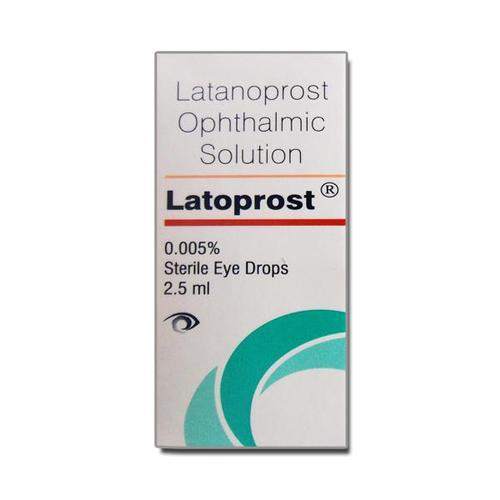
LATOPROST EYE DROPS
Price: Rs.820.80
13% off
In stock
Loose stock: 0
Description
LATOPROST 50MCG EYE DROPS 2.5ML
Details
Composition
LATANOPROST 50 MCG
# Latanoprost 50 mcg/mL
## Short Description
**Latanoprost 50 mcg/mL** is a prescription **prostaglandin analogue eye drop** used to lower elevated pressure inside the eye. It is commonly prescribed for **open-angle glaucoma and ocular hypertension**.
Latanoprost works by increasing the natural drainage of aqueous humor from the eye, thereby reducing **intraocular pressure (IOP)** and helping protect the optic nerve from glaucoma-related damage.
> **Note:** Latanoprost is commonly expressed as **50 micrograms/mL (0.005%)**. The exact concentration and formulation should be verified on the product label.
---
## Key Benefits
* Helps **lower elevated intraocular pressure**
* Used in the treatment of **open-angle glaucoma**
* Helps manage **ocular hypertension**
* Increases natural drainage of fluid from the eye
* Helps reduce the risk of pressure-related **optic nerve damage**
* Usually administered **once daily**
* Can be used alone or alongside other glaucoma medicines when prescribed
---
## Uses / Indications
### Open-Angle Glaucoma
Latanoprost is commonly used to reduce elevated intraocular pressure in patients with **open-angle glaucoma**.
Lowering eye pressure helps reduce the risk of progressive optic nerve damage and vision loss.
### Ocular Hypertension
It may also be prescribed for **ocular hypertension**, where the pressure inside the eye is higher than normal but glaucoma-related optic nerve damage has not necessarily developed.
### Other Uses
An ophthalmologist may prescribe latanoprost for other pressure-related eye conditions when clinically appropriate.
> Latanoprost controls elevated eye pressure but **does not reverse existing optic nerve damage** caused by glaucoma.
---
## How It Works
Latanoprost is a **prostaglandin F2α analogue**.
After being administered into the eye, it is converted into an active form that increases **uveoscleral outflow** of aqueous humor.
This allows excess fluid inside the eye to drain more effectively.
**Latanoprost → increases aqueous humor drainage → lowers intraocular pressure → helps protect the optic nerve.**
---
## Dosage & Administration
### Recommended Adult Dose
The usual dose is:
**One drop of latanoprost 50 mcg/mL (0.005%) into the affected eye(s) once daily, preferably in the evening.**
Do not use it more frequently than prescribed because increasing the frequency may reduce its pressure-lowering effect.
### How to Apply the Eye Drops
1. Wash your hands thoroughly.
2. Remove contact lenses before administration.
3. Tilt your head back and look upward.
4. Gently pull down the lower eyelid.
5. Place **one drop** into the affected eye.
6. Avoid touching the dropper tip to the eye, eyelids, or other surfaces.
7. Close the eye gently.
8. If possible, gently press the inner corner of the eye near the nose for about **1 minute**.
9. Replace the cap tightly after use.
### Contact Lenses
Remove contact lenses before applying latanoprost.
Wait at least **15 minutes** before putting contact lenses back into the eyes.
### If Using Other Eye Drops
If multiple ophthalmic medicines are prescribed, separate their administration by at least **5 minutes**, unless your ophthalmologist gives different instructions.
### Missed Dose
If you forget a dose, administer the next dose at the usual time.
**Do not use two doses to compensate for a missed dose.**
---
## Side Effects
### Common Side Effects
Possible side effects include:
* Eye redness
* Eye irritation
* Burning or stinging
* Increased eyelash growth
* Darkening of the iris
* Darkening of the skin around the eyes
* Blurred vision immediately after application
* Dry eyes
* Increased tearing
* Eye discomfort
### Iris Color Changes
Latanoprost may gradually cause **permanent darkening of the iris**, particularly in people with mixed-color irises such as:
* Green-brown
* Blue-brown
* Gray-brown
The color change generally develops slowly and may be more noticeable after months or years of treatment.
### Eyelash Changes
Latanoprost can cause:
* Longer eyelashes
* Thicker eyelashes
* Darker eyelashes
* Changes in eyelash direction
These effects may partially reverse after discontinuation.
### Serious Side Effects
Seek medical attention if you experience:
* Severe eye pain
* Significant vision changes
* Severe or persistent eye inflammation
* Marked sensitivity to light
* Signs of an allergic reaction
* Severe swelling around the eye
Rarely, latanoprost may be associated with **macular edema**, particularly in susceptible patients.
---
## Precautions & Warnings
### Iris Pigmentation
Latanoprost can permanently increase brown pigmentation of the iris.
This is generally cosmetic but should be discussed with your ophthalmologist.
### Macular Edema
Use caution in patients who have risk factors for macular edema, including certain patients with:
* Aphakia
* Pseudophakia with a torn posterior lens capsule
* Previous macular edema
* Certain retinal disorders
### Herpes Simplex Keratitis
Latanoprost should be used cautiously in patients with a history of **herpetic keratitis**, as prostaglandin analogues may potentially reactivate or worsen the condition.
### Intraocular Inflammation
Patients with active or recurrent uveitis or iritis should inform their ophthalmologist before using latanoprost.
### Asthma
Tell your doctor if you have asthma or a history of asthma.
### Contact Lenses
Remove contact lenses before administration because some formulations contain **benzalkonium chloride**, which may be absorbed by soft contact lenses and can irritate the eye.
### Pregnancy
Tell your doctor if you are pregnant or planning pregnancy. Latanoprost should be used during pregnancy only when considered appropriate by a healthcare professional.
### Breastfeeding
Discuss latanoprost use with your healthcare professional if you are breastfeeding.
### Children
Safety and dosing in children depend on age and the specific indication. Use only under appropriate pediatric/ophthalmic supervision.
---
## Drug Interactions
### Other Glaucoma Medicines
Latanoprost may be used with other pressure-lowering eye drops when prescribed.
If multiple ophthalmic medicines are used, separate applications by at least **5 minutes**.
### Other Prostaglandin Analogues
Using two prostaglandin analogue medicines together may result in inadequate additional pressure reduction and may potentially increase adverse effects.
Do not combine them unless specifically prescribed by an ophthalmologist.
### Thimerosal-Containing Eye Drops
When thimerosal-containing ophthalmic preparations are used together with latanoprost, precipitation can occur.
If both are prescribed, they should generally be administered with an interval of at least **5 minutes**.
### Other Medicines
Tell your doctor or pharmacist about all prescription medicines, OTC medicines, eye drops, vitamins, and supplements you use.
---
## Storage Information
Storage requirements may vary according to the specific manufacturer's formulation.
For many latanoprost products:
* Store unopened bottles in a **refrigerator at 2°C–8°C**.
* Protect from light.
* Do not freeze.
* After opening, follow the manufacturer's instructions regarding storage and discard period.
* Keep the bottle tightly closed.
* Keep out of reach and sight of children.
* Avoid contaminating the dropper tip.
* Do not use after the expiry date.
> **Always follow the storage instructions printed on your specific product packaging**, as storage requirements after opening can vary between formulations and markets.
---
## Prescription Status
**Latanoprost 50 mcg/mL is generally a prescription-only ophthalmic medicine.**
It should be used under the supervision of an ophthalmologist or other qualified healthcare professional.
Regular eye examinations may be required to monitor intraocular pressure and the progression of glaucoma.
---
## Genuine Medicine Assurance
When purchasing **Latanoprost 50 mcg/mL**:
* Purchase from a **licensed pharmacy or authorized medicine supplier**.
* Verify the medicine name, strength, and formulation.
* Check the manufacturer's name.
* Check the batch/lot number and expiry date.
* Ensure the bottle and packaging are sealed and intact.
* Check that the eye-drop solution appears consistent with the manufacturer's description.
* Avoid products with damaged, leaking, altered, or suspicious packaging.
* Do not share your eye drops with another person.
* Do not use an eye-drop bottle if the dropper tip has become contaminated.
* If authenticity is uncertain, consult a pharmacist or contact the manufacturer using the details printed on the package.
---
# FAQ – Latanoprost 50 mcg/mL
### 1. What is Latanoprost 50 mcg/mL used for?
Latanoprost is used to **lower increased pressure inside the eye** in conditions such as open-angle glaucoma and ocular hypertension.
### 2. Is latanoprost a glaucoma medicine?
Yes. Latanoprost is a commonly prescribed **prostaglandin analogue for glaucoma and elevated intraocular pressure**.
### 3. How does latanoprost lower eye pressure?
It increases the drainage of aqueous humor through the **uveoscleral pathway**, reducing intraocular pressure.
### 4. How often should latanoprost eye drops be used?
The usual adult regimen is **one drop in the affected eye(s) once daily**, commonly in the evening.
### 5. Can I use latanoprost twice a day?
Do not use it more frequently than prescribed. Using latanoprost more than once daily may reduce its effectiveness rather than improve eye-pressure control.
### 6. Can latanoprost cure glaucoma?
Latanoprost does not cure glaucoma or reverse existing optic nerve damage. It helps **control intraocular pressure and reduce the risk of further damage**.
### 7. Does latanoprost improve eyesight?
Latanoprost primarily lowers eye pressure. It is not designed to directly improve vision that has already been lost due to glaucoma.
### 8. Can latanoprost change eye color?
Yes. It can gradually increase brown pigmentation of the iris. The change can be **permanent**, particularly in people with mixed-color eyes.
### 9. Does latanoprost make eyelashes longer?
Yes. Increased eyelash length, thickness, pigmentation, or changes in growth direction can occur.
### 10. Does latanoprost cause red eyes?
Yes. **Eye redness** is one of the relatively common side effects of latanoprost.
### 11. Can latanoprost cause blurred vision?
Temporary blurred vision may occur immediately after applying the drops. Persistent or significant vision changes should be evaluated by an eye specialist.
### 12. Can I wear contact lenses while using latanoprost?
Remove contact lenses before applying the drops. If your product contains benzalkonium chloride, wait at least **15 minutes** before reinserting contact lenses.
### 13. What should I do if I miss a dose of latanoprost?
Skip the missed dose and use your next dose at the normal time. **Do not use two drops to make up for the missed dose.**
### 14. Can I use other glaucoma eye drops with latanoprost?
Yes, other glaucoma medicines may sometimes be prescribed alongside latanoprost. Allow at least **5 minutes between different eye drops**, unless otherwise instructed.
### 15. Can I use latanoprost with another prostaglandin eye drop?
Generally, two prostaglandin analogue medicines should not be combined unless specifically directed by an ophthalmologist.
### 16. Should latanoprost be refrigerated?
Many unopened latanoprost products require refrigeration at **2°C–8°C**. Storage after opening varies by product, so follow the instructions on your specific package.
### 17. Can latanoprost be used during pregnancy?
Tell your doctor if you are pregnant or planning pregnancy. Your doctor will determine whether the expected benefits outweigh potential risks.
### 18. Can latanoprost be used while breastfeeding?
Discuss breastfeeding with your healthcare professional before using latanoprost.
### 19. Can latanoprost cause macular edema?
Rarely, latanoprost may be associated with **macular edema**, particularly in people with certain risk factors. Report new or worsening vision changes to your ophthalmologist.
### 20. Can latanoprost cause eye irritation?
Yes. Burning, stinging, irritation, dryness, or discomfort may occur after application.
### 21. What happens if I accidentally put more than one drop in my eye?
An occasional extra drop is unlikely to cause serious harm, although irritation or redness may occur. If a large amount is accidentally used or significant symptoms develop, contact a healthcare professional.
### 22. Can I stop latanoprost when my eye pressure becomes normal?
Do not stop treatment without consulting your ophthalmologist. Normal pressure may be the result of the medicine working.
### 23. Is Latanoprost 50 mcg/mL available without a prescription?
Latanoprost is generally a **prescription-only medicine**, although regulations can vary by country.
### 24. Can I share my latanoprost eye drops?
No. Eye drops should not be shared because this can spread infection and contaminate the bottle.
### 25. How long does latanoprost take to work?
Latanoprost begins lowering intraocular pressure within several hours, with maximum pressure-lowering effects generally developing over a longer period of regular use.
---
## Medical Disclaimer
This information about **Latanoprost 50 mcg/mL (0.005%)** is provided for educational and informational purposes only and is **not a substitute for professional medical advice, diagnosis, or treatment**.
Latanoprost is a prescription ophthalmic medicine used to lower intraocular pressure. Use it exactly as directed by an ophthalmologist. Do not increase the frequency or discontinue treatment without professional advice.
Changes in iris pigmentation, eyelash growth, and eye redness can occur. Patients with a history of uveitis, herpes simplex keratitis, macular edema, retinal disease, or certain lens conditions should inform their eye specialist before treatment.
Seek prompt medical attention for severe eye pain, significant vision changes, severe inflammation, or symptoms suggesting an allergic reaction.
Always read the specific product label and follow the instructions of your ophthalmologist or pharmacist.