LEFRA 20MG
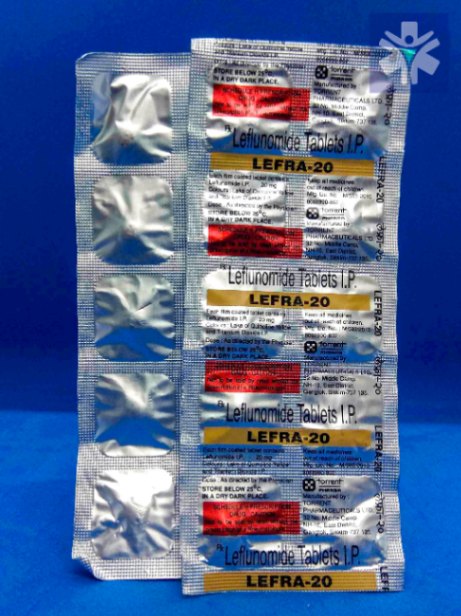
Price: Rs.515.20
13% off
In stock
Loose stock: 0
Description
LEFRA 20MG TAB 10
Details
Composition
LEFLUNOMIDE 20 MG
# LEFLUNOMIDE 20 MG
## Short Description
**Leflunomide 20 mg** is a prescription **disease-modifying antirheumatic drug (DMARD)** used primarily to treat **active rheumatoid arthritis (RA)**. It helps reduce joint inflammation, pain, swelling, and stiffness and can slow the progression of joint damage.
Leflunomide works by suppressing certain immune-system processes that contribute to chronic inflammation. Because it affects the immune system and has a long-lasting active metabolite, treatment requires appropriate medical monitoring.
---
## Key Benefits
* Helps reduce **joint pain, swelling, and stiffness** associated with rheumatoid arthritis.
* Helps improve physical function and mobility.
* Helps control excessive immune-system activity involved in rheumatoid arthritis.
* Can help **slow the progression of structural joint damage**.
* Provides a long-term disease-modifying treatment option.
* May be used alone or in combination with other DMARDs when prescribed by a specialist.
> **Important:** Leflunomide is not intended to provide immediate pain relief. Its disease-modifying effects develop over time.
---
## Uses / Indications
Leflunomide is primarily used for:
* **Active rheumatoid arthritis**
* Active psoriatic arthritis in some countries and according to local approval
It may be prescribed when long-term control of inflammatory arthritis is required.
### Rheumatoid Arthritis
Leflunomide can help:
* Reduce inflammation
* Reduce joint tenderness and swelling
* Improve physical function
* Slow the progression of joint damage
The approved indications may vary depending on the country and regulatory authority.
---
## How It Works
Leflunomide is an **immunomodulatory medicine**.
After administration, it is converted to its active metabolite, **teriflunomide**.
Teriflunomide inhibits an enzyme called **dihydroorotate dehydrogenase (DHODH)**, which is involved in the production of pyrimidines.
This reduces the ability of activated immune cells, particularly rapidly proliferating lymphocytes, to multiply.
As a result, leflunomide helps reduce the abnormal immune activity responsible for inflammation and joint damage in rheumatoid arthritis.
---
## Dosage & Administration
* Take **Leflunomide 20 mg exactly as prescribed by your doctor**.
* It may be taken **with or without food**.
* Take it at approximately the same time each day.
* Swallow the tablet with water.
* Do not crush or chew the tablet unless specifically instructed.
* Do not change the dose without medical advice.
### Typical Adult Regimen
A commonly used maintenance dose is:
**20 mg once daily.**
Some patients may initially receive a **loading dose**, but loading doses are not appropriate for everyone because they may increase adverse effects. Your doctor will determine whether a loading dose is suitable.
### Important
Leflunomide has a **very long elimination half-life**. Its active metabolite can remain in the body for an extended period after treatment is stopped.
A specific **accelerated drug-elimination procedure** may therefore be required in certain situations, such as serious toxicity, pregnancy, or before conception.
### Missed Dose
Take the missed dose when remembered unless it is nearly time for the next dose.
**Do not take two doses together.**
---
## Side Effects
Common side effects may include:
* Diarrhea
* Nausea
* Headache
* Abdominal discomfort
* Indigestion
* Increased blood pressure
* Hair thinning or hair loss
* Skin rash
* Dry skin
* Reduced appetite
* Mild respiratory infections
* Elevated liver enzymes
### Serious Side Effects
Leflunomide can cause serious adverse reactions, including:
* **Liver injury**
* Severe infection
* Serious blood disorders
* Severe skin reactions
* Lung problems/interstitial lung disease
* Peripheral neuropathy
* Severe allergic reactions
* Increased blood pressure
Seek urgent medical attention for:
* Yellowing of the skin or eyes
* Dark urine
* Severe abdominal pain
* Unexplained bruising or bleeding
* Persistent fever
* Severe cough or difficulty breathing
* Widespread blistering or peeling skin
* Facial or throat swelling
* Severe weakness or numbness
---
## Precautions & Warnings
### Liver Toxicity
Leflunomide can cause **serious liver injury**.
Tell your doctor if you have:
* Liver disease
* A history of hepatitis
* Abnormal liver function tests
* Heavy alcohol consumption
Liver function tests are generally required before and during treatment.
### Blood Disorders
Leflunomide can reduce blood-cell counts in some patients.
Your doctor may monitor:
* Complete blood count
* White blood cells
* Platelets
* Hemoglobin
### Infection Risk
Because leflunomide suppresses immune activity, it can increase susceptibility to infections.
Contact your doctor if you develop:
* Persistent fever
* Severe sore throat
* Persistent cough
* Unusual infections
* Other signs of serious infection
### Pregnancy
**Leflunomide can cause serious fetal harm.**
It should **not be used during pregnancy** unless specifically directed under exceptional specialist circumstances.
Women who could become pregnant generally require appropriate contraception during treatment and may need a drug-elimination procedure before attempting conception.
Men planning to father a child should also discuss leflunomide with their healthcare professional because the active metabolite can persist in the body.
### Vaccinations
Discuss vaccination with your doctor before treatment. Certain **live vaccines** may not be appropriate during leflunomide treatment.
### Blood Pressure
Leflunomide can increase blood pressure. Blood pressure should be monitored during treatment.
### Lung Problems
Rarely, leflunomide can cause serious lung problems. Tell your doctor if you develop:
* New or worsening cough
* Shortness of breath
* Difficulty breathing
* Unexplained fever
### Neuropathy
Leflunomide may rarely cause peripheral neuropathy, characterized by:
* Tingling
* Numbness
* Burning sensations
* Weakness
Report these symptoms promptly.
---
## Drug Interactions
### Methotrexate
Leflunomide may be combined with methotrexate in selected patients, but the combination can increase the risk of **liver toxicity and blood abnormalities**. Close medical monitoring is required.
### Other Immunosuppressants
Combining leflunomide with other immunosuppressive medicines may increase the risk of:
* Serious infections
* Blood disorders
* Liver toxicity
### Hepatotoxic Medicines
Medicines that can affect the liver may increase the risk of liver injury when combined with leflunomide.
Tell your doctor about all medicines that may affect liver function.
### Rifampicin
Rifampicin can increase levels of the active metabolite of leflunomide and may increase adverse effects.
### Warfarin
Leflunomide may affect the response to warfarin. Patients taking warfarin may require closer monitoring of **INR**.
### Certain Cholesterol Medicines
Some medicines that affect liver metabolism may interact with leflunomide.
### Alcohol
Alcohol may increase the risk of **liver damage**. Avoid or minimize alcohol according to your healthcare professional's advice.
### Other Medicines
Always tell your doctor or pharmacist about:
* Prescription medicines
* OTC medicines
* Vitamins
* Herbal supplements
* Other arthritis medicines
before starting leflunomide.
---
## Storage Information
* Store at **room temperature according to the manufacturer's instructions**.
* Keep tablets in their original packaging.
* Protect from excessive heat, moisture, and direct sunlight.
* Keep the container tightly closed.
* Keep out of reach of children.
* Do not use after the expiry date.
* Do not use tablets if the packaging is damaged or the medicine appears deteriorated.
---
## Prescription Status
**Leflunomide 20 mg is a prescription-only medicine.**
It should be prescribed and monitored by a qualified healthcare professional, often a rheumatologist or physician experienced in treating inflammatory arthritis.
Regular monitoring may include:
* Liver function tests
* Complete blood count
* Blood pressure
* Assessment for infection
* Pregnancy-related precautions when applicable
---
## Genuine Medicine Assurance
When purchasing **Leflunomide 20 mg**, ensure that you:
* Purchase only from a **licensed pharmacy or authorized medicine supplier**.
* Verify the generic name and strength.
* Check the manufacturer's name.
* Verify the batch/lot number and expiry date.
* Ensure the packaging and security seal are intact.
* Check that the tablets and labeling match the manufacturer's information.
* Avoid products with suspicious packaging or unusually low prices.
* Never purchase prescription medicines from unauthorized sellers.
* Follow your country's prescription and medicine regulations.
For additional authenticity assurance, compare the packaging with information provided by the manufacturer or the relevant national medicines regulatory authority.
---
# FAQ
### 1. What is Leflunomide 20 mg used for?
Leflunomide 20 mg is primarily used to treat **active rheumatoid arthritis**. It may also be approved for psoriatic arthritis in some countries.
### 2. Is Leflunomide a painkiller?
No. Leflunomide is a **disease-modifying antirheumatic drug (DMARD)**. It treats the underlying immune-driven inflammation rather than simply masking pain.
### 3. How long does Leflunomide take to work?
Leflunomide does not provide immediate relief. Improvement may begin over **several weeks**, with the full therapeutic effect taking longer.
### 4. Can Leflunomide cure rheumatoid arthritis?
There is currently no medication that permanently cures rheumatoid arthritis. Leflunomide helps **control disease activity and reduce inflammation and joint damage**.
### 5. Can Leflunomide be taken with Methotrexate?
Yes, the two medicines may sometimes be prescribed together, but the combination requires careful medical supervision because of increased risks of **liver toxicity, blood abnormalities, and other adverse effects**.
### 6. Does Leflunomide affect the liver?
Yes. Leflunomide can cause **elevated liver enzymes and, rarely, serious liver injury**. Regular liver-function monitoring is important.
### 7. Can I drink alcohol while taking Leflunomide?
Alcohol may increase the risk of liver injury. It is generally advisable to **avoid or minimize alcohol** and discuss alcohol consumption with your doctor.
### 8. Can Leflunomide lower the immune system?
Yes. Leflunomide suppresses certain immune-cell activity, which can increase susceptibility to **infections**.
### 9. Can I receive vaccines while taking Leflunomide?
Some vaccines may be appropriate, but **live vaccines may not be recommended** during treatment. Discuss vaccination plans with your healthcare professional.
### 10. Can Leflunomide cause hair loss?
Yes. **Hair thinning or hair loss** can occur in some patients. It is often reversible after treatment is stopped, although recovery can take time.
### 11. Does Leflunomide cause diarrhea?
Yes. **Diarrhea is one of the more common side effects** of leflunomide.
### 12. Can Leflunomide increase blood pressure?
Yes. Leflunomide can increase blood pressure in some patients. Blood pressure should be monitored during treatment.
### 13. Can women take Leflunomide during pregnancy?
**Leflunomide can cause serious fetal harm and should not be used during pregnancy.** Women who could become pregnant should discuss effective contraception and pregnancy planning with their doctor.
### 14. How long should I wait after stopping Leflunomide before becoming pregnant?
Because leflunomide's active metabolite can remain in the body for a long time, simply stopping the medicine may not be sufficient. A doctor may prescribe an **accelerated elimination procedure** and confirm that drug levels are sufficiently low before pregnancy is attempted.
### 15. Can men take Leflunomide if they want to have children?
Men planning to father a child should discuss treatment with their doctor. Because the active metabolite persists for a long time, an elimination procedure may be considered depending on the circumstances.
### 16. What is the Leflunomide washout procedure?
A **cholestyramine or activated-charcoal elimination procedure** may be used under medical supervision to accelerate removal of leflunomide's active metabolite from the body.
### 17. Can Leflunomide cause lung problems?
Rarely, leflunomide can cause serious lung reactions, including interstitial lung disease. Seek medical advice for **new or worsening cough or breathing difficulty**.
### 18. Does Leflunomide require blood tests?
Yes. Doctors commonly monitor **liver function and blood counts** during treatment. Blood pressure and other clinical parameters may also be monitored.
### 19. Can I stop Leflunomide suddenly?
Unlike some medicines, leflunomide does not generally require a gradual taper solely to prevent withdrawal. However, **do not stop it without medical advice**, because its effects and active metabolite persist for a long time and an elimination procedure may sometimes be required.
### 20. What happens if I take too much Leflunomide?
An overdose may increase the risk of adverse effects such as gastrointestinal symptoms, liver abnormalities, and blood disorders. Contact a healthcare professional or poison service promptly if an overdose is suspected.
---
## Medical Disclaimer
This information is provided for **educational and informational purposes only** and is not a substitute for professional medical advice, diagnosis, or treatment.
**Leflunomide 20 mg is a prescription DMARD that requires medical supervision and laboratory monitoring.** It can cause serious adverse effects involving the liver, blood cells, immune system, lungs, and pregnancy.
**Leflunomide is contraindicated during pregnancy because of the potential for serious fetal harm.** Because its active metabolite can remain in the body for a prolonged period, an accelerated drug-elimination procedure may be required in certain circumstances.
Do not start, stop, or change the dose of leflunomide without consulting your healthcare professional. Seek medical attention for symptoms such as jaundice, severe infection, unexplained bleeding, significant breathing difficulty, severe skin reactions, or new neurological symptoms.
Always read the **specific manufacturer's package insert and prescribing information**, as approved indications, monitoring requirements, contraindications, dosage recommendations, and regulatory requirements may vary between products and countries.