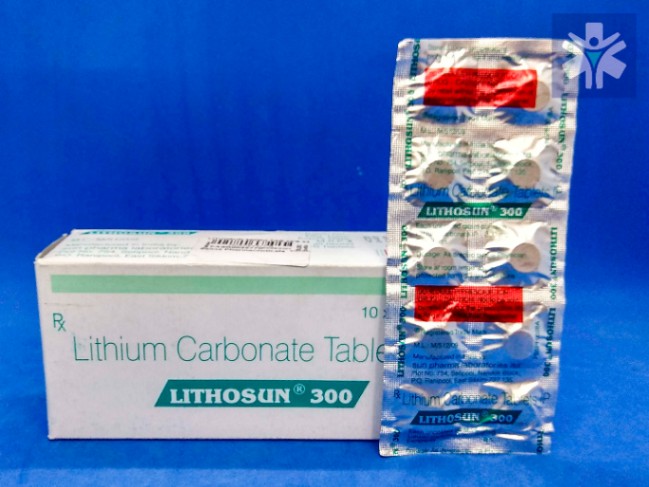
LITHOSUN 300MG
Price: Rs.25.50
10% off
In stock
Loose stock: 0
Description
LITHOSUN 300MG TAB 10
Details
Composition
LITHIUM CARBONATE 300 MG
# Lithium Carbonate 300 mg
## SHORT DESCRIPTION
Lithium Carbonate 300 mg is a **mood-stabilizing medicine** primarily used in the treatment and prevention of episodes of **bipolar disorder**. It can help reduce manic episodes and may help prevent future episodes of mania and depression.
Lithium has a **narrow therapeutic range**, meaning the amount needed for benefit is relatively close to the amount that can cause toxicity. Regular blood-level monitoring and medical supervision are therefore important during treatment.
## KEY BENEFITS
* Helps control **manic episodes** associated with bipolar disorder
* Helps prevent recurrence of manic episodes
* Helps provide long-term mood stabilization
* May reduce the frequency and severity of bipolar mood episodes
* May be used as part of a long-term bipolar disorder treatment plan
* Can help maintain mood stability when taken consistently as prescribed
## USES / INDICATIONS
Lithium carbonate may be prescribed for:
* **Bipolar disorder**
* Treatment of acute mania or hypomania
* Long-term prevention of manic episodes
* Maintenance treatment to reduce recurrence of bipolar mood episodes
* Certain other psychiatric conditions in selected patients under specialist supervision
The exact approved uses may vary according to the country and specific product.
## HOW IT WORKS
Lithium is a **mood stabilizer**. Its exact mechanism is complex and is not completely understood.
It affects several signaling pathways in the brain, including intracellular signaling systems and neurotransmitter-related processes. These effects help stabilize abnormal changes in mood and reduce the tendency toward manic episodes.
Lithium does not work like a conventional sedative and should be taken consistently for sustained mood stabilization.
## DOSAGE & ADMINISTRATION
* Take Lithium Carbonate 300 mg exactly as prescribed.
* The dose is individualized according to the condition, response to treatment, kidney function, age and **serum lithium concentration**.
* Lithium is commonly taken in divided doses or according to the specific formulation prescribed.
* Take it at approximately the same times each day.
* Maintain a **consistent intake of fluids and dietary salt** unless your doctor advises otherwise.
* Do not suddenly make major changes to your fluid or salt intake.
* Swallow extended-release tablets whole if your product is an extended-release formulation.
* Do not crush or chew modified-release tablets unless specifically permitted by the product instructions.
* Do not stop lithium suddenly without medical advice.
### Blood Monitoring
Regular blood tests are an important part of lithium treatment. Your doctor may monitor:
* Serum lithium concentration
* Kidney function
* Thyroid function
* Electrolytes
* Calcium levels
* Other parameters depending on your medical condition
Lithium blood samples are usually taken at a standardized time in relation to the previous dose so that the result can be interpreted accurately.
### Missed Dose
Take the missed dose when remembered unless it is close to the next scheduled dose. **Do not take two doses together.** Follow your doctor's specific instructions.
## SIDE EFFECTS
Common side effects may include:
* Fine hand tremor
* Increased thirst
* Increased urination
* Nausea
* Diarrhea
* Stomach discomfort
* Mild weakness
* Fatigue
* Weight gain
* Acne or skin changes
Some side effects may improve as the body adjusts to treatment.
### Signs of Lithium Toxicity
Lithium toxicity can be serious. Seek urgent medical attention if you experience:
* Severe or worsening tremor
* Persistent vomiting or diarrhea
* Severe drowsiness
* Muscle weakness
* Loss of coordination
* Unsteady walking
* Slurred speech
* Confusion
* Blurred vision
* Severe dizziness
* Seizures
* Loss of consciousness
**Do not wait for symptoms to become severe if lithium toxicity is suspected.**
## PRECAUTIONS & WARNINGS
* Lithium has a **narrow therapeutic index** and requires careful monitoring.
* Dehydration can increase lithium levels and the risk of toxicity.
* Excessive sweating, vomiting, diarrhea or fever can affect lithium levels.
* Maintain adequate and consistent fluid intake.
* Avoid sudden changes in dietary salt intake.
* Tell your doctor if you have **kidney disease**.
* Tell your doctor if you have thyroid disease.
* Lithium may cause or worsen hypothyroidism in some patients.
* Inform your doctor if you have heart disease.
* Tell your doctor if you have psoriasis, as lithium may worsen it.
* Older adults may be more sensitive to lithium.
* Avoid self-medication with medicines that can increase lithium levels.
* Do not stop lithium abruptly without medical supervision.
* Pregnancy requires careful specialist assessment because lithium can affect fetal development.
* If breastfeeding, discuss lithium use with your healthcare professional.
* Avoid driving or operating machinery if you experience dizziness, drowsiness, impaired coordination or blurred vision.
## DRUG INTERACTIONS
Lithium interacts with several commonly used medicines.
### Important Interactions
* **NSAIDs** such as ibuprofen, naproxen and diclofenac — may increase lithium levels and toxicity risk.
* **ACE inhibitors and ARBs** such as enalapril, lisinopril and losartan — may increase lithium concentrations.
* **Diuretics**, particularly thiazide diuretics — can significantly increase lithium levels.
* **Loop diuretics** may also affect lithium concentrations.
* **Metronidazole** — may increase lithium levels in some patients.
* **Tetracycline antibiotics** — may increase lithium concentrations.
* **SGLT2 inhibitors and other medicines affecting fluid balance** may potentially alter lithium levels and require monitoring.
* Other medicines that affect kidney function or sodium/fluid balance may alter lithium concentrations.
Do not start an over-the-counter painkiller, diuretic or other new medicine without checking with your doctor or pharmacist.
## STORAGE INFORMATION
* Store according to the manufacturer's instructions.
* Keep tablets in their original packaging.
* Store at the recommended room temperature.
* Protect from excessive heat, moisture and direct sunlight.
* Keep the container tightly closed where applicable.
* Keep out of reach of children.
* Do not use after the expiry date.
* Do not use tablets if the packaging is damaged.
## PRESCRIPTION STATUS
**Prescription medicine.**
Lithium Carbonate 300 mg should only be used under the supervision of a qualified healthcare professional. Regular blood monitoring is generally required because lithium toxicity can be serious.
## GENUINE MEDICINE ASSURANCE
For safe and genuine Lithium Carbonate 300 mg:
* Purchase only from a licensed and reputable pharmacy.
* Verify the medicine name, strength and formulation.
* Check the manufacturer and packaging information.
* Check the batch number and expiry date.
* Ensure the seal and packaging are intact.
* Avoid medicines with damaged, altered or suspicious packaging.
* Follow the manufacturer's storage instructions.
* Consult a pharmacist if you have concerns about medicine authenticity.
## FAQ
### What is Lithium Carbonate 300 mg used for?
Lithium Carbonate 300 mg is primarily used for **bipolar disorder**, particularly the treatment and prevention of manic episodes and long-term mood stabilization.
### Is Lithium Carbonate a mood stabilizer?
Yes. Lithium is one of the established **mood stabilizers** used in the treatment of bipolar disorder.
### How does Lithium Carbonate work?
Lithium affects several biochemical signaling pathways in the brain and helps stabilize abnormal mood activity. Its precise mechanism is complex and not completely understood.
### Does Lithium cure bipolar disorder?
Lithium does not cure bipolar disorder, but it can significantly help **control symptoms and reduce the risk of future mood episodes** when taken as prescribed.
### Does Lithium need regular blood tests?
Yes. Regular blood tests are an important part of lithium treatment because the therapeutic concentration is close to the concentration that can cause toxicity.
### What is a therapeutic lithium level?
The target serum lithium concentration varies depending on the treatment goal, timing of the blood test, formulation and individual patient factors. Your doctor will determine the appropriate target for you.
### What happens if my lithium level is too high?
A high lithium concentration can cause **lithium toxicity**. Symptoms may include worsening tremor, vomiting, diarrhea, drowsiness, confusion, muscle weakness, poor coordination and slurred speech. Severe toxicity can cause seizures or loss of consciousness.
### Can dehydration increase lithium toxicity?
Yes. **Dehydration can increase lithium concentrations** and raise the risk of toxicity. Vomiting, diarrhea, excessive sweating and inadequate fluid intake can all be important.
### Should I drink more water while taking Lithium?
Maintain adequate and consistent fluid intake. Avoid both dehydration and sudden excessive changes in fluid consumption. Follow your doctor's specific advice, particularly if you have heart or kidney disease.
### Should I change my salt intake while taking Lithium?
Avoid sudden major changes in dietary salt intake. Changes in sodium balance can affect lithium levels.
### Can Lithium affect the kidneys?
Long-term lithium treatment can affect kidney function in some people. Regular kidney-function monitoring is therefore important.
### Can Lithium affect the thyroid?
Yes. Lithium can cause **hypothyroidism** in some patients. Thyroid function is commonly monitored during long-term treatment.
### Can I take Ibuprofen with Lithium?
Ibuprofen and other NSAIDs can increase lithium levels and may increase the risk of toxicity. Consult your doctor or pharmacist before taking NSAIDs while using lithium.
### Can I take Diclofenac with Lithium?
Diclofenac is an NSAID and may increase lithium concentrations. It should not be taken regularly with lithium without medical advice and appropriate monitoring.
### Can Lithium be taken with blood-pressure medicines?
Some blood-pressure medicines, particularly **ACE inhibitors, ARBs and certain diuretics**, can increase lithium levels. Your doctor may need to adjust treatment or monitor lithium more closely.
### Can I drink alcohol while taking Lithium?
Alcohol can worsen dizziness, dehydration and impaired coordination and may make mood symptoms more difficult to manage. Discuss alcohol consumption with your healthcare professional.
### Can Lithium cause weight gain?
Yes. Weight gain can occur during lithium treatment. Maintaining a balanced diet and regular physical activity may help manage weight.
### Can Lithium cause hand tremors?
A mild fine tremor can occur, particularly early in treatment. However, a severe or worsening tremor can be a sign of excessive lithium levels and should be assessed promptly.
### Can Lithium be used during pregnancy?
Lithium may be used in some pregnancies when the benefits outweigh the potential risks, but it requires careful specialist management. **Do not stop lithium suddenly if you become pregnant**; contact your doctor promptly.
### Can Lithium be used while breastfeeding?
Lithium can pass into breast milk. Breastfeeding decisions should be made with a specialist because the infant may require monitoring if lithium is continued.
### What should I do if I miss a dose of Lithium?
Take the missed dose when remembered unless it is close to the next dose. Do not take two doses together. If you frequently miss doses, speak with your healthcare professional.
### What happens if I take too much Lithium?
Taking too much lithium can cause potentially life-threatening toxicity. Seek **urgent medical attention** if you take more than prescribed or develop symptoms such as severe tremor, vomiting, confusion, poor coordination or extreme drowsiness.
### Can I stop Lithium suddenly?
Do not stop lithium suddenly without medical advice. Abrupt discontinuation may increase the risk of recurrence of mood symptoms.
### How should Lithium Carbonate 300 mg be stored?
Store it according to the manufacturer's instructions at the recommended room temperature, away from excessive heat and moisture. Keep it in its original packaging and out of reach of children.
## MEDICAL DISCLAIMER
This information is provided for educational and informational purposes only and does not replace professional medical advice, diagnosis or treatment. **Lithium Carbonate 300 mg is a prescription mood stabilizer with a narrow therapeutic range and potentially serious toxicity.** Regular blood-level and medical monitoring may be required, including monitoring of kidney and thyroid function. Dehydration, changes in salt intake and interactions with medicines such as NSAIDs, ACE inhibitors, ARBs and diuretics can affect lithium levels. Do not start, stop or change the dose without consulting a qualified healthcare professional. If lithium toxicity is suspected, seek urgent medical attention. Always follow the specific product label and your doctor's instructions.