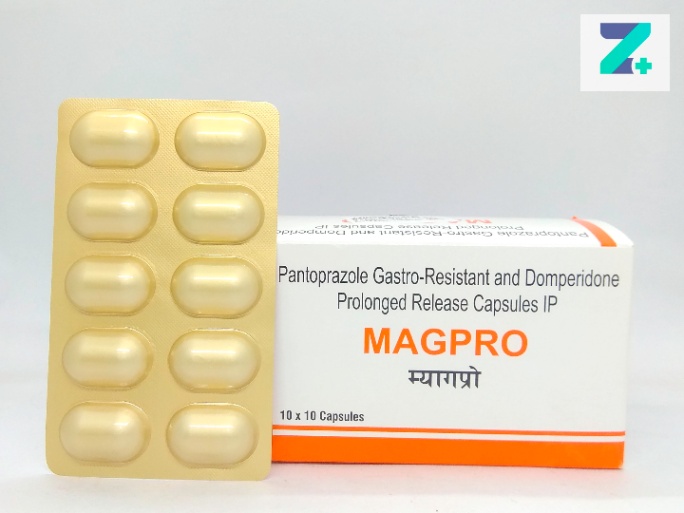
MAGPRO
Price: Rs.170.00
10% off
In stock
Loose stock: 0
Description
MAGPRO CAP 10
Details
Composition
DOMPERIDONE 10 MG,PANTOPRAZOLE 40 MG
# DOMPERIDONE 10 MG + PANTOPRAZOLE 40 MG
## SHORT DESCRIPTION
**Domperidone 10 mg + Pantoprazole 40 mg** is a combination medicine commonly used for **acid-related gastrointestinal symptoms accompanied by nausea, vomiting, or delayed gastric emptying**.
* **Pantoprazole** is a proton pump inhibitor (PPI) that reduces the production of stomach acid.
* **Domperidone** is a dopamine D2-receptor antagonist with prokinetic and antiemetic effects that can improve upper gastrointestinal motility and help relieve nausea and vomiting.
This combination should generally be used when both components are clinically appropriate, and **domperidone should be used at the lowest effective dose for the shortest appropriate duration** because of its potential cardiac risks.
---
## KEY BENEFITS
* Helps reduce **excess stomach acid**.
* May relieve symptoms of **heartburn and acid reflux**.
* Helps manage acid-related indigestion and upper gastrointestinal discomfort.
* Domperidone may help reduce **nausea and vomiting**.
* May support gastric emptying and upper gastrointestinal motility.
* Combining acid suppression with an antiemetic/prokinetic may be useful when reflux symptoms occur together with nausea.
> **Important:** Domperidone is not appropriate for everyone. It has been associated with serious heart-rhythm problems in susceptible patients.
---
## USES / INDICATIONS
This combination may be prescribed for conditions involving **acid reflux or excess gastric acid with associated nausea or delayed gastric emptying**.
Potential uses include:
* Gastroesophageal reflux disease (GERD)
* Heartburn associated with acid reflux
* Acid-related dyspepsia
* Upper gastrointestinal discomfort associated with reflux
* Nausea and vomiting associated with certain gastrointestinal disorders
* Symptoms associated with delayed gastric emptying, when domperidone is considered appropriate
### Important
The combination is **not intended to treat every cause of nausea, vomiting, abdominal pain, or indigestion**.
Persistent symptoms should be evaluated to identify the underlying cause.
---
## HOW IT WORKS
### Pantoprazole 40 mg
Pantoprazole blocks the **H⁺/K⁺-ATPase proton pump** in stomach acid-producing cells.
This significantly reduces gastric acid secretion and helps relieve acid-related symptoms while allowing acid-damaged tissue to heal.
**Pantoprazole → proton pump inhibition → reduced stomach acid → relief of acid-related symptoms**
### Domperidone 10 mg
Domperidone blocks **dopamine D2 receptors**, mainly in the gastrointestinal tract and the vomiting center outside the blood-brain barrier.
It can:
* Increase upper gastrointestinal motility
* Promote gastric emptying
* Increase lower esophageal sphincter tone
* Reduce nausea and vomiting
**Domperidone → improved upper GI motility + reduced nausea → improved gastrointestinal symptoms**
---
## DOSAGE & ADMINISTRATION
### Typical Adult Use
The exact dosage and duration should be determined by a healthcare professional.
For products containing **domperidone 10 mg + pantoprazole 40 mg**, the prescribed regimen commonly involves taking the combination **before meals**, because pantoprazole works best when administered before food and domperidone is generally taken before meals.
**Do not exceed the prescribed dose.**
### How to Take
* Take the medicine exactly as prescribed.
* Swallow the tablet whole with water.
* Do not crush or chew gastro-resistant/enteric-coated pantoprazole tablets unless the product specifically allows it.
* If instructed to take it before food, take it approximately **30–60 minutes before a meal**.
* Follow the instructions on your specific product because formulations can differ.
### Duration of Treatment
Domperidone should generally be used for the **shortest duration necessary**, particularly because prolonged or high-dose use can increase cardiac risk.
### Missed Dose
Take the missed dose when remembered unless it is nearly time for your next scheduled dose.
**Do not double the next dose.**
---
## SIDE EFFECTS
### Common Side Effects
Possible side effects include:
* Headache
* Diarrhea
* Constipation
* Abdominal discomfort
* Nausea
* Dry mouth
* Flatulence
* Dizziness
### Domperidone-Related Effects
Domperidone may occasionally cause:
* Increased prolactin levels
* Breast tenderness
* Breast enlargement
* Milk production
* Menstrual irregularities
### Pantoprazole-Related Effects
Longer-term or repeated PPI treatment may be associated with problems such as:
* Vitamin B12 deficiency
* Low magnesium levels
* Increased risk of certain gastrointestinal infections
* Increased fracture risk in susceptible individuals
### Serious Side Effects
Seek immediate medical attention if you experience:
* Fast or irregular heartbeat
* Fainting
* Severe dizziness
* Seizure
* Severe allergic reaction
* Difficulty breathing
* Swelling of the face, lips, tongue, or throat
**Palpitations, fainting, or an irregular heartbeat while taking domperidone require prompt medical assessment.**
---
## PRECAUTIONS & WARNINGS
### Heart Rhythm Problems
Domperidone can increase the risk of **QT prolongation and serious ventricular arrhythmias**.
It should generally be avoided or used only under specialist guidance in people with:
* Known prolonged QT interval
* Significant heart disease
* Certain cardiac rhythm disorders
* Severe electrolyte abnormalities
* Moderate or severe liver impairment
* Conditions associated with increased risk of cardiac arrhythmia
### Electrolyte Abnormalities
Low levels of:
* Potassium
* Magnesium
can increase the risk of abnormal heart rhythms with domperidone.
### Liver Disease
Pantoprazole and domperidone require particular consideration in people with liver disease. Domperidone may be contraindicated in moderate or severe hepatic impairment.
### Kidney Disease
People with significant kidney impairment may require dose adjustments, especially with repeated pantoprazole treatment.
### Long-Term PPI Use
Long-term pantoprazole treatment should be periodically reviewed by a healthcare professional.
### Pregnancy
If you are pregnant or planning pregnancy, consult your healthcare professional before using this combination.
### Breastfeeding
Domperidone can increase prolactin and is excreted into breast milk. Consult a healthcare professional before use while breastfeeding.
### Alarm Symptoms
Seek medical evaluation if you have:
* Unexplained weight loss
* Difficulty swallowing
* Persistent vomiting
* Vomiting blood
* Black or tarry stools
* Severe or persistent abdominal pain
* Anemia
* New or worsening symptoms
These symptoms may require investigation rather than prolonged self-treatment for acid reflux.
---
## DRUG INTERACTIONS
### Important Domperidone Interactions
Domperidone should **not** generally be combined with medicines that significantly prolong the QT interval or strongly inhibit CYP3A4.
Examples include certain:
* Macrolide antibiotics
* Azole antifungal medicines
* Antiarrhythmic medicines
* Certain antipsychotic medicines
* Other medicines known to prolong the QT interval
### Examples of Important Medicines
Medicines such as **ketoconazole, erythromycin, clarithromycin, and certain antiarrhythmics** may significantly increase the risk of cardiac adverse effects with domperidone.
### Anticholinergic Medicines
Some anticholinergic medicines may reduce the gastrointestinal prokinetic effects of domperidone.
### Medicines Affecting Stomach Acid
Pantoprazole can affect the absorption of medicines whose absorption depends on gastric acidity.
### Warfarin and Other Medicines
Pantoprazole may interact with certain medicines, and monitoring may occasionally be required with drugs such as warfarin.
### Methotrexate
High-dose methotrexate may interact with PPIs such as pantoprazole and may require special management.
### HIV Medicines
Some antiretroviral medicines may interact with PPIs or domperidone.
**Always provide your doctor or pharmacist with a complete list of prescription medicines, OTC products, supplements, and herbal medicines before starting this combination.**
---
## STORAGE INFORMATION
* Store according to the manufacturer's recommended conditions.
* Keep the medicine in its original packaging.
* Protect from excessive heat, moisture, and direct sunlight.
* Keep out of reach and sight of children.
* Do not use after the expiry date.
* Do not use tablets if the blister or packaging is damaged or tampered with.
---
## PRESCRIPTION STATUS
**Prescription Status Depends on Local Regulations**
Pantoprazole may be available OTC in some countries and formulations, while **domperidone is subject to stricter restrictions in many countries because of its cardiac safety risks**.
This combination should be used according to local regulations and the advice of a qualified healthcare professional.
---
## GENUINE MEDICINE ASSURANCE
For safe and effective treatment, purchase **Domperidone 10 mg + Pantoprazole 40 mg** from a licensed pharmacy or authorized medicine supplier.
Before using the product, check:
* Product name
* Active ingredients and strengths
* Manufacturer details
* Batch/lot number
* Manufacturing and expiry dates
* Packaging and seal integrity
* Regulatory/registration information where applicable
Do not use products that are:
* Expired
* Damaged
* Tampered with
* Missing batch or expiry information
* Stored improperly
If you have concerns about authenticity, consult a licensed pharmacist or the appropriate medicine regulatory authority.
---
# FAQ – DOMPERIDONE 10 MG + PANTOPRAZOLE 40 MG
### 1. What is Domperidone 10 mg + Pantoprazole 40 mg used for?
This combination may be used for **acid reflux, GERD, or acid-related gastrointestinal symptoms accompanied by nausea, vomiting, or delayed gastric emptying** when both medicines are clinically appropriate.
### 2. What is Pantoprazole 40 mg?
Pantoprazole is a **proton pump inhibitor (PPI)** that reduces stomach acid production.
### 3. What is Domperidone 10 mg?
Domperidone is a **prokinetic and antiemetic medicine** that can improve upper gastrointestinal motility and reduce nausea and vomiting.
### 4. Can this combination treat acidity?
Yes. Pantoprazole reduces stomach acid and can help treat acid-related symptoms such as heartburn and reflux.
### 5. Can this medicine treat GERD?
Pantoprazole is commonly used to treat **gastroesophageal reflux disease (GERD)**. Domperidone may be included in selected patients when nausea or delayed gastric emptying is also present.
### 6. Should Domperidone + Pantoprazole be taken before food?
It is commonly taken **before meals**, particularly because pantoprazole is generally most effective when taken before food. Follow the instructions for your specific product.
### 7. Can I take this medicine after eating?
Taking it after food may reduce the optimal acid-suppressing effect of pantoprazole. Follow the timing recommended by your doctor or the product label.
### 8. How long can I take Domperidone 10 mg?
Domperidone should generally be used for the **shortest duration necessary**, because prolonged or high-dose treatment can increase the risk of serious cardiac side effects.
### 9. Can Domperidone cause heart problems?
Yes. Domperidone has been associated with **QT prolongation and potentially serious abnormal heart rhythms**, particularly at higher doses or in people with risk factors.
### 10. Who should avoid Domperidone?
It may be unsuitable for people with certain heart conditions, prolonged QT interval, significant electrolyte disturbances, moderate or severe liver impairment, or those taking certain interacting medicines.
### 11. Can I take Domperidone with antibiotics?
Some antibiotics, particularly certain **macrolides**, can interact significantly with domperidone and increase cardiac risk. Always tell your doctor which antibiotics you are taking.
### 12. Can I take this medicine with antacids?
Some antacids may be used with pantoprazole, but the timing may matter depending on the product. Ask a pharmacist or doctor about combining them.
### 13. Can this medicine help with nausea?
Yes. **Domperidone** can reduce nausea and vomiting in appropriate gastrointestinal conditions.
### 14. Can this medicine help with bloating?
Pantoprazole and domperidone may help certain gastrointestinal symptoms when they are related to acid reflux or impaired gastric motility, but bloating has many possible causes.
### 15. Does Pantoprazole immediately relieve heartburn?
Pantoprazole reduces acid production, but maximum symptom improvement may require regular dosing over time rather than providing immediate relief like some fast-acting antacids.
### 16. Can Domperidone cause breast enlargement or milk production?
Yes. By increasing prolactin levels, domperidone can occasionally cause **breast tenderness, breast enlargement, or milk production**.
### 17. Can I take this medicine during pregnancy?
Consult your healthcare professional before taking this combination during pregnancy. Treatment should be based on an individual assessment of potential benefits and risks.
### 18. Can I take Domperidone + Pantoprazole while breastfeeding?
Consult a healthcare professional before use while breastfeeding, particularly because domperidone passes into breast milk and may affect prolactin levels.
### 19. Can people with kidney disease take this medicine?
Some patients with kidney disease can use pantoprazole, but dosage or frequency may require adjustment in significant renal impairment. Medical supervision is recommended.
### 20. Can people with liver disease take this medicine?
Domperidone may be unsuitable in moderate or severe liver impairment. Patients with liver disease should consult their healthcare professional before using this combination.
### 21. What happens if I miss a dose?
Take it when remembered unless it is nearly time for the next dose. **Do not double the next dose.**
### 22. What happens if I take too much Domperidone?
An overdose can cause symptoms such as drowsiness, agitation, altered consciousness, abnormal movements, and potentially dangerous heart-rhythm disturbances. Seek urgent medical advice if an overdose is suspected.
### 23. What happens if I take Pantoprazole for a long time?
Long-term PPI use may be associated with complications such as **low magnesium, vitamin B12 deficiency, certain infections, and increased fracture risk in susceptible individuals**. Long-term treatment should be periodically reviewed.
### 24. Can I stop Pantoprazole suddenly?
If you have been taking pantoprazole regularly for an extended period, stopping suddenly may sometimes result in **rebound acid secretion and worsening symptoms**. Discuss discontinuation with your healthcare professional.
### 25. Is Domperidone + Pantoprazole available without a prescription?
Availability varies by country. Because of domperidone's cardiac safety considerations, it is **prescription-only or restricted in many regions**.
---
## MEDICAL DISCLAIMER
This information about **Domperidone 10 mg + Pantoprazole 40 mg** is provided for general educational and informational purposes only. It is **not a substitute for professional medical advice, diagnosis, or treatment**.
Domperidone has important **cardiac safety considerations**, including the potential for QT prolongation and serious abnormal heart rhythms. It should be used at the **lowest effective dose for the shortest appropriate duration** and should be avoided in patients with relevant contraindications or interacting medicines.
Pantoprazole is generally well tolerated, but prolonged use may require medical monitoring in some patients.
**Do not start, stop, or change the dose of this combination without consulting a qualified healthcare professional.** Seek urgent medical attention for fainting, severe palpitations, irregular heartbeat, vomiting blood, black stools, severe abdominal pain, difficulty swallowing, or other serious symptoms.
Always read the product label/package insert and follow your doctor's or pharmacist's instructions.