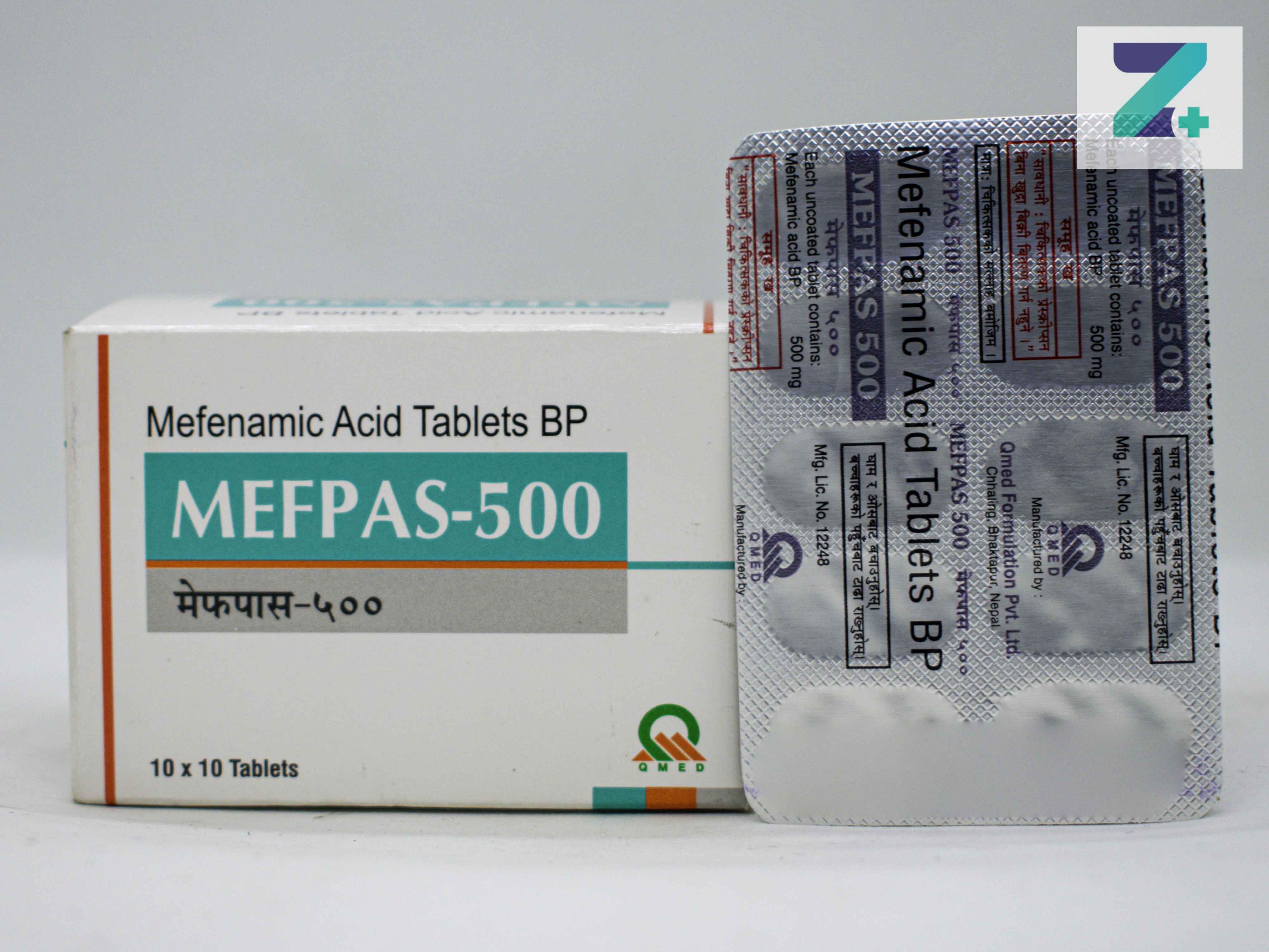
MEFPAS-500
Price: Rs.55.00
10% off
In stock
Loose stock: 5
Description
MEFPAS-500 TAB 10
Details
Composition
MEFENAMIC ACID 500 MG
# MEFENAMIC ACID 500 MG
## SHORT DESCRIPTION
**Mefenamic Acid 500 mg** is a non-steroidal anti-inflammatory drug (**NSAID**) used for the short-term relief of **mild to moderate pain and inflammation**. It can also be used for **painful menstrual periods (dysmenorrhea)**.
It works mainly by reducing the production of prostaglandins, chemical substances involved in pain, inflammation, and fever.
> **Important:** Mefenamic acid is generally intended for **short-term use at the lowest effective dose** because prolonged or high-dose NSAID use can increase the risk of gastrointestinal, kidney, cardiovascular, and other complications.
---
## KEY BENEFITS
* Provides relief from **mild to moderate pain**.
* Helps reduce **inflammation and swelling**.
* Commonly used for **menstrual pain and cramps**.
* May help relieve certain musculoskeletal and dental pain.
* Can reduce pain associated with inflammatory conditions.
* Non-opioid analgesic option for appropriate patients.
---
## USES / INDICATIONS
Mefenamic acid may be prescribed for short-term treatment of:
1. **Menstrual pain (dysmenorrhea)**
2. Mild to moderate acute pain
3. Dental pain
4. Musculoskeletal pain
5. Soft-tissue or inflammatory pain
6. Other painful inflammatory conditions when considered appropriate by a healthcare professional
The approved uses may vary according to the country and specific product.
---
## HOW IT WORKS
Mefenamic acid is an **NSAID**.
It inhibits the enzymes **cyclooxygenase-1 (COX-1) and cyclooxygenase-2 (COX-2)**, reducing the production of prostaglandins.
Prostaglandins contribute to:
* Pain
* Inflammation
* Swelling
* Fever
### In Simple Terms:
**Mefenamic acid → reduces prostaglandin production → decreases pain and inflammation.**
---
## DOSAGE & ADMINISTRATION
### Adults
For some indications, an adult regimen may begin with:
**500 mg initially, followed by 250 mg every 6 hours as needed**, according to the prescribed regimen.
The exact dose and duration depend on the condition being treated and the specific product instructions.
> **Do not assume that 500 mg should be taken multiple times daily without medical advice.**
### Menstrual Pain
Treatment is generally started **when menstrual pain begins** and continued for the shortest period necessary.
### Administration
* Take exactly as prescribed.
* Take with food or immediately after food if it causes stomach irritation.
* Swallow with sufficient water.
* Use the **lowest effective dose for the shortest appropriate duration**.
* Do not combine with another NSAID unless specifically advised.
### Missed Dose
If taking regularly and you miss a dose, take it when remembered unless it is almost time for the next dose.
**Do not take a double dose.**
---
## SIDE EFFECTS
### Common Side Effects
Possible side effects include:
* Nausea
* Vomiting
* Indigestion
* Stomach discomfort
* Abdominal pain
* Diarrhea
* Constipation
* Headache
* Dizziness
* Heartburn
### Serious Side Effects
Seek urgent medical attention for:
* Black or tarry stools
* Vomiting blood or material resembling coffee grounds
* Severe abdominal pain
* Chest pain
* Shortness of breath
* Sudden weakness or difficulty speaking
* Severe allergic reaction
* Facial or throat swelling
* Severe skin rash or blistering
* Significant reduction in urination
* Yellowing of the skin or eyes
NSAIDs can cause **serious gastrointestinal bleeding, cardiovascular events, kidney injury, and hypersensitivity reactions**, even in some people without previous symptoms.
---
## PRECAUTIONS & WARNINGS
### Stomach Ulcers and Bleeding
Mefenamic acid can increase the risk of:
* Gastric ulcers
* Gastrointestinal bleeding
* Perforation
Risk is higher with prolonged use, higher doses, older age, previous ulcers, or concurrent use of certain medicines.
### Heart Disease
NSAIDs may increase the risk of **heart attack and stroke**, particularly with higher doses or longer treatment.
Use caution in patients with:
* Heart disease
* High blood pressure
* Previous stroke
* Heart failure
### Kidney Disease
Mefenamic acid can reduce kidney blood flow and may worsen kidney function.
Avoid or use only under medical supervision in patients with significant kidney disease.
### Liver Disease
Patients with significant liver disease should consult a healthcare professional before using mefenamic acid.
### Asthma
Some people with asthma may experience worsening symptoms or bronchospasm after taking NSAIDs, particularly those with aspirin-sensitive asthma.
### Pregnancy
Mefenamic acid and other NSAIDs should generally be **avoided from around 20 weeks of pregnancy unless specifically advised by a healthcare professional**, and NSAIDs should not be used during the later stages of pregnancy because of fetal and delivery-related risks.
### Elderly Patients
Older adults may have a greater risk of gastrointestinal bleeding, kidney problems, and cardiovascular complications.
### Dehydration
Dehydration can increase the risk of kidney injury. Maintain appropriate fluid intake unless your healthcare professional has advised fluid restriction.
---
## DRUG INTERACTIONS
### Other NSAIDs
Avoid combining mefenamic acid with other NSAIDs such as:
* Ibuprofen
* Naproxen
* Diclofenac
* Aspirin at analgesic doses
* Ketorolac
Taking multiple NSAIDs increases the risk of gastrointestinal bleeding and kidney problems.
### Anticoagulants
Medicines such as **warfarin and other anticoagulants** can increase the risk of bleeding when combined with NSAIDs.
### Antiplatelet Medicines
Aspirin and other antiplatelet medicines may increase gastrointestinal bleeding risk.
### Corticosteroids
Medicines such as prednisone can increase the risk of gastrointestinal ulceration and bleeding when combined with NSAIDs.
### SSRIs/SNRIs
Antidepressants such as:
* Sertraline
* Escitalopram
* Fluoxetine
* Paroxetine
* Venlafaxine
may increase bleeding risk when combined with NSAIDs.
### ACE Inhibitors / ARBs
Medicines such as lisinopril, enalapril, losartan, or valsartan may have reduced blood-pressure-lowering effects and increased kidney risk when combined with NSAIDs.
### Diuretics
NSAIDs may reduce the effectiveness of diuretics and increase the risk of kidney problems.
### Lithium
Mefenamic acid may increase **lithium concentrations**, potentially causing lithium toxicity.
### Methotrexate
NSAIDs may increase methotrexate exposure and toxicity, particularly with higher methotrexate doses or impaired kidney function.
### Cyclosporine or Tacrolimus
The combination may increase the risk of kidney toxicity.
Always tell your healthcare professional about all prescription medicines, OTC medicines, vitamins, and herbal supplements you use.
---
## STORAGE INFORMATION
* Store according to the manufacturer's instructions.
* Keep at room temperature unless the product label specifies otherwise.
* Protect from excessive heat, moisture, and direct sunlight.
* Keep in the original packaging.
* Keep out of reach and sight of children.
* Do not use after the expiry date.
* Do not use tablets from damaged or improperly sealed packaging.
---
## PRESCRIPTION STATUS
**Prescription status varies by country and formulation.**
Mefenamic acid 500 mg may be a **prescription medicine** in many countries, while some lower-strength formulations may have different dispensing requirements.
Follow local pharmacy and regulatory requirements.
---
## GENUINE MEDICINE ASSURANCE
When purchasing **Mefenamic Acid 500 mg**, obtain it from a **licensed pharmacy or authorized medicine supplier**.
Check the packaging for:
* Correct medicine name
* Strength: **500 mg**
* Manufacturer information
* Batch/lot number
* Manufacturing date
* Expiry date
* Intact packaging and seal
* Appropriate regulatory information
Avoid products with damaged packaging, missing information, altered expiry dates, or questionable authenticity.
---
# FAQ – MEFENAMIC ACID 500 MG
### 1. What is Mefenamic Acid 500 mg used for?
Mefenamic acid 500 mg is an NSAID used for **short-term relief of mild to moderate pain and inflammation**, including menstrual pain.
### 2. Is mefenamic acid a painkiller?
Yes. Mefenamic acid is a **non-steroidal anti-inflammatory painkiller (NSAID)**.
### 3. Is mefenamic acid used for period pain?
Yes. It is commonly prescribed for **menstrual cramps and painful periods (dysmenorrhea)**.
### 4. How does mefenamic acid work?
It reduces the production of prostaglandins involved in pain and inflammation by inhibiting COX enzymes.
### 5. How should Mefenamic Acid 500 mg be taken?
Take it exactly as prescribed. It is generally recommended to take it **with food or immediately after food** if stomach irritation occurs.
### 6. Can I take mefenamic acid on an empty stomach?
It is preferable to take it with food or after food if possible because NSAIDs can irritate the stomach.
### 7. Can mefenamic acid be taken with paracetamol?
There is not usually a major direct interaction between mefenamic acid and paracetamol, but combination use should follow professional advice, particularly if pain persists.
### 8. Can I take mefenamic acid with ibuprofen?
Generally, **do not combine mefenamic acid with ibuprofen** unless specifically instructed by a healthcare professional. Both are NSAIDs and combining them increases the risk of adverse effects.
### 9. Can mefenamic acid be taken with diclofenac?
No, combining mefenamic acid with diclofenac is generally inappropriate unless specifically directed by a healthcare professional because both are NSAIDs.
### 10. Can mefenamic acid cause stomach ulcers?
Yes. NSAIDs can cause **stomach or intestinal ulcers and bleeding**, particularly with prolonged use or in people with risk factors.
### 11. Can mefenamic acid affect the kidneys?
Yes. It can reduce kidney blood flow and may cause or worsen kidney impairment, especially in susceptible patients.
### 12. Can mefenamic acid increase blood pressure?
NSAIDs can cause **fluid retention and increased blood pressure** in some people and may interfere with certain blood-pressure medicines.
### 13. Can mefenamic acid be used during pregnancy?
NSAIDs should generally be avoided from around **20 weeks of pregnancy unless specifically recommended by a healthcare professional**, and they should not be used during later pregnancy because of important fetal risks.
### 14. Can mefenamic acid be used while breastfeeding?
Consult a healthcare professional before use while breastfeeding. The suitability depends on the clinical situation and alternative treatments.
### 15. How quickly does mefenamic acid work?
Pain relief may begin within a relatively short period after taking a dose, although the timing varies between individuals and conditions.
### 16. Can mefenamic acid be used for toothache?
It may provide short-term relief of **dental pain**, but it does not treat the underlying cause of a dental infection or other dental problem.
### 17. Can mefenamic acid reduce fever?
NSAIDs can have fever-reducing effects, but mefenamic acid is primarily used for pain and inflammation. The cause of a persistent fever should be evaluated.
### 18. What should I do if I miss a dose?
Take the missed dose when remembered unless it is almost time for the next dose. **Do not double the next dose.**
### 19. How long can I take mefenamic acid?
It is generally intended for **short-term use**. Use the lowest effective dose for the shortest duration recommended by your healthcare professional.
### 20. Is Mefenamic Acid 500 mg available without a prescription?
Prescription requirements vary by country. In many locations, **500 mg mefenamic acid is prescription-only**.
---
## MEDICAL DISCLAIMER
This information about **Mefenamic Acid 500 mg** is provided for general educational purposes only and does not replace professional medical advice, diagnosis, or treatment.
Mefenamic acid is an NSAID and can cause potentially serious **gastrointestinal bleeding, ulcers, kidney problems, cardiovascular events, and allergic reactions**. The risk may increase with higher doses, prolonged use, older age, or use with certain medicines.
Do not combine it with other NSAIDs unless specifically instructed by a healthcare professional. Tell your healthcare professional if you have a history of ulcers or gastrointestinal bleeding, kidney or liver disease, heart disease, hypertension, asthma triggered by NSAIDs, or if you are pregnant.
Always follow the **specific product label and your healthcare professional's instructions** regarding dosage, duration, contraindications, interactions, and precautions.