MELABRITE 4%
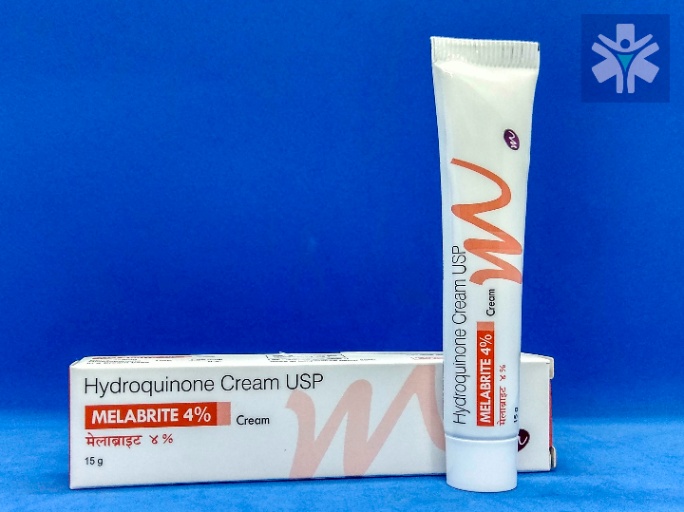
Price: Rs.130.00
10% off
In stock
Loose stock: 0
Description
MELABRITE 4% CREAM 15G
Details
Composition
HYDROQUINONE 4.0%
# Hydroquinone 4% Cream
## Short Description
**Hydroquinone 4%** is a topical **skin-lightening medicine** used to reduce areas of excessive skin pigmentation. It works by decreasing the production of melanin, the pigment responsible for skin color.
Hydroquinone 4% may be prescribed for conditions such as **melasma, post-inflammatory hyperpigmentation, freckles, and other localized hyperpigmentation**. It is generally intended for **short-term or intermittent use under medical supervision**, as prolonged or inappropriate use can cause skin irritation and, rarely, ochronosis (persistent blue-black discoloration).
---
## Key Benefits
* Helps reduce the appearance of **dark spots and hyperpigmentation**.
* May improve pigmentation associated with **melasma**.
* Helps fade **post-inflammatory hyperpigmentation**.
* Can reduce the appearance of certain freckles and localized pigmentation.
* Works directly on the melanin-production pathway.
* May help create a more even-looking skin tone when appropriately used.
> **Important:** Hydroquinone treats pigmentation; it does not permanently prevent pigmentation from returning. Consistent **sun protection** is essential during treatment.
---
## Uses / Indications
Hydroquinone 4% may be used for:
* **Melasma**
* **Post-inflammatory hyperpigmentation (PIH)**
* Freckles
* Solar/lentigines-related pigmentation in selected cases
* Other forms of localized hyperpigmentation diagnosed by a healthcare professional
Hydroquinone should not be used to lighten normal skin or large areas of the body without medical advice.
---
## How It Works
Hydroquinone is a **depigmenting agent** that primarily works by inhibiting **tyrosinase**, an enzyme involved in the production of melanin.
By reducing melanin synthesis, hydroquinone gradually decreases the intensity of excess pigmentation.
The effect is gradual rather than immediate. New pigmentation may develop again if the underlying cause, including sun exposure or hormonal triggers, continues.
---
## Dosage & Administration
### Typical Application
Hydroquinone 4% is generally applied as a **thin layer to the affected pigmented areas**, commonly **twice daily** or according to the prescribing healthcare professional's instructions.
### How to Apply
1. Cleanse the skin gently and pat dry.
2. Apply a small amount of hydroquinone to the **affected pigmented areas**.
3. Avoid applying it to normal surrounding skin whenever possible.
4. Wash your hands after application.
5. Avoid contact with the eyes, lips, inside of the nose, and other mucous membranes.
### Before Regular Use
A healthcare professional may recommend a **small-area test application** before broader use, particularly for people with sensitive skin.
### Sun Protection
Use a **broad-spectrum sunscreen with adequate SPF** and minimize unnecessary sun exposure. Sun exposure can worsen pigmentation and reduce the effectiveness of treatment.
### Duration
Visible improvement may require **several weeks** of consistent use. If there is no meaningful improvement after an appropriate treatment period, consult your dermatologist rather than continuing indefinitely.
Hydroquinone is generally not intended for continuous, unrestricted long-term use.
### Missed Application
Apply the missed dose when remembered unless it is nearly time for the next application.
**Do not apply extra cream to compensate.**
---
## Side Effects
### Common Side Effects
Possible local reactions include:
* Mild redness
* Dryness
* Burning or stinging
* Itching
* Irritation
* Mild peeling
These effects may be more noticeable during the initial period of treatment.
### Serious or Long-Term Side Effects
Stop using hydroquinone and seek medical advice if you develop:
* Severe irritation
* Significant swelling
* Blistering
* Persistent redness
* Severe burning
* Unexpected darkening or blue-black discoloration of the skin
Long-term or inappropriate use can rarely cause **exogenous ochronosis**, a condition characterized by persistent blue-black or grayish pigmentation.
---
## Precautions & Warnings
### External Use Only
Hydroquinone is intended for **topical use only**. Do not swallow it.
### Avoid Broken or Irritated Skin
Do not apply to severely irritated, sunburned, cracked, or damaged skin unless directed by a healthcare professional.
### Avoid the Eyes
Keep away from the eyes and mucous membranes. If accidental contact occurs, rinse thoroughly with water.
### Sun Exposure
Sun exposure can worsen hyperpigmentation. Use appropriate sunscreen and protective clothing during treatment.
### Skin Sensitivity
Hydroquinone may cause irritation, especially when used with other potentially irritating skincare products.
### Pregnancy and Breastfeeding
If you are pregnant, planning pregnancy, or breastfeeding, consult your healthcare professional before using hydroquinone. Its use during pregnancy should be based on professional medical advice.
### Children
Use in children should only occur when specifically recommended by a healthcare professional.
### Long-Term Use
Avoid prolonged continuous use unless specifically supervised by a dermatologist because of the risk of persistent pigmentation changes and other adverse effects.
---
## Drug Interactions
Hydroquinone applied to the skin has limited systemic absorption, so significant drug interactions are uncommon. However, **additive skin irritation** can occur when it is used with other topical products.
Use caution when combining hydroquinone with:
* Benzoyl peroxide
* Hydrogen peroxide
* Retinoids such as tretinoin or adapalene
* Alpha hydroxy acids (AHAs)
* Beta hydroxy acids (BHAs)
* Strong exfoliating products
* Other depigmenting agents
### Benzoyl Peroxide
Hydroquinone used together with benzoyl peroxide can sometimes cause **temporary dark staining or discoloration** of the skin. If both are prescribed, follow your healthcare professional's instructions regarding application.
Tell your dermatologist or pharmacist about all prescription medicines, OTC products, cosmetics, and skincare treatments you use.
---
## Storage Information
* Store Hydroquinone 4% according to the **manufacturer's recommended storage conditions**.
* Keep the container tightly closed.
* Protect from excessive heat, moisture, and direct sunlight.
* Keep away from children.
* Do not use after the expiry date.
* Do not use the product if its color, texture, or appearance has changed significantly.
* Avoid contamination of the product by touching the applicator directly to the skin.
---
## Prescription Status
**Hydroquinone 4% is prescription-only in many countries**, although regulatory status can vary by country and formulation.
Because 4% hydroquinone is a relatively strong concentration and prolonged or inappropriate use can cause adverse skin effects, use should preferably be guided by a **dermatologist or other qualified healthcare professional**.
---
## Genuine Medicine Assurance
When purchasing Hydroquinone 4%:
* Purchase only from a **licensed pharmacy or authorized medicine retailer**.
* Verify the product name and **4% strength**.
* Check the manufacturer, batch/lot number, and expiry date.
* Ensure the tube/container is properly sealed.
* Check that the packaging is intact and professionally printed.
* Avoid products from unauthorized sellers.
* Do not use products with altered labels or missing batch information.
* Follow the manufacturer's recommended storage instructions.
---
# FAQ – Hydroquinone 4%
### 1. What is Hydroquinone 4% used for?
Hydroquinone 4% is a topical depigmenting medicine used to reduce **hyperpigmentation**, including melasma and post-inflammatory hyperpigmentation.
### 2. How does Hydroquinone 4% lighten dark spots?
Hydroquinone reduces melanin production primarily by inhibiting **tyrosinase**, an enzyme involved in melanin synthesis.
### 3. Is Hydroquinone 4% effective for melasma?
Hydroquinone is an established topical treatment for **melasma**, but treatment should ideally be guided by a dermatologist because melasma can be persistent and may recur.
### 4. How long does Hydroquinone 4% take to work?
Improvement generally takes **several weeks of consistent use**. The response varies depending on the type and depth of pigmentation and individual skin characteristics.
### 5. Can Hydroquinone 4% permanently remove dark spots?
Hydroquinone can significantly reduce pigmentation, but it does not necessarily prevent pigmentation from returning. **Sun protection and management of the underlying cause are important** for maintaining results.
### 6. Can I use Hydroquinone 4% every day?
It is commonly used regularly during an appropriate treatment course, but the frequency and duration should follow your healthcare professional's instructions. Continuous long-term use without supervision is not recommended.
### 7. Can Hydroquinone 4% be used on the face?
Yes, it may be prescribed for facial hyperpigmentation such as melasma. However, facial skin can be sensitive, so it should be applied carefully to affected areas and used according to professional guidance.
### 8. Can Hydroquinone be used for acne marks?
Hydroquinone may help fade **post-inflammatory hyperpigmentation left after acne**, but it does not treat active acne itself.
### 9. Can I use Hydroquinone 4% with sunscreen?
Yes. In fact, **daily broad-spectrum sunscreen is strongly recommended** because UV exposure can worsen pigmentation and interfere with treatment.
### 10. Can Hydroquinone cause skin irritation?
Yes. Redness, dryness, burning, stinging, itching, and peeling can occur. Severe or persistent irritation should be evaluated by a healthcare professional.
### 11. Can Hydroquinone make skin darker?
Inappropriate or prolonged use can rarely cause **exogenous ochronosis**, which may result in persistent blue-black or grayish skin discoloration.
### 12. Can I use Hydroquinone with Tretinoin?
Hydroquinone and tretinoin are sometimes prescribed together for hyperpigmentation, but the combination can increase skin irritation. Use them together only according to a dermatologist's instructions.
### 13. Can I use Hydroquinone with Vitamin C?
Vitamin C products may sometimes be included in a pigmentation-treatment routine, but combining multiple active skincare ingredients can increase irritation. Follow your dermatologist's recommended routine.
### 14. Can Hydroquinone be used during pregnancy?
Consult your healthcare professional before using hydroquinone during pregnancy. **Do not self-treat pigmentation during pregnancy without medical advice.**
### 15. Can Hydroquinone be used while breastfeeding?
Discuss its use with your healthcare professional. Avoid applying it to areas that could come into direct contact with an infant's skin or mouth.
### 16. What happens if I forget to apply Hydroquinone?
Apply it when remembered unless it is nearly time for the next application. **Do not apply extra product** to compensate for a missed application.
### 17. Should I stop Hydroquinone if my skin becomes very irritated?
If significant irritation occurs, stop using the product and consult a healthcare professional. Severe irritation may require treatment adjustment.
### 18. Is Hydroquinone 4% available without a prescription?
The regulatory status varies by country, but **4% hydroquinone is prescription-only in many countries**. Check local pharmacy and regulatory requirements.
---
## Medical Disclaimer
This information about **Hydroquinone 4%** is provided for general educational and informational purposes only. It is not a substitute for professional medical advice, diagnosis, or treatment.
Hydroquinone is a potent topical depigmenting medicine and should be used appropriately. **Prolonged or unsupervised use can cause significant skin irritation and, rarely, permanent or difficult-to-reverse pigmentation such as exogenous ochronosis.**
Use hydroquinone only as directed by a qualified healthcare professional. **Daily sun protection is an important part of hyperpigmentation treatment.** Stop use and seek medical advice if severe irritation, blistering, marked discoloration, or other unexpected skin changes occur.