METAPRO XL 25MG
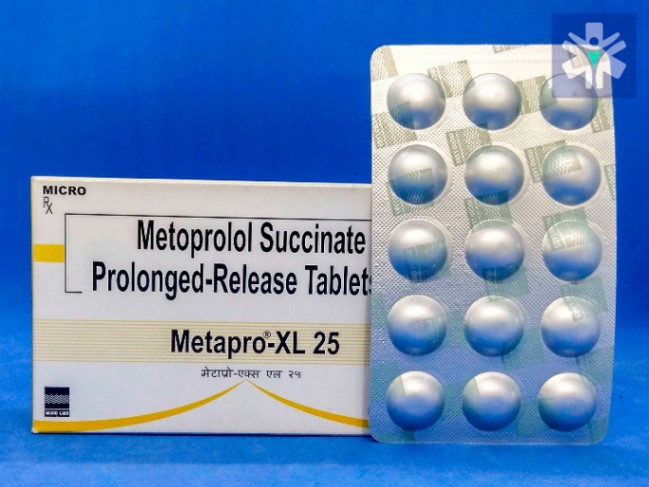
Price: Rs.60.00
13% off
In stock
Loose stock: 0
Description
METAPRO XL 25MG TAB 15
Details
Composition
METOPROLOL SUCCINATE 25 MG
# METOPROLOL SUCCINATE 25 MG
## Short Description
**Metoprolol Succinate 25 mg** is an **extended-release beta-1 selective beta-blocker** used to manage certain cardiovascular conditions. It works primarily by slowing the heart rate, reducing the force of heart contraction, and lowering the workload on the heart.
It may be prescribed for **high blood pressure, angina, heart failure, and certain heart rhythm conditions**, depending on the patient's medical condition and local prescribing guidelines.
> **Important:** Metoprolol succinate extended-release tablets should generally be taken **once daily** and should not be confused with immediate-release **metoprolol tartrate**.
---
## Key Benefits
* Helps **lower high blood pressure**.
* Reduces heart rate and the heart's workload.
* May help prevent or reduce **angina (chest pain)**.
* Can be part of treatment for certain types of **heart failure**.
* Helps control rapid heart rates in selected heart rhythm disorders.
* Reduces the heart's demand for oxygen.
* Extended-release formulation provides sustained beta-blocking activity over the dosing interval.
---
## Uses / Indications
Metoprolol succinate 25 mg may be prescribed for:
* **Hypertension (high blood pressure)**
* **Angina pectoris**
* **Heart failure with reduced ejection fraction (HFrEF)**, as part of an appropriate treatment regimen
* Certain **tachyarrhythmias or rapid heart rates**
* Prevention or management of some cardiovascular complications, depending on the clinical situation
The exact approved indications vary according to the **country, product formulation, and manufacturer's labeling**.
### Important
Metoprolol should be used under medical supervision because the dose may need to be adjusted gradually according to **blood pressure, heart rate, symptoms, and underlying heart condition**.
---
## How It Works
Metoprolol is a **selective beta-1 adrenergic receptor blocker** at usual therapeutic doses.
It reduces the effects of adrenaline and related stress hormones on the heart. This can:
* Slow the heart rate
* Reduce the force of heart contraction
* Reduce blood pressure
* Decrease the heart's oxygen requirement
* Reduce cardiac workload
In appropriately selected patients with heart failure, long-term beta-blocker treatment can help improve cardiac function and reduce the risk of certain cardiovascular complications.
---
## Dosage & Administration
* Take **Metoprolol Succinate 25 mg exactly as prescribed**.
* It is an **extended-release** formulation and is generally taken **once daily**.
* Take it at approximately the same time each day.
* It may generally be taken with or immediately after food; follow the specific product instructions.
* Swallow extended-release tablets whole unless your particular product is specifically designed to be divided.
* **Do not crush or chew** an extended-release tablet unless the manufacturer specifically permits it.
* Your doctor may start with a low dose and gradually increase it depending on your response.
* Do not change the dose without medical advice.
* Do not stop metoprolol suddenly, especially if you have heart disease.
### Missed Dose
If you miss a dose, take it when remembered unless it is close to the time of the next dose. **Do not take two doses at once.**
---
## Side Effects
Possible side effects include:
* Tiredness or fatigue
* Dizziness
* Headache
* Slow heart rate
* Low blood pressure
* Cold hands or feet
* Weakness
* Nausea
* Sleep disturbances or vivid dreams
* Shortness of breath in susceptible individuals
These effects may be more noticeable when treatment is first started or when the dose is increased.
### Serious Side Effects
Seek medical attention if you experience:
* Very slow heartbeat
* Fainting
* Severe dizziness
* Significant breathing difficulty
* New or worsening swelling of the legs
* Rapid weight gain associated with heart failure
* Chest pain
* Severe allergic reaction
---
## Precautions & Warnings
* Do not use metoprolol if you have a known allergy to **metoprolol or any ingredient in the formulation**.
* Use cautiously if you have a **very slow heart rate, low blood pressure, heart block, or certain conduction disorders**.
* Tell your doctor if you have **asthma, COPD, or other breathing problems**. Although metoprolol is beta-1 selective, selectivity can decrease at higher doses.
* Patients with diabetes should use caution because beta-blockers can **mask some symptoms of low blood sugar**, particularly a rapid heartbeat.
* Tell your doctor if you have peripheral circulation problems.
* If you have heart failure, the dose may need to be increased gradually under medical supervision.
* **Do not abruptly discontinue metoprolol.** Sudden withdrawal can worsen angina and may increase the risk of serious cardiovascular events.
* Tell your doctor before surgery or anesthesia because beta-blockade may affect heart rate and blood pressure.
* Tell your doctor if you are pregnant, planning pregnancy, or breastfeeding.
* Avoid driving or operating machinery if you experience dizziness or excessive fatigue.
* Monitor blood pressure and pulse as recommended by your healthcare professional.
---
## Drug Interactions
Metoprolol can interact with several medicines, including:
### Other Medicines That Slow Heart Rate
Medicines such as **verapamil, diltiazem, digoxin, and certain antiarrhythmic medicines** may further reduce heart rate or impair cardiac conduction.
### Blood Pressure Medicines
Combining metoprolol with other medicines that lower blood pressure may cause **excessive hypotension or dizziness**.
### CYP2D6 Inhibitors
Medicines that strongly inhibit the CYP2D6 enzyme can increase metoprolol concentrations and potentially increase beta-blocker effects. Examples include some antidepressants such as **fluoxetine and paroxetine**.
### Diabetes Medicines
Metoprolol may alter the response to insulin and other glucose-lowering medicines and can mask some warning symptoms of hypoglycemia.
### Clonidine
Combined use requires careful medical supervision. Abrupt withdrawal of clonidine while taking a beta-blocker can cause significant blood pressure elevation.
### Other Medicines
Always tell your doctor or pharmacist about:
* Prescription medicines
* OTC medicines
* Vitamins
* Herbal supplements
* Other heart or blood-pressure medicines
---
## Storage Information
* Store at **room temperature according to the manufacturer's instructions**.
* Keep the tablets in their original packaging.
* Protect from excessive heat, moisture, and direct sunlight.
* Keep the container tightly closed.
* Keep out of reach and sight of children.
* Do not use after the expiry date.
* Do not use tablets that are damaged, discolored, or deteriorated.
---
## Prescription Status
**Metoprolol Succinate 25 mg is generally a prescription medicine.**
It should be used under the supervision of a qualified healthcare professional because appropriate dosing depends on the patient's **blood pressure, heart rate, cardiovascular condition, and response to treatment**.
Prescription requirements can vary between countries.
---
## Genuine Medicine Assurance
When purchasing **Metoprolol Succinate 25 mg**, ensure that you:
* Purchase from a **licensed pharmacy or authorized medicine supplier**.
* Check the medicine name and confirm that it is **metoprolol succinate extended-release** rather than metoprolol tartrate.
* Verify the strength, manufacturer, batch/lot number, manufacturing information, and expiry date.
* Ensure the packaging is sealed and undamaged.
* Check that tablets and packaging have clear, complete labeling.
* Avoid medicines with suspicious packaging, missing information, or unusually low prices.
* Do not purchase prescription medicines from unauthorized sellers.
* Follow applicable local pharmaceutical regulations.
---
# FAQ
### 1. What is Metoprolol Succinate 25 mg used for?
Metoprolol succinate 25 mg may be used for **high blood pressure, angina, certain heart rhythm problems, and heart failure**, depending on the patient's condition and prescribing guidelines.
### 2. Is Metoprolol Succinate a beta-blocker?
Yes. Metoprolol succinate is a **beta-1 selective beta-blocker** that primarily affects the heart.
### 3. Does Metoprolol lower blood pressure?
Yes. It can lower blood pressure by reducing heart rate, cardiac output, and the effects of adrenaline on the cardiovascular system.
### 4. Does Metoprolol lower heart rate?
Yes. Metoprolol commonly **slows the heart rate** by blocking beta-1 receptors in the heart.
### 5. What is the difference between Metoprolol Succinate and Metoprolol Tartrate?
Both contain metoprolol, but they are different formulations:
* **Metoprolol succinate:** extended-release formulation, generally designed for once-daily dosing.
* **Metoprolol tartrate:** immediate-release formulation, usually requiring more frequent dosing.
They should **not be substituted on a milligram-for-milligram basis without medical advice**.
### 6. Is Metoprolol Succinate 25 mg an extended-release medicine?
Yes. Metoprolol succinate is commonly supplied as an **extended-release formulation**.
### 7. Can Metoprolol Succinate 25 mg be taken twice a day?
Metoprolol succinate extended-release is generally designed for **once-daily administration**, but dosing should always follow the specific prescription and product instructions.
### 8. Can I stop Metoprolol suddenly?
**No.** Do not stop metoprolol abruptly unless instructed by your doctor. Sudden discontinuation can worsen angina and may increase the risk of serious heart problems.
### 9. Can Metoprolol cause tiredness?
Yes. **Fatigue, weakness, and dizziness** are among the possible side effects, particularly when starting treatment or increasing the dose.
### 10. Can Metoprolol cause a slow heartbeat?
Yes. Because metoprolol slows the heart rate, **bradycardia (slow heart rate)** can occur.
### 11. Can I take Metoprolol if I have asthma?
Metoprolol is relatively beta-1 selective, but this selectivity is not absolute. It should be used cautiously in people with asthma or other bronchospastic conditions and only under medical supervision.
### 12. Can Metoprolol be used for heart failure?
Yes. Extended-release metoprolol succinate is an established treatment option for certain patients with **heart failure with reduced ejection fraction**. It is generally started at a low dose and increased gradually under medical supervision.
### 13. Can Metoprolol help with anxiety?
Although metoprolol can reduce some physical effects of adrenaline, such as a fast heartbeat, it is **not primarily an anxiety medicine**. Do not use it for anxiety unless specifically recommended by a healthcare professional.
### 14. Can Metoprolol cause low blood pressure?
Yes. Excessive blood-pressure reduction can cause **dizziness, weakness, or fainting**.
### 15. Can people with diabetes take Metoprolol?
People with diabetes can sometimes take metoprolol when clinically indicated, but beta-blockers may **mask some symptoms of hypoglycemia**, particularly rapid heartbeat. Blood glucose should be monitored according to medical advice.
### 16. Can I take Metoprolol during pregnancy?
If you are pregnant, planning pregnancy, or breastfeeding, consult your healthcare professional before using metoprolol. The benefits and potential risks should be assessed individually.
### 17. What should I do if I miss a dose?
Take the missed dose when remembered unless it is nearly time for your next dose. **Do not take a double dose** to compensate.
### 18. Can I drink alcohol while taking Metoprolol?
Alcohol may increase dizziness or lower blood pressure in some people taking metoprolol. Discuss alcohol consumption with your healthcare professional, particularly when starting treatment.
### 19. What happens if I take too much Metoprolol?
An overdose can cause **very slow heart rate, low blood pressure, breathing problems, dizziness, fainting, or other serious cardiovascular effects**. Seek urgent medical attention if an overdose is suspected.
### 20. How long does Metoprolol Succinate 25 mg take to work?
The medicine begins affecting heart rate and blood pressure after a dose, but the full therapeutic benefit may take longer and varies according to the condition being treated. Continue treatment as prescribed even if you do not immediately notice a change.
---
## Medical Disclaimer
This information is provided for **educational and informational purposes only** and is not a substitute for professional medical advice, diagnosis, or treatment.
**Metoprolol Succinate 25 mg should be taken only according to a qualified healthcare professional's prescription or the specific manufacturer's instructions.** The appropriate dose varies according to the condition being treated, heart rate, blood pressure, kidney and liver function, other medicines, and individual response.
Do **not stop metoprolol suddenly**, particularly if it has been prescribed for heart disease or angina. Sudden withdrawal can potentially lead to serious cardiovascular complications.
Always verify that the product is **metoprolol succinate extended-release** and not metoprolol tartrate before using the medicine, as the two formulations have different release characteristics and dosing schedules.
Always read the **specific product label and package insert**, as approved indications, dosage recommendations, contraindications, and prescription requirements may vary between products and countries.