METDIL
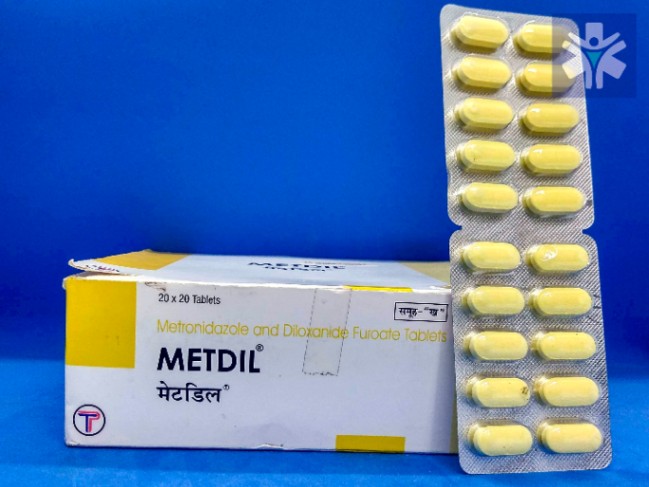
Price: Rs.80.00
10% off
In stock
Loose stock: 4
Description
METDIL TAB 10
Details
Composition
DILOXANIDE FUROATE 500 MG,METRONIDAZOLE 400 MG
# DILOXANIDE FUROATE 500 MG + METRONIDAZOLE 400 MG
## SHORT DESCRIPTION
**Diloxanide Furoate 500 mg + Metronidazole 400 mg** is an **antiprotozoal combination medicine** used primarily in the treatment of **intestinal amoebiasis (amoebic dysentery)** caused by *Entamoeba histolytica*.
The combination uses two complementary medicines: **metronidazole** treats invasive/tissue amoebiasis, while **diloxanide furoate** acts mainly within the intestine to eliminate susceptible amoebic organisms that remain in the intestinal lumen.
> **Important:** Treatment of amoebiasis should ideally be based on an appropriate diagnosis because diarrhea and abdominal symptoms can have many causes.
---
## KEY BENEFITS
* Helps treat **intestinal amoebiasis** caused by *Entamoeba histolytica*.
* Metronidazole acts against **tissue-invasive amoebic infection**.
* Diloxanide furoate acts primarily against **intestinal/luminal amoebic forms**.
* The complementary actions can help address both tissue infection and intestinal colonization.
* May help relieve symptoms such as:
* Diarrhea
* Abdominal cramps
* Abdominal discomfort
* Blood or mucus in stools associated with amoebic dysentery
---
## USES / INDICATIONS
### Intestinal Amoebiasis
The combination may be prescribed for:
* **Amoebic dysentery**
* Symptomatic intestinal amoebiasis
* Intestinal infection caused by *Entamoeba histolytica*
### Eradication of Intestinal Amoebae
Diloxanide furoate is a **luminal amoebicide**, meaning it acts within the intestinal lumen against susceptible amoebae.
Metronidazole is used to treat the invasive component of amoebic infection.
### Important Diagnostic Point
Not every person who carries *E. histolytica* has invasive disease, and not every intestinal infection is caused by *E. histolytica*. Appropriate laboratory evaluation may be required to distinguish it from other causes of diarrhea.
---
## HOW IT WORKS
### Diloxanide Furoate 500 mg
Diloxanide furoate is a **luminal amoebicide**.
After oral administration, it acts primarily within the intestine against susceptible amoebic organisms, helping eliminate organisms remaining in the intestinal lumen.
**Diloxanide furoate → acts in the intestinal lumen → helps eradicate susceptible amoebae.**
### Metronidazole 400 mg
Metronidazole is an **antiprotozoal and antibacterial medicine**.
Inside susceptible organisms, its nitro group is reduced to reactive metabolites that damage DNA and interfere with nucleic-acid synthesis.
**Metronidazole → damages protozoal DNA → inhibits survival and multiplication of susceptible organisms.**
### Combined Action
The combination can provide complementary treatment:
**Metronidazole → treats invasive/tissue amoebiasis**
**Diloxanide furoate → eliminates susceptible intestinal/luminal amoebae**
---
## DOSAGE & ADMINISTRATION
* Take this medicine **exactly as prescribed**.
* The appropriate dose and treatment duration depend on the patient's age, diagnosis, severity of infection, and formulation.
* Take oral doses with water.
* Metronidazole may be taken **with food** if it causes stomach irritation.
* Complete the prescribed treatment course unless your healthcare professional advises otherwise.
### Important
The listed strengths (**Diloxanide Furoate 500 mg + Metronidazole 400 mg**) do not by themselves determine the correct dosing schedule.
**Do not self-prescribe this combination for diarrhea.**
### Missed Dose
Take the missed dose when remembered unless it is nearly time for the next dose.
**Do not take a double dose.**
### Hydration
If diarrhea is present, maintaining adequate **fluid and electrolyte intake** is important to reduce the risk of dehydration.
---
## SIDE EFFECTS
### Common Side Effects
Possible side effects include:
* Nausea
* Vomiting
* Abdominal discomfort
* Diarrhea
* Headache
* Dizziness
* Loss of appetite
* Metallic or unpleasant taste
* Dry mouth
### Metronidazole-Related Effects
Some patients may experience:
* Darker urine
* Metallic taste
* Gastrointestinal upset
* Temporary dizziness
### Diloxanide-Related Effects
Possible effects include:
* Flatulence
* Abdominal discomfort
* Nausea
* Vomiting
* Headache
### Serious Side Effects
Seek medical attention for:
* Severe or persistent diarrhea
* Severe abdominal pain
* Severe skin rash
* Blistering or peeling skin
* Numbness or tingling of the hands or feet
* Seizures
* Severe confusion
* Difficulty walking or coordination problems
* Facial or throat swelling
* Difficulty breathing
---
## PRECAUTIONS & WARNINGS
### Alcohol
**Avoid alcohol during metronidazole treatment and for at least 48 hours after the final dose** unless your healthcare professional advises otherwise.
Alcohol may cause unpleasant reactions such as:
* Nausea
* Vomiting
* Abdominal cramps
* Flushing
* Headache
* Rapid heartbeat
### Neurological Effects
Prolonged or repeated metronidazole treatment can rarely cause neurological adverse effects, including:
* Numbness
* Tingling
* Weakness
* Poor coordination
* Seizures
Contact your healthcare professional if these symptoms develop.
### Liver Disease
Tell your healthcare professional if you have liver disease. Metronidazole metabolism can be affected by significant hepatic impairment.
### Blood Disorders
Tell your doctor if you have a history of blood disorders. Blood-count monitoring may be considered during prolonged or repeated treatment.
### Pregnancy
Tell your healthcare professional if you are pregnant or planning pregnancy. Treatment should be based on an assessment of the benefits and potential risks.
### Breastfeeding
Metronidazole passes into breast milk. Discuss treatment with your healthcare professional if you are breastfeeding.
### Diagnosis
Persistent diarrhea, bloody stools, fever, severe abdominal pain, or dehydration requires medical assessment because several infections and non-infectious conditions can produce similar symptoms.
---
## DRUG INTERACTIONS
### Alcohol
Alcohol should be avoided during metronidazole treatment and for the recommended period after treatment.
### Warfarin
Metronidazole can increase the anticoagulant effect of **warfarin**, potentially increasing bleeding risk. INR monitoring may be required.
### Lithium
Metronidazole may increase lithium concentrations and potentially increase the risk of lithium toxicity.
### Disulfiram
Metronidazole should generally not be used with disulfiram because of the risk of adverse neuropsychiatric reactions.
### Phenytoin and Phenobarbital
These medicines can affect metronidazole metabolism and may alter its effectiveness or exposure.
### Busulfan
Metronidazole may increase busulfan exposure and toxicity.
### Other Medicines
Always tell your doctor or pharmacist about:
* Prescription medicines
* OTC medicines
* Vitamins
* Herbal supplements
* Other antiprotozoal medicines
Do not combine multiple treatments for diarrhea or intestinal infections without professional advice.
---
## STORAGE INFORMATION
* Store according to the **manufacturer's instructions**.
* Keep tablets in their original packaging.
* Store in a cool, dry place.
* Protect from excessive heat, moisture, and direct sunlight.
* Keep the container tightly closed.
* Keep out of reach of children.
* Do not use after the expiry date.
* Do not use tablets if the packaging is damaged or the medicine appears abnormal.
---
## PRESCRIPTION STATUS
**Diloxanide Furoate 500 mg + Metronidazole 400 mg is generally a prescription medicine**, although regulatory status can vary between countries.
Because the combination is intended for specific protozoal infections and requires appropriate diagnosis and dosing, it should be used under the supervision of a qualified healthcare professional.
---
## GENUINE MEDICINE ASSURANCE
When purchasing Diloxanide Furoate 500 mg + Metronidazole 400 mg, ensure that:
* The product comes in **original, sealed manufacturer packaging**.
* Both active ingredients and their strengths are clearly listed.
* The manufacturer's name and information are present.
* The **batch/lot number and expiry date** are clearly visible.
* The packaging shows no signs of tampering.
* The medicine is purchased from a **licensed pharmacy or authorized medicine supplier**.
* The product has appropriate regulatory authorization for the market.
* Storage conditions have been maintained appropriately.
Do not use products with broken seals, unclear labeling, altered packaging, or an expired date.
---
# FAQ – DILOXANIDE FUROATE 500 MG + METRONIDAZOLE 400 MG
### 1. What is Diloxanide Furoate 500 mg + Metronidazole 400 mg used for?
It is primarily used for **intestinal amoebiasis and amoebic dysentery** caused by susceptible *Entamoeba histolytica*.
### 2. What is Diloxanide Furoate?
Diloxanide furoate is a **luminal amoebicide** that acts primarily within the intestine to eliminate susceptible amoebae.
### 3. What is Metronidazole?
Metronidazole is an **antiprotozoal and antibacterial medicine** used against susceptible anaerobic bacteria and protozoa.
### 4. Why are Diloxanide Furoate and Metronidazole combined?
They have complementary actions. Metronidazole addresses **invasive amoebic infection**, while diloxanide furoate helps eliminate susceptible amoebae remaining in the intestinal lumen.
### 5. Does this medicine treat all types of diarrhea?
**No.** Most diarrhea is not necessarily caused by amoebiasis. Antibiotic or antiprotozoal treatment should be used only when clinically appropriate.
### 6. Can I take this medicine for bloody diarrhea without seeing a doctor?
No. **Bloody diarrhea requires medical assessment** because it can be caused by several infections and other medical conditions.
### 7. Should I avoid alcohol while taking Metronidazole?
Yes. Avoid alcohol during treatment and for **at least 48 hours after the last metronidazole dose** unless your healthcare professional gives different instructions.
### 8. Can Metronidazole cause a metallic taste?
Yes. A **metallic or unpleasant taste** is a common side effect of metronidazole.
### 9. Can this medicine cause nausea?
Yes. Nausea, abdominal discomfort, and other gastrointestinal symptoms may occur.
### 10. Can this medicine cause dark urine?
Metronidazole can sometimes cause **dark or reddish-brown urine**, which is generally harmless. However, unusual or persistent changes should be discussed with a healthcare professional.
### 11. Can I stop the medicine when my diarrhea improves?
Do not stop treatment early unless your healthcare professional tells you to. Complete the prescribed course.
### 12. What should I do if I miss a dose?
Take it when remembered unless it is almost time for the next dose. **Do not double the next dose.**
### 13. Can this medicine be used during pregnancy?
It may be used when clinically indicated, but pregnancy should always be discussed with your healthcare professional before treatment.
### 14. Can I take this medicine while breastfeeding?
Metronidazole passes into breast milk. Discuss the treatment with your healthcare professional before taking it while breastfeeding.
### 15. Can this medicine interact with warfarin?
Yes. Metronidazole can increase the effects of **warfarin** and may increase bleeding risk. Appropriate monitoring may be required.
### 16. Can Metronidazole affect the nervous system?
Rarely, particularly with prolonged or repeated treatment, metronidazole can cause neurological effects such as **numbness, tingling, coordination problems, or seizures**.
### 17. How long does treatment take?
The duration depends on the diagnosis and severity of infection. Follow the exact course prescribed by your healthcare professional.
### 18. Do I need to drink extra fluids during amoebiasis treatment?
Maintaining adequate hydration is important, particularly if you have diarrhea or vomiting. Oral rehydration solutions may be appropriate when fluid and electrolyte losses are significant.
### 19. Can this medicine prevent amoebiasis?
No. Prevention involves safe drinking water, proper sanitation, hand hygiene, and safe food practices. The medicine should not be used routinely as a preventive treatment without medical advice.
### 20. Is Diloxanide Furoate + Metronidazole available without a prescription?
In many markets, this combination is **prescription-only or pharmacist-controlled**. Regulatory requirements vary by country.
---
## MEDICAL DISCLAIMER
This information about **Diloxanide Furoate 500 mg + Metronidazole 400 mg** is provided for educational and informational purposes only and is not a substitute for professional medical advice, diagnosis, or treatment.
The appropriate treatment of amoebiasis depends on the **diagnosis, severity of infection, patient age, pregnancy status, liver function, other medicines, and local treatment guidelines**. Not every episode of diarrhea is caused by *Entamoeba histolytica*.
**Do not self-medicate with antiprotozoal or antibiotic medicines for unexplained diarrhea.** Seek medical attention for bloody stools, severe abdominal pain, persistent vomiting, high fever, signs of dehydration, or worsening symptoms. Avoid alcohol while taking metronidazole and for the recommended period after the final dose.