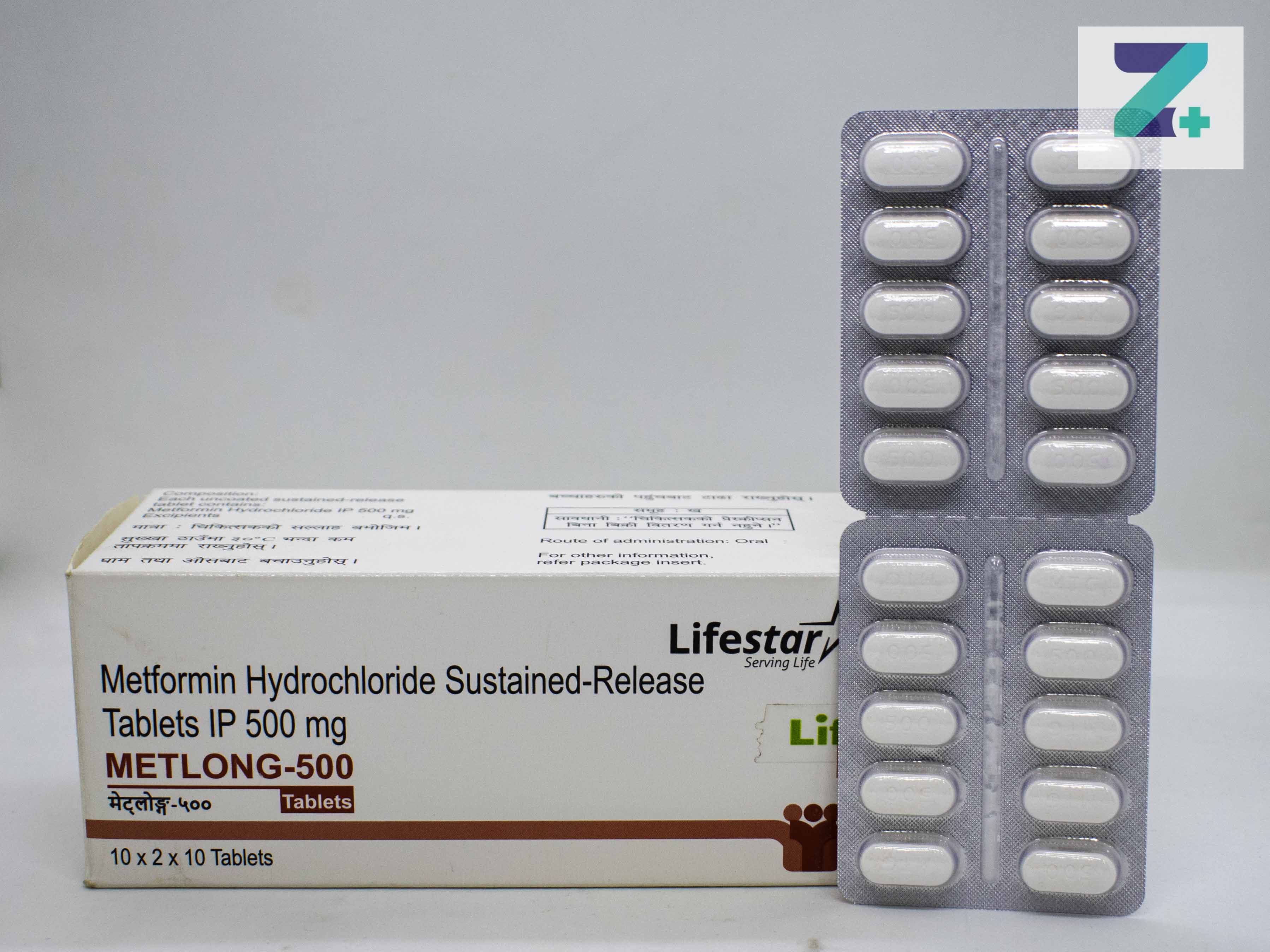
METLONG 500
Price: Rs.35.00
13% off
In stock
Loose stock: 0
Description
METLONG 500 TAB 10
Details
Composition
METFORMIN HYDROCHLORIDE 500
# METFORMIN HYDROCHLORIDE 500 MG
## SHORT DESCRIPTION
**Metformin Hydrochloride 500 mg** is an oral antidiabetic medicine belonging to the **biguanide** class. It is commonly used as a first-line treatment for **type 2 diabetes mellitus**, together with a healthy diet and regular physical activity.
Metformin helps lower blood glucose primarily by reducing glucose production by the liver and improving the body's sensitivity to insulin. It generally does **not cause low blood sugar when used alone**.
---
## KEY BENEFITS
* Helps control **high blood glucose levels** in people with type 2 diabetes.
* Reduces glucose production by the liver.
* Improves the body's response to insulin.
* Helps reduce insulin resistance.
* Generally has a low risk of hypoglycemia when used alone.
* May be used alone or together with other diabetes medicines when prescribed.
* Can support long-term blood-glucose management as part of a comprehensive diabetes-care plan.
---
## USES / INDICATIONS
Metformin Hydrochloride 500 mg may be prescribed for:
### 1. Type 2 Diabetes Mellitus
Metformin is widely used to improve blood-glucose control in adults with **type 2 diabetes**, alongside appropriate diet and exercise.
### 2. Combination Diabetes Therapy
It may be combined with other diabetes medicines, including insulin or other oral antidiabetic medicines, when additional glucose control is required.
### 3. Other Medical Uses
In some circumstances, healthcare professionals may prescribe metformin for other conditions. Such use should only occur under appropriate medical supervision.
> **Important:** Metformin is **not used to treat type 1 diabetes as a substitute for insulin**.
---
## HOW IT WORKS
Metformin lowers blood glucose through several mechanisms:
* **Reduces glucose production by the liver**, particularly through decreased gluconeogenesis.
* **Improves insulin sensitivity**, allowing tissues to use glucose more effectively.
* Reduces intestinal glucose absorption to a smaller extent.
Metformin does not normally stimulate the pancreas to release additional insulin. Therefore, when used by itself, it generally has a **low risk of causing hypoglycemia**.
---
## DOSAGE & ADMINISTRATION
* Take Metformin Hydrochloride 500 mg **exactly as prescribed by your doctor**.
* The starting dose is often **500 mg once or twice daily**, depending on the formulation and individual patient factors.
* Take immediate-release tablets **with meals** to reduce gastrointestinal side effects.
* Your doctor may gradually increase the dose according to blood-glucose response and tolerability.
* Swallow tablets with water unless your specific product instructions say otherwise.
* If you are using an **extended-release (ER/SR/XR) formulation**, swallow the tablet whole and follow the specific product instructions.
* Do not crush, split, or chew extended-release tablets unless your product specifically allows it.
### If You Miss a Dose
Take the missed dose when you remember unless it is nearly time for your next dose. Do not take two doses together to make up for a missed dose.
---
## SIDE EFFECTS
Common side effects are mainly gastrointestinal and may include:
* Nausea
* Diarrhea
* Abdominal discomfort
* Stomach pain
* Bloating
* Gas
* Reduced appetite
* Metallic taste
These effects are often more noticeable when treatment is started and may improve as the body adjusts.
### Vitamin B12 Deficiency
Long-term metformin use can reduce **vitamin B12 levels** in some people. Your healthcare professional may monitor B12 levels when clinically appropriate.
### Serious Side Effect: Lactic Acidosis
A very rare but serious complication is **metformin-associated lactic acidosis**, particularly in patients with significant kidney impairment or other risk factors.
Seek urgent medical attention for symptoms such as:
* Severe weakness
* Unusual sleepiness
* Difficulty breathing
* Persistent vomiting
* Severe abdominal discomfort
* Feeling unusually cold
* Slow or irregular heartbeat
---
## PRECAUTIONS & WARNINGS
### Kidney Function
Kidney function should be assessed before and during treatment. Metformin may not be appropriate in patients with **severe kidney impairment**.
### Lactic Acidosis Risk
The risk of lactic acidosis is increased in certain situations, including severe kidney dysfunction, significant dehydration, severe infection, or conditions associated with reduced oxygen supply to tissues.
### Contrast Imaging Procedures
Tell your healthcare professional that you take metformin before certain **iodinated contrast imaging procedures**. Metformin may need to be temporarily stopped in selected patients depending on kidney function and the procedure.
### Liver Disease
Inform your doctor if you have significant liver disease or a history of liver problems.
### Alcohol
Excessive alcohol intake can increase the risk of lactic acidosis and should be avoided.
### Vitamin B12
Long-term treatment may be associated with reduced vitamin B12 levels. Monitoring may be considered, particularly if symptoms or risk factors for deficiency are present.
### Pregnancy
If you are pregnant, planning pregnancy, or breastfeeding, discuss metformin treatment with your healthcare professional before making any changes.
---
## DRUG INTERACTIONS
Metformin can interact with certain medicines and medical procedures.
Important examples include:
* **Iodinated contrast agents** used for certain imaging procedures may require temporary interruption of metformin in appropriate patients.
* Some medicines that affect **kidney function** may increase the risk associated with metformin.
* Certain diuretics, blood-pressure medicines, and other drugs can alter kidney function or glucose control.
* Other diabetes medicines, including **insulin and sulfonylureas**, may increase the risk of hypoglycemia when combined with metformin.
* Excessive alcohol consumption may increase the risk of serious adverse effects.
Always inform your doctor or pharmacist about **all prescription medicines, over-the-counter medicines, vitamins, and supplements** you use.
---
## STORAGE INFORMATION
* Store at **room temperature** according to the manufacturer's instructions.
* Keep away from excessive heat and moisture.
* Protect from direct sunlight.
* Keep the medicine in its original packaging.
* Keep out of reach of children and pets.
* Do not use after the expiry date.
* Do not use tablets if the packaging is damaged or the tablets appear abnormal.
---
## PRESCRIPTION STATUS
**Prescription medicine.**
Metformin Hydrochloride 500 mg should be used under the supervision of a qualified healthcare professional. The appropriate dose depends on blood-glucose levels, kidney function, formulation, other medicines, and individual response.
---
## GENUINE MEDICINE ASSURANCE
When purchasing Metformin Hydrochloride 500 mg:
* Purchase from a **licensed pharmacy or authorized medicine retailer**.
* Check the manufacturer's name and product information.
* Verify the **batch/lot number and expiry date**.
* Ensure the packaging and seal are intact.
* Avoid products with damaged, altered, or suspicious packaging.
* Check whether the product is an immediate-release or extended-release formulation.
* Follow the storage instructions provided by the manufacturer.
* If you suspect a product is counterfeit, consult a pharmacist or the appropriate medicines regulatory authority before using it.
---
# FAQ SECTION
### 1. What is Metformin Hydrochloride 500 mg used for?
Metformin 500 mg is primarily used to help control **blood glucose in people with type 2 diabetes**, together with diet, physical activity, and other treatments when appropriate.
### 2. Is Metformin 500 mg a diabetes medicine?
Yes. Metformin is an oral **antidiabetic medicine** and is commonly used as an initial treatment for type 2 diabetes.
### 3. How does Metformin 500 mg lower blood sugar?
Metformin primarily **reduces glucose production by the liver** and improves insulin sensitivity, helping the body use glucose more effectively.
### 4. Does Metformin cause low blood sugar?
Metformin alone generally has a **low risk of hypoglycemia**. However, the risk can increase when it is combined with insulin or certain other diabetes medicines.
### 5. Should Metformin 500 mg be taken with food?
Yes. Taking immediate-release metformin **with meals** can help reduce stomach-related side effects such as nausea and diarrhea.
### 6. Why does Metformin cause diarrhea?
Metformin affects the gastrointestinal tract and can cause diarrhea, nausea, bloating, and abdominal discomfort, particularly when treatment is first started. These effects often improve with continued treatment.
### 7. Can Metformin 500 mg cause weight loss?
Some people experience modest weight loss or reduced weight gain while taking metformin. However, **metformin should not be used solely as a weight-loss medicine unless specifically prescribed for an appropriate medical reason**.
### 8. Can Metformin be taken long term?
Yes. Metformin may be used for many years when it remains appropriate and is monitored by a healthcare professional. Kidney function and other relevant health parameters may need periodic assessment.
### 9. Can Metformin cause vitamin B12 deficiency?
Long-term metformin treatment can reduce **vitamin B12 levels** in some patients. Your healthcare professional may recommend B12 testing if you have risk factors or symptoms of deficiency.
### 10. Can I stop Metformin when my blood sugar becomes normal?
Do not stop metformin without discussing it with your doctor. Normal blood glucose may indicate that the treatment and lifestyle changes are working; stopping medication without medical guidance can cause glucose levels to rise again.
### 11. What should I do if I miss a dose of Metformin?
Take the missed dose when you remember unless it is nearly time for your next scheduled dose. Do not take a double dose to compensate.
### 12. Can Metformin be taken with other diabetes medicines?
Yes. Metformin is frequently combined with other diabetes medicines when additional glucose control is needed. Your doctor will select the combination based on your health and blood-glucose goals.
### 13. Can I drink alcohol while taking Metformin?
Excessive alcohol consumption is not recommended because it can increase the risk of serious complications, including **lactic acidosis**, and can also affect blood-glucose control.
### 14. Is Metformin suitable for people with kidney disease?
It depends on the severity of kidney impairment. Metformin is contraindicated or requires special consideration in significant renal impairment. Your doctor will assess kidney function before and during treatment.
### 15. Can Metformin be taken during pregnancy?
Metformin may be used in some pregnancy-related situations, but the decision should be made by a qualified healthcare professional based on the individual's medical circumstances. Do not start or stop it during pregnancy without medical advice.
### 16. How long does Metformin 500 mg take to work?
Metformin begins affecting glucose metabolism after treatment starts, but improvement in blood-glucose control develops over time. Your healthcare professional may monitor glucose and HbA1c to assess the overall response.
### 17. What is the difference between Metformin 500 mg and Metformin SR/ER 500 mg?
Both contain metformin, but **immediate-release and sustained/extended-release formulations release the medicine differently**. They should be taken according to their specific product instructions and should not be switched without professional advice.
---
## MEDICAL DISCLAIMER
This information is provided for **educational and informational purposes only** and does not replace professional medical advice, diagnosis, or treatment. Metformin Hydrochloride 500 mg is a prescription medicine and should be used only under the direction of a qualified healthcare professional.
The appropriate dose depends on the patient's blood-glucose control, kidney function, formulation, other medicines, and overall health. **Do not start, stop, or change the dose without medical advice.**
Seek urgent medical attention if you develop severe weakness, difficulty breathing, persistent vomiting, unusual sleepiness, or other symptoms suggestive of a serious adverse reaction. Always read the product package insert and follow your doctor's or pharmacist's instructions.