METRO
Price: Rs.75.00
10% off
In stock
Loose stock: 0
Description
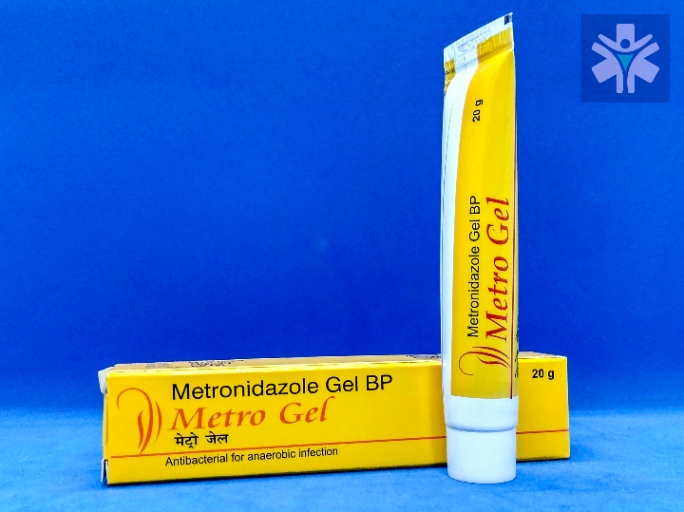
METRO GEL 20G
Details
Composition
METRONIDAZOLE 1 % W/W
# Metronidazole 1% W/W
## Short Description
**Metronidazole 1% W/W** is a topical antimicrobial medicine used on the skin to help manage certain **bacterial and inflammatory skin conditions**. Metronidazole belongs to the nitroimidazole class of medicines and has antibacterial and anti-inflammatory properties. Topical metronidazole is commonly used in the management of **rosacea**, depending on the specific formulation and local prescribing information.
## Key Benefits
* Helps reduce inflammatory skin lesions associated with rosacea
* Provides topical antibacterial activity against susceptible microorganisms
* May help reduce redness and inflammatory bumps associated with rosacea
* Applied directly to affected areas
* Generally has limited systemic exposure compared with oral metronidazole
* Can be used as part of a dermatologist-recommended skincare treatment plan
## Uses / Indications
Metronidazole 1% W/W topical preparations may be prescribed for:
* **Papulopustular rosacea**
* Inflammatory facial redness and lesions associated with rosacea
* Certain localized skin infections or inflammatory conditions when specifically prescribed
The exact approved indication can vary according to the formulation and country.
> **Important:** Metronidazole 1% W/W is a topical preparation and should not be assumed to be interchangeable with oral or vaginal metronidazole products.
## How It Works
Metronidazole enters susceptible microorganisms and is converted into reactive compounds that can **damage microbial DNA**, interfering with their ability to survive and reproduce.
For rosacea, its benefits are also thought to involve **anti-inflammatory effects**, which may help reduce inflammatory lesions and redness.
## Dosage & Administration
* Use **Metronidazole 1% W/W exactly as prescribed** by your doctor.
* Clean and gently dry the affected skin before application.
* Apply a **thin layer** to the affected area as directed.
* Avoid applying it to the eyes, inside the mouth, or other mucous membranes unless specifically instructed.
* Wash your hands before and after application unless the hands are the treatment area.
* Do not apply more frequently or use a larger amount than recommended.
* Continue treatment for the prescribed duration, even if symptoms improve earlier.
* Avoid covering the treated area with airtight dressings unless directed by a healthcare professional.
Do not use topical metronidazole on broken or severely irritated skin unless your healthcare professional recommends it.
## Side Effects
### Common Side Effects
Some people may experience:
* Skin irritation
* Redness
* Burning or stinging
* Dryness
* Itching
* Mild skin discomfort
* Peeling or scaling
These effects are usually mild and may improve as treatment continues.
### Serious Side Effects
Stop using the product and seek medical advice if you develop:
* Severe or persistent skin irritation
* Significant swelling
* Severe rash
* Blistering
* Signs of a serious allergic reaction, such as difficulty breathing or swelling of the face, lips, tongue, or throat
## Precautions & Warnings
* For **external use only**, unless the product is specifically formulated for another route.
* Avoid contact with the eyes. If accidental contact occurs, rinse thoroughly with water.
* Do not swallow the product.
* Inform your healthcare professional if you have previously experienced an allergy to **metronidazole or other nitroimidazole medicines**.
* Avoid applying the medicine to severely damaged or irritated skin unless advised.
* Tell your doctor if you are pregnant, planning pregnancy, or breastfeeding.
* Use caution with products that contain alcohol or other irritating ingredients if they worsen skin irritation.
* If your skin condition becomes significantly worse, consult your healthcare professional.
* Topical metronidazole is **not appropriate for every type of bacterial or fungal skin infection**.
## Drug Interactions
Because topical metronidazole generally produces lower systemic exposure than oral metronidazole, clinically significant drug interactions are less common.
However, tell your doctor or pharmacist about all medicines and supplements you use, particularly if you are also taking **oral metronidazole or other nitroimidazole medicines**.
Do not use multiple topical medicines on the same area without professional advice, as this may increase irritation.
## Storage Information
* Store at the temperature specified on the product packaging.
* Keep away from excessive heat and direct sunlight.
* Keep the container tightly closed when not in use.
* Do not freeze unless the product label specifically permits it.
* Keep out of reach and sight of children.
* Do not use after the expiry date.
* Dispose of expired or unused medicine according to local pharmacy or healthcare guidance.
## Prescription Status
**Metronidazole 1% W/W prescription status varies by country and formulation.** Some topical metronidazole preparations may require a prescription, while availability differs between markets.
Use it according to the instructions provided by a qualified healthcare professional and applicable local regulations.
## Genuine Medicine Assurance
When purchasing Metronidazole 1% W/W:
* Purchase from a **licensed pharmacy or reputable healthcare provider**.
* Check the manufacturer's name, product strength, batch/lot number, expiry date, and packaging.
* Make sure the tube/container is properly sealed and undamaged.
* Avoid products with missing, altered, or suspicious labeling.
* Do not use a product if its appearance, packaging, or labeling seems unusual.
* When authenticity is uncertain, contact the manufacturer or a licensed pharmacist before use.
## Frequently Asked Questions (FAQ)
### What is Metronidazole 1% W/W used for?
Metronidazole 1% W/W is a topical medicine commonly used to help manage **rosacea**, particularly inflammatory lesions such as papules and pustules. Its exact indication depends on the specific product.
### Is Metronidazole 1% a cream or gel?
Metronidazole 1% may be formulated as a **cream, gel, lotion, or another topical preparation**, depending on the manufacturer. Always check the product packaging for the specific dosage form.
### Can Metronidazole 1% be used for acne?
Metronidazole is **not generally a first-line treatment for ordinary acne**. It is more commonly associated with treatment of inflammatory rosacea. A healthcare professional should determine whether it is appropriate for your skin condition.
### Can Metronidazole 1% treat rosacea?
Yes. Topical metronidazole is commonly used to manage **inflammatory rosacea**, including papules and pustules. It may help reduce inflammation and associated skin lesions.
### How often should Metronidazole 1% be applied?
The frequency depends on the specific product and your doctor's instructions. Follow the directions on your prescription or product label rather than applying it more frequently than recommended.
### Can I apply Metronidazole 1% around my eyes?
Avoid contact with the eyes. Do not apply it close to the eyes unless your healthcare professional specifically instructs you to do so.
### Can Metronidazole 1% be used on broken skin?
It should generally not be applied to significantly broken or severely irritated skin unless specifically recommended by a healthcare professional.
### Does topical Metronidazole have side effects?
Yes. Possible side effects include **burning, stinging, redness, dryness, itching, irritation, and peeling** at the application site.
### Can I use moisturizer with Metronidazole 1%?
A gentle, non-irritating moisturizer may generally be used as part of a skincare routine, but it is best to follow your healthcare professional's instructions regarding the order and timing of products.
### Can Metronidazole 1% be used during pregnancy?
Topical medicines may have lower systemic absorption than oral medicines, but you should still **consult your doctor before using metronidazole during pregnancy**, especially during prolonged treatment.
### How long does Metronidazole 1% take to work?
Improvement in rosacea symptoms may take **several weeks**. The response varies between individuals. Continue treatment as prescribed and consult your healthcare professional if your condition does not improve.
### Can I use Metronidazole 1% with other skincare products?
Some skincare products can increase irritation. Use gentle, fragrance-free products when possible and discuss combining metronidazole with other active treatments with your dermatologist or pharmacist.
### Is Metronidazole 1% an antibiotic?
Metronidazole has **antimicrobial activity** and belongs to the nitroimidazole class. Topical preparations are used for specific skin conditions, including rosacea, depending on the formulation and indication.
### Is Metronidazole 1% the same as oral Metronidazole?
No. Although both contain metronidazole, **topical and oral formulations are designed for different routes of administration and uses**. They should not be substituted for one another without medical advice.
## Medical Disclaimer
This information about **Metronidazole 1% W/W** is provided for educational purposes only and does not replace professional medical advice, diagnosis, or treatment. The appropriate use, application frequency, treatment duration, and approved indications may vary according to the specific formulation and country. Always read the product label and follow your doctor's or pharmacist's instructions. Seek professional medical advice if symptoms worsen, persist, or if you experience a severe allergic or skin reaction.