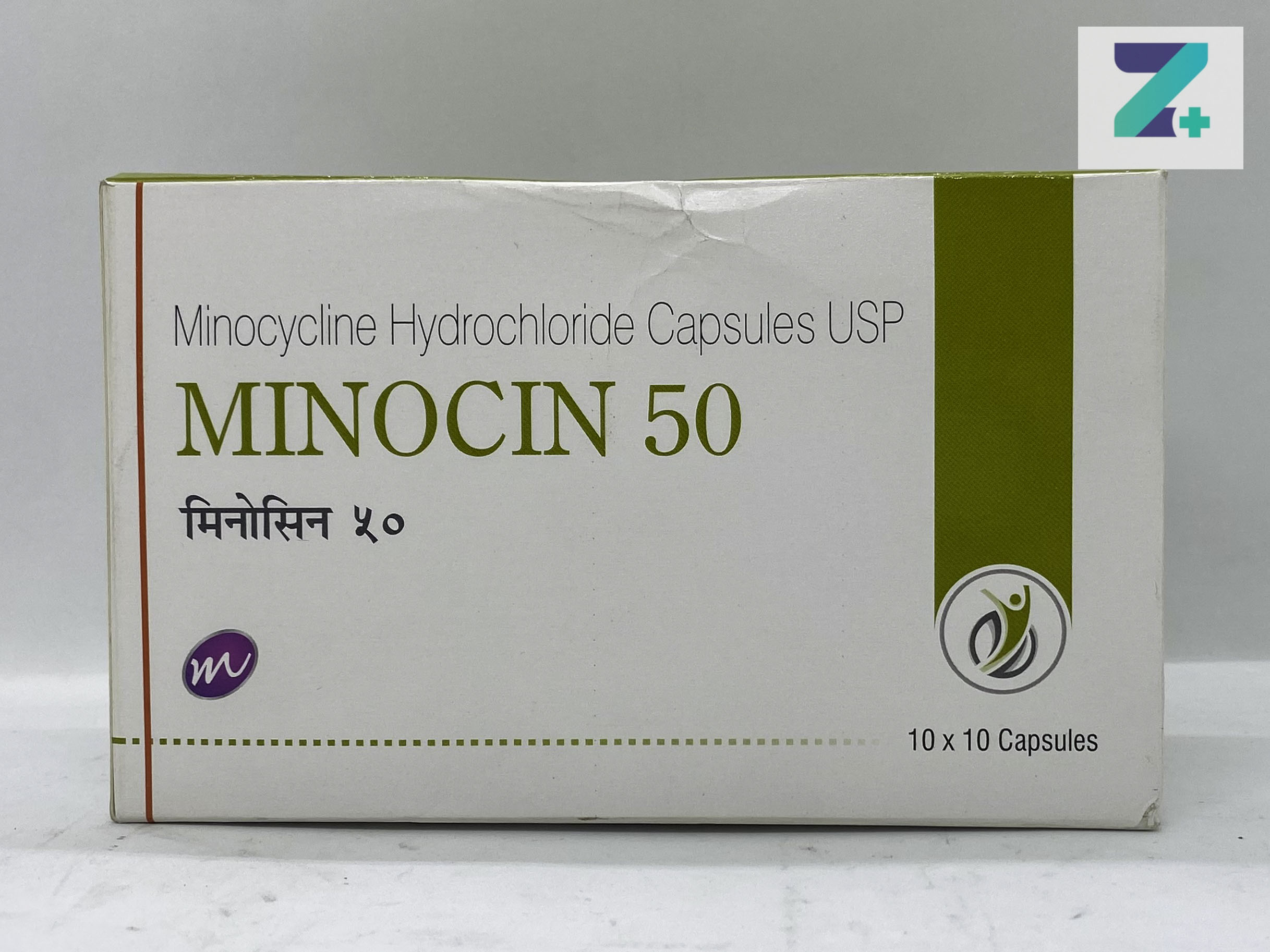
MINOCIN-50
Price: Rs.350.00
10% off
In stock
Loose stock: 0
Description
MINOCIN-50 CAP 10
Details
Composition
MINOCYCLINE 50 MG
# Minocycline 50 mg
## Short Description
**Minocycline 50 mg** is a prescription **tetracycline-class antibiotic** used to treat certain bacterial infections. It is also commonly prescribed in selected cases of **moderate-to-severe inflammatory acne**.
Minocycline works by inhibiting bacterial protein production, thereby preventing susceptible bacteria from growing and multiplying. It should be used only when a bacterial infection is suspected or confirmed and when antibiotic treatment is appropriate.
> **Important:** Minocycline does not treat viral infections such as the common cold or influenza.
---
## Key Benefits
* Effective against a range of susceptible **bacterial infections**
* Commonly used for **inflammatory acne**
* Helps reduce acne-causing bacterial activity
* Has anti-inflammatory properties that may contribute to its usefulness in acne
* Available as an oral medicine for systemic treatment
* Can be used when a healthcare professional considers tetracycline therapy appropriate
---
## Uses / Indications
Minocycline 50 mg may be prescribed for susceptible bacterial infections, depending on local guidelines and bacterial sensitivity.
### **Acne**
Minocycline is commonly used for:
* Moderate inflammatory acne
* Acne with inflammatory papules and pustules
* Acne that has not responded adequately to topical treatment
### **Bacterial Infections**
Depending on the susceptibility of the organism, minocycline may be used for selected infections such as:
* Certain respiratory bacterial infections
* Certain skin and soft-tissue infections
* Some infections caused by susceptible Gram-positive or Gram-negative bacteria
* Certain atypical bacterial infections
The exact indication should be determined by a healthcare professional.
> **Antibiotic stewardship:** Minocycline should not be used for viral illnesses and should not be taken without an appropriate medical indication.
---
## How It Works
Minocycline belongs to the **tetracycline antibiotic** class.
It enters susceptible bacterial cells and binds to the **30S bacterial ribosomal subunit**.
This interferes with bacterial protein synthesis, preventing bacteria from producing proteins needed for growth and reproduction.
**Minocycline → inhibits bacterial protein synthesis → slows bacterial growth → helps control susceptible bacterial infection**
For acne, minocycline may also have **anti-inflammatory effects**, which can help reduce inflammatory acne lesions.
---
## Dosage & Administration
> **Important:** The correct dose and duration depend on the condition being treated, age, kidney function, other medicines, and clinical response. Follow your prescription exactly.
### General Administration
* Take Minocycline 50 mg exactly as prescribed.
* It is commonly administered in divided or once-daily regimens depending on the formulation and indication.
* Swallow the capsule/tablet with a **full glass of water**.
* Remain sitting or standing rather than lying down immediately after taking it to reduce the risk of irritation of the esophagus.
* It may be taken with food if stomach upset occurs, although absorption can be affected by certain mineral-containing products.
* Take doses at approximately the same time each day when prescribed regularly.
### Avoid Taking Together With Certain Products
Avoid taking minocycline at the same time as:
* Antacids containing aluminum, calcium, or magnesium
* Iron supplements
* Calcium supplements
* Magnesium-containing products
These can bind to minocycline and reduce its absorption. Your pharmacist can advise you on an appropriate time interval.
### Missed Dose
Take the missed dose when remembered unless it is nearly time for your next scheduled dose.
**Do not take two doses at once.**
### Duration of Treatment
Complete the prescribed course when treating a bacterial infection, unless your healthcare professional tells you to stop.
For acne, treatment duration is individualized and should be periodically reviewed.
---
## Side Effects
### Common Side Effects
Possible side effects include:
* Nausea
* Vomiting
* Diarrhea
* Stomach discomfort
* Headache
* Dizziness
* Light-headedness
* Skin sensitivity to sunlight
### Minocycline-Specific Effects
Minocycline can sometimes cause:
* **Dizziness or vertigo**
* Skin, nail, tooth, or gum pigmentation with prolonged use
* Increased sensitivity to sunlight
* Changes in liver enzymes
### Serious Side Effects
Seek medical attention if you develop:
* Severe or persistent headache
* Vision changes
* Severe dizziness
* Difficulty breathing
* Facial or throat swelling
* Severe skin rash or blistering
* Yellowing of the skin or eyes
* Dark urine
* Severe abdominal pain
* Persistent watery or bloody diarrhea
* Unusual joint pain, fever, or other symptoms suggesting an autoimmune reaction
Rare but serious reactions associated with minocycline can include **intracranial hypertension, severe liver injury, hypersensitivity reactions, and autoimmune syndromes**.
---
## Precautions & Warnings
### Pregnancy
Minocycline should generally **not be used during pregnancy unless specifically determined necessary by a healthcare professional**.
Tetracyclines can affect fetal development, particularly the bones and teeth.
Tell your doctor if you are pregnant, planning pregnancy, or become pregnant while taking minocycline.
### Children
Minocycline is generally avoided in children **younger than 8 years**, except in specific circumstances where a specialist determines that treatment is appropriate.
Tetracyclines can cause permanent tooth discoloration and affect bone development in young children.
### Tooth Discoloration
Long-term exposure can cause pigmentation of teeth and other tissues.
### Dizziness and Vertigo
Minocycline can cause dizziness or vertigo.
Use caution when:
* Driving
* Operating machinery
* Performing activities requiring balance or concentration
Do not drive if you feel dizzy or impaired.
### Sun Sensitivity
Minocycline may increase sensitivity to sunlight.
Use:
* Protective clothing
* Sunscreen
* Shade when possible
Avoid excessive sun exposure.
### Liver Problems
Use caution if you have liver disease or take other medicines that can affect the liver.
Seek medical advice if you develop jaundice, dark urine, severe fatigue, or abdominal pain.
### Kidney Problems
Tell your doctor if you have kidney disease. Your healthcare professional may determine whether dose adjustment or additional monitoring is needed.
### Intracranial Hypertension
Tetracycline antibiotics, including minocycline, have been associated with increased pressure inside the skull.
Seek medical attention for:
* Persistent severe headache
* Blurred vision
* Double vision
* Visual disturbances
* Nausea or vomiting associated with severe headache
The risk may be increased when tetracyclines are combined with **systemic retinoids such as isotretinoin**.
### Antibiotic-Associated Diarrhea
Minocycline can occasionally cause antibiotic-associated diarrhea, including **Clostridioides difficile-associated diarrhea**.
Seek medical attention for severe, persistent, or bloody diarrhea, even if it occurs after treatment has ended.
---
## Drug Interactions
Tell your doctor or pharmacist about all medicines, supplements, and vitamins you take.
Important interactions include:
### Antacids
Products containing:
* Aluminum
* Calcium
* Magnesium
can reduce minocycline absorption.
### Iron Supplements
Iron can bind to minocycline and reduce its absorption.
### Calcium Supplements
Calcium-containing supplements and some calcium-rich products may reduce absorption.
### Oral Retinoids
Combining minocycline with **isotretinoin or other systemic retinoids** may increase the risk of intracranial hypertension.
### Warfarin
Minocycline may enhance the effects of warfarin in some patients. Closer monitoring of anticoagulation may be required.
### Penicillin Antibiotics
Tetracyclines are generally bacteriostatic, while penicillins are bactericidal. Their combination should be used only when specifically considered appropriate by a healthcare professional.
### Other Potential Interactions
Tell your healthcare professional about:
* Other antibiotics
* Blood thinners
* Acne medicines
* Seizure medicines
* Herbal products
* Mineral supplements
---
## Storage Information
* Store at **room temperature** according to the manufacturer's instructions.
* Protect from excessive heat, moisture, and direct sunlight.
* Keep the medicine in its original packaging.
* Keep the container tightly closed.
* Keep out of reach and sight of children.
* Do not use after the expiry date.
* Do not use capsules or tablets that appear damaged or altered.
---
## Prescription Status
**Minocycline 50 mg is generally a prescription medicine.**
It should be used under the supervision of a qualified healthcare professional because inappropriate antibiotic use can cause treatment failure, adverse effects, and antimicrobial resistance.
---
## Genuine Medicine Assurance
When purchasing **Minocycline 50 mg**:
* Purchase from a **licensed pharmacy or authorized medicine supplier**.
* Verify the medicine name and strength.
* Check the manufacturer's name and packaging.
* Check the batch/lot number and expiry date.
* Ensure the packaging and seal are intact.
* Do not purchase medicines from suspicious or unauthorized sources.
* Do not use capsules/tablets from damaged or tampered packaging.
* If authenticity is uncertain, consult a pharmacist or contact the manufacturer using the details printed on the product packaging.
---
# FAQ – Minocycline 50 mg
### 1. What is Minocycline 50 mg used for?
Minocycline 50 mg is an antibiotic used to treat certain **susceptible bacterial infections** and is commonly prescribed for selected cases of **inflammatory acne**.
### 2. Is Minocycline 50 mg an antibiotic?
Yes. Minocycline is a **tetracycline-class antibiotic**.
### 3. Does Minocycline work for acne?
Yes. Minocycline can help treat moderate inflammatory acne by reducing susceptible bacteria and inflammation.
### 4. Is Minocycline effective for all types of acne?
No. It is particularly useful for **inflammatory acne**. It may not be appropriate for every type or severity of acne.
### 5. Does Minocycline cure acne permanently?
Minocycline can control inflammatory acne during treatment, but it does not necessarily provide a permanent cure. Acne may return after treatment, and a longer-term topical maintenance regimen may be recommended.
### 6. How does Minocycline work?
It inhibits bacterial protein production by binding to the **30S ribosomal subunit**, preventing susceptible bacteria from growing and multiplying.
### 7. Can Minocycline treat a cold or flu?
No. Colds and influenza are generally caused by viruses, and minocycline does not treat viral infections.
### 8. How should I take Minocycline 50 mg?
Take it exactly as prescribed with a full glass of water. Avoid lying down immediately after taking it.
### 9. Can I take Minocycline with food?
Depending on the formulation, minocycline may be taken with food if it causes stomach upset. However, certain mineral-containing foods or supplements can reduce absorption.
Follow your product-specific instructions.
### 10. Can I take Minocycline with milk?
Calcium can reduce absorption of some tetracycline antibiotics. To avoid reduced absorption, discuss appropriate timing of dairy products and minocycline with your pharmacist or doctor.
### 11. Can I take iron supplements with Minocycline?
Iron can reduce minocycline absorption. Do not take them at the same time; ask your pharmacist about appropriate spacing.
### 12. Can I take antacids with Minocycline?
Antacids containing aluminum, calcium, or magnesium can reduce absorption. Separate their administration according to your healthcare professional's instructions.
### 13. Does Minocycline cause dizziness?
Yes. **Dizziness and vertigo** are recognized side effects and may be more noticeable in some patients.
### 14. Can I drive while taking Minocycline?
If you experience dizziness, vertigo, blurred vision, or impaired concentration, **do not drive or operate machinery** until you feel normal again.
### 15. Does Minocycline make the skin sensitive to sunlight?
Yes. Use sunscreen, protective clothing, and avoid excessive sunlight while taking minocycline.
### 16. Can Minocycline cause tooth discoloration?
Long-term use can cause pigmentation of teeth and other tissues. Tetracyclines are generally avoided in young children because of the risk of permanent tooth discoloration.
### 17. Can Minocycline be taken during pregnancy?
Minocycline is generally avoided during pregnancy unless a healthcare professional determines that its use is necessary.
### 18. Can children take Minocycline 50 mg?
Minocycline is generally avoided in children younger than 8 years except in specific medical circumstances under specialist supervision.
### 19. Can Minocycline cause liver problems?
Rarely, minocycline can cause serious liver injury. Seek medical attention if you develop yellow skin or eyes, dark urine, severe fatigue, or significant abdominal pain.
### 20. Can Minocycline cause severe headaches?
Rarely, tetracyclines including minocycline can cause **increased intracranial pressure**. Persistent severe headache, visual changes, or double vision should be assessed promptly.
### 21. Can I take isotretinoin with Minocycline?
The combination is generally avoided because both can increase the risk of **intracranial hypertension**. Never combine them without specific medical supervision.
### 22. Can I stop Minocycline when my acne improves?
Do not change or stop a prescribed course without discussing it with your healthcare professional. Acne treatment duration should be individualized.
### 23. What happens if I miss a dose?
Take it when remembered unless it is nearly time for your next dose. **Do not double the next dose.**
### 24. What happens if I take too much Minocycline?
An overdose may increase the risk of adverse effects such as nausea, dizziness, or other toxicity. Contact a healthcare professional or poison service for advice if you take substantially more than prescribed.
### 25. Can Minocycline cause diarrhea?
Yes. Mild diarrhea can occur. **Severe, persistent, or bloody diarrhea** requires medical evaluation because antibiotic-associated colitis can occur.
### 26. Does Minocycline cause antibiotic resistance?
Like other antibiotics, inappropriate or unnecessary use can contribute to **antimicrobial resistance**. Use minocycline only when prescribed and appropriate.
### 27. Can I use Minocycline with other acne treatments?
It can be combined with certain topical acne medicines, but treatment should be coordinated by a healthcare professional to reduce irritation and optimize results.
### 28. How long does Minocycline take to work for acne?
Improvement in inflammatory acne usually takes **several weeks**, rather than occurring immediately. Your healthcare professional may reassess treatment after an appropriate period.
### 29. Is Minocycline 50 mg strong?
The appropriate strength depends on the condition, patient, and treatment regimen. **50 mg is a commonly used strength**, but the correct dose should be determined by a healthcare professional.
### 30. What should I do if I develop a severe rash while taking Minocycline?
Stop and seek prompt medical advice, particularly if the rash is widespread, blistering, peeling, associated with fever, or accompanied by swelling or breathing difficulty.
---
## Medical Disclaimer
This information is provided for **educational and informational purposes only** and is not a substitute for professional medical advice, diagnosis, or treatment.
**Minocycline 50 mg is a prescription antibiotic and should be used only when medically indicated.** Do not use it for viral infections or share it with another person. Take the medicine exactly as prescribed and follow your healthcare professional's instructions regarding treatment duration.
Minocycline can cause dizziness, photosensitivity, gastrointestinal effects, pigmentation changes, and, rarely, serious reactions involving the liver, nervous system, or immune system. Seek prompt medical attention for **severe headache with visual changes, severe rash, facial swelling, difficulty breathing, jaundice, or severe/persistent or bloody diarrhea**.
Pregnant patients, young children, and people with liver or kidney problems should discuss the use of minocycline with a qualified healthcare professional before treatment.