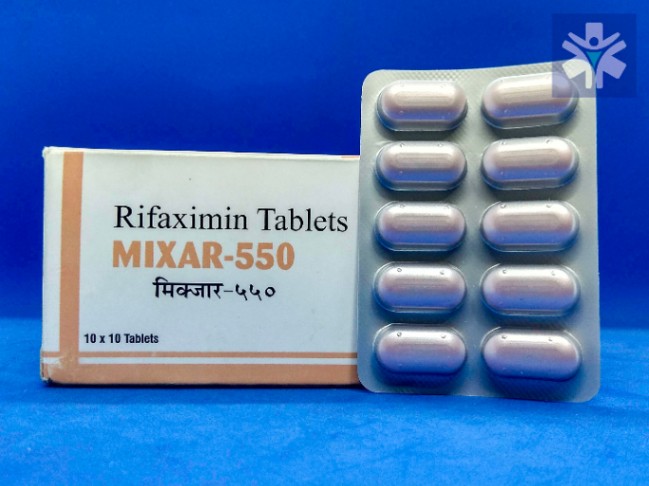
MIXAR-550
Price: Rs.550.00
10% off
In stock
Loose stock: 0
Description
MIXAR-550 TAB 10
Details
Composition
RIFAXIMIN 550 MG
# RIFAXIMIN 550 MG
## SHORT DESCRIPTION
**Rifaximin 550 mg** is a prescription **rifamycin-class antibiotic** that works primarily within the gastrointestinal tract because very little of the medicine is absorbed into the bloodstream. It is commonly used for specific intestinal conditions, including **reduction in the risk of overt hepatic encephalopathy recurrence in adults** and, in certain countries, **treatment of irritable bowel syndrome with diarrhea (IBS-D)**.
Rifaximin should be used only for appropriate indications and as prescribed by a healthcare professional.
---
## KEY BENEFITS
* Helps reduce the risk of **recurring overt hepatic encephalopathy** in appropriate patients.
* Acts primarily within the gastrointestinal tract.
* Has relatively **low systemic absorption** compared with many other antibiotics.
* May be used for **IBS-D** in eligible adults, depending on local approval.
* Generally causes fewer systemic antibiotic effects because limited amounts reach the bloodstream.
---
## USES / INDICATIONS
Rifaximin 550 mg may be prescribed for:
### Hepatic Encephalopathy
* Helps **reduce the risk of recurrence of overt hepatic encephalopathy** in adults with appropriate liver disease.
### Irritable Bowel Syndrome With Diarrhea
* In some countries, rifaximin is approved for the treatment of **IBS with diarrhea (IBS-D)** in adults.
### Other Uses
Rifaximin may sometimes be prescribed for other gastrointestinal conditions by a specialist. Such uses should be based on appropriate medical assessment.
> **Important:** Approved indications and dosing can vary by country and product.
---
## HOW IT WORKS
Rifaximin is a **rifamycin antibiotic**.
It works by inhibiting **bacterial DNA-dependent RNA polymerase**, which interferes with bacterial RNA production and prevents susceptible bacteria from producing proteins needed for growth and survival.
Because rifaximin is poorly absorbed from the gastrointestinal tract, its antibacterial activity occurs predominantly **inside the intestine**.
**Rifaximin → inhibits bacterial RNA synthesis → suppresses susceptible intestinal bacteria → helps control bacterial activity associated with certain gastrointestinal conditions.**
---
## DOSAGE & ADMINISTRATION
> **Take Rifaximin 550 mg exactly as prescribed by your healthcare professional.**
The dose depends on the condition being treated.
### For Hepatic Encephalopathy
A commonly used adult regimen is:
**550 mg twice daily.**
Treatment is generally continued regularly to reduce the risk of recurrence, according to the prescribing physician.
### For IBS-D
In adults, where approved, rifaximin is commonly prescribed as:
**550 mg three times daily for 14 days.**
Some patients may be prescribed repeat courses if symptoms recur, depending on the approved product information and doctor's assessment.
### How to Take
* May generally be taken **with or without food**.
* Swallow the tablet with water.
* Take doses at approximately consistent times each day.
* Follow the prescribed duration.
* Do not change the dose without medical advice.
### Missed Dose
Take the missed dose when remembered unless it is nearly time for the next scheduled dose.
**Do not take two doses at the same time to compensate for a missed dose.**
---
## SIDE EFFECTS
### Common Side Effects
Possible side effects include:
* Nausea
* Headache
* Abdominal pain or discomfort
* Dizziness
* Fatigue
* Constipation
* Diarrhea
* Bloating
Side effects can vary depending on the condition being treated.
### Serious Side Effects
Seek medical attention if you develop:
* Severe or persistent diarrhea
* Bloody diarrhea
* Severe abdominal pain
* Signs of a serious allergic reaction
* Swelling of the face, lips, tongue, or throat
* Difficulty breathing
* Severe skin reactions
### Antibiotic-Associated Diarrhea
Like other antibiotics, rifaximin can occasionally be associated with **Clostridioides difficile-associated diarrhea**, which can occur during or after antibiotic treatment.
---
## PRECAUTIONS & WARNINGS
### Severe Diarrhea
Contact your healthcare professional if diarrhea becomes severe, persistent, bloody, or is accompanied by fever or significant abdominal pain.
### Liver Disease
Rifaximin is commonly used in patients with liver disease, particularly for hepatic encephalopathy, but patients with severe liver impairment may require careful medical supervision.
### Antibiotic Resistance
Unnecessary or inappropriate use of antibiotics can contribute to antimicrobial resistance.
### Allergy
Do not use rifaximin if you have previously experienced a serious allergic reaction to rifaximin, rifamycin antibiotics, or another ingredient in the formulation.
### Pregnancy
Tell your doctor if you are pregnant or planning pregnancy. Rifaximin should be used during pregnancy only when medically appropriate.
### Breastfeeding
Discuss rifaximin use with your healthcare professional if breastfeeding.
### Hepatic Encephalopathy
Rifaximin is generally used as part of a broader treatment strategy for hepatic encephalopathy. Continue other medicines prescribed for this condition unless your doctor tells you otherwise.
---
## DRUG INTERACTIONS
Rifaximin has relatively low systemic absorption, so significant systemic interactions are less common than with many other antibiotics. However, interactions can still occur.
### Cyclosporine
**Cyclosporine** can increase systemic exposure to rifaximin and may increase the potential for adverse effects.
### P-glycoprotein Inhibitors
Medicines that inhibit P-glycoprotein may increase rifaximin exposure.
### Other Medicines
Tell your doctor or pharmacist about all:
* Prescription medicines
* OTC medicines
* Vitamins
* Herbal supplements
* Other antibiotics
This is particularly important if you have significant liver disease or take medicines that affect drug metabolism or transport.
---
## STORAGE INFORMATION
* Store according to the manufacturer's instructions.
* Keep the tablets in their original packaging.
* Protect from excessive heat and moisture.
* Keep away from direct sunlight.
* Keep out of reach and sight of children.
* Keep the container tightly closed where applicable.
* Do not use after the expiry date.
* Do not use tablets from damaged or tampered packaging.
---
## PRESCRIPTION STATUS
**Prescription Medicine**
Rifaximin 550 mg should be used under the supervision of a qualified healthcare professional.
Prescription requirements and approved indications can vary by country.
---
## GENUINE MEDICINE ASSURANCE
For safe treatment, purchase **Rifaximin 550 mg** only from a licensed pharmacy or authorized medicine supplier.
Before use, verify:
* Product name and strength
* Active ingredient
* Manufacturer
* Batch/lot number
* Manufacturing date
* Expiry date
* Packaging and seal
* Regulatory information where applicable
Do not use the medicine if:
* The package is damaged or tampered with.
* The product is expired.
* Important labeling information is missing.
* Tablets appear damaged or unusual.
If you suspect a product is counterfeit or defective, consult a licensed pharmacist or the appropriate medicine regulatory authority.
---
# FAQ – RIFAXIMIN 550 MG
### 1. What is Rifaximin 550 mg used for?
Rifaximin 550 mg is commonly used to **reduce recurrence of overt hepatic encephalopathy in adults**. In some countries, it is also approved for **IBS with diarrhea (IBS-D)**.
### 2. Is Rifaximin an antibiotic?
Yes. Rifaximin is a **rifamycin-class antibiotic** that primarily acts within the gastrointestinal tract.
### 3. How does Rifaximin work?
It inhibits bacterial **DNA-dependent RNA polymerase**, interfering with bacterial RNA production and growth.
### 4. Is Rifaximin absorbed into the bloodstream?
Only a very small amount of orally administered rifaximin is normally absorbed, allowing most of its activity to occur inside the gastrointestinal tract.
### 5. Is Rifaximin used for hepatic encephalopathy?
Yes. Rifaximin 550 mg is commonly used to **reduce the risk of recurrence of overt hepatic encephalopathy** in appropriate adults.
### 6. What is the usual Rifaximin 550 mg dose for hepatic encephalopathy?
A commonly prescribed regimen is **550 mg twice daily**, but treatment should always follow the individual prescription.
### 7. What is the usual Rifaximin dose for IBS-D?
Where approved for IBS-D, adults are commonly prescribed **550 mg three times daily for 14 days**. Local product labeling should be followed.
### 8. Can Rifaximin be taken with food?
Yes. Rifaximin can generally be taken **with or without food**, depending on the product instructions.
### 9. Does Rifaximin treat diarrhea?
It can treat certain forms of diarrhea, including **IBS-D when approved and appropriately diagnosed**. It is not appropriate for every cause of diarrhea.
### 10. Can Rifaximin treat bacterial infections outside the intestine?
Rifaximin primarily acts inside the gastrointestinal tract and is **not generally used to treat systemic bacterial infections**.
### 11. Is Rifaximin the same as Rifampicin?
No. Both belong to the rifamycin family, but they are different medicines with different absorption, uses, and prescribing considerations.
### 12. Does Rifaximin cure hepatic encephalopathy?
Rifaximin helps **reduce the risk of recurrence** of overt hepatic encephalopathy. It is not a cure for the underlying liver disease.
### 13. Can Rifaximin be taken with Lactulose?
Yes. Rifaximin is commonly prescribed alongside **lactulose** for appropriate patients with hepatic encephalopathy. Follow your doctor's treatment plan.
### 14. Can Rifaximin cause diarrhea?
Although rifaximin is used for certain diarrheal conditions, diarrhea can still occur as a side effect. Severe or persistent diarrhea should be medically evaluated.
### 15. Can Rifaximin cause antibiotic resistance?
Yes. As with other antibiotics, inappropriate or unnecessary use can contribute to antibiotic resistance.
### 16. Can Rifaximin cause liver problems?
Rifaximin is minimally absorbed, but patients with significant liver impairment require appropriate medical supervision, particularly because it is often prescribed in advanced liver disease.
### 17. Can Rifaximin be taken during pregnancy?
Tell your doctor if you are pregnant or planning pregnancy. Your healthcare professional will determine whether treatment is appropriate.
### 18. Can Rifaximin be used while breastfeeding?
Discuss treatment with your healthcare professional if you are breastfeeding.
### 19. What happens if I miss a dose of Rifaximin?
Take the missed dose when remembered unless it is almost time for the next dose. **Do not double the dose.**
### 20. Should I stop Rifaximin when I feel better?
Follow the prescribed treatment plan. For hepatic encephalopathy, rifaximin may be intended as ongoing preventive therapy. For other indications, the treatment duration varies.
### 21. Can Rifaximin be used for infectious diarrhea?
It may be appropriate for certain bacterial diarrheal illnesses in specific circumstances, but it should not be used for every type of diarrhea. The cause of diarrhea should be appropriately assessed.
### 22. Can children take Rifaximin 550 mg?
The safety and approved uses of rifaximin vary by age and indication. **Do not give the 550 mg adult formulation to a child unless specifically prescribed.**
### 23. Is Rifaximin available without a prescription?
Rifaximin is generally a **prescription medicine**, although regulations can vary by country.
### 24. Can Rifaximin be taken with other medicines?
Often yes, but tell your healthcare professional about all medicines you take, particularly **cyclosporine and other medicines that may affect drug transport or metabolism**.
### 25. What should I do if I develop severe diarrhea while taking Rifaximin?
Contact a healthcare professional promptly, particularly if diarrhea is severe, persistent, bloody, or accompanied by fever or significant abdominal pain.
---
## MEDICAL DISCLAIMER
This information about **Rifaximin 550 mg** is provided for general educational and informational purposes only. It is **not a substitute for professional medical advice, diagnosis, or treatment**.
Rifaximin is a prescription antibiotic with specific approved indications that may differ between countries. The appropriate dose and treatment duration depend on the condition being treated and the patient's medical circumstances.
**Do not self-medicate with Rifaximin for unexplained diarrhea or other gastrointestinal symptoms.** Unnecessary antibiotic use can contribute to antimicrobial resistance and may delay appropriate diagnosis and treatment.
Patients taking rifaximin for hepatic encephalopathy should follow their complete treatment plan and should not discontinue other prescribed medicines, such as lactulose, without medical advice.
Seek medical attention for severe or persistent diarrhea, bloody stools, severe abdominal pain, difficulty breathing, facial or throat swelling, or other signs of a serious adverse reaction.
**Always read the product label/package insert and follow the instructions provided by your doctor or pharmacist.**