MONOTRATE OD 50MG
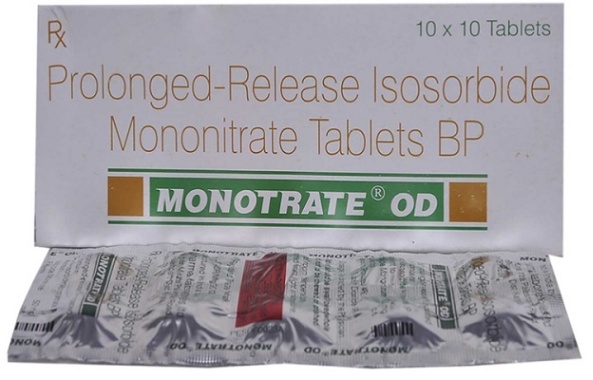
Price: Rs.168.00
13% off
In stock
Loose stock: 0
Description
MONOTRATE OD 50MG TAB 10
Details
Composition
ISOSORBIDE MONONITRATE 50 MG
# ISOSORBIDE MONONITRATE 50 MG
## Short Description
**Isosorbide Mononitrate 50 mg** is a **nitrate medicine** used primarily to help prevent **angina (chest pain) caused by coronary artery disease**. It works by relaxing and widening blood vessels, which reduces the workload on the heart and decreases its demand for oxygen.
Isosorbide mononitrate is generally used for **prevention of angina attacks** and is **not intended to provide immediate relief during an acute angina attack**.
> **Important:** The exact dosing schedule depends on whether the 50 mg product is an immediate-release or modified/extended-release formulation. Always follow the specific product label and prescription.
---
## Key Benefits
* Helps **prevent angina (chest pain)** associated with coronary artery disease.
* Relaxes and widens blood vessels.
* Reduces the amount of work required by the heart.
* Decreases the heart's oxygen demand.
* Can improve exercise tolerance in patients with chronic stable angina.
* Helps reduce the frequency of angina episodes when used regularly as prescribed.
---
## Uses / Indications
### Prevention of Angina
Isosorbide mononitrate is primarily used for the **prevention of angina pectoris**, especially in patients with coronary artery disease.
It may help reduce:
* Chest discomfort
* Chest pressure
* Exercise-induced angina
* Angina associated with physical exertion
### Important Limitation
Isosorbide mononitrate is **not a rescue medicine for an acute angina attack** because it does not act quickly enough for immediate relief.
Patients with prescribed acute angina treatment should keep their **short-acting nitrate**, such as sublingual nitroglycerin, available as directed.
---
## How It Works
Isosorbide mononitrate is converted to **nitric oxide (NO)** in the body.
Nitric oxide activates **soluble guanylate cyclase**, increasing cyclic GMP in vascular smooth muscle.
This causes the blood vessels to relax.
The major effect is **venodilation**, which:
* Reduces venous return to the heart.
* Decreases the amount of blood filling the heart.
* Reduces cardiac workload.
* Lowers myocardial oxygen demand.
At higher concentrations, nitrates can also dilate arteries and coronary vessels.
Overall, this helps prevent the chest pain associated with insufficient oxygen supply to the heart muscle.
---
## Dosage & Administration
**Take Isosorbide Mononitrate 50 mg exactly as prescribed.**
The appropriate regimen depends on the formulation.
### General Administration
* Take the medicine at the prescribed time each day.
* Swallow tablets with water.
* Do not crush, chew, or split a modified-release tablet unless the product instructions specifically allow it.
* Follow the manufacturer's instructions regarding food.
* Take it consistently to maintain the intended anti-anginal effect.
### Nitrate-Free Interval
With regular nitrate treatment, a daily **nitrate-free interval** is often incorporated into the dosing schedule to reduce the development of **tolerance**.
The exact timing depends on the formulation and prescribed regimen.
**Do not create or change the nitrate-free interval yourself.** Follow your doctor's instructions.
### Missed Dose
If you miss a dose:
* Take it when remembered unless it is nearly time for the next dose.
* Skip the missed dose if it is close to the next scheduled dose.
* **Do not take two doses together.**
### Acute Chest Pain
Do **not** rely on isosorbide mononitrate 50 mg for rapid relief of sudden chest pain.
If you develop sudden or severe chest pain, follow your prescribed emergency/angina action plan and seek urgent medical attention when appropriate.
---
## Side Effects
### Common Side Effects
The most common adverse effect is **headache**.
Other possible effects include:
* Dizziness
* Lightheadedness
* Weakness
* Flushing
* Nausea
* Vomiting
* Low blood pressure
* Increased heart rate
* Fainting
### Headache
Nitrate-related headaches are common, especially when treatment is started or the dose is increased.
They may become less troublesome as the body adjusts.
Do not stop the medicine without consulting your doctor simply because of headaches.
### Serious Side Effects
Seek medical attention if you experience:
* Severe dizziness or fainting
* Very low blood pressure
* Persistent rapid heartbeat
* Worsening chest pain
* Severe allergic reaction
* Difficulty breathing
### Methemoglobinemia
Rarely, excessive nitrate exposure can cause **methemoglobinemia**, which reduces the blood's ability to carry oxygen.
Possible symptoms include:
* Blue or gray discoloration of the lips/skin
* Shortness of breath
* Unusual fatigue
* Rapid heartbeat
* Confusion
This requires urgent medical attention.
---
## Precautions & Warnings
* **Never combine isosorbide mononitrate with PDE-5 inhibitors** such as sildenafil, tadalafil, or vardenafil.
* Do not use it with **riociguat**.
* It can cause dizziness or low blood pressure, especially when treatment begins.
* Rise slowly from sitting or lying down.
* Avoid driving or operating machinery if you feel dizzy or lightheaded.
* Tell your doctor if you have low blood pressure.
* Tell your doctor if you have severe anemia.
* Inform your doctor if you have glaucoma.
* Tell your doctor about any recent head injury or increased intracranial pressure.
* Use caution in patients with conditions where reduced blood pressure could be dangerous.
* Alcohol may increase blood-pressure-lowering effects and dizziness.
* Do not stop treatment without medical advice.
### Tolerance
Continuous exposure to nitrates can result in **nitrate tolerance**, reducing their effectiveness.
Your doctor may therefore prescribe a schedule that includes a nitrate-free period.
### Chest Pain Warning
If chest pain is **new, severe, occurs at rest, lasts longer than usual, or is accompanied by sweating, nausea, shortness of breath, or pain spreading to the arm, jaw, shoulder, or back**, seek emergency medical attention.
---
## Drug Interactions
### PDE-5 Inhibitors — Contraindicated
Do **not** use isosorbide mononitrate with:
* Sildenafil
* Tadalafil
* Vardenafil
* Avanafil
These medicines can cause a **dangerous and potentially life-threatening drop in blood pressure** when combined with nitrates.
### Riociguat
Do not combine isosorbide mononitrate with **riociguat**, as significant hypotension may occur.
### Other Blood-Pressure-Lowering Medicines
Combining isosorbide mononitrate with medicines that lower blood pressure may increase:
* Dizziness
* Fainting
* Hypotension
Examples include:
* ACE inhibitors
* ARBs
* Beta-blockers
* Calcium-channel blockers
* Diuretics
These combinations may sometimes be clinically appropriate but require medical supervision.
### Alcohol
Alcohol can enhance the blood-pressure-lowering effects of nitrates and may increase:
* Dizziness
* Fainting
* Weakness
Avoid or limit alcohol according to your doctor's advice.
### Other Nitrates
Taking multiple nitrate medicines may increase the risk of excessive hypotension and nitrate-related adverse effects.
---
## Storage Information
* Store at **room temperature according to the manufacturer's instructions**.
* Keep tablets in their original packaging.
* Protect from excessive heat, moisture, and direct sunlight.
* Keep the container tightly closed.
* Keep out of reach of children.
* Do not use after the expiry date.
* Do not use tablets if the packaging is damaged or the medicine appears abnormal.
---
## Prescription Status
**Isosorbide Mononitrate 50 mg is generally a prescription medicine.**
It should be used under medical supervision because treatment requires appropriate diagnosis of chest pain and consideration of blood pressure, heart disease, other medicines, and nitrate tolerance.
Prescription requirements may vary by country.
---
## Genuine Medicine Assurance
When purchasing **Isosorbide Mononitrate 50 mg**, ensure that you:
* Purchase from a **licensed pharmacy or authorized medicine supplier**.
* Verify the generic name and strength.
* Confirm whether the product is **immediate-release or modified/extended-release**.
* Check the manufacturer's name.
* Verify the batch/lot number and expiry date.
* Ensure the packaging and security seal are intact.
* Check that the tablet appearance matches the manufacturer's product information.
* Avoid products with suspicious packaging or unusually low prices.
* Do not purchase prescription medicines from unauthorized sellers.
For authenticity assurance, compare the packaging and product details with the manufacturer's official documentation or the relevant national medicines regulatory authority.
---
# FAQ
### 1. What is Isosorbide Mononitrate 50 mg used for?
It is primarily used to **prevent angina (chest pain) associated with coronary artery disease**.
### 2. Is Isosorbide Mononitrate a nitrate?
Yes. It belongs to the **organic nitrate** class of medicines.
### 3. How does Isosorbide Mononitrate work?
It releases nitric-oxide-related activity that relaxes blood vessels, reducing the heart's workload and oxygen demand.
### 4. Can Isosorbide Mononitrate stop an angina attack immediately?
**No.** It is primarily a preventive medicine. It is not intended for rapid relief of an acute angina attack.
### 5. Why does Isosorbide Mononitrate cause headaches?
Nitrates widen blood vessels, including blood vessels in the head, which can cause headaches. This is a common effect, particularly when treatment begins.
### 6. Can I take sildenafil with Isosorbide Mononitrate?
**No.** Sildenafil and other PDE-5 inhibitors can cause a dangerous drop in blood pressure when combined with nitrate medicines.
### 7. Can I take tadalafil with Isosorbide Mononitrate?
**No.** Tadalafil must not be combined with nitrate medicines because of the risk of severe hypotension.
### 8. Can I drink alcohol while taking Isosorbide Mononitrate?
Alcohol may increase the blood-pressure-lowering effects of the medicine and increase dizziness or fainting. It is generally advisable to avoid or limit alcohol.
### 9. Can Isosorbide Mononitrate lower blood pressure?
Yes. Blood-pressure reduction is one of its pharmacological effects, although it is primarily prescribed for **angina prevention**.
### 10. What is nitrate tolerance?
Nitrate tolerance occurs when the body becomes less responsive to nitrate medicines after continuous exposure. A prescribed **nitrate-free interval** can help reduce this problem.
### 11. Why is a nitrate-free interval needed?
It allows the body to maintain sensitivity to nitrate treatment and helps reduce the development of tolerance.
### 12. Can I stop Isosorbide Mononitrate suddenly?
Do not stop it without medical advice. Stopping anti-anginal treatment may lead to worsening or recurrence of angina.
### 13. Can Isosorbide Mononitrate cause dizziness?
Yes. Dizziness and lightheadedness can occur because the medicine can lower blood pressure.
### 14. Can I drive while taking Isosorbide Mononitrate?
Avoid driving or operating machinery if you experience dizziness, blurred vision, weakness, or lightheadedness.
### 15. Can Isosorbide Mononitrate be used during pregnancy?
Tell your doctor if you are pregnant or planning pregnancy. Your healthcare professional will determine whether the potential benefits outweigh the risks.
### 16. Can Isosorbide Mononitrate be used while breastfeeding?
Consult your healthcare professional before using it while breastfeeding so that the benefits and potential risks can be assessed.
### 17. What should I do if I miss a dose?
Take it when remembered unless it is close to your next scheduled dose. Skip the missed dose if necessary and **do not double the next dose**.
### 18. What happens if I take too much Isosorbide Mononitrate?
An overdose can cause severe hypotension, dizziness, fainting, rapid heartbeat, and potentially serious complications. Seek urgent medical attention if an overdose is suspected.
### 19. Is Isosorbide Mononitrate the same as Nitroglycerin?
No. Both are nitrate medicines, but they have different formulations and uses. **Isosorbide mononitrate is commonly used for prevention**, whereas short-acting nitroglycerin is commonly used for rapid relief of acute angina.
### 20. What should I do if my chest pain becomes worse while taking Isosorbide Mononitrate?
Do not ignore worsening or new chest pain. Follow your prescribed emergency plan and seek urgent medical attention, particularly if the pain is severe, occurs at rest, lasts longer than usual, or is associated with shortness of breath, sweating, nausea, or pain radiating to the arm or jaw.
---
## Medical Disclaimer
This information is provided for **educational and informational purposes only** and is not a substitute for professional medical advice, diagnosis, or treatment.
**Isosorbide Mononitrate 50 mg is a prescription nitrate medicine primarily used to prevent angina. It is not intended to provide immediate relief of an acute angina attack.** Patients with coronary artery disease should follow their healthcare professional's individual treatment and emergency plan.
**Never combine isosorbide mononitrate with sildenafil, tadalafil, vardenafil, avanafil, or other PDE-5 inhibitors, or with riociguat**, because the combination can cause a potentially life-threatening fall in blood pressure.
Because 50 mg products may have different release characteristics, including modified-release formulations, **dosage and administration must be based on the exact product prescribed**. Nitrate tolerance and the appropriate nitrate-free interval should be managed by a healthcare professional.
Seek urgent medical attention for new, severe, prolonged, or worsening chest pain or symptoms suggestive of a heart attack.
Always follow the **specific manufacturer's package insert and your healthcare professional's instructions**, as approved indications, dosage recommendations, contraindications, warnings, formulation, and prescription requirements may vary between products and countries.