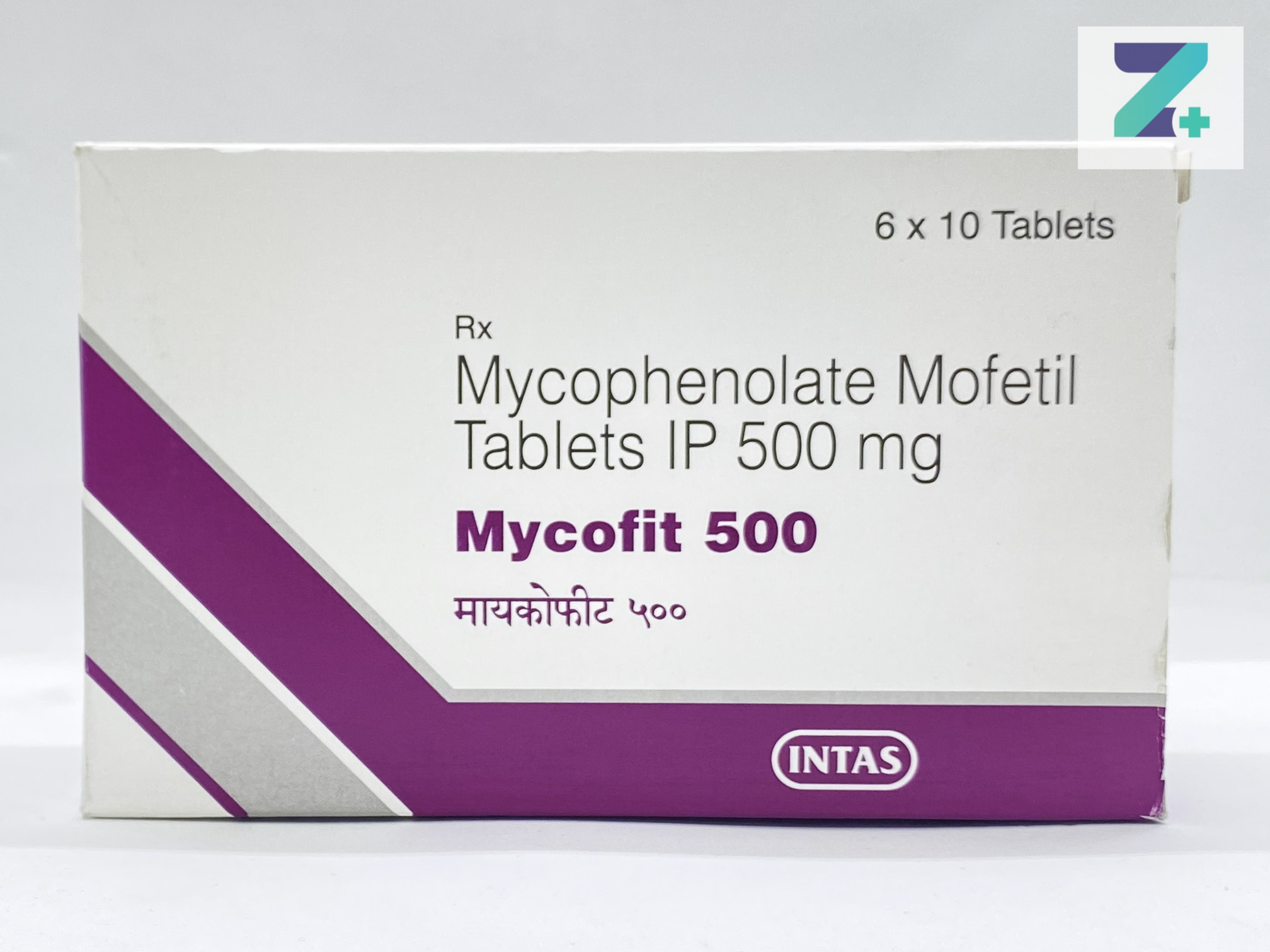
MYCOFIT 500
Price: Rs.659.20
10% off
In stock
Loose stock: 0
Description
MYCOFIT 500 TAB 10
Details
Composition
MYCOPHENOLATE 500 MG
# Mycophenolate 500 mg
## Short Description
**Mycophenolate 500 mg** is an **immunosuppressant medicine** used primarily to help prevent rejection of transplanted organs, especially **kidney, heart, or liver transplants**. It is commonly used in combination with other immunosuppressive medicines.
Mycophenolate reduces the activity of certain immune cells, helping prevent the body's immune system from attacking and rejecting a transplanted organ.
> **Important:** Mycophenolate is a high-risk prescription medicine that requires regular medical monitoring. It can increase susceptibility to infections and has important pregnancy-related risks.
---
## Key Benefits
* Helps **prevent organ transplant rejection**
* Suppresses excessive immune-system activity
* Helps protect a transplanted **kidney, heart, or liver**
* Can be used as part of a combination immunosuppressive regimen
* Helps maintain long-term transplant function when used as prescribed
---
## Uses / Indications
Mycophenolate 500 mg is primarily used for:
* **Prevention of kidney transplant rejection**
* **Prevention of heart transplant rejection**
* **Prevention of liver transplant rejection**
It may also be prescribed by specialists for certain **autoimmune or immune-mediated conditions** when clinically appropriate, although such uses may be outside the approved indication depending on the country and specific formulation.
Mycophenolate is generally used together with other medicines such as a corticosteroid and a calcineurin inhibitor.
---
## How It Works
Mycophenolate is an **immunosuppressant**. It is converted to its active form, mycophenolic acid, which inhibits an enzyme called **inosine monophosphate dehydrogenase (IMPDH)**.
This reduces the ability of certain immune cells, particularly **T and B lymphocytes**, to multiply.
As a result, the immune response against a transplanted organ is reduced, helping lower the risk of **organ rejection**.
---
## Dosage & Administration
> **Important:** The correct dose depends on the transplant type, formulation, other immunosuppressants being used, kidney/liver function, and individual medical circumstances. **Do not change the dose yourself.**
### General Administration
* Take Mycophenolate exactly as prescribed by your transplant specialist.
* Take it at the same times each day to maintain consistent medicine levels.
* Swallow tablets whole with water.
* **Do not crush, chew, or break** tablets unless your healthcare professional specifically instructs you to do so.
* Take it consistently with respect to food; follow the instructions provided for your particular product.
* Do not stop treatment without medical advice, even if you feel well.
### Missed Dose
If you forget a dose, contact your transplant team or follow the missed-dose instructions provided with your prescription. **Do not take a double dose** unless specifically instructed by your healthcare professional.
### Monitoring
Long-term treatment generally requires regular monitoring, which may include:
* Complete blood counts
* Kidney function
* Liver function
* Signs of infection
* Other tests determined by your transplant specialist
---
## Side Effects
### Common Side Effects
Possible side effects include:
* Diarrhea
* Nausea
* Vomiting
* Abdominal discomfort
* Headache
* Dizziness
* Fatigue
* Swelling
* Increased susceptibility to infections
### Serious Side Effects
Mycophenolate can cause serious adverse effects. Seek medical attention if you develop:
* Fever or persistent infection symptoms
* Unexplained bruising or bleeding
* Severe weakness or unusual tiredness
* Difficulty breathing
* Persistent cough
* Severe diarrhea or abdominal pain
* Blood in the stool
* Unusual skin lesions or rapidly changing skin growths
Mycophenolate can cause **low blood-cell counts**, increasing the risk of infections, anemia, and bleeding.
Long-term immunosuppression can also increase the risk of certain **malignancies, particularly skin cancers and lymphomas**.
---
## Precautions & Warnings
### Infection Risk
Because mycophenolate suppresses the immune system, you may be more susceptible to:
* Bacterial infections
* Viral infections
* Fungal infections
* Opportunistic infections
Contact your healthcare professional promptly if you develop fever, persistent cough, painful urination, unusual weakness, or other signs of infection.
### Pregnancy Warning
**Mycophenolate can cause serious harm to an unborn baby and is associated with an increased risk of miscarriage and congenital abnormalities.**
Women who can become pregnant generally require appropriate pregnancy-prevention measures before, during, and for an appropriate period after treatment as directed by their healthcare professional.
If pregnancy occurs while taking mycophenolate, **contact your doctor immediately**. Do not stop the medicine on your own because stopping immunosuppression can put a transplanted organ at risk.
### Other Important Precautions
Tell your healthcare professional if you have:
* A history of recurrent infections
* Blood disorders or low blood-cell counts
* Kidney or liver problems
* A history of gastrointestinal disease
* A history of cancer or skin cancer
* Phenylketonuria (depending on the formulation)
* Any planned vaccination
Avoid unnecessary exposure to people with serious contagious infections and use appropriate sun protection because immunosuppressive treatment can increase skin-cancer risk.
---
## Drug Interactions
Mycophenolate has several clinically important interactions.
Tell your doctor about **all medicines, supplements, and herbal products** you use.
Potential interactions include:
* **Antacids containing magnesium or aluminum** — may reduce absorption.
* **Proton-pump inhibitors (PPIs)** — may affect mycophenolate exposure depending on the formulation.
* **Cholestyramine and other bile-acid sequestrants** — may reduce absorption.
* **Certain antibiotics** — may alter mycophenolate exposure.
* **Other immunosuppressants** — may increase the risk of infection or blood-cell abnormalities.
* **Live vaccines** — may be less effective or potentially unsafe during significant immunosuppression.
* **Sevelamer and phosphate binders** — may reduce absorption when taken together.
### Important
Do not start or stop any medicine, including OTC medicines or supplements, without discussing it with your transplant or prescribing team.
---
## Storage Information
* Store Mycophenolate 500 mg according to the temperature requirements stated on the product label.
* Keep the medicine in its original packaging.
* Protect it from excessive heat, moisture, and direct sunlight.
* Keep the container tightly closed.
* Keep out of reach and sight of children.
* Do not use after the expiry date.
* Dispose of unused medicine according to local pharmaceutical disposal recommendations.
---
## Prescription Status
**Mycophenolate 500 mg is a prescription-only immunosuppressant medicine.**
It should be used under the supervision of a **transplant specialist or other qualified healthcare professional**. Regular blood tests and medical follow-up are usually required.
**Do not stop, restart, or change the dose without medical advice**, especially after an organ transplant.
---
## Genuine Medicine Assurance
When purchasing Mycophenolate 500 mg:
* Purchase only from a **licensed and reputable pharmacy or authorized medicine supplier**.
* Check that the packaging is intact and properly sealed.
* Verify the **medicine name, strength, batch number, manufacturing details, and expiry date**.
* Ensure the product matches your prescription and formulation.
* Do not use medicine from damaged, opened, or suspicious packaging.
* Do not substitute one mycophenolate formulation for another without medical guidance.
* If you suspect that the medicine is counterfeit, contact a pharmacist or the manufacturer using the information printed on the original packaging.
For transplant medicines, maintaining a **consistent product and dosing schedule** is particularly important. Discuss any proposed substitution with your transplant team.
---
# FAQ – Mycophenolate 500 mg
### 1. What is Mycophenolate 500 mg used for?
Mycophenolate 500 mg is an immunosuppressant primarily used to **prevent rejection of transplanted organs**, particularly kidney, heart, and liver transplants.
### 2. Is Mycophenolate an immunosuppressant?
Yes. Mycophenolate suppresses certain immune-system cells, reducing the body's immune response against a transplanted organ.
### 3. How does Mycophenolate prevent organ rejection?
It inhibits an enzyme needed for the multiplication of certain T and B lymphocytes. By reducing the growth of these immune cells, mycophenolate decreases the immune response that can attack a transplanted organ.
### 4. What is Mycophenolate 500 mg commonly taken with?
It is commonly used as part of a **combination immunosuppressive regimen**, which may include a corticosteroid and a calcineurin inhibitor such as tacrolimus or ciclosporin.
### 5. Can I stop Mycophenolate if I feel well?
**No.** Feeling well does not mean that the risk of organ rejection has disappeared. Stopping mycophenolate without medical supervision can increase the risk of transplant rejection.
### 6. What happens if I miss a dose of Mycophenolate?
Follow the missed-dose instructions provided by your transplant team. Do not take an extra dose to compensate unless your healthcare professional specifically tells you to do so.
### 7. Does Mycophenolate weaken the immune system?
Yes. It intentionally suppresses immune-system activity. This helps prevent organ rejection but also increases susceptibility to infections.
### 8. Can Mycophenolate cause infections?
Yes. Because it suppresses the immune system, it can increase the risk of bacterial, viral, fungal, and other opportunistic infections. Report signs of infection promptly.
### 9. Can Mycophenolate cause diarrhea?
Yes. **Diarrhea is one of the common gastrointestinal side effects** of mycophenolate. Persistent or severe diarrhea should be reported to your healthcare professional because it can lead to dehydration and may require evaluation or adjustment of treatment.
### 10. Can Mycophenolate cause low blood counts?
Yes. Mycophenolate can reduce blood-cell counts, including white blood cells, red blood cells, and platelets. Regular blood tests are therefore important during treatment.
### 11. Is Mycophenolate safe during pregnancy?
**Mycophenolate can cause serious fetal harm and increase the risk of miscarriage.** Women who can become pregnant should discuss effective pregnancy prevention with their healthcare professional before starting treatment.
### 12. Can men taking Mycophenolate father a child?
Pregnancy planning while taking mycophenolate should be discussed with a healthcare professional. Current product-specific recommendations regarding contraception and family planning should be followed carefully.
### 13. Can I receive vaccines while taking Mycophenolate?
Some vaccines may be less effective during immunosuppressive treatment, and **live vaccines may not be appropriate**. Always consult your healthcare professional before receiving a vaccine.
### 14. Can I take antacids with Mycophenolate 500 mg?
Some antacids, particularly those containing **magnesium or aluminum**, can affect mycophenolate absorption. Ask your pharmacist or doctor how to separate these medicines or whether an alternative is appropriate.
### 15. Can Mycophenolate cause cancer?
Long-term immunosuppression can increase the risk of certain cancers, including **skin cancers and lymphomas**. Use sun protection and attend recommended medical follow-ups.
### 16. Can I take Mycophenolate with food?
The effect of food can depend on the specific mycophenolate formulation. Follow the instructions supplied with your product and take it consistently according to your transplant team's advice.
### 17. What should I do if I become pregnant while taking Mycophenolate?
Contact your healthcare professional or transplant team **immediately**. Do not stop the medicine on your own, because sudden interruption of immunosuppressive therapy may increase the risk of organ rejection.
### 18. How long do I need to take Mycophenolate after a transplant?
Many transplant recipients require long-term immunosuppressive treatment, but the exact duration varies. Your transplant specialist will determine the appropriate treatment plan.
### 19. Can I switch between different Mycophenolate products?
Do not switch between formulations or manufacturers without discussing it with your healthcare professional. Different mycophenolate formulations may have different absorption characteristics and dosing instructions.
### 20. What monitoring is required while taking Mycophenolate?
Your healthcare team may regularly monitor **blood-cell counts, kidney function, liver function, infection status, and other parameters** based on your medical condition and transplant regimen.
---
## Medical Disclaimer
This information is provided for **educational and informational purposes only** and is not a substitute for professional medical advice, diagnosis, or treatment.
Mycophenolate 500 mg is a **potent prescription immunosuppressant** that requires specialist supervision and regular monitoring. The appropriate dose and formulation depend on the patient's transplant status, other immunosuppressive medicines, organ function, and individual medical circumstances.
**Do not stop or change mycophenolate treatment without consulting your transplant specialist.** Seek medical attention for signs of serious infection, unusual bleeding, severe gastrointestinal symptoms, or suspected pregnancy.
Always read the package insert supplied with your specific product and follow the instructions of your healthcare professional.