NEMOX-250-DT
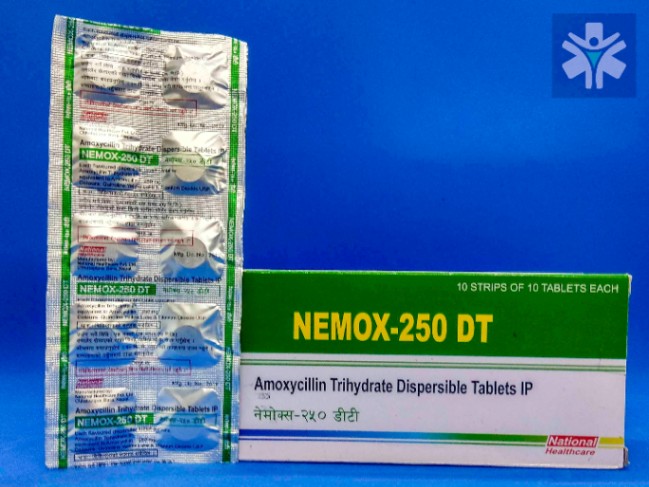
Price: Rs.50.00
10% off
In stock
Loose stock: 0
Description
NEMOX-250-DT TAB 10
Details
Composition
AMOXICILLIN 250 MG
# Amoxicillin 250 mg
## Short Description
**Amoxicillin 250 mg** is a **penicillin-type antibiotic** used to treat a variety of bacterial infections. It works by interfering with the formation of the bacterial cell wall, causing susceptible bacteria to die.
Amoxicillin may be prescribed for infections of the **ears, nose, throat, respiratory tract, urinary tract, skin, and other areas**, depending on the bacteria involved. It is also used in specific combination regimens for **Helicobacter pylori (H. pylori)** infection.
> **Important:** Amoxicillin treats **bacterial infections**, not viral infections such as the common cold or influenza. Use antibiotics only when prescribed or recommended by a qualified healthcare professional.
---
# Key Benefits
* Effective against a range of **susceptible bacterial infections**.
* Can be used to treat infections affecting the **respiratory tract, ears, nose, throat, urinary tract, and skin**.
* May be included in combination therapy for **H. pylori eradication**.
* Available in a **250 mg strength**, which may be useful for certain patients and pediatric dosing regimens.
* Penicillin-type antibiotic with well-established clinical use.
---
# Uses / Indications
Amoxicillin may be prescribed for susceptible bacterial infections such as:
### Respiratory & ENT Infections
* Bacterial throat infections
* Tonsillitis
* Sinusitis
* Otitis media (middle-ear infection)
* Certain lower respiratory tract infections
### Urinary Tract Infections
May be used for certain urinary tract infections caused by susceptible bacteria.
### Skin & Soft-Tissue Infections
May be prescribed for selected bacterial infections of the skin and soft tissues.
### Dental Infections
Amoxicillin may be prescribed for certain dental infections when bacterial infection is present and the medicine is appropriate.
### H. pylori Infection
Amoxicillin is commonly used as part of **combination therapy** with other medicines to eradicate *H. pylori*, a bacterium associated with peptic ulcer disease.
### Other Infections
It may be used for other susceptible bacterial infections when determined appropriate by a healthcare professional.
> The choice of antibiotic should depend on the suspected or confirmed bacteria, infection site, local resistance patterns, and individual patient factors.
---
# How It Works
Amoxicillin is a **beta-lactam antibiotic belonging to the penicillin family**.
It interferes with bacterial cell-wall synthesis by binding to **penicillin-binding proteins (PBPs)** involved in constructing and maintaining the bacterial cell wall.
This weakens the bacterial cell wall and can cause susceptible bacteria to rupture and die.
Because human cells do not have bacterial-type cell walls, amoxicillin can selectively target bacteria.
---
# Dosage & Administration
**Take Amoxicillin 250 mg exactly as prescribed by your doctor.**
The appropriate dose depends on:
* Type and severity of infection
* Age and body weight
* Kidney function
* Susceptibility of the bacteria
* Other medicines being taken
### General Administration
* Amoxicillin may generally be taken **with or without food**.
* Take doses at evenly spaced intervals.
* Swallow capsules/tablets with water.
* Complete the **prescribed course**, even if you begin to feel better.
* Do not share antibiotics with another person.
* Do not use leftover antibiotics for a future illness.
### Children
Pediatric doses are generally calculated according to **body weight and the type/severity of infection**. Do not give a child amoxicillin based solely on the adult dose.
### Kidney Impairment
Patients with reduced kidney function may require **dose adjustment or changes in dosing intervals**.
### Missed Dose
Take the missed dose when remembered unless it is almost time for the next dose.
**Do not take two doses together** to compensate for a missed dose.
---
# Side Effects
Most people tolerate amoxicillin well, but side effects can occur.
### Common Side Effects
* Nausea
* Vomiting
* Diarrhea
* Stomach discomfort
* Mild skin rash
* Headache
### Serious Side Effects
Seek medical attention if you develop:
* Severe or persistent diarrhea
* Bloody or watery stools
* Severe skin rash
* Blistering or peeling skin
* Swelling of the face, lips, tongue, or throat
* Difficulty breathing or swallowing
* Severe dizziness or fainting
### Allergic Reactions
Amoxicillin can cause serious allergic reactions, particularly in people with a history of allergy to **penicillins or other beta-lactam antibiotics**.
Anaphylaxis is a medical emergency.
---
# Precautions & Warnings
### 1. Penicillin Allergy
Do not take amoxicillin if you have previously experienced a serious allergic reaction to:
* Amoxicillin
* Penicillin antibiotics
* Certain other beta-lactam antibiotics
Tell your doctor about any previous antibiotic allergy before treatment.
### 2. Severe Diarrhea
Antibiotics can sometimes cause **Clostridioides difficile-associated diarrhea**, which may occur during treatment or even after the antibiotic has been completed.
Seek medical advice if you develop severe, persistent, or bloody diarrhea.
### 3. Kidney Disease
Tell your doctor if you have kidney disease because the dose may need adjustment.
### 4. Infectious Mononucleosis
Patients with **infectious mononucleosis (glandular fever)** have a higher risk of developing a widespread rash when treated with amoxicillin.
### 5. Liver Problems
Although uncommon, liver-related adverse effects can occur. Tell your healthcare professional if you have a history of liver disease.
### 6. Pregnancy and Breastfeeding
Tell your doctor if you are pregnant, planning pregnancy, or breastfeeding. Amoxicillin is commonly used when clinically indicated, but treatment should still be determined by a healthcare professional.
### 7. Antibiotic Resistance
Using antibiotics unnecessarily or incorrectly contributes to **antibiotic resistance**. Do not use amoxicillin for viral infections such as colds or influenza.
---
# Drug Interactions
Tell your doctor or pharmacist about all prescription medicines, OTC medicines, vitamins, and herbal supplements you take.
Important interactions may include:
### Warfarin and Other Anticoagulants
Amoxicillin may occasionally affect anticoagulation control in people taking **warfarin or similar medicines**. Additional monitoring may be required.
### Methotrexate
Amoxicillin may reduce the clearance of **methotrexate**, potentially increasing methotrexate toxicity.
### Allopurinol
Taking amoxicillin with **allopurinol** may increase the likelihood of skin rash in some patients.
### Probenecid
Probenecid can reduce renal elimination of amoxicillin and may increase amoxicillin concentrations.
### Other Antibiotics
Tell your doctor about other antibiotics you are taking. Combining antibiotics is not always beneficial and should be done only when clinically indicated.
---
# Storage Information
* Store according to the **manufacturer's instructions**.
* Keep tablets/capsules in their original packaging.
* Protect from excessive heat, moisture, and direct sunlight.
* Keep the container tightly closed.
* Keep out of reach of children.
* Do not use after the expiry date.
* Do not use tablets/capsules if the packaging is damaged.
### If Using Amoxicillin Suspension
If the prescribed product is a powder that has been mixed into an oral suspension, follow the **specific manufacturer's storage instructions**, including whether refrigeration is recommended and how long the prepared suspension remains usable.
Do not use a reconstituted suspension beyond the labeled in-use period.
---
# Prescription Status
**Amoxicillin 250 mg is generally a prescription antibiotic.**
It should be used only when prescribed or recommended by an appropriately qualified healthcare professional.
Prescription requirements may vary between countries. For Nepal, dispensing should follow applicable local medicine regulations.
---
# Genuine Medicine Assurance
When purchasing **Amoxicillin 250 mg**, ensure that:
* You purchase it from a **licensed pharmacy or authorized medicine supplier**.
* The packaging is sealed and undamaged.
* The manufacturer's name and product information are clearly printed.
* The **batch/lot number, manufacturing date, and expiry date** are readable.
* The strength is clearly stated as **250 mg**.
* Capsules/tablets appear intact and normal.
* You retain the pharmacy invoice or receipt where possible.
* Avoid purchasing antibiotics from unauthorized sellers.
* Where available, verify the product through the manufacturer's or relevant medicines regulatory authority's authentication system.
---
# FAQ – Amoxicillin 250 mg
### 1. What is Amoxicillin 250 mg used for?
Amoxicillin 250 mg is an antibiotic used to treat **susceptible bacterial infections**, including certain respiratory, ear, throat, urinary tract, skin, and dental infections. It is also used in combination regimens for *H. pylori* infection.
### 2. Is Amoxicillin an antibiotic?
Yes. Amoxicillin is a **penicillin-type beta-lactam antibiotic**.
### 3. Does Amoxicillin treat viral infections?
**No.** Amoxicillin does not treat viruses that cause illnesses such as the common cold or influenza.
### 4. How does Amoxicillin work?
It blocks bacterial **cell-wall synthesis**, weakening the cell wall and causing susceptible bacteria to die.
### 5. What is Amoxicillin 250 mg commonly prescribed for?
Depending on the diagnosis, it may be prescribed for susceptible infections involving the **ears, throat, sinuses, respiratory tract, urinary tract, skin, and teeth**.
### 6. Can Amoxicillin be taken with food?
Yes. Amoxicillin can generally be taken **with or without food**. If it causes stomach discomfort, taking it with food may be helpful unless your doctor gives different instructions.
### 7. How long should I take Amoxicillin?
Take it for the **exact duration prescribed** by your healthcare professional. Do not stop early simply because symptoms have improved unless your prescriber tells you to do so.
### 8. What happens if I miss an Amoxicillin dose?
Take the missed dose when you remember unless it is nearly time for your next dose. **Do not double the next dose.**
### 9. Can Amoxicillin cause diarrhea?
Yes. **Diarrhea is a common antibiotic-related side effect.** Severe, persistent, or bloody diarrhea requires medical evaluation because it can sometimes indicate a more serious antibiotic-associated infection.
### 10. Can Amoxicillin cause an allergic reaction?
Yes. People allergic to penicillin antibiotics may experience reactions ranging from rash to potentially life-threatening **anaphylaxis**.
Seek emergency medical attention for facial or throat swelling, difficulty breathing, or severe dizziness.
### 11. Can I take Amoxicillin if I am allergic to penicillin?
If you have a known penicillin allergy, tell your doctor before taking amoxicillin. People with a history of serious penicillin allergy generally should **not take amoxicillin** unless specifically evaluated and advised by a specialist.
### 12. Can Amoxicillin be used during pregnancy?
Amoxicillin is commonly used during pregnancy when clinically appropriate. However, pregnant patients should take it only after discussing the need for treatment with their healthcare professional.
### 13. Can I drink alcohol while taking Amoxicillin?
Alcohol does not have a major direct interaction with amoxicillin for most people. However, alcohol may worsen symptoms such as nausea, dizziness, or stomach upset while you are ill. Follow your healthcare professional's advice.
### 14. Can Amoxicillin treat a tooth infection?
Amoxicillin may be prescribed for certain **bacterial dental infections**, but dental infections often require dental treatment in addition to antibiotics.
### 15. Can Amoxicillin treat a sore throat?
It can treat certain **bacterial throat infections**, such as susceptible streptococcal infections. Most sore throats are viral and do not require antibiotics.
### 16. Can I use leftover Amoxicillin for another infection?
**No.** Do not use leftover antibiotics for a new illness. Different infections may require different treatments, and inappropriate antibiotic use contributes to resistance.
### 17. Can Amoxicillin cause a rash?
Yes. A rash can occur as a side effect or as a sign of an allergic reaction. Patients with infectious mononucleosis are particularly likely to develop a rash when given amoxicillin.
### 18. Does Amoxicillin affect birth-control pills?
The evidence does not generally show that amoxicillin reduces the effectiveness of hormonal contraception. However, vomiting or severe diarrhea can interfere with absorption of oral contraceptives. Follow the contraceptive product's instructions and ask a pharmacist or doctor if you are concerned.
### 19. Can children take Amoxicillin 250 mg?
Children can be prescribed amoxicillin, but the dose is usually determined according to **body weight, age, infection type, and kidney function**. Do not give a child an adult dose without medical advice.
### 20. What should I do if I develop severe diarrhea while taking Amoxicillin?
Contact a healthcare professional, particularly if diarrhea is **severe, persistent, watery, or bloody**. Do not automatically treat severe antibiotic-associated diarrhea with anti-diarrheal medicines without medical advice.
---
# Medical Disclaimer
**This information is provided for educational and informational purposes only and is not a substitute for professional medical advice, diagnosis, or treatment.**
Amoxicillin 250 mg should be used only according to the instructions of a qualified healthcare professional and the specific product label. The appropriate dose and treatment duration depend on the type and severity of infection, age, body weight, kidney function, bacterial susceptibility, and other individual factors.
**Do not use amoxicillin for viral infections or share antibiotics with others.** Unnecessary or inappropriate antibiotic use contributes to antimicrobial resistance.
If you develop difficulty breathing, swelling of the face or throat, severe skin reactions, fainting, or other symptoms of a serious allergic reaction, seek **urgent medical attention**.