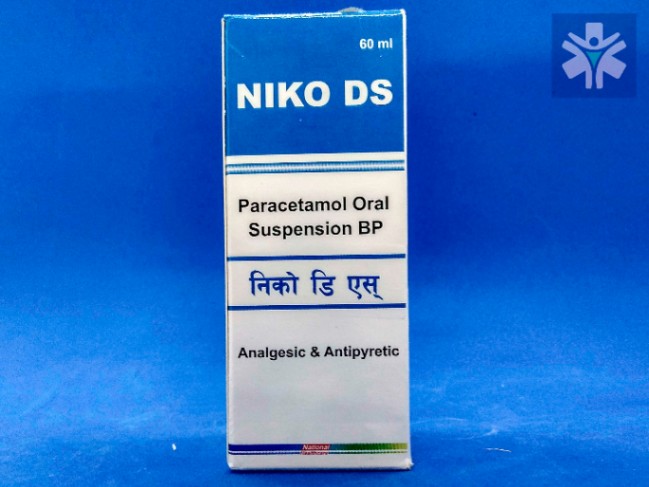
NIKO DS
Price: Rs.55.00
10% off
In stock
Loose stock: 0
Description
NIKO DS SYR 60ML
Details
Composition
PARACETAMOL 250 MG
# Paracetamol 250 mg
## SHORT DESCRIPTION
Paracetamol 250 mg is a commonly used **pain-relieving and fever-reducing medicine**. It helps relieve mild to moderate pain and reduce fever. It is commonly available in formulations for children, but the appropriate dose depends on the child's **age, weight, formulation and medical condition**.
Paracetamol is also known as **acetaminophen**.
## KEY BENEFITS
* Helps reduce **fever**
* Relieves mild to moderate pain
* May help with headache and body aches
* Can help relieve pain associated with colds and flu
* Useful for toothache and minor muscle aches
* Does not generally cause stomach irritation to the same extent as many NSAID painkillers when used at recommended doses
## USES / INDICATIONS
Paracetamol 250 mg may be used for:
* **Fever**
* Headache
* Toothache
* Earache
* Sore throat discomfort
* Muscle aches
* Minor joint or body pain
* Pain associated with colds and flu
* Mild to moderate general pain
For children, dosing should be based primarily on **body weight and the concentration of the specific product**.
## HOW IT WORKS
Paracetamol works mainly by reducing the production of certain **prostaglandins in the central nervous system**, which helps reduce pain and lower body temperature.
It has relatively little peripheral anti-inflammatory activity compared with medicines such as ibuprofen or diclofenac. Its primary effects are **analgesic (pain-relieving)** and **antipyretic (fever-reducing)**.
## DOSAGE & ADMINISTRATION
* Take Paracetamol 250 mg exactly as directed by your doctor, pharmacist or product label.
* For children, the dose should be calculated according to **body weight**, not simply age.
* Follow the dosing instructions for the particular formulation.
* Measure liquid formulations using the supplied measuring device rather than a household spoon.
* Do not give more frequently than recommended.
* Do not exceed the maximum daily dose.
* Do not use multiple paracetamol-containing medicines at the same time unless advised by a healthcare professional.
### Children
A commonly used pediatric dose is approximately **10–15 mg/kg per dose**, usually given every **4–6 hours as needed**, with a maximum number of doses per day according to the product's labeling and healthcare professional's advice.
**Do not use the 250 mg strength solely based on age. The child's weight and the product concentration must be considered.**
### Missed Dose
Paracetamol is usually taken as needed. If a scheduled dose is missed, give it when appropriate unless it is nearly time for the next dose. **Never give an extra dose to compensate for a missed dose.**
## SIDE EFFECTS
When used at recommended doses, paracetamol is generally well tolerated.
Possible side effects include:
* Nausea
* Vomiting
* Abdominal discomfort
* Skin rash
* Itching
### Serious Side Effects
Rare but serious reactions can include:
* Severe allergic reaction
* Difficulty breathing
* Swelling of the face, lips or throat
* Severe skin rash or blistering
* **Liver damage**, particularly after overdose or prolonged excessive use
Seek immediate medical attention if an overdose is suspected, **even if the person feels well**, because serious liver injury may initially have few symptoms.
## PRECAUTIONS & WARNINGS
* Do not exceed the recommended dose.
* Check the ingredients of other medicines because many cold, flu and pain medicines also contain **paracetamol/acetaminophen**.
* Avoid taking multiple paracetamol-containing products simultaneously.
* Tell your doctor if you have **liver disease**.
* People who regularly consume significant amounts of alcohol may have a higher risk of liver toxicity.
* Malnutrition or prolonged fasting may increase susceptibility to paracetamol-related liver injury.
* Use in children only according to the appropriate weight-based dose.
* Do not use for prolonged periods without medical advice.
* If fever persists or repeatedly returns, consult a healthcare professional.
* Seek medical attention for unexplained or persistent pain.
## DRUG INTERACTIONS
Paracetamol can interact with certain medicines, including:
* **Warfarin** — regular long-term use may increase anticoagulant effects and require monitoring.
* Certain medicines that affect liver enzymes may alter paracetamol metabolism.
* Some anticonvulsants may increase the risk of liver toxicity.
* Other medicines containing **paracetamol/acetaminophen** — increases the risk of accidental overdose.
* Alcohol — excessive alcohol consumption may increase the risk of liver injury.
Always tell your doctor or pharmacist about all prescription medicines, over-the-counter products, vitamins and herbal supplements you take.
## STORAGE INFORMATION
* Store according to the manufacturer's instructions.
* Keep the medicine in its original packaging.
* Store at the recommended room temperature.
* Protect from excessive heat, moisture and direct sunlight.
* Keep the medicine out of reach of children.
* Keep liquid formulations tightly closed.
* Do not use after the expiry date.
* Do not use the product if the packaging is damaged or the formulation appears abnormal.
## PRESCRIPTION STATUS
**Prescription status varies by country, strength and formulation.**
Paracetamol 250 mg may be available without a prescription in many markets, while certain formulations or circumstances may require professional supervision.
## GENUINE MEDICINE ASSURANCE
For safe and genuine Paracetamol 250 mg:
* Purchase from a licensed and reputable pharmacy.
* Check the medicine name and strength.
* Verify the manufacturer's details.
* Check the batch number and expiry date.
* Ensure the packaging and seal are intact.
* Check the formulation and concentration carefully, especially for children's products.
* Avoid medicines with damaged or suspicious packaging.
* Do not purchase medicines from unauthorized sources.
* Consult a pharmacist if you have concerns about product authenticity.
## FAQ
### What is Paracetamol 250 mg used for?
Paracetamol 250 mg is used to **reduce fever and relieve mild to moderate pain**, including headache, toothache, muscle aches and pain associated with colds and flu.
### Is Paracetamol 250 mg suitable for children?
It may be suitable for children depending on their **weight, age and the specific formulation**. Pediatric doses should be calculated carefully according to body weight and product instructions.
### How much Paracetamol 250 mg can a child take?
A commonly used pediatric dose is **10–15 mg/kg per dose every 4–6 hours as needed**, subject to the product's maximum daily dose and healthcare professional's advice.
### Can Paracetamol 250 mg reduce fever?
Yes. Paracetamol is an effective **antipyretic** and can help reduce fever.
### Does Paracetamol 250 mg relieve pain?
Yes. It can relieve mild to moderate pain such as headache, toothache, muscle aches and general body pain.
### How long does Paracetamol take to work?
Paracetamol generally begins to provide pain relief and fever reduction within **about 30–60 minutes**, although the response varies between individuals.
### How long does Paracetamol last?
The effect commonly lasts for approximately **4–6 hours**, depending on the person and formulation.
### Can Paracetamol be taken on an empty stomach?
Yes. Paracetamol can generally be taken with or without food. Taking it with food may help if it causes stomach discomfort.
### Can Paracetamol be taken with ibuprofen?
In some circumstances, paracetamol and ibuprofen can be used together or alternated, but dosing must be appropriate for the person's age, weight and health status. Ask a healthcare professional if you are unsure.
### Can Paracetamol be taken with antibiotics?
Paracetamol can generally be used with many antibiotics, but interactions are possible with certain medicines. Check with your doctor or pharmacist if you are taking prescription antibiotics.
### Can Paracetamol be taken with cold and flu medicines?
Some cold and flu medicines already contain paracetamol. **Check the ingredients carefully** to avoid accidentally exceeding the recommended daily dose.
### Can Paracetamol damage the liver?
Yes. Excessive doses can cause **severe and potentially life-threatening liver damage**. The risk is higher with overdose, prolonged excessive use and certain risk factors.
### What happens if too much Paracetamol is taken?
An overdose can cause severe liver damage, even if there are initially no obvious symptoms. **Seek emergency medical attention immediately if an overdose is suspected.**
### Can Paracetamol be taken during pregnancy?
Paracetamol may be used during pregnancy when necessary and at the lowest effective dose for the shortest appropriate duration, following advice from a healthcare professional.
### Can Paracetamol be taken while breastfeeding?
Paracetamol is generally considered compatible with breastfeeding when used at recommended doses. Consult a healthcare professional if prolonged or high-dose treatment is required.
### Can Paracetamol cause sleepiness?
Paracetamol alone does not usually cause significant drowsiness. If you experience unusual sleepiness or other concerning symptoms, consult a healthcare professional.
### Can Paracetamol be used for toothache?
Yes. Paracetamol can help relieve **mild to moderate toothache**, but persistent dental pain should be evaluated by a dentist.
### Can Paracetamol treat the cause of fever?
No. Paracetamol helps reduce fever and discomfort but does not treat the underlying cause. Persistent or severe fever requires medical evaluation.
### What should I do if I miss a dose?
Take the dose when appropriate if needed, while maintaining the recommended interval between doses. **Do not double the next dose.**
### How should Paracetamol 250 mg be stored?
Store according to the manufacturer's instructions, generally at room temperature away from excessive heat and moisture. Keep it out of reach of children.
## MEDICAL DISCLAIMER
This information is provided for educational and informational purposes only and does not replace professional medical advice, diagnosis or treatment. **Paracetamol 250 mg must be used according to the recommended dose, particularly in children, where dosing should be based on body weight and the specific product concentration.** Taking too much paracetamol can cause serious and potentially fatal liver damage. Check all other medicines for paracetamol/acetaminophen to prevent accidental overdose. Seek immediate medical attention if an overdose is suspected, even if no symptoms are present. Always follow the specific product label and your healthcare professional's instructions.