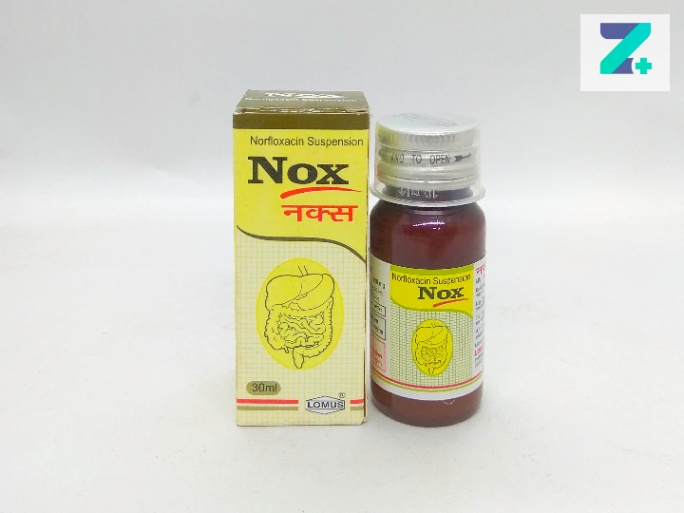
NOX
Price: Rs.125.00
10% off
In stock
Loose stock: 0
Description
NOX SUSP 60ML
Details
Composition
NORFLOXACIN 100 MG
# Norfloxacin 100 mg
## SHORT DESCRIPTION
Norfloxacin 100 mg is a **fluoroquinolone antibiotic** used to treat certain bacterial infections caused by susceptible microorganisms. It works by interfering with bacterial enzymes required for DNA replication and repair.
Norfloxacin should be used only when a bacterial infection is confirmed or strongly suspected and when it is an appropriate antibiotic choice. **It does not treat viral infections** such as the common cold or influenza.
> **Important:** The 100 mg strength is relatively low compared with many adult norfloxacin regimens. The exact strength, dose, and duration should always follow the product label and your healthcare professional's prescription.
## KEY BENEFITS
* Helps treat susceptible bacterial infections
* Acts directly against susceptible bacteria
* May be prescribed for certain urinary and gastrointestinal bacterial infections
* Convenient oral administration
* Works by inhibiting bacterial DNA replication
* Can be effective against susceptible bacteria when appropriately selected
## USES / INDICATIONS
Norfloxacin may be prescribed for certain susceptible bacterial infections, including:
* Urinary tract infections
* Certain gastrointestinal bacterial infections
* Infectious diarrhoea caused by susceptible bacteria
* Other infections when specifically prescribed by a healthcare professional
The exact indications vary by country, bacterial resistance patterns, and product labeling.
**Norfloxacin should not be used for viral infections.**
## HOW IT WORKS
Norfloxacin belongs to the **fluoroquinolone antibiotic** class.
It inhibits bacterial enzymes called **DNA gyrase and topoisomerase IV**, which are essential for bacterial DNA replication, repair, and separation.
By interfering with these enzymes, norfloxacin prevents bacteria from multiplying and can ultimately cause bacterial cell death.
## DOSAGE & ADMINISTRATION
* Take Norfloxacin 100 mg exactly as prescribed by your doctor.
* The appropriate dose depends on the infection, bacterial susceptibility, kidney function, age, and local treatment recommendations.
* Norfloxacin is generally taken with water.
* Fluoroquinolones may have reduced absorption when taken with food or products containing minerals.
* Take norfloxacin at the recommended time in relation to meals and other medicines.
* Avoid taking it together with milk, yoghurt, antacids, iron, calcium, magnesium, or zinc supplements unless your healthcare professional provides appropriate timing instructions.
* Swallow the tablet with sufficient water.
* Complete the prescribed course unless your doctor advises otherwise.
* Do not take extra doses to compensate for a missed dose.
* Drink adequate fluids unless your doctor has advised fluid restriction.
## SIDE EFFECTS
Common side effects may include:
* Nausea
* Abdominal discomfort
* Diarrhoea
* Headache
* Dizziness
* Indigestion
* Vomiting
Less common but potentially serious adverse effects include:
* Tendinitis or tendon rupture
* Peripheral neuropathy
* Severe or persistent diarrhoea
* Severe allergic reactions
* Mental or nervous-system effects
* Changes in heart rhythm
* Blood glucose disturbances
* Liver problems
* Severe skin reactions
**Stop taking norfloxacin and seek medical advice promptly if you develop tendon pain or swelling, especially around the Achilles tendon, or symptoms such as numbness, tingling, burning, weakness, severe mood changes, or significant palpitations.**
## PRECAUTIONS & WARNINGS
* Norfloxacin and other fluoroquinolones can cause potentially serious **tendon, nerve, muscle, joint, and nervous-system adverse effects**.
* Avoid strenuous exercise if tendon pain or swelling develops.
* The risk of tendon injury may be higher in older adults, people taking corticosteroids, and people with certain medical conditions.
* Inform your doctor if you have a history of tendon disorders.
* Tell your doctor if you have kidney disease because dosage adjustment may be necessary.
* Inform your doctor if you have heart-rhythm problems or low potassium or magnesium levels.
* Tell your doctor if you have diabetes because fluoroquinolones can affect blood glucose.
* Avoid unnecessary exposure to strong sunlight or UV radiation if you develop photosensitivity.
* Do not use norfloxacin for viral infections.
* Seek medical attention for severe or persistent diarrhoea during or after treatment.
* Fluoroquinolones may rarely cause serious neurological or psychiatric effects.
* Inform your healthcare professional if you are pregnant or breastfeeding.
* Norfloxacin is generally not preferred in children and adolescents unless specifically indicated by a specialist.
## DRUG INTERACTIONS
Norfloxacin absorption can be significantly reduced by:
* Antacids containing aluminium or magnesium
* Iron supplements
* Zinc supplements
* Calcium supplements
* Multivitamins containing minerals
* Dairy products such as milk and yoghurt
Other potentially important interactions include:
* **Warfarin and other anticoagulants**
* Corticosteroids, which may increase the risk of tendon injury
* Certain medicines that prolong the QT interval
* Some diabetes medicines
* Certain NSAIDs, which may increase the risk of nervous-system adverse effects
* Cyclosporine and other medicines affected by fluoroquinolones
Because interaction requirements vary by product and patient, always tell your doctor or pharmacist about all prescription medicines, over-the-counter medicines, vitamins, and supplements you take.
## STORAGE INFORMATION
* Store Norfloxacin 100 mg according to the manufacturer's instructions.
* Keep at room temperature unless the product label specifies otherwise.
* Protect from excessive heat, moisture, and direct sunlight.
* Keep the tablets in their original packaging.
* Keep out of reach and sight of children.
* Do not use after the expiry date.
* Do not use tablets if the packaging is damaged or the medicine appears abnormal.
## PRESCRIPTION STATUS
Norfloxacin is generally a **prescription antibiotic** and should be used under the supervision of a qualified healthcare professional.
Due to increasing bacterial resistance and the potentially serious adverse effects associated with fluoroquinolones, norfloxacin should be used only when it is considered an appropriate treatment option.
## GENUINE MEDICINE ASSURANCE
For genuine medicine assurance:
* Purchase Norfloxacin 100 mg from a licensed and reputable pharmacy.
* Check the medicine name, strength, manufacturer, batch number, and expiry date.
* Ensure the packaging and seal are intact.
* Do not use products with damaged, altered, or suspicious packaging.
* Check that the tablets match the description provided by the manufacturer.
* Store the medicine according to the label instructions.
* Consult a pharmacist if you have concerns about product authenticity.
## FAQ
### What is Norfloxacin 100 mg used for?
Norfloxacin is an antibiotic used to treat certain bacterial infections caused by susceptible bacteria. Depending on local guidelines and product labeling, it may be used for certain urinary tract and gastrointestinal infections.
### Is Norfloxacin an antibiotic?
Yes. Norfloxacin is a **fluoroquinolone antibiotic**.
### Does Norfloxacin treat viral infections?
No. Norfloxacin does not treat viral infections such as influenza, common cold, or most viral sore throats.
### How does Norfloxacin work?
Norfloxacin blocks bacterial DNA gyrase and topoisomerase IV, enzymes that bacteria need to replicate and repair their DNA. This prevents bacterial multiplication.
### How should I take Norfloxacin 100 mg?
Take it exactly as prescribed with water. Follow the specific instructions regarding meals and separate it appropriately from mineral-containing supplements and antacids.
### Can I take Norfloxacin with milk?
Milk and other dairy products can reduce absorption of norfloxacin. Follow your product instructions and ask your pharmacist about the appropriate interval between dairy products and your dose.
### Can I take Norfloxacin with calcium or iron supplements?
Calcium, iron, magnesium, and zinc can reduce norfloxacin absorption. These products generally need to be taken separately. Follow the timing instructions provided by your doctor or pharmacist.
### Can Norfloxacin be used for urinary tract infections?
Norfloxacin has been used for certain urinary tract infections, but its suitability depends on the bacteria involved, local antibiotic resistance, and current treatment recommendations.
### Can Norfloxacin be used for diarrhoea?
It may be prescribed for certain bacterial causes of diarrhoea, but most diarrhoea is not bacterial and does not require antibiotics. The cause should be assessed before treatment.
### How long does Norfloxacin take to work?
Symptoms may begin improving within a few days if the bacteria are susceptible to the medicine. If symptoms worsen or fail to improve, contact your healthcare professional.
### Can Norfloxacin cause diarrhoea?
Yes. Diarrhoea is a possible side effect. Severe, persistent, or bloody diarrhoea during or after treatment requires medical evaluation.
### Can Norfloxacin damage tendons?
Yes. Fluoroquinolones, including norfloxacin, can rarely cause tendinitis or tendon rupture. The Achilles tendon is particularly commonly affected.
### What should I do if I develop tendon pain while taking Norfloxacin?
Stop strenuous physical activity and contact your healthcare professional promptly. Do not continue taking the medicine without medical advice if tendon injury is suspected.
### Can Norfloxacin cause nerve problems?
Rarely, fluoroquinolones can cause peripheral neuropathy, resulting in symptoms such as numbness, tingling, burning, pain, or weakness. Prompt medical assessment is recommended if these symptoms occur.
### Can Norfloxacin affect blood sugar?
Yes. Fluoroquinolones can cause changes in blood glucose, particularly in people with diabetes or those taking medicines that lower blood sugar.
### Can Norfloxacin affect the heart?
Norfloxacin may contribute to QT-interval prolongation in susceptible individuals. Tell your doctor if you have a heart-rhythm disorder or take medicines known to prolong the QT interval.
### Can I take painkillers with Norfloxacin?
Some painkillers may interact with fluoroquinolones. In particular, certain NSAIDs may increase the risk of nervous-system adverse effects. Ask your doctor or pharmacist before combining medicines.
### Can I take Norfloxacin during pregnancy?
Norfloxacin is generally avoided during pregnancy unless a healthcare professional determines that it is necessary. Tell your doctor if you are pregnant or planning pregnancy.
### Can I take Norfloxacin while breastfeeding?
Consult your healthcare professional before using norfloxacin while breastfeeding. The risks and benefits should be evaluated for the individual situation.
### What happens if I miss a dose of Norfloxacin?
Take the missed dose when you remember unless it is nearly time for the next dose. Do not take two doses together to make up for a missed dose.
### Should I complete the Norfloxacin course?
If norfloxacin has been prescribed for a confirmed or suspected bacterial infection, follow the treatment duration prescribed by your doctor. Do not stop or extend treatment without medical advice.
### Can I drink alcohol while taking Norfloxacin?
Alcohol is not known to have a specific major interaction with norfloxacin, but it can worsen side effects such as dizziness or stomach discomfort. Avoid alcohol if it makes you feel unwell.
### Can Norfloxacin cause antibiotic resistance?
Yes. Unnecessary or inappropriate use of antibiotics contributes to antimicrobial resistance. Norfloxacin should only be used when clinically appropriate and prescribed by a healthcare professional.
## MEDICAL DISCLAIMER
This information is provided for educational and informational purposes only and is not a substitute for professional medical advice, diagnosis, or treatment. Norfloxacin is a prescription fluoroquinolone antibiotic with potentially serious adverse effects and should be used only when medically appropriate. The **100 mg strength and dosing schedule must be confirmed against the specific product and prescription**, as dosing varies according to the infection and patient factors. Do not use antibiotics for viral infections or self-medicate with leftover antibiotics. Always read the product label and consult your doctor or pharmacist for personalized medical advice.