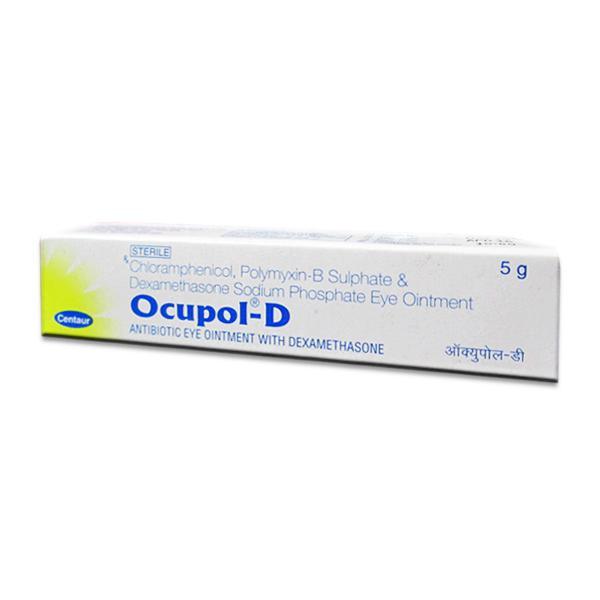
OCUPOL D EYE OINT
Price: Rs.130.70
10% off
In stock
Loose stock: 0
Description
OCUPOL D EYE OINT OINT 5GM
Details
Composition
CHLORAMPHENICOL 10 MG,DEXAMETHASONE PHOSPHATE 1 MG,POLYMYXIN B SULPHATE 10000 IU
# CHLORAMPHENICOL 10 MG + DEXAMETHASONE PHOSPHATE 1 MG + POLYMYXIN B SULPHATE 10,000 IU
## Short Description
**Chloramphenicol 10 mg + Dexamethasone Phosphate 1 mg + Polymyxin B Sulphate 10,000 IU** is an **antibiotic-corticosteroid combination** used in certain ophthalmic preparations to treat susceptible bacterial eye infections accompanied by inflammation.
* **Chloramphenicol** is a broad-spectrum antibiotic.
* **Polymyxin B** is an antibiotic particularly active against many Gram-negative bacteria.
* **Dexamethasone phosphate** is a corticosteroid that reduces ocular inflammation.
> **Important:** Because this medicine contains a corticosteroid, it should not be used for an unexplained red eye or suspected viral/fungal eye infection without appropriate medical evaluation.
---
## Key Benefits
* Helps treat certain **susceptible bacterial eye infections**.
* Provides antibacterial activity through two different antibiotics.
* Helps reduce **eye inflammation, redness, and swelling** associated with appropriate conditions.
* May help relieve inflammatory ocular symptoms while treating susceptible bacterial infection.
* Combines antibacterial and anti-inflammatory effects in a single preparation.
* May be prescribed when both an antibiotic and corticosteroid are clinically indicated.
---
## Uses / Indications
This combination may be prescribed for selected **bacterial eye infections associated with inflammation**, such as:
* Bacterial conjunctivitis
* Blepharoconjunctivitis
* Certain superficial bacterial ocular infections
* Other susceptible ocular infections where corticosteroid treatment is appropriate
The precise approved indications depend on the formulation and local regulatory approval.
### Important Limitations
This medicine should **not be routinely used for all forms of red or irritated eyes**.
The dexamethasone component can worsen or mask certain infections, including:
* Herpes simplex keratitis
* Other viral eye infections
* Fungal eye infections
* Certain untreated ocular infections
A healthcare professional should establish the diagnosis before using a steroid-containing ophthalmic preparation.
---
## How It Works
### Chloramphenicol 10 mg
Chloramphenicol inhibits bacterial protein synthesis by binding to the **50S ribosomal subunit**.
This prevents susceptible bacteria from producing proteins necessary for their growth and reproduction.
### Polymyxin B Sulphate 10,000 IU
Polymyxin B is an antibiotic that acts primarily against susceptible **Gram-negative bacteria**.
It interacts with bacterial cell membranes, disrupting membrane integrity and causing leakage of cellular contents, which leads to bacterial death.
### Dexamethasone Phosphate 1 mg
Dexamethasone is a potent **corticosteroid**.
It suppresses inflammatory responses and reduces:
* Redness
* Swelling
* Irritation
* Inflammatory discomfort
### Combined Action
The combination provides **dual antibacterial coverage plus anti-inflammatory activity**. It is appropriate only when a susceptible bacterial infection and steroid-responsive inflammation are both present or strongly suspected by a healthcare professional.
---
## Dosage & Administration
**Use exactly as prescribed by your doctor or ophthalmologist.**
The appropriate dose and frequency depend on the **specific formulation, severity of infection, and clinical response**.
### General Administration for an Ophthalmic Preparation
1. Wash your hands thoroughly.
2. Shake the preparation if instructed by the product label.
3. Tilt your head backward.
4. Gently pull down the lower eyelid.
5. Instill the prescribed number of drops into the affected eye.
6. Do not allow the applicator tip to touch the eye, eyelashes, fingers, or other surfaces.
7. Close the eye gently after application.
8. Replace the cap securely.
### Contact Lenses
Remove contact lenses before applying the medicine unless your eye-care professional specifically tells you otherwise.
Follow the product's instructions regarding when lenses can be reinserted.
### Other Eye Medicines
If using other ophthalmic medicines, generally allow **5–10 minutes between different eye preparations**, unless your healthcare professional gives different instructions.
### Duration of Treatment
Use for the **shortest duration appropriate and prescribed by your doctor**.
Because the product contains dexamethasone, prolonged or unnecessary use can increase the risk of glaucoma, cataracts, delayed healing, and worsening of infections.
### Missed Dose
Apply the missed dose when remembered unless it is almost time for the next scheduled dose.
**Do not double the dose** to make up for a missed application.
---
## Side Effects
### Common Side Effects
Temporary effects may include:
* Mild burning or stinging
* Eye irritation
* Temporary blurred vision
* Watery eyes
* Mild discomfort
* Eyelid irritation
### Dexamethasone-Related Effects
Prolonged or inappropriate use may cause:
* Increased intraocular pressure
* Glaucoma
* Cataract formation
* Delayed corneal healing
* Increased susceptibility to infection
* Masking or worsening of an existing infection
### Antibiotic-Related Effects
Some individuals may experience:
* Local irritation
* Allergic reactions
* Eyelid swelling
* Redness
Rarely, chloramphenicol has been associated with serious blood disorders, including **aplastic anemia**. Although systemic exposure from ophthalmic administration is generally low, this potential serious risk supports appropriate and medically supervised use.
### Seek Urgent Medical Attention If
You experience:
* Severe eye pain
* Sudden vision loss or major vision changes
* Severe light sensitivity
* Rapidly worsening eye symptoms
* Significant swelling
* Severe allergic reaction
---
## Precautions & Warnings
### Do Not Self-Treat Unexplained Red Eyes
A red eye can have many causes. Steroid-containing eye medicines can worsen certain infections or delay diagnosis.
### Viral Eye Infections
Dexamethasone can worsen certain viral infections, particularly **herpes simplex keratitis**.
### Fungal Infections
Corticosteroids may worsen fungal infections and can make them more difficult to diagnose.
### Increased Intraocular Pressure
Prolonged corticosteroid treatment can increase eye pressure and potentially cause **glaucoma**.
Patients receiving extended treatment may require intraocular pressure monitoring.
### Cataracts
Long-term or repeated exposure to ophthalmic corticosteroids may increase the risk of cataract formation.
### Corneal Injury
Dexamethasone can delay corneal healing. Use requires particular caution in patients with corneal ulcers, abrasions, or other epithelial defects.
### Contact Lens Use
Contact lens wear can increase the risk of ocular infection and irritation. Follow your ophthalmologist's instructions carefully.
### Allergy
Do not use the medicine if you have previously experienced a serious allergic reaction to chloramphenicol, polymyxin B, dexamethasone, or any component of the formulation.
### Prolonged Use
Do not continue treatment longer than prescribed. If the eye becomes more painful, vision worsens, or symptoms do not improve, seek medical reassessment.
---
## Drug Interactions
Systemic interactions are generally less frequent with ophthalmic administration, but important interactions and additive effects may still occur.
### Other Ophthalmic Corticosteroids
Using additional steroid-containing eye preparations may increase corticosteroid exposure and the risk of adverse effects.
### Other Antibiotic Eye Preparations
Tell your healthcare professional about any other antibiotic eye medicines you are using.
### Other Eye Drops
If multiple ophthalmic preparations are prescribed, separate them by approximately **5–10 minutes** unless instructed otherwise.
### Systemic Corticosteroids
Concurrent use of systemic corticosteroids may increase overall corticosteroid exposure.
### Medicines Affecting Blood Counts
Inform your doctor if you are taking medicines known to affect bone marrow or blood-cell production, particularly if prolonged chloramphenicol exposure is anticipated.
### Anticoagulants
Chloramphenicol may potentially affect the metabolism or action of certain medicines, including some anticoagulants.
Always tell your doctor or pharmacist about **all prescription medicines, OTC medicines, vitamins, supplements, and herbal products** you use.
---
## Storage Information
* Store according to the **manufacturer's recommended storage temperature**.
* Keep the container tightly closed.
* Protect from excessive heat and direct sunlight.
* Do not freeze unless specifically stated on the product label.
* Keep out of reach of children.
* Do not use after the expiry date.
* Do not use if the bottle, tube, or seal is damaged.
* Do not use if the preparation becomes unusually cloudy, discolored, or contaminated.
* Follow the manufacturer's instructions regarding the period of use after opening.
---
## Prescription Status
**Chloramphenicol + Dexamethasone Phosphate + Polymyxin B Sulphate is generally a prescription ophthalmic medicine.**
Because it contains a potent corticosteroid, appropriate diagnosis and medical supervision are important.
Prescription status and approved indications can vary by country and specific formulation.
---
## Genuine Medicine Assurance
When purchasing **Chloramphenicol 10 mg + Dexamethasone Phosphate 1 mg + Polymyxin B Sulphate 10,000 IU**, ensure that you:
* Purchase from a **licensed pharmacy or authorized medicine supplier**.
* Verify all three active ingredients and their strengths.
* Check the manufacturer's name.
* Check the batch/lot number and expiry date.
* Ensure the packaging and seal are intact.
* Confirm that the product is specifically labeled for **ophthalmic use**.
* Avoid products with altered, damaged, or suspicious packaging.
* Do not purchase prescription eye medicines from unauthorized sellers.
For authenticity, compare the batch details, manufacturer information, packaging, and product labeling with the manufacturer's official documentation or the relevant medicines regulatory authority.
---
# FAQ
### 1. What is Chloramphenicol + Dexamethasone + Polymyxin B used for?
It is used for certain **bacterial eye infections accompanied by inflammation**, when both antibiotic treatment and corticosteroid therapy are considered appropriate.
### 2. Is Chloramphenicol an antibiotic?
Yes. Chloramphenicol is a broad-spectrum antibiotic that inhibits bacterial protein synthesis.
### 3. What is Polymyxin B?
Polymyxin B is an antibiotic that primarily acts against susceptible **Gram-negative bacteria** by disrupting their cell membranes.
### 4. What is Dexamethasone phosphate?
Dexamethasone phosphate is a corticosteroid that reduces inflammation, redness, and swelling.
### 5. Can this medicine be used for any red eye?
**No.** Red eyes can result from allergies, viral infections, injuries, glaucoma, and other conditions. The steroid component may worsen some causes of red eye.
### 6. Can it treat viral conjunctivitis?
No. Antibiotics do not treat viral infections, and dexamethasone can potentially worsen or mask some viral eye infections.
### 7. Can it be used for fungal eye infections?
No, unless specifically directed by an ophthalmologist in a particular clinical situation. Corticosteroids may worsen fungal infections.
### 8. How often should I use these eye drops?
The frequency depends on the specific product and severity of the condition. **Follow your doctor's prescribed schedule and the product label.**
### 9. Can this medicine cause blurred vision?
Yes. Temporary blurred vision can occur immediately after application. Avoid driving or operating machinery until your vision has returned to normal.
### 10. Can prolonged use increase eye pressure?
**Yes.** Dexamethasone can increase intraocular pressure, potentially leading to glaucoma, particularly with prolonged use.
### 11. Can this medicine cause cataracts?
Long-term or repeated corticosteroid use can increase the risk of cataract formation.
### 12. Can I wear contact lenses while using this medicine?
Contact lenses should generally be removed during treatment unless your eye-care professional specifically advises otherwise.
### 13. Can I use other eye drops with this medicine?
Other eye medicines may be prescribed when necessary. Generally, leave **5–10 minutes between different eye preparations** unless your doctor advises differently.
### 14. What should I do if I miss an eye-drop dose?
Apply the missed dose when remembered unless it is nearly time for the next scheduled dose. Do not apply extra drops to compensate.
### 15. What happens if I accidentally put too many drops in my eye?
A small excess is unlikely to cause serious problems, although temporary irritation or blurred vision may occur. If a large amount is used or severe symptoms develop, seek medical advice.
### 16. Can children use this medicine?
Children should use this combination **only under appropriate medical supervision**, particularly because it contains a corticosteroid.
### 17. Can it be used during pregnancy?
Consult a healthcare professional before use during pregnancy. The potential benefits and risks should be assessed based on the individual situation.
### 18. Can it be used while breastfeeding?
Discuss its use with your doctor or pharmacist, particularly if prolonged or frequent treatment is required.
### 19. How long should I use Chloramphenicol + Dexamethasone + Polymyxin B?
Use it only for the **duration prescribed by your doctor**. Prolonged corticosteroid exposure can cause serious ocular complications.
### 20. Is Chloramphenicol + Dexamethasone + Polymyxin B available without a prescription?
It is generally considered a **prescription ophthalmic medicine**, although regulations vary by country and formulation.
---
## Medical Disclaimer
This information is provided for **educational and informational purposes only** and is not a substitute for professional medical advice, diagnosis, or treatment.
**Chloramphenicol 10 mg + Dexamethasone Phosphate 1 mg + Polymyxin B Sulphate 10,000 IU should be used only when a healthcare professional has determined that both antibacterial and corticosteroid treatment are appropriate.** The dexamethasone component can worsen or mask certain viral and fungal infections and can increase intraocular pressure with prolonged use.
Do not use this medicine to self-treat unexplained eye redness, pain, injury, or vision changes. Seek prompt ophthalmic evaluation for **severe eye pain, sudden vision changes, marked light sensitivity, or rapidly worsening symptoms**.
Always follow the **specific manufacturer's package insert and your ophthalmologist's or pharmacist's instructions**, as formulations, dosage recommendations, approved indications, warnings, and prescription requirements may vary between products and countries.