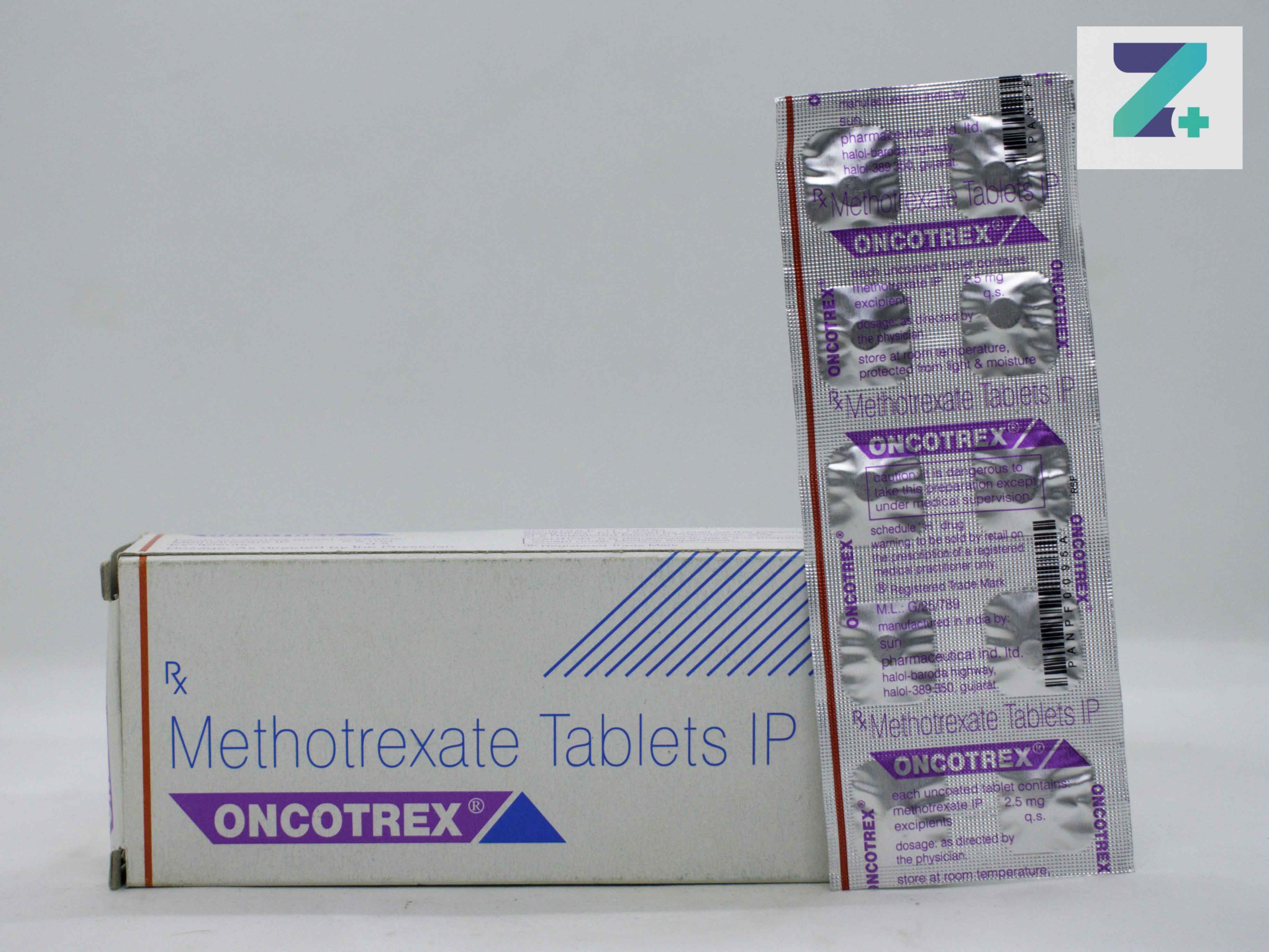
ONCOTREX 2.5MG
Price: Rs.75.40
10% off
In stock
Loose stock: 0
Description
ONCOTREX 2.5MG TAB 10
Details
Composition
METHOTREXATE 2.5 MG
# Methotrexate 2.5 mg
## SHORT DESCRIPTION
Methotrexate 2.5 mg is a **prescription medicine** that belongs to the antimetabolite and immunosuppressant class. At low doses, it is commonly used as a **disease-modifying antirheumatic drug (DMARD)** for conditions such as rheumatoid arthritis and psoriasis. It may also be prescribed for certain cancers and other medical conditions under specialist supervision.
Methotrexate is a **high-alert medicine** and must be taken exactly according to the prescribed schedule.
> **Important:** For many inflammatory and autoimmune conditions, methotrexate is taken **once weekly, not once daily**. Taking it daily by mistake can cause life-threatening toxicity.
## KEY BENEFITS
* Helps reduce **inflammation and immune-system activity**
* Helps control rheumatoid arthritis and other inflammatory joint conditions
* Can reduce joint pain, swelling, and stiffness
* Helps control moderate-to-severe psoriasis and psoriatic arthritis
* Can slow disease progression in certain autoimmune conditions
* Used in specialist oncology treatment for certain cancers
## USES / INDICATIONS
Methotrexate 2.5 mg tablets may be prescribed for:
* **Rheumatoid arthritis**
* Psoriatic arthritis
* Severe or disabling psoriasis
* Certain other autoimmune or inflammatory disorders
* Certain cancers, depending on the treatment protocol
* Other specialist indications when prescribed by an appropriately qualified healthcare professional
The indication, dose, and schedule can differ substantially between conditions.
## HOW IT WORKS
Methotrexate interferes with **folate-dependent cellular processes** and inhibits enzymes involved in DNA and cell replication.
At low doses used for inflammatory diseases, methotrexate also affects immune-system activity and reduces the production of inflammatory mediators. This helps decrease inflammation and abnormal immune responses.
At higher doses used in oncology, methotrexate interferes more strongly with rapidly dividing cells.
## DOSAGE & ADMINISTRATION
* Take methotrexate **exactly as prescribed**.
* For many inflammatory conditions, methotrexate is taken **once weekly on a specific day**.
* **Do not take methotrexate every day unless a specialist has specifically prescribed a daily regimen for a particular medical indication.**
* Take the tablets with water and follow the instructions provided with your prescription.
* Do not change the dose or frequency yourself.
* Your doctor may prescribe **folic acid or folinic acid (folate rescue)** to reduce certain side effects.
* Regular blood tests are usually required to monitor blood counts and liver and kidney function.
* If you miss a weekly dose, contact your doctor or pharmacist for instructions rather than taking extra tablets.
**Critical safety warning:** Methotrexate dosing errors can cause severe or fatal toxicity. Always verify the prescribed **dose and frequency** before taking the medicine.
## SIDE EFFECTS
Possible side effects include:
* Nausea
* Vomiting
* Diarrhea
* Loss of appetite
* Abdominal discomfort
* Headache
* Tiredness
* Mouth ulcers
* Hair thinning or hair loss
* Increased sensitivity to sunlight
Serious side effects can include:
* **Bone marrow suppression**
* Severe infection
* Liver damage
* Kidney damage
* Lung inflammation or pneumonitis
* Severe skin reactions
* Gastrointestinal bleeding or ulceration
* Severe allergic reactions
Seek immediate medical attention for **difficulty breathing, persistent cough, fever, unusual bleeding or bruising, severe mouth ulcers, yellowing of the skin or eyes, severe abdominal pain, or significant reduction in urine output**.
## PRECAUTIONS & WARNINGS
* Methotrexate can cause serious **liver, kidney, blood, lung, and immune-system toxicity**.
* Regular blood tests are important during treatment.
* Avoid taking more than the prescribed dose.
* Do not take extra tablets because symptoms have not improved.
* Tell your doctor if you have **liver disease, kidney disease, blood disorders, active infections, lung disease, stomach ulcers, or immune-system problems**.
* Avoid excessive alcohol because it may increase the risk of liver toxicity.
* Methotrexate can make you more susceptible to infections.
* Avoid close contact with people who have serious contagious infections when possible.
* Discuss vaccination with your doctor before receiving vaccines, particularly live vaccines.
* Methotrexate can cause serious harm to an unborn baby. **It is generally contraindicated during pregnancy for non-cancerous conditions.**
* Both women and men receiving methotrexate should discuss appropriate contraception and pregnancy planning with their healthcare professional.
* Do not donate blood during treatment and for the period recommended by your healthcare professional after treatment.
* Report persistent cough or difficulty breathing promptly because methotrexate can rarely cause serious lung toxicity.
## DRUG INTERACTIONS
Methotrexate has many clinically important interactions. Examples include:
* **Trimethoprim or co-trimoxazole:** May significantly increase the risk of bone marrow suppression and other methotrexate toxicity.
* **NSAIDs such as ibuprofen, naproxen, and diclofenac:** May affect methotrexate clearance and increase toxicity, particularly at higher methotrexate doses or in patients with impaired kidney function.
* **Aspirin and other salicylates:** May alter methotrexate clearance and increase toxicity.
* **Certain antibiotics:** Some penicillins, sulfonamides, tetracyclines, and other antibiotics can affect methotrexate elimination or increase adverse effects.
* **Proton-pump inhibitors:** Medicines such as omeprazole and pantoprazole may affect methotrexate clearance, particularly with high-dose treatment.
* **Other medicines that affect the liver:** May increase the risk of liver toxicity.
* **Other immunosuppressive medicines:** May increase the risk of infection and bone marrow suppression.
* **Live vaccines:** May cause an increased risk of infection because methotrexate suppresses immune function.
* **Retinoids:** May increase the risk of liver toxicity.
This is **not a complete interaction list**. Always tell your doctor and pharmacist about every medicine, OTC product, vitamin, and herbal supplement you use.
## STORAGE INFORMATION
* Store methotrexate tablets according to the manufacturer's instructions.
* Keep at room temperature and protect from excessive heat, moisture, and direct sunlight.
* Keep the medicine in its original packaging.
* Keep tightly closed when not in use.
* Store securely away from children and other household members.
* Do not use after the expiry date.
* Do not share methotrexate with another person, even if they have similar symptoms.
## PRESCRIPTION STATUS
**Prescription Medicine**
Methotrexate 2.5 mg is a high-risk prescription medicine that should be used only under the supervision of a qualified healthcare professional. Regular clinical and laboratory monitoring may be required.
## GENUINE MEDICINE ASSURANCE
Purchase Methotrexate 2.5 mg only from a **licensed and reputable pharmacy**. Before use, check:
* Product name and strength
* Active ingredient
* Manufacturer details
* Batch or lot number
* Expiry date
* Packaging and seal
Do not use medicines with damaged, opened, altered, or suspicious packaging.
Because methotrexate is a high-alert medicine, carefully verify the **tablet strength and prescribed dosing frequency** before every dose.
## FAQ — Frequently Asked Questions
### What is Methotrexate 2.5 mg used for?
Methotrexate 2.5 mg may be used to treat **rheumatoid arthritis, psoriasis, psoriatic arthritis, certain autoimmune conditions, and some cancers**, depending on the prescribed treatment regimen.
### Is Methotrexate 2.5 mg a steroid?
No. Methotrexate is not a corticosteroid. It is an **antimetabolite and immunosuppressive medicine** that can also act as a disease-modifying antirheumatic drug at low doses.
### Is Methotrexate taken every day?
For many inflammatory conditions, **no**. Methotrexate is commonly taken **once weekly**. Daily administration when a weekly regimen was prescribed can cause severe and potentially fatal toxicity.
### Why is Methotrexate 2.5 mg considered a high-alert medicine?
Methotrexate has a narrow safety margin and dosing errors can cause severe toxicity, including bone marrow suppression, liver damage, kidney injury, severe infections, and gastrointestinal complications.
### How long does Methotrexate take to work for rheumatoid arthritis?
Methotrexate does not usually provide immediate relief. Improvement may begin after several weeks, while the full therapeutic effect can take longer.
### Does Methotrexate cure rheumatoid arthritis?
Methotrexate does not cure rheumatoid arthritis, but it can significantly reduce inflammation, symptoms, and disease activity and may help slow joint damage.
### Why is folic acid often prescribed with methotrexate?
Folic acid may help reduce certain methotrexate-related side effects, including mouth ulcers, nausea, and some blood or liver-related effects. Take folic acid exactly according to your doctor's instructions because the schedule can vary.
### Can Methotrexate cause hair loss?
Yes. Hair thinning or hair loss can occur in some people taking methotrexate. Tell your doctor if this becomes significant or concerning.
### Can Methotrexate damage the liver?
Yes. Methotrexate can cause **liver toxicity**, particularly with long-term treatment or in people with certain risk factors. Regular liver-function monitoring is therefore important.
### Can Methotrexate affect the kidneys?
Yes. Methotrexate can cause kidney problems, particularly at higher doses or in people with impaired kidney function. Adequate monitoring is important.
### Can Methotrexate affect the lungs?
Rarely, methotrexate can cause lung inflammation or pneumonitis. Report a persistent dry cough, shortness of breath, or unexplained breathing difficulty promptly.
### Can I drink alcohol while taking Methotrexate?
Alcohol can increase the risk of **liver toxicity**. Discuss alcohol consumption with your doctor; many patients taking methotrexate are advised to avoid or strictly limit alcohol.
### Can I take ibuprofen with Methotrexate?
Do not routinely take ibuprofen or other NSAIDs with methotrexate without medical advice. The interaction can increase the risk of methotrexate toxicity in certain circumstances.
### Can Methotrexate be taken during pregnancy?
Methotrexate can cause serious fetal harm and is generally **not used during pregnancy for inflammatory conditions**. Anyone who is pregnant, planning pregnancy, or may become pregnant should discuss methotrexate with a doctor before taking it.
### Can I breastfeed while taking Methotrexate?
Methotrexate may not be appropriate during breastfeeding, depending on the dose and indication. Discuss breastfeeding with your doctor before treatment.
### What should I do if I accidentally take Methotrexate every day instead of weekly?
**Seek urgent medical advice immediately.** Do not wait for symptoms to develop. Accidental daily dosing can cause severe, potentially life-threatening toxicity.
### What happens if I miss my weekly Methotrexate dose?
Do not automatically double the next dose. Contact your doctor or pharmacist for specific instructions, particularly if several days have passed.
### Can Methotrexate weaken the immune system?
Yes. Methotrexate suppresses certain immune responses and may increase susceptibility to infections. Contact your healthcare professional if you develop fever or other signs of infection.
### Do I need blood tests while taking Methotrexate?
Yes. Regular monitoring of **blood counts, liver function, and kidney function** is commonly required, particularly during the initial stages and throughout long-term treatment.
## MEDICAL DISCLAIMER
This information is provided for **general educational and informational purposes only** and is not a substitute for professional medical advice, diagnosis, or treatment. Methotrexate 2.5 mg is a high-alert prescription medicine with potentially serious and life-threatening adverse effects. The dose and frequency vary significantly according to the medical condition. For many inflammatory conditions, methotrexate is taken **once weekly rather than daily**. Always follow your doctor's exact instructions, read the product information, and consult your doctor or pharmacist before starting, stopping, or changing treatment.