OROHEX
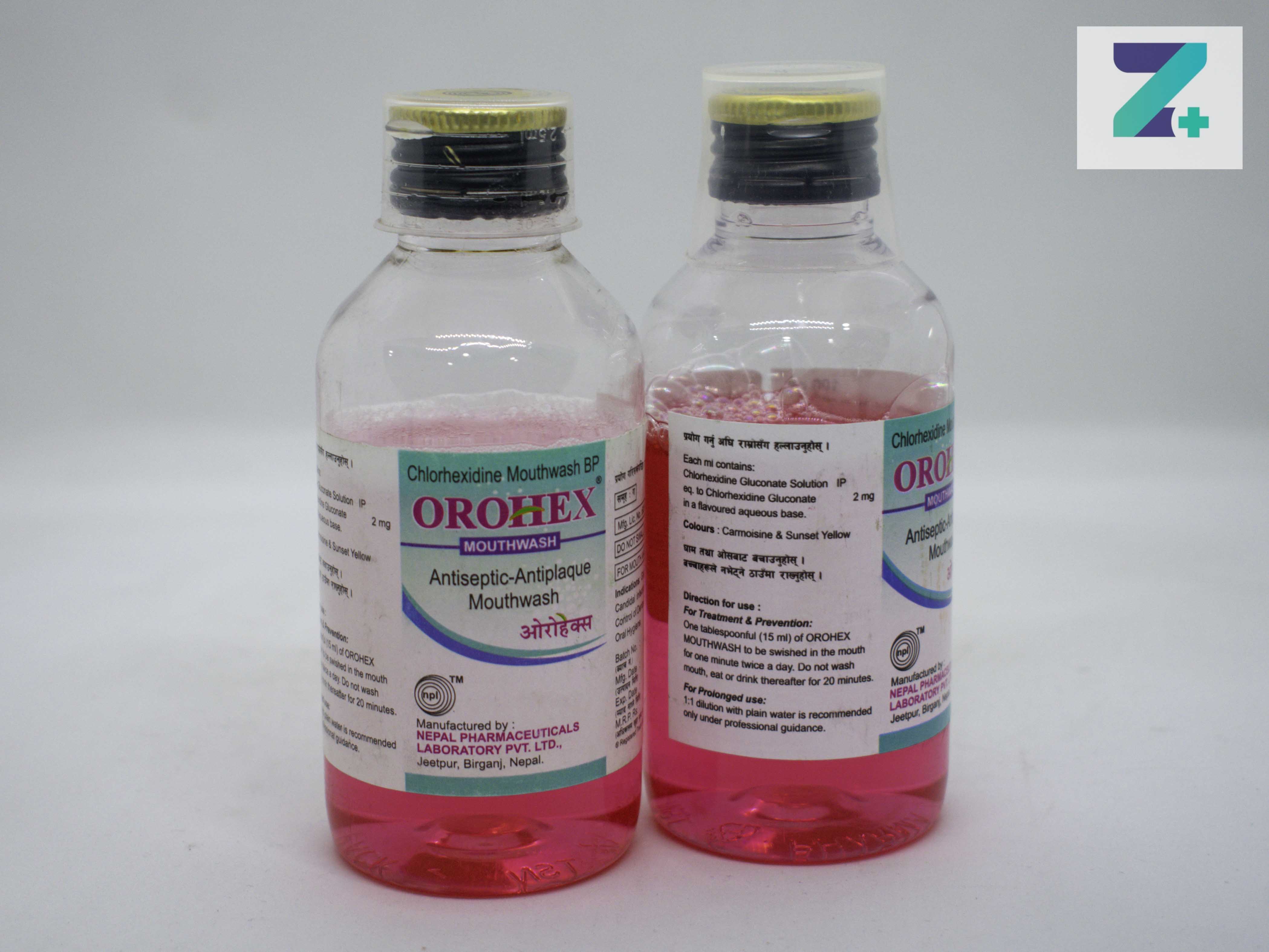
Price: Rs.100.00
10% off
In stock
Loose stock: 0
Description
OROHEX MOUTHWASH 100ML
Details
Composition
CHLORHEXIDINE 2 MG
# CHLORHEXIDINE 2 MG
> **Note:** “Chlorhexidine 2 mg” can refer to different formulations and concentrations depending on the product (for example, oral, topical, or skin preparations). The information below assumes a **chlorhexidine topical antiseptic preparation**. Always follow the strength, concentration, route, and instructions printed on the specific product label.
## Short Description
**Chlorhexidine 2 mg** is an **antiseptic and antimicrobial medicine** used to reduce or control microorganisms on the skin or other appropriate surfaces, depending on the formulation.
Chlorhexidine works against many types of bacteria and has persistent antimicrobial activity, making it useful for reducing microbial contamination before certain medical procedures and for some skin-cleansing applications.
## Key Benefits
* Helps reduce **bacteria and other microorganisms** on the treated area.
* Provides antiseptic cleansing for appropriate skin applications.
* Has antimicrobial activity that can persist after application.
* Can help reduce microbial contamination before certain medical procedures.
* Available in different formulations for specific clinical and hygiene applications.
## Uses / Indications
Depending on the specific formulation, chlorhexidine may be used for:
* **Antiseptic skin cleansing**.
* Preparation of skin before injections or minor procedures.
* Reducing microorganisms on intact skin.
* Certain healthcare-related antiseptic applications.
* Other uses specifically stated on the manufacturer's label.
### Important
Chlorhexidine products are **not interchangeable**. A preparation designed for skin should not automatically be used in the mouth, eyes, ears, wounds, or other body areas unless the product is specifically labeled for that use.
## How It Works
Chlorhexidine is a **cationic antiseptic**.
It interacts with negatively charged components of microbial cell membranes. This disrupts membrane integrity and causes leakage of cellular contents, ultimately damaging or killing susceptible microorganisms.
### Overall Action
**Chlorhexidine → interacts with microbial cell membranes → disrupts membrane integrity → reduces susceptible microorganisms.**
Chlorhexidine has relatively persistent activity on the skin compared with some other antiseptics.
## Dosage & Administration
The appropriate amount and frequency depend on the **formulation, concentration, application site, and intended use**.
### General Topical Use
* Use only as directed on the product label or by a healthcare professional.
* Apply to the intended area using the recommended amount.
* Follow the manufacturer's instructions regarding whether the preparation should be rinsed or allowed to dry.
* Avoid contact with the eyes, mouth, and other sensitive areas unless specifically intended for that use.
* Do not apply more frequently than recommended.
* Wash hands before and after application when appropriate.
### Important
**Do not use the stated “2 mg” as a universal dosing instruction.** Chlorhexidine products are marketed in different concentrations and dosage forms, and the correct administration depends on the exact product.
## Side Effects
Possible side effects may include:
* Skin irritation.
* Redness.
* Dryness.
* Itching.
* Burning or stinging at the application site.
* Contact dermatitis.
### Serious Allergic Reaction
Rarely, chlorhexidine can cause a **severe allergic reaction (anaphylaxis)**.
Seek emergency medical attention if symptoms such as:
* Difficulty breathing.
* Swelling of the face, lips, tongue, or throat.
* Severe wheezing.
* Widespread hives.
* Severe dizziness or collapse.
occur after exposure.
## Precautions & Warnings
### For External Use Only — Where Applicable
If the product is labeled for topical use, do not swallow it or use it internally.
### Avoid the Eyes
Chlorhexidine can cause **serious eye irritation or injury**.
Keep it away from the eyes. If accidental eye exposure occurs, rinse thoroughly with water and seek medical attention if irritation persists or vision is affected.
### Avoid the Ears
Chlorhexidine should not be introduced into the ear canal unless specifically indicated by a healthcare professional, particularly when the **eardrum may be perforated**.
### Avoid the Mouth Unless Specifically Formulated for Oral Use
A skin antiseptic should **never be used as a mouthwash**.
Only chlorhexidine products specifically manufactured and labeled for oral use should be used in the mouth.
### Damaged Skin
Some formulations may be unsuitable for certain open wounds, burns, mucous membranes, or severely damaged skin. Follow the specific product instructions.
### Allergy
Tell your healthcare professional if you have previously experienced an allergic reaction to:
* Chlorhexidine.
* Chlorhexidine-containing products.
* Other antiseptics.
### Infants and Children
Certain chlorhexidine preparations require particular caution in newborns and young children because of the risk of skin irritation and other adverse reactions. Use only an age-appropriate product according to professional advice.
### Pregnancy and Breastfeeding
Topical chlorhexidine may be used in some circumstances during pregnancy or breastfeeding, but the specific formulation and application site matter. Consult a healthcare professional if you are pregnant or breastfeeding.
## Drug Interactions
Chlorhexidine used topically generally has **limited systemic drug interactions**, but product-specific compatibility is important.
### Other Antiseptics
Avoid routinely combining chlorhexidine with other antiseptics on the same area unless instructed by a healthcare professional.
### Soaps and Anionic Products
Certain soaps and products containing **anionic substances** can reduce chlorhexidine's antimicrobial activity.
Follow the manufacturer's instructions regarding cleansing products and application.
### Other Topical Medicines
Tell your healthcare professional about other creams, ointments, antiseptics, or skin treatments being applied to the same area.
## Storage Information
* Store according to the manufacturer's instructions.
* Keep at room temperature unless the product label specifies otherwise.
* Protect from excessive heat and direct sunlight.
* Keep the container tightly closed.
* Keep away from children.
* Do not use after the expiry date.
* Do not use if the container is damaged or the product appears abnormal.
## Prescription Status
**Chlorhexidine products may be available with or without a prescription depending on their concentration, formulation, intended use, and local regulations.**
Many topical antiseptic preparations are available over the counter, while certain medical formulations may be supplied under professional supervision.
Always follow local dispensing requirements.
## Genuine Medicine Assurance
When purchasing Chlorhexidine 2 mg, obtain it from a **licensed pharmacy or authorized medicine supplier**.
Check:
* Active ingredient: **Chlorhexidine**.
* Exact concentration and dosage form.
* Intended route of administration.
* Manufacturer information.
* Batch/lot number.
* Manufacturing and expiry dates.
* Intact packaging and seal.
* Clear usage instructions.
Do not use a product if the packaging is damaged, tampered with, incorrectly labeled, or appears counterfeit.
## Frequently Asked Questions (FAQ)
### 1. What is Chlorhexidine 2 mg used for?
Chlorhexidine is an **antiseptic** used to reduce microorganisms on the skin or other specific areas, depending on the formulation.
### 2. Is chlorhexidine an antibiotic?
No. Chlorhexidine is an **antiseptic**, not a conventional antibiotic. It works locally by damaging microbial cell membranes.
### 3. Does chlorhexidine kill bacteria?
Yes. Chlorhexidine has antimicrobial activity against many bacteria and can reduce bacterial contamination on appropriately treated surfaces.
### 4. Can chlorhexidine be used on the skin?
Yes, when the particular formulation is intended for **topical skin use**.
### 5. Can I use skin chlorhexidine in my mouth?
**No.** A skin preparation should not be used in the mouth. Only products specifically formulated and labeled for oral use should be used orally.
### 6. Can chlorhexidine be used in the eyes?
No, unless specifically formulated and approved for ophthalmic use. Chlorhexidine can cause serious eye injury.
### 7. Can chlorhexidine be used in the ear?
Do not put chlorhexidine into the ear canal unless specifically directed by a healthcare professional. Particular caution is required if the eardrum is perforated.
### 8. Can chlorhexidine be used on wounds?
This depends on the exact product. Some chlorhexidine preparations are intended for intact skin and may not be appropriate for open wounds or damaged tissue. Follow the product label or medical advice.
### 9. Does chlorhexidine cause skin irritation?
It can. Possible reactions include **redness, dryness, itching, burning, or contact dermatitis**.
### 10. Can chlorhexidine cause an allergic reaction?
Yes. Although uncommon, chlorhexidine can cause serious allergic reactions, including **anaphylaxis**.
### 11. What should I do if chlorhexidine gets into my eyes?
Immediately rinse the eyes thoroughly with plenty of water. Seek medical attention if pain, irritation, redness, or vision problems persist.
### 12. Can chlorhexidine be used every day?
Some chlorhexidine products are designed for regular use, while others are intended for occasional antiseptic preparation. Follow the instructions for the **specific formulation**.
### 13. Can chlorhexidine be used during pregnancy?
Some topical chlorhexidine preparations may be used during pregnancy when appropriate. Consult your healthcare professional regarding the specific product.
### 14. Can chlorhexidine be used while breastfeeding?
Certain topical preparations may be suitable during breastfeeding, but avoid applying it to the breast or nipple in a way that could expose the infant unless specifically advised.
### 15. Does chlorhexidine interact with other medicines?
Topical chlorhexidine generally has limited systemic interactions, but other antiseptics, soaps, and topical products may affect its activity or increase irritation.
### 16. Is Chlorhexidine 2 mg available without a prescription?
Availability depends on the **specific formulation and local regulations**. Many topical chlorhexidine products are available without a prescription.
### 17. How should chlorhexidine be stored?
Store it according to the manufacturer's instructions, protected from excessive heat and direct sunlight, and keep it out of reach of children.
### 18. Can chlorhexidine treat a fungal infection?
Chlorhexidine primarily acts as an antiseptic against susceptible microorganisms. It should **not be considered a substitute for an appropriate antifungal medicine** when a fungal infection is diagnosed.
### 19. Can chlorhexidine replace antibiotics?
No. Chlorhexidine is a topical antiseptic and is not a replacement for systemic antibiotics when antibiotics are medically indicated.
### 20. What happens if chlorhexidine is swallowed?
Accidental swallowing should be taken seriously, particularly with concentrated products. Do not induce vomiting unless instructed by a healthcare professional. Seek appropriate medical or poison-control advice.
### 21. How quickly does chlorhexidine work?
Chlorhexidine begins exerting antimicrobial activity after application, but the extent and duration of activity depend on the formulation, concentration, microorganisms involved, and contact time.
### 22. Can I use chlorhexidine with other antiseptics?
Do not routinely combine different antiseptics on the same area unless instructed by a healthcare professional, because they may interact or increase skin irritation.
### 23. Why is chlorhexidine commonly used before medical procedures?
Chlorhexidine can substantially reduce microorganisms on the skin and has **persistent antimicrobial activity**, making appropriate formulations useful for skin antisepsis before certain procedures.
### 24. Is chlorhexidine safe for children?
Safety depends on the child's age and the specific formulation. Some products require special precautions in infants and young children. Always follow the product labeling or professional advice.
### 25. When should I stop using chlorhexidine?
Stop using it and seek medical advice if you develop a significant rash, severe irritation, swelling, breathing difficulty, or other signs of an allergic reaction.
## Medical Disclaimer
This information about **Chlorhexidine 2 mg** is provided for general educational and informational purposes only and is not a substitute for professional medical advice, diagnosis, or treatment.
**Chlorhexidine products differ significantly by concentration, formulation, and route of administration.** The exact product label should always be checked before use. Do not use a topical skin preparation in the eyes, ears, mouth, or other sensitive areas unless it is specifically formulated and labeled for that purpose.
Seek urgent medical attention for signs of a serious allergic reaction, including **difficulty breathing, facial or throat swelling, widespread hives, severe dizziness, or collapse**.