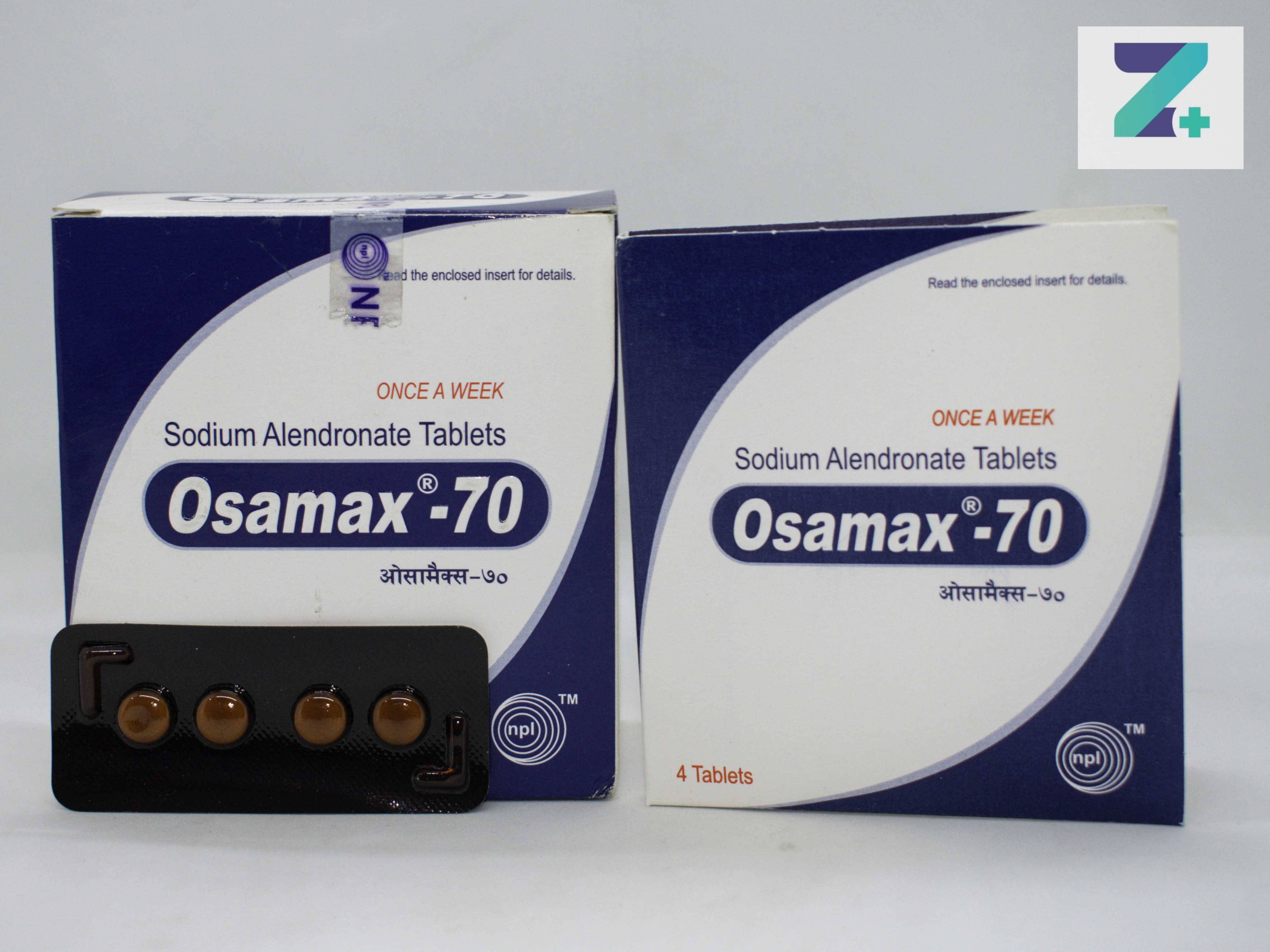
OSAMAX-70
Price: Rs.200.00
15% off
In stock
Loose stock: 0
Description
OSAMAX-70 TAB 4
Details
Composition
ALENDRONIC ACID 70 MG
# ALENDRONIC ACID 70 MG
## SHORT DESCRIPTION
**Alendronic Acid 70 mg (Alendronate)** is a bisphosphonate medicine used primarily for the **treatment and prevention of osteoporosis**. It helps strengthen bones and reduce the risk of fractures, particularly fractures of the **hip and spine**.
Alendronic acid works by slowing the breakdown of old bone, allowing bone density and strength to be maintained or improved.
---
## KEY BENEFITS
* Helps **treat osteoporosis**.
* Helps reduce the risk of **vertebral (spinal) fractures**.
* Helps reduce the risk of **hip and other osteoporotic fractures**.
* Slows excessive bone loss.
* Helps maintain or increase bone mineral density.
* May be used in appropriate patients with osteoporosis associated with menopause or other risk factors.
---
## USES / INDICATIONS
Alendronic Acid 70 mg may be prescribed for:
* **Postmenopausal osteoporosis**
* Osteoporosis in men
* Osteoporosis associated with prolonged corticosteroid use, when appropriate
* Reducing the risk of osteoporotic fractures
Treatment should be based on an assessment of fracture risk and individual patient factors.
---
## HOW IT WORKS
Alendronic acid belongs to the **bisphosphonate** class of medicines.
Bone is continuously remodeled through two main processes:
* **Osteoclasts** break down old bone.
* **Osteoblasts** form new bone.
Alendronic acid binds to bone mineral and inhibits the activity of osteoclasts.
### In Simple Terms
**Alendronic acid → reduces osteoclast-mediated bone breakdown → slows bone loss → helps maintain bone density and strength.**
It does not work by directly building new bone; rather, it reduces excessive bone resorption so that bone formation can become more balanced.
---
## DOSAGE & ADMINISTRATION
### Usual Adult Dose
For many osteoporosis treatment regimens:
**Alendronic Acid 70 mg is taken once weekly.**
The exact regimen should always follow the prescription and product instructions.
### How to Take Alendronic Acid Correctly
Because alendronic acid can irritate the esophagus, the way it is taken is extremely important:
1. Take the tablet **after getting up for the day**.
2. Take it on an **empty stomach**.
3. Swallow the tablet with a full glass of **plain water**.
4. Do **not chew, crush, or suck** the tablet.
5. Remain **upright (sitting or standing) for at least 30 minutes**.
6. Do not eat, drink anything other than plain water, or take other oral medicines during this period.
### Weekly Schedule
Choose a day of the week that is convenient and take the tablet on the same day each week.
### Missed Dose
If you miss your weekly dose:
* Take **one tablet the morning after you remember**.
* Then return to your usual weekly schedule.
* Do **not take two tablets on the same day**.
---
## SIDE EFFECTS
### Common Side Effects
Possible adverse effects include:
* Stomach pain or discomfort
* Indigestion
* Acid reflux
* Nausea
* Constipation
* Diarrhea
* Headache
* Muscle pain
* Joint pain
* Bone pain
### Esophageal Irritation
Alendronic acid can cause:
* Difficulty swallowing
* Painful swallowing
* Heartburn
* Chest discomfort
* Inflammation of the esophagus
Seek medical attention if these symptoms develop or become severe.
### Serious but Rare Side Effects
Long-term bisphosphonate treatment has been associated with rare complications such as:
* **Osteonecrosis of the jaw**
* **Atypical femoral fractures**
* Severe musculoskeletal pain
* Severe allergic reactions
Inform your healthcare professional about persistent thigh, hip, or groin pain, particularly during long-term treatment.
---
## PRECAUTIONS & WARNINGS
### Correct Administration Is Essential
Never take alendronic acid while lying down.
Taking it incorrectly can increase the risk of **esophageal irritation, ulcers, and inflammation**.
### Esophageal Problems
Tell your doctor if you have:
* Difficulty swallowing
* Esophageal disease
* Severe reflux
* Barrett's esophagus
* Other conditions that delay esophageal emptying
### Kidney Disease
Alendronic acid is not generally recommended in patients with **severe renal impairment**. Your doctor may assess kidney function before prescribing it.
### Calcium and Vitamin D
Adequate calcium and vitamin D are important during osteoporosis treatment.
If dietary intake is insufficient, your healthcare professional may recommend supplementation.
### Low Calcium Levels
Pre-existing **hypocalcemia (low blood calcium)** should generally be corrected before starting treatment.
### Dental Procedures
Rarely, bisphosphonates can cause osteonecrosis of the jaw.
Tell your dentist that you take alendronic acid, particularly if you require:
* Tooth extraction
* Dental implants
* Other invasive dental procedures
Maintain good oral hygiene and attend regular dental checkups.
### Long-Term Treatment
The need for continued bisphosphonate treatment should be **periodically reviewed** because the optimal duration varies according to fracture risk.
### Pregnancy
Alendronic acid is generally **not intended for use during pregnancy**.
Tell your healthcare professional if you are pregnant or planning pregnancy.
### Breastfeeding
Discuss use with your healthcare professional if breastfeeding.
---
## DRUG INTERACTIONS
### Calcium Supplements
Calcium can significantly reduce absorption of alendronic acid.
Take calcium supplements at a **different time of day**.
### Antacids
Antacids containing calcium, magnesium, or aluminum can reduce absorption.
Do not take them at the same time as alendronic acid.
### Iron Supplements
Iron can interfere with absorption.
Take iron supplements separately according to your healthcare professional's instructions.
### Other Oral Medicines
Many oral medicines may interfere with absorption or increase gastrointestinal irritation.
As a general precaution, other oral medicines should not be taken during the required administration interval unless specifically instructed.
### NSAIDs
Medicines such as:
* Ibuprofen
* Naproxen
* Diclofenac
* Aspirin
may increase the risk of gastrointestinal irritation when combined with alendronic acid in some patients.
Tell your doctor about all medicines you regularly take.
---
## STORAGE INFORMATION
* Store according to the **manufacturer's instructions**.
* Keep tablets in their original packaging.
* Store in a cool, dry place.
* Protect from excessive heat and moisture.
* Keep away from direct sunlight.
* Keep out of reach of children.
* Do not use after the expiry date.
* Keep the package tightly closed when applicable.
---
## PRESCRIPTION STATUS
**Alendronic Acid 70 mg is generally a prescription medicine**, although the exact legal classification can vary by country.
Because treatment requires appropriate assessment of bone health, kidney function, calcium status, fracture risk, and contraindications, it should be used under healthcare professional supervision.
---
## GENUINE MEDICINE ASSURANCE
When purchasing Alendronic Acid 70 mg:
* Purchase from a **licensed pharmacy or authorized medicine supplier**.
* Check that the packaging is sealed and intact.
* Verify the medicine name and strength.
* Check the **batch/lot number and expiry date**.
* Confirm the manufacturer's information.
* Look for signs of tampering or damaged packaging.
* Follow the manufacturer's storage instructions.
Do not use tablets from damaged, expired, or suspicious packaging.
---
# FAQ – ALENDRONIC ACID 70 MG
### 1. What is Alendronic Acid 70 mg used for?
Alendronic acid is mainly used to **treat and prevent osteoporosis** and reduce the risk of fractures.
### 2. Is Alendronic Acid the same as Alendronate?
Yes. **Alendronic acid is also known as alendronate**.
### 3. How often is Alendronic Acid 70 mg taken?
The 70 mg strength is commonly prescribed **once weekly** for osteoporosis, but follow the exact instructions on your prescription.
### 4. Why must Alendronic Acid be taken on an empty stomach?
Food and many beverages can significantly reduce the absorption of alendronic acid. Taking it on an empty stomach helps ensure adequate absorption.
### 5. Why do I need to remain upright after taking Alendronic Acid?
Remaining upright helps prevent the tablet from remaining in the esophagus and reduces the risk of **esophageal irritation and injury**.
### 6. Can I take Alendronic Acid with milk?
No. Take the tablet with **plain water only**. Milk and other drinks can reduce absorption.
### 7. Can I take calcium with Alendronic Acid?
Yes, calcium may be needed for osteoporosis management, but it should be taken **at a separate time** because calcium reduces alendronic acid absorption.
### 8. Can I take Alendronic Acid with coffee or tea?
No. Take it with plain water. Coffee, tea, juice, and other beverages can reduce absorption.
### 9. What happens if I forget my weekly dose?
Take one tablet the morning after you remember, then return to your regular weekly schedule. **Do not take two tablets on the same day.**
### 10. How long does Alendronic Acid take to work?
Bone-density improvement occurs gradually. Treatment is generally continued for an extended period to reduce fracture risk, with progress assessed periodically by a healthcare professional.
### 11. Can Alendronic Acid strengthen bones?
Yes. By reducing excessive bone breakdown, alendronic acid can help **increase or maintain bone mineral density and strengthen bone**.
### 12. Can Alendronic Acid prevent fractures?
Yes. It has been shown to reduce the risk of important osteoporotic fractures, particularly **vertebral and hip fractures**, in appropriate patients.
### 13. Can Alendronic Acid cause stomach problems?
Yes. Indigestion, abdominal discomfort, heartburn, nausea, and other gastrointestinal symptoms can occur. Correct administration helps reduce the risk of esophageal irritation.
### 14. Can Alendronic Acid damage the esophagus?
Rarely, yes. Incorrect administration can cause **esophagitis, ulcers, or irritation**. Take it with plenty of plain water and remain upright for at least 30 minutes.
### 15. Can Alendronic Acid affect the jaw?
Rarely, bisphosphonates can cause **osteonecrosis of the jaw**. Tell your dentist that you are taking alendronic acid, especially before invasive dental procedures.
### 16. Can Alendronic Acid cause thigh or hip pain?
Rarely, long-term bisphosphonate treatment can be associated with atypical femoral fractures. Persistent or unusual **thigh, hip, or groin pain** should be evaluated by a healthcare professional.
### 17. Can I take Alendronic Acid during pregnancy?
It is generally not intended for use during pregnancy. Inform your healthcare professional if you are pregnant or planning pregnancy.
### 18. Can I take Alendronic Acid with other medicines?
Some medicines, especially **calcium, iron, antacids, and other oral medicines**, can interfere with absorption. Tell your doctor or pharmacist about all medicines and supplements you take.
### 19. How long should I take Alendronic Acid 70 mg?
Treatment duration depends on your fracture risk and response to treatment. Your healthcare professional should periodically review whether continued therapy is appropriate.
### 20. Is Alendronic Acid 70 mg available without a prescription?
It is generally a **prescription medicine**, although availability and legal status can vary between countries.
---
## MEDICAL DISCLAIMER
This information about **Alendronic Acid 70 mg** is provided for educational and informational purposes only and does not replace professional medical advice, diagnosis, or treatment.
Alendronic acid must be taken correctly because improper administration can cause **serious irritation or injury to the esophagus**. Do not take it if you cannot remain upright for at least 30 minutes after administration or if you have certain esophageal disorders unless specifically advised by your doctor.
Patients with kidney disease, low calcium levels, significant gastrointestinal conditions, or upcoming invasive dental procedures should discuss treatment with their healthcare professional.
Always follow the prescribed dosage, administration instructions, and treatment duration provided by your doctor or the specific product labeling.