OVIDON GARGLE
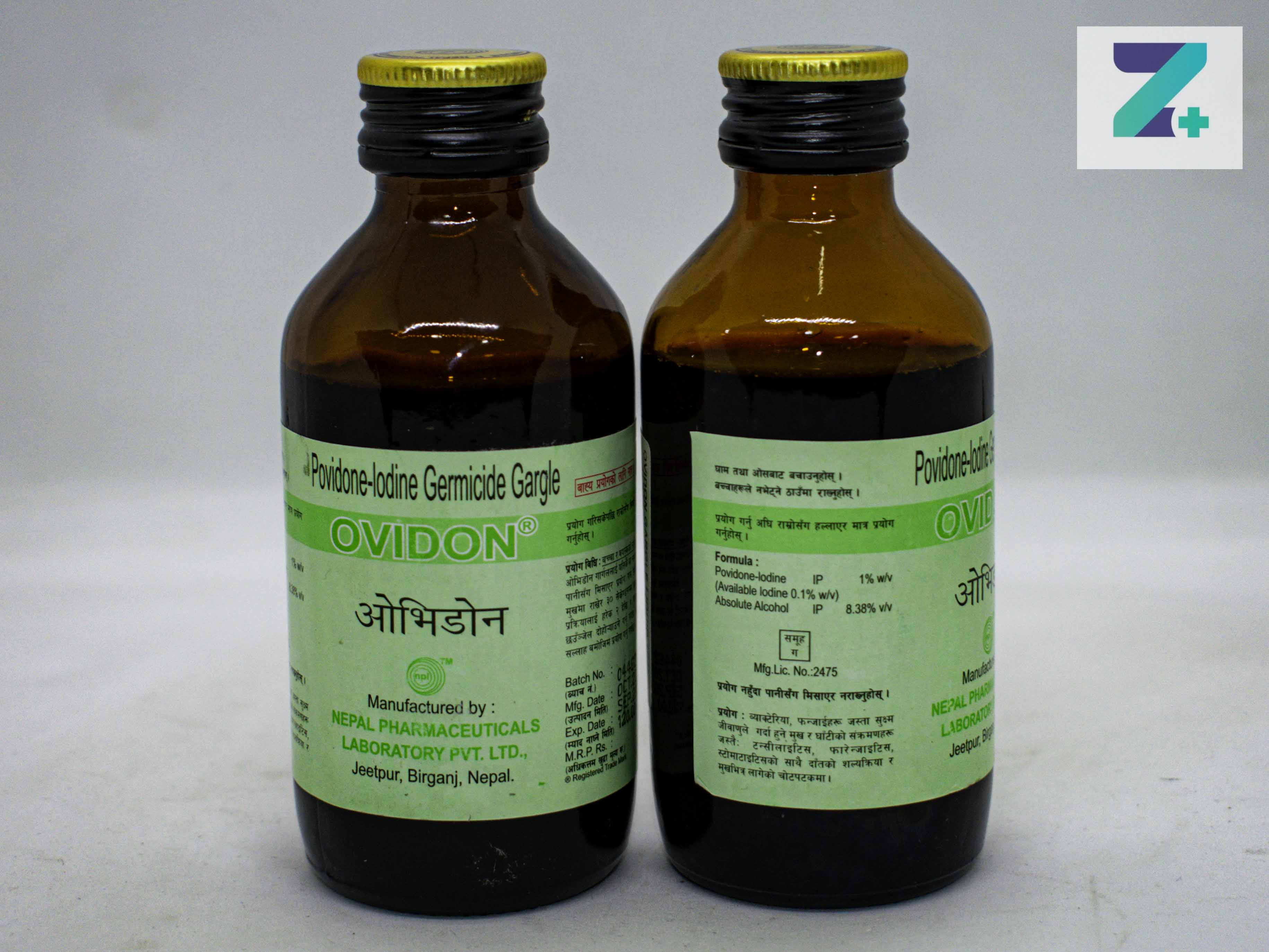
Price: Rs.120.00
10% off
In stock
Loose stock: 0
Description
OVIDON GARGLE LIQUID 100ML
Details
Composition
POVIDONE IODINE 1 % W/V
# POVIDONE IODINE 1% W/V
## SHORT DESCRIPTION
**Povidone Iodine 1% w/v** is a topical antiseptic preparation used to help reduce or prevent the growth of microorganisms on the skin and other appropriate body surfaces, depending on the specific formulation.
Povidone iodine releases **iodine**, which has broad antimicrobial activity against many bacteria, viruses, fungi, and other microorganisms.
> **Important:** The appropriate use depends on whether the product is formulated as a skin antiseptic, oral preparation, ophthalmic preparation, or another specialized product. Always follow the specific product label.
---
## KEY BENEFITS
* Provides **broad-spectrum antiseptic activity**.
* Helps reduce microorganisms on the skin.
* Can help prevent infection in appropriate minor wounds or procedures.
* Active against many types of **bacteria, fungi, and viruses**.
* Useful as a topical antiseptic when used according to the product's intended indication.
* Can be used for antiseptic preparation of skin when specifically formulated and labeled for that purpose.
---
## USES / INDICATIONS
Depending on the formulation and approved labeling, Povidone Iodine 1% may be used for:
* Antiseptic cleansing of minor cuts and abrasions
* Minor superficial wounds
* Skin disinfection
* Preparation of skin before certain medical procedures
* Reduction of microorganisms on the skin
### Important
Not every povidone iodine product is suitable for every body site. **Do not use a skin preparation in the eyes, mouth, vagina, or other sensitive areas unless the product is specifically labeled for that use.**
It should not be used as a substitute for medical treatment of deep, severe, or infected wounds.
---
## HOW IT WORKS
Povidone iodine is an iodine-containing antiseptic.
When applied, it gradually releases **free iodine**, which interacts with essential components of microorganisms and damages proteins and other cellular structures.
This results in antimicrobial activity against a broad range of microorganisms.
### In Simple Terms
**Povidone iodine → releases iodine → damages essential microbial components → helps reduce microorganisms.**
---
## DOSAGE & ADMINISTRATION
The appropriate application depends on the **specific product formulation and intended use**.
### For Minor Skin Applications
* Clean the affected area as appropriate.
* Apply a small amount of the solution to the affected area according to the product instructions.
* Allow the preparation to work as directed.
* Follow the manufacturer's recommended frequency and duration.
* Wash hands before and after application unless the hands are the treatment area.
### Important
Do not apply more frequently or over larger areas than recommended.
Avoid contact with the **eyes** unless the product is specifically formulated for ophthalmic use.
Do not swallow topical preparations.
### Deep or Serious Wounds
Seek professional medical care for:
* Deep cuts
* Puncture wounds
* Animal or human bites
* Extensive burns
* Heavily contaminated wounds
* Wounds with significant bleeding
* Wounds showing signs of infection
---
## SIDE EFFECTS
### Common Side Effects
Possible local effects include:
* Mild skin irritation
* Burning or stinging
* Redness
* Dryness
* Itching
### Allergic or Severe Reactions
Stop use and seek medical attention if you develop:
* Severe rash
* Facial swelling
* Difficulty breathing
* Severe skin irritation
* Signs of a serious allergic reaction
### Prolonged or Extensive Use
Repeated or extensive application can increase systemic iodine absorption and may potentially affect **thyroid function**, particularly in susceptible individuals.
---
## PRECAUTIONS & WARNINGS
### Thyroid Disorders
Use caution if you have:
* Thyroid disease
* Hyperthyroidism
* Other thyroid disorders
Repeated or extensive use may increase iodine exposure.
### Kidney Disease
People with significant kidney impairment should consult a healthcare professional before prolonged or extensive use because iodine clearance may be affected.
### Pregnancy
Tell your healthcare professional if you are pregnant or planning pregnancy. Repeated or extensive iodine exposure during pregnancy should generally be avoided unless medically necessary.
### Breastfeeding
Use cautiously during breastfeeding and follow professional advice, particularly if repeated or extensive application is required.
### Infants and Newborns
Infants, especially premature or newborn babies, may be more susceptible to iodine absorption. Use only when specifically recommended.
### Large Wounds
Avoid extensive application to large areas unless instructed by a healthcare professional.
### Eyes
Avoid contact with the eyes unless the product is specifically intended for ophthalmic use.
### Internal Use
Do not swallow a topical povidone iodine preparation unless it is specifically manufactured and labeled for oral/internal use.
### Allergy
Tell your healthcare professional if you have previously experienced irritation or hypersensitivity to povidone iodine or related products.
---
## DRUG INTERACTIONS
For occasional topical use on small areas, clinically significant interactions are uncommon.
However, prolonged or extensive use may increase iodine absorption and potentially affect thyroid function or interfere with some thyroid-related investigations.
### Lithium
Repeated or extensive use of iodine-containing antiseptics may be of concern in people taking **lithium**, particularly because both can affect thyroid function.
### Thyroid-Related Medicines
People taking thyroid medicines or receiving treatment for thyroid disorders should consult their healthcare professional before prolonged or extensive use.
### Other Antiseptics
Avoid routinely applying multiple antiseptics to the same area unless specifically recommended. Combining products may increase irritation or reduce compatibility.
Tell your healthcare professional about all prescription medicines, OTC medicines, and supplements you use.
---
## STORAGE INFORMATION
* Store according to the **manufacturer's instructions**.
* Keep in the original container.
* Store in a cool, dry place.
* Protect from excessive heat and direct sunlight.
* Keep the container tightly closed.
* Keep out of reach of children.
* Do not use after the expiry date.
* Do not use if the container is damaged, leaking, or the product has significantly changed in appearance.
---
## PRESCRIPTION STATUS
**Povidone Iodine 1% may be available without a prescription in many countries**, particularly when marketed as a topical antiseptic.
However, prescription requirements and approved uses vary according to the **country, formulation, concentration, and intended route of administration**.
Always follow local regulatory requirements and the product label.
---
## GENUINE MEDICINE ASSURANCE
When purchasing Povidone Iodine 1%:
* Purchase from a **licensed pharmacy or authorized supplier**.
* Check that the product is in original, sealed packaging.
* Verify the concentration and intended route of use.
* Check the **batch/lot number and expiry date**.
* Confirm manufacturer information.
* Check for signs of tampering or leakage.
* Ensure the product has been stored appropriately.
Do not use products with damaged packaging, missing labels, or questionable authenticity.
---
# FAQ – POVIDONE IODINE 1%
### 1. What is Povidone Iodine 1% used for?
Povidone iodine 1% is an antiseptic preparation used to help **reduce microorganisms on the skin** and may be used for minor wounds or skin disinfection depending on the specific product.
### 2. Is Povidone Iodine an antiseptic?
Yes. Povidone iodine is a **broad-spectrum antiseptic** with activity against many bacteria, fungi, and viruses.
### 3. Can Povidone Iodine be used on cuts?
A product specifically labeled for skin use may be used for appropriate **minor cuts and abrasions** according to its instructions.
### 4. Can Povidone Iodine be used on burns?
Minor superficial burns may sometimes be treated with an appropriate antiseptic, but povidone iodine should not be relied upon for **large, deep, or serious burns**. Seek medical attention for significant burns.
### 5. Can Povidone Iodine be used on an open wound?
It may be appropriate for some minor wounds when the product is labeled for wound/skin use. Deep or extensive wounds require professional medical assessment.
### 6. Can I use Povidone Iodine on my face?
Only if the specific product is labeled for facial use. Avoid the eyes and sensitive areas.
### 7. Can Povidone Iodine be used in the eyes?
Do not use ordinary skin povidone iodine in the eyes. **Only ophthalmic formulations specifically manufactured for eye use should be used in the eyes.**
### 8. Can Povidone Iodine be swallowed?
No. A topical povidone iodine preparation should **not be swallowed** unless it is specifically formulated and labeled for oral use.
### 9. Does Povidone Iodine kill bacteria?
Yes. Povidone iodine releases iodine, which damages essential components of many microorganisms, including susceptible bacteria.
### 10. Does Povidone Iodine kill fungi?
Povidone iodine has activity against many fungi and yeasts, but it should not automatically be considered a treatment for established fungal infections.
### 11. Can Povidone Iodine be used every day?
The appropriate frequency depends on the specific product and indication. **Do not use it repeatedly or extensively for prolonged periods without professional advice.**
### 12. Can Povidone Iodine affect the thyroid?
Yes. Extensive or prolonged iodine exposure can affect thyroid function, particularly in susceptible individuals.
### 13. Can people with thyroid problems use Povidone Iodine?
People with thyroid disorders should consult a healthcare professional before repeated or extensive use.
### 14. Can Povidone Iodine be used during pregnancy?
Consult a healthcare professional before use during pregnancy, especially for repeated or extensive applications.
### 15. Can Povidone Iodine be used while breastfeeding?
Ask your healthcare professional before repeated or extensive use during breastfeeding.
### 16. What are the common side effects of Povidone Iodine?
Possible side effects include **mild burning, stinging, redness, dryness, itching, or skin irritation**.
### 17. Can Povidone Iodine cause an allergic reaction?
Although uncommon, hypersensitivity reactions can occur. Stop using it and seek medical attention if severe rash, swelling, or breathing difficulty develops.
### 18. Can I use another antiseptic together with Povidone Iodine?
Avoid combining multiple antiseptics on the same area unless specifically recommended by a healthcare professional.
### 19. Is Povidone Iodine 1% available without a prescription?
It may be available OTC in many countries, but legal status varies depending on the formulation and intended use.
### 20. Does Povidone Iodine replace antibiotics?
No. It is an **antiseptic**, not a substitute for systemic antibiotics when antibiotics are medically indicated for a significant bacterial infection.
---
## MEDICAL DISCLAIMER
This information about **Povidone Iodine 1% w/v** is provided for educational and informational purposes only and is not a substitute for professional medical advice, diagnosis, or treatment.
The appropriate use of povidone iodine depends on the **specific formulation and intended route of administration**. Do not use a skin preparation in the eyes, mouth, or other sensitive areas unless the product is specifically designed and labeled for that purpose.
Avoid prolonged or extensive use without medical advice, particularly in **infants, people with thyroid or kidney disorders, pregnant individuals, and breastfeeding individuals**.
Seek medical attention for deep wounds, severe burns, animal or human bites, significant bleeding, or wounds showing signs of infection.
**Always read the product label and follow the manufacturer's instructions or your healthcare professional's advice.**