OXYSPAS 2.5MG
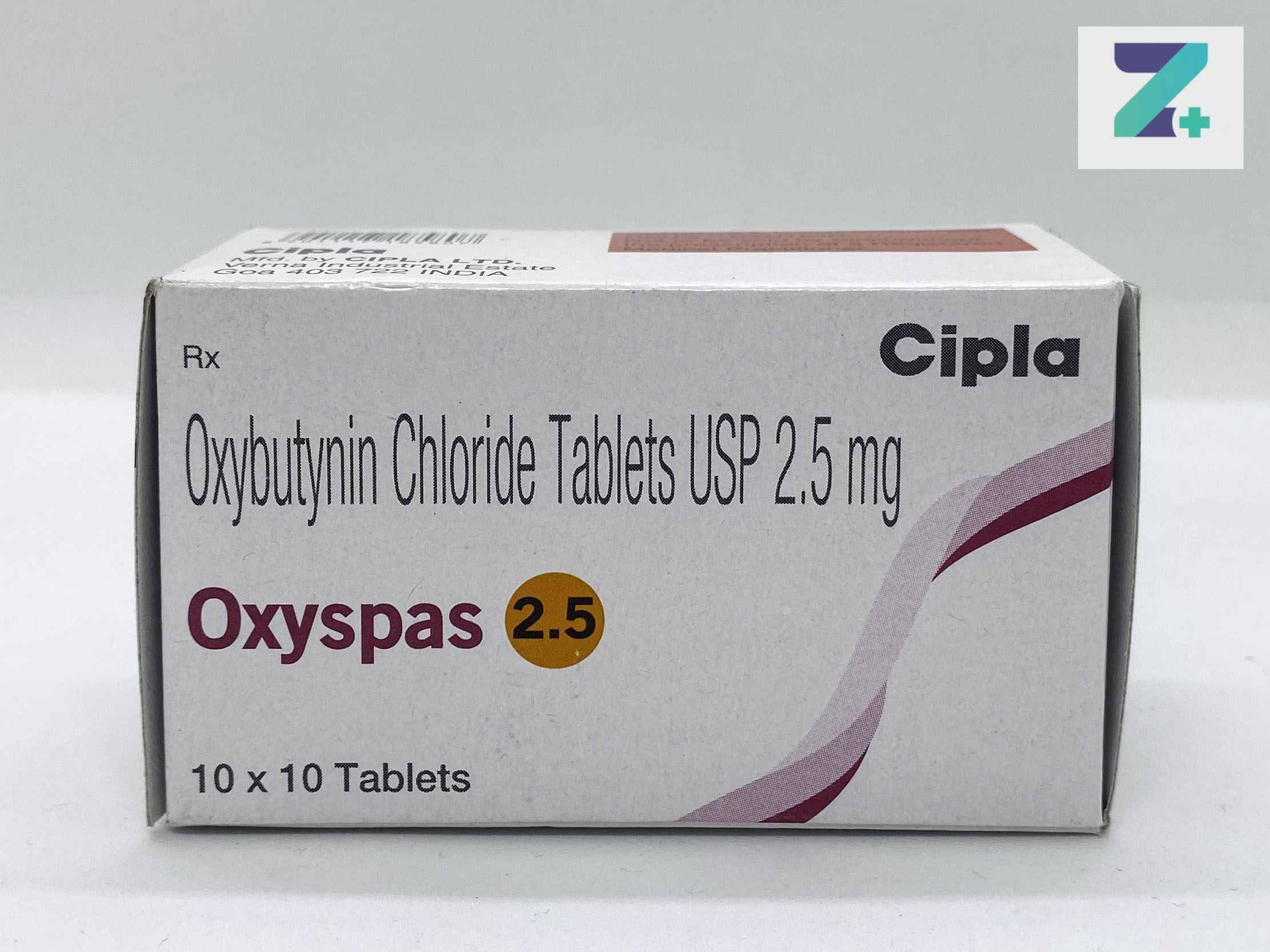
Price: Rs.208.30
13% off
In stock
Loose stock: 0
Description
OXYSPAS 2.5MG TAB 10
Details
Composition
OXYBUTYNIN CHLORIDE 2.5 MG
# Oxybutynin Chloride 2.5 mg
## Short Description
**Oxybutynin chloride 2.5 mg** is an **antimuscarinic (anticholinergic) medicine** used to treat symptoms of an **overactive bladder**, including frequent urination, urinary urgency and urge urinary incontinence.
It works by relaxing the bladder muscle, helping the bladder hold urine for longer and reducing involuntary bladder contractions.
> **Important:** Oxybutynin can cause anticholinergic side effects such as dry mouth, constipation, blurred vision and dizziness. It should be used according to a healthcare professional's instructions.
---
## Key Benefits
* Helps reduce **urinary urgency**.
* May decrease **frequent urination**.
* Helps control **urge urinary incontinence**.
* Relaxes involuntary bladder muscle contractions.
* Can increase functional bladder capacity.
* May improve bladder-control symptoms and daily quality of life.
* Available in different formulations, including immediate-release tablets and extended-release preparations.
---
## Uses / Indications
Oxybutynin chloride may be prescribed for:
* **Overactive bladder (OAB)**
* Urinary urgency
* Urinary frequency
* **Urge urinary incontinence**
* Urgency-associated bladder leakage
* Certain forms of neurogenic bladder dysfunction, such as detrusor overactivity, when prescribed by a specialist
Oxybutynin is **not appropriate for every cause of urinary frequency or incontinence**. Symptoms caused by urinary infection, prostate problems, excessive fluid intake or other conditions may require different treatment.
---
## How It Works
Oxybutynin is an **antimuscarinic medicine**.
It blocks muscarinic acetylcholine receptors in the bladder. This reduces involuntary contractions of the **detrusor muscle**, allowing the bladder to store more urine.
### In simple terms:
**Oxybutynin → blocks muscarinic receptors → relaxes bladder muscle → reduces involuntary contractions → improves urgency and bladder control.**
Because muscarinic receptors are also found throughout the body, blocking them can cause effects such as **dry mouth, constipation and blurred vision**.
---
## Dosage & Administration
### Adults
For **immediate-release oxybutynin tablets**, a commonly used starting regimen is:
**2.5 mg to 5 mg, 2–3 times daily**, depending on individual response and medical advice.
The dose may be adjusted by the healthcare professional according to symptom control and tolerability.
> **Important:** The appropriate dose depends on the formulation. Do not use the dosing information for immediate-release tablets for extended-release oxybutynin products.
### Administration
* Take exactly as prescribed.
* Swallow tablets with water.
* Take at approximately the same times each day.
* Immediate-release tablets may generally be taken with or without food.
* Do not crush or chew extended-release tablets.
* Do not take more than prescribed.
### Missed Dose
Take the missed dose when remembered unless it is nearly time for the next scheduled dose. **Do not double the dose.**
---
## Side Effects
### Common Side Effects
Anticholinergic effects are relatively common and may include:
* **Dry mouth**
* Constipation
* Headache
* Dizziness
* Drowsiness
* Blurred vision
* Dry eyes
* Nausea
* Abdominal discomfort
* Reduced sweating
### Less Common but Important Effects
* Difficulty urinating
* Rapid or irregular heartbeat
* Confusion
* Memory problems
* Hallucinations
* Severe constipation
* Eye pain or sudden vision changes
Older adults may be more susceptible to **confusion, cognitive impairment and other anticholinergic effects**.
### Seek Urgent Medical Attention For
* Inability to urinate
* Severe eye pain or sudden visual disturbance
* Severe allergic reaction
* Severe confusion or unusual behavior
* Very rapid or irregular heartbeat
* Signs of heat-related illness such as extreme weakness, confusion or inability to cool down
---
## Precautions & Warnings
### Urinary Retention
Oxybutynin can make it more difficult to empty the bladder.
Use particular caution in people with:
* Urinary retention
* Bladder outlet obstruction
* Enlarged prostate
* Difficulty starting urination
### Narrow-Angle Glaucoma
Oxybutynin can increase pressure inside the eye and may be unsuitable for people with **untreated narrow-angle glaucoma**.
Seek medical advice for eye pain, halos around lights or sudden blurred vision.
### Gastrointestinal Conditions
Because oxybutynin reduces smooth-muscle activity, it may worsen certain gastrointestinal conditions, including:
* Severe ulcerative colitis
* Intestinal obstruction
* Paralytic ileus
* Severe constipation
### Reduced Sweating and Heat Intolerance
Oxybutynin can decrease sweating. This may increase the risk of **overheating or heat stroke**, especially in hot weather or during strenuous activity.
### Heart Conditions
Use caution in people with certain cardiac conditions, particularly if the medicine causes a rapid heartbeat.
### Cognitive Effects
Confusion, memory problems and other cognitive effects can occur, particularly in **older adults** or with higher anticholinergic exposure.
### Alcohol and Driving
Oxybutynin may cause **drowsiness, dizziness or blurred vision**. Avoid driving or operating machinery until you know how the medicine affects you.
Alcohol may worsen dizziness or drowsiness.
---
## Drug Interactions
### Other Anticholinergic Medicines
Combining oxybutynin with other anticholinergic medicines may increase:
* Dry mouth
* Constipation
* Urinary retention
* Blurred vision
* Confusion
Examples include some medicines for allergies, Parkinson's disease, gastrointestinal disorders and certain psychiatric conditions.
### Antihistamines
Some older antihistamines, such as **diphenhydramine or chlorpheniramine**, have anticholinergic properties and may increase side effects.
### Tricyclic Antidepressants
Medicines such as **amitriptyline** may increase anticholinergic effects when combined with oxybutynin.
### Antipsychotic Medicines
Some antipsychotics can contribute to anticholinergic effects and constipation.
### CYP3A4 Inhibitors
Medicines that inhibit CYP3A4 may increase oxybutynin exposure, particularly with certain formulations.
Examples include some:
* Azole antifungals
* Macrolide antibiotics
* HIV medicines
### Other Medicines
Tell your healthcare professional about all prescription medicines, OTC medicines, vitamins and herbal supplements you use.
---
## Storage Information
* Store at **room temperature** according to the manufacturer's instructions.
* Keep tablets in the original packaging.
* Protect from excessive heat, moisture and direct sunlight.
* Keep the container tightly closed.
* Keep out of reach of children.
* Do not use after the expiry date.
* Do not use tablets from damaged or improperly sealed packaging.
---
## Prescription Status
**Oxybutynin chloride 2.5 mg is generally a prescription medicine.**
It should be used under medical supervision because urinary symptoms can have multiple causes and oxybutynin may cause significant anticholinergic adverse effects.
---
## Genuine Medicine Assurance
When purchasing **Oxybutynin Chloride 2.5 mg**:
* Purchase from a **licensed and reputable pharmacy**.
* Check that the packaging is sealed and undamaged.
* Verify the medicine name, strength and dosage form.
* Check the manufacturer's name, batch/lot number and expiry date.
* Do not use tablets from suspicious or damaged packaging.
* Avoid unauthorized online medicine sellers.
* Follow the manufacturer's storage instructions.
* If you suspect a counterfeit product, contact the manufacturer, licensed pharmacy or relevant medicines regulatory authority.
---
# Frequently Asked Questions (FAQ)
### 1. What is Oxybutynin Chloride 2.5 mg used for?
Oxybutynin 2.5 mg is used to treat symptoms associated with an **overactive bladder**, including urinary urgency, frequent urination and urge urinary incontinence.
### 2. Is Oxybutynin a bladder medicine?
Yes. Oxybutynin is an **antimuscarinic bladder medicine** that relaxes the bladder muscle and reduces involuntary contractions.
### 3. How does Oxybutynin work?
It blocks muscarinic receptors, reducing involuntary contractions of the bladder's detrusor muscle. This allows the bladder to store more urine and helps reduce urgency and leakage.
### 4. What is Oxybutynin 2.5 mg used for in adults?
It may be used to control **overactive bladder symptoms**, including urgency, frequency and urge urinary incontinence. It may also be prescribed for certain neurogenic bladder conditions.
### 5. Does Oxybutynin stop frequent urination?
Oxybutynin can reduce urinary frequency when frequent urination is caused by **overactive bladder or involuntary bladder contractions**.
### 6. Does Oxybutynin help urinary incontinence?
Yes. It can help control **urge urinary incontinence**, where urine leakage occurs because of a sudden, difficult-to-control urge to urinate.
### 7. What are the most common side effects of Oxybutynin?
The most common side effects include **dry mouth, constipation, dizziness, blurred vision and headache**.
### 8. Why does Oxybutynin cause dry mouth?
Oxybutynin blocks muscarinic receptors throughout the body, including receptors involved in saliva production. This reduces saliva and causes **dry mouth**.
### 9. Can Oxybutynin cause constipation?
Yes. Reduced intestinal muscle activity can cause **constipation**. Adequate fluids and dietary fiber may help if appropriate for you.
### 10. Can Oxybutynin cause difficulty urinating?
Yes. Oxybutynin can reduce bladder contractions and, in some people, cause or worsen **urinary retention**.
### 11. Can Oxybutynin affect vision?
Yes. It can cause **blurred vision** and may increase eye pressure in susceptible individuals. Sudden eye pain or major vision changes require urgent medical attention.
### 12. Can Oxybutynin cause drowsiness?
Yes. **Drowsiness and dizziness** can occur. Avoid driving or operating machinery until you know how the medicine affects you.
### 13. Can Oxybutynin be taken with alcohol?
Alcohol may increase **drowsiness or dizziness**. It is advisable to limit or avoid alcohol until you know how oxybutynin affects you.
### 14. Can Oxybutynin be used in older adults?
It can be prescribed to older adults, but caution is important because older people may be more susceptible to **confusion, constipation, urinary retention and other anticholinergic effects**.
### 15. Can Oxybutynin be used during pregnancy?
Consult a healthcare professional before using oxybutynin during pregnancy. It should be used only when the expected benefits justify potential risks.
### 16. Can Oxybutynin be used while breastfeeding?
Oxybutynin may affect milk production and the safety of use during breastfeeding should be discussed with a healthcare professional.
### 17. Can I take Oxybutynin with other bladder medicines?
Sometimes oxybutynin is combined with other treatments, but combining medicines that have anticholinergic effects can increase adverse reactions. **Do not add another bladder medicine without medical advice.**
### 18. What happens if I miss an Oxybutynin dose?
Take the missed dose when remembered unless it is nearly time for your next dose. **Do not take two doses at once.**
### 19. Can Oxybutynin cure an overactive bladder permanently?
Oxybutynin controls bladder symptoms but does not necessarily cure the underlying cause. Symptoms may return when treatment is stopped, depending on the underlying condition.
### 20. Is Oxybutynin 2.5 mg available without a prescription?
Oxybutynin 2.5 mg is **generally prescription-only**, although legal requirements can vary by country and formulation.
---
## Medical Disclaimer
This information about **Oxybutynin Chloride 2.5 mg** is provided for educational and general informational purposes only. It is **not a substitute for professional medical advice, diagnosis or treatment**.
Urinary urgency, frequency and incontinence can have many causes, including urinary infections, prostate disorders, neurological conditions and other bladder problems. A healthcare professional should determine the underlying cause before treatment.
Oxybutynin can cause significant **anticholinergic effects**, including urinary retention, constipation, blurred vision, dizziness and cognitive changes. **Do not start, stop or change the dose without professional medical advice.**
Seek prompt medical attention for inability to urinate, severe eye pain or vision changes, severe confusion, serious allergic reactions or other concerning symptoms.